In Pakistan, the act of drinking water — the most basic human need — has become a calculated risk for millions of families and businesses. Municipal supply systems carry aging-pipe contamination. Groundwater aquifers across Punjab and Sindh test positive for arsenic, excess salts, and nitrates. Commercially bottled water offers inconsistent quality with no source transparency. Against all of these realities, a properly installed drinking water RO plant stands as the one solution that genuinely addresses the full spectrum of water contamination threats simultaneously, with measurable and verifiable results.
A drinking water RO plant doesn’t rely on assumptions or brand promises. It operates on established physics — forcing pressurized water through a semi-permeable membrane that blocks dissolved salts, heavy metals, nitrates, arsenic, fluoride, and biological contaminants at the ionic level. The purified output can be tested and verified at any time using a simple TDS meter, giving users objective confirmation that their water meets safe drinking standards continuously.
The Next Rex, a technology-driven services company recognized across Pakistan for its precision-focused subscription-based approach, has built a comprehensive drinking water RO plant service model that combines professional water quality assessment, quality-controlled installation, and structured long-term maintenance for both residential and commercial clients across the country.

Test Your Water Today — Book a professional drinking water assessment with our RO plant specialists and discover what’s actually in your water before it’s too late.
Why a Drinking Water RO Plant Is the Only Comprehensive Solution for Pakistan
The Pakistani water contamination landscape is complex and regionally variable. Different areas face different dominant contaminants, and no single conventional filter technology addresses more than one or two categories effectively. This is the fundamental limitation that makes a drinking water RO plant uniquely valuable in the Pakistani context.
Conventional carbon filters address chlorine and some organic compounds but cannot remove dissolved salts, heavy metals, or nitrates. Ceramic gravity filters handle some bacteria but pass dissolved contaminants freely. UV sterilization eliminates biological threats but leaves chemical and mineral contamination completely untouched. Boiling removes biological threats but actually concentrates dissolved chemicals and minerals by reducing water volume.
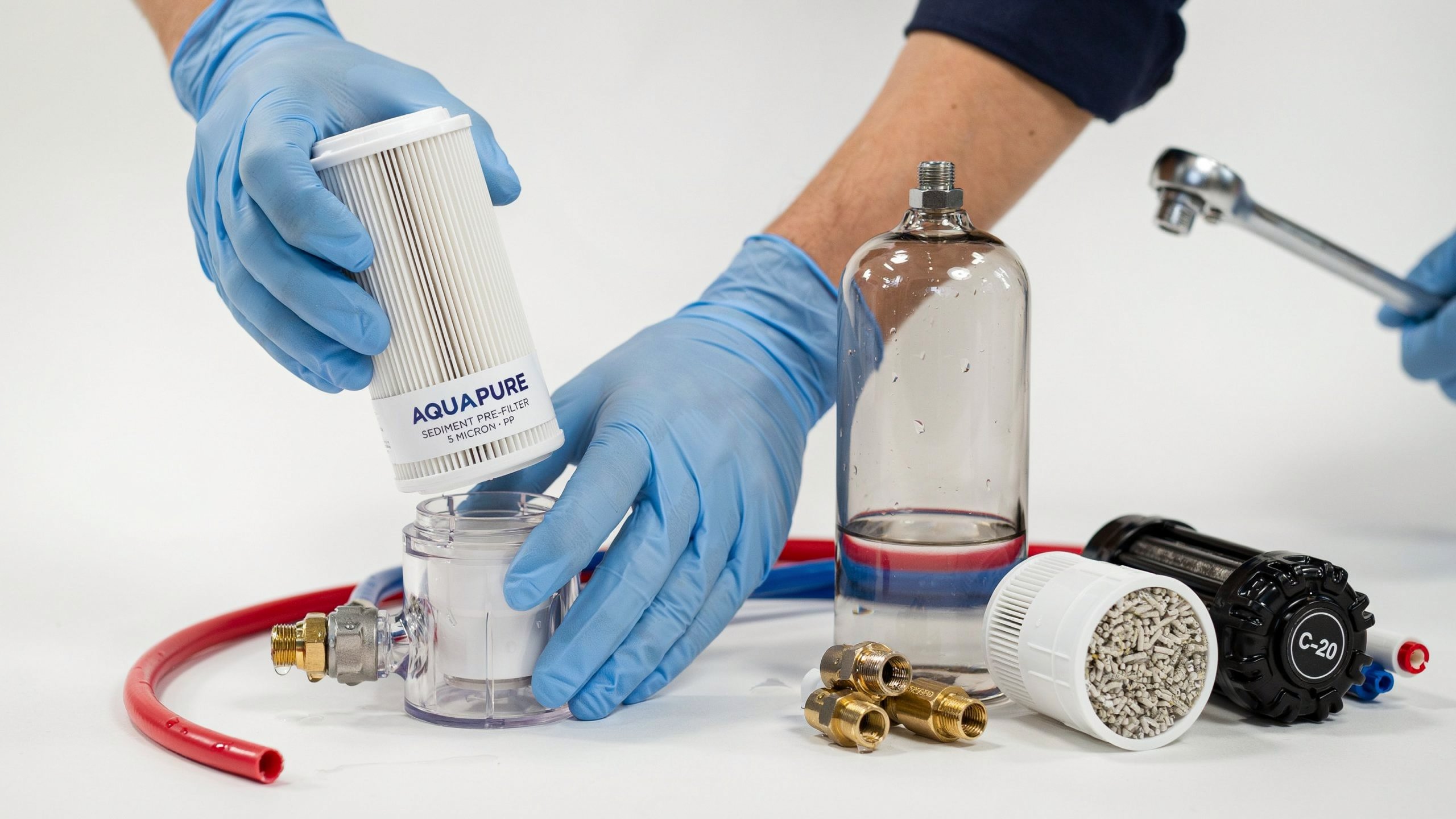
A drinking water RO plant addresses every one of these contamination categories within a single integrated system. Its multi-stage design combines sediment pre-filtration, activated carbon treatment, membrane filtration, and post-carbon polishing in a sequential process that creates multiple overlapping purification barriers. When one stage operates at slightly reduced efficiency, others compensate — a redundancy that no single-stage filter system can offer.
Furthermore, reverse osmosis technology produces output water that can be objectively measured and verified rather than trusted on faith. This measurability is critically important in Pakistan’s current water quality environment, where contamination is invisible, tasteless at low concentrations, and dangerously easy to underestimate without proper testing.
How a Drinking Water RO Plant Removes Pakistan’s Most Dangerous Contaminants
Understanding which specific contaminants a drinking water RO plant removes — and how effectively — validates the technology for Pakistani water conditions and clarifies why it consistently outperforms alternatives across the country’s diverse regional contamination profiles.
Arsenic is among the most dangerous contaminants in Pakistani groundwater. Geological deposits in large parts of Punjab and Sindh naturally leach arsenic into shallow aquifers, and long-term exposure at even low concentrations is associated with cancers, cardiovascular disease, and serious skin conditions. A properly maintained drinking water RO plant achieves arsenic rejection rates of 90% to 95%, making it the most practical and accessible arsenic mitigation technology available at the household level in Pakistan.
Nitrate contamination from agricultural fertilizer runoff affects farming communities across Punjab and presents particular danger to infants. Unlike bacteria, nitrates cannot be eliminated by boiling — in fact, boiling concentrates them. An RO membrane removes nitrates effectively through size exclusion and ionic rejection, where boiling and conventional filters both fail entirely.
Total dissolved solids exceeding 500 ppm — the WHO safe drinking limit — are documented across large regions of Pakistan. High TDS water carries excess minerals, salts, and chemical compounds that cause long-term kidney stress and cardiovascular strain with continuous consumption. A drinking water RO plant consistently reduces TDS to below 50 ppm in its output, well within the safe range for daily consumption.
Heavy metals including lead, chromium, and cadmium enter Pakistani water supplies through industrial discharge, agricultural runoff, and deteriorating pipe infrastructure in urban distribution networks. RO membranes reject these metals at rates of 95% to 99%, delivering heavy metal-free drinking water that no conventional filter can match.
Choosing the Right RO Water Plant Scale for Your Specific Needs
Matching system capacity to actual daily consumption is one of the most important technical decisions in any water purification project. An RO Water Plant that’s undersized for your household or business runs dry during peak demand, forces the pump to operate continuously beyond its rated duty cycle, and ultimately fails prematurely. An oversized system wastes capital on capacity that never gets utilized.
For residential use, the starting calculation is straightforward. A typical Pakistani family of five to seven people consumes between twelve and twenty liters of drinking and cooking water daily. A standard 75 GPD domestic drinking water RO plant produces approximately 280 liters per day under optimal conditions — more than sufficient for this consumption level with adequate storage buffer.
Larger households, those that also use purified water for appliances like steam irons or humidifiers, or those in areas with heavily contaminated source water that reduces membrane efficiency should consider 100 to 150 GPD systems. These provide the additional capacity buffer that prevents the storage tank from running empty during high-consumption periods.
Commercial drinking water RO plants for restaurants, clinics, offices, and schools require professional capacity calculation based on peak demand analysis rather than simple daily average figures. A restaurant serving lunch and dinner services has very different peak demand patterns from an office with consistent low-level consumption throughout the day. Professional system sizing accounts for these patterns to ensure reliable supply under all operating conditions.
What to Look for in a Quality Drinking Water RO Plant Installation
Not every drinking water RO plant installation delivers equivalent results. The quality of components, the thoroughness of the installation process, and the professionalism of the commissioning procedure all determine whether your system performs as expected from day one or requires immediate corrective attention.
The membrane is the most critical component to evaluate. A quality RO filtration plant installation uses membranes from manufacturers with documented performance specifications. The installer should be able to name the membrane brand and model, state its rated rejection percentage, and explain its expected service life under your specific source water conditions.
Pre-filter quality matters enormously for long-term membrane protection. Carbon block pre-filters from quality media manufacturers protect the RO membrane from chlorine oxidation, which is the leading cause of premature membrane failure in Pakistani systems where municipal water carries significant chlorine loads. A properly specified carbon block filter reduces membrane chlorine exposure to negligible levels throughout its service interval.
The booster pump is the component most frequently under-specified in low-cost systems. Without adequate and consistent inlet pressure — typically between 40 and 80 PSI for effective RO operation — membrane rejection rates decline and production speed drops significantly. A quality installation uses a pump rated appropriately for continuous cycling at your system’s designed output capacity, not simply the minimum pump that allows any water production at all.
Installation workmanship affects both immediate performance and long-term reliability. Properly torqued fittings, quality tubing connections, correctly oriented filter housings, and thorough commissioning testing are not details — they are the difference between a system that performs consistently for years and one that develops leaks, pressure loss, and contamination bypass within months.
Drinking Water RO Plant Maintenance: The Schedule Every Owner Needs
A drinking water RO plant that receives proper maintenance delivers consistent, safe output throughout its operational life. One that is neglected degrades gradually and invisibly, producing water that appears clean but contains progressively higher levels of contaminants as membranes foul and pre-filters exhaust without replacement.
Sediment pre-filters require replacement every three to six months. In areas with visible turbidity, rust, or high iron content in source water, replacement may be needed more frequently. This filter costs between PKR 300 and PKR 800 per replacement and protects the membrane from physical damage that would dramatically shorten its service life.
Carbon block pre-filters should also be replaced every three to six months, with timing adjusted based on source water chlorine concentration. This component’s replacement is arguably the most important maintenance task for membrane longevity, because chlorine oxidation is irreversible and cumulatively destroys membrane rejection capability with continuous unprotected exposure.
A water filtration plant for home RO membrane requires replacement every one to two years in typical residential use. Signs of membrane decline include rising output TDS readings despite fresh pre-filters, noticeably reduced water production rate, and in severe cases, changes in output water taste. Annual professional inspections that include membrane performance testing catch declining performance before it reaches levels that compromise water safety.
The pressurized storage tank requires sanitization at least annually to prevent biofilm formation on interior surfaces. This overlooked maintenance task is one of the most common ways otherwise well-maintained systems develop microbiological contamination issues. Professional annual servicing should always include tank sanitization as a standard line item.
How The Next Rex Structures Drinking Water RO Plant Services in Pakistan
The Next Rex brings a fundamentally different service culture to drinking water RO plant provision in Pakistan. Their engagement process begins with professional water quality analysis of your specific source water — the only rational starting point for any honest purification recommendation. This analysis-first approach ensures that every system they recommend is configured for the actual contaminants present in your water, not a generic national average profile.
Their operational infrastructure, backed by enterprise-level cloud platforms including AWS and GCP, means project management, service scheduling, and client communication operate with documented precision. Maintenance reminders, service records, filter replacement histories, and performance data are maintained through structured digital systems that eliminate the disorganization characteristic of most traditional water treatment providers in Pakistan.
Their subscription-based service model converts the unpredictable cost of maintaining a water filter for home or commercial drinking water RO plant into a structured, predictable package that covers filter replacements, annual professional inspections, membrane testing, and priority technical response without per-visit charges.
The Next Rex also actively publishes educational content on water quality, health, and infrastructure through their digital platforms. This investment in public knowledge reflects a brand philosophy that measures success by client outcomes rather than transaction volume. For anyone investing in a drinking water RO plant in Pakistan, choosing a service partner with this orientation represents a meaningful practical advantage.
Protect Your Family’s Health — Let The Next Rex design a drinking water RO plant solution built precisely around your source water conditions, household size, and long-term budget reality.
FAQs About Drinking Water RO Plant Services in Pakistan
1. How does a drinking water RO plant perform differently in high-TDS areas of Pakistan compared to low-TDS areas?
A drinking water RO plant performs consistently across both conditions, though high-TDS source water increases the concentration of the reject stream and may slightly reduce membrane service life compared to lower-TDS environments.
2. Can a domestic drinking water RO plant provide enough output for a large joint family household in Pakistan?
Larger households should select systems rated at 100 GPD or higher, as a properly sized drinking water RO plant with adequate storage capacity can comfortably serve joint families of ten to fifteen members with consistent purified water availability.
3. What is the safest way to verify that my drinking water RO plant is working correctly at home? Measuring output TDS monthly with an inexpensive TDS meter and comparing it against your source water TDS provides immediate, objective confirmation that your filtration plant membrane is performing at an acceptable rejection rate.
4. Is it safe to drink water directly from the drinking water RO plant output tap without storage?
Yes, water drawn directly from the post-filter output of a properly maintained drinking water RO plant is safe to drink immediately without any additional treatment or storage period.
5. How does a drinking water RO plant handle seasonal water quality variations in Pakistan during monsoon season?

During monsoon season, source water turbidity typically increases significantly, which means sediment pre-filter replacement frequency should be increased to protect the membrane from accelerated fouling under higher suspended solid loads.