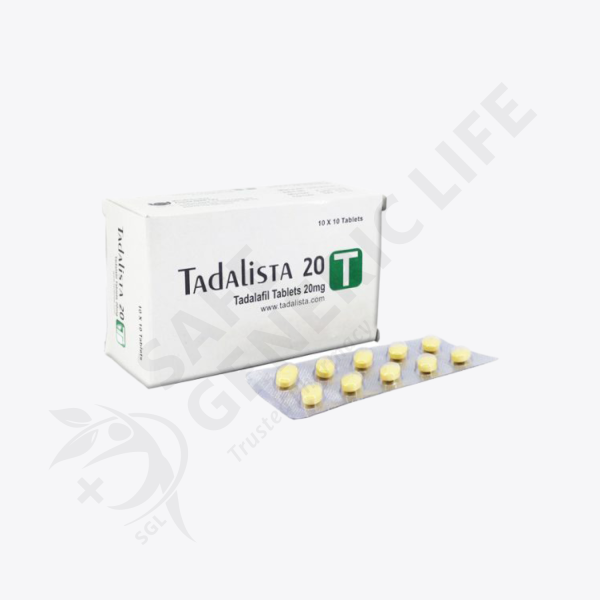
Tadalista 20 is one of the many medicines discussed online when men are looking for treatment for erectile dysfunction (ED). Its active ingredient is tadalafil, a phosphodiesterase type-5 (PDE5) inhibitor that helps improve blood flow to the penis when sexual stimulation is present. The “20” refers to the 20 mg strength, which can make the product sound like a straightforward stronger version of lower-dose tadalafil. But that is where the story becomes more interesting: a higher dose is not automatically the right dose for every person, and using more tadalafil than necessary can increase the chance of troublesome adverse effects. Official tadalafil prescribing information describes 10 mg as the usual starting dose for as-needed treatment of ED, with the dose potentially increased to 20 mg or reduced to 5 mg according to effectiveness and tolerability.
What exactly is Tadalista 20?

Tadalista 20 generally refers to a 20 mg tadalafil tablet. The important medical point is the active ingredient rather than the brand name: tadalafil works by inhibiting PDE5, an enzyme involved in regulating blood flow in erectile tissue. During sexual stimulation, this mechanism can help the blood vessels in the penis relax sufficiently to support an erection. It does not create sexual desire, and it does not normally produce an erection simply because the tablet has been swallowed. Sexual stimulation is still necessary for the medicine to work.
That distinction matters because online discussions sometimes portray tadalafil as though it were a switch that automatically produces an erection. It is better understood as a treatment that improves the body’s response to sexual stimulation in men who have ED. Tadalafil is also used medically for other conditions, including benign prostatic hyperplasia and pulmonary arterial hypertension, but the appropriate dose and formulation can differ considerably. A Tadalista 20 tablet should therefore not be treated as interchangeable with every tadalafil product simply because they contain the same active ingredient.
Why does the 20 mg strength attract so much attention?
The 20 mg dose sits toward the higher end of the commonly used as-needed tadalafil range for ED. According to the U.S. prescribing information for Cialis, treatment generally begins at 10 mg before anticipated sexual activity, with an increase to 20 mg or reduction to 5 mg depending on individual response and tolerability. The maximum recommended frequency for as-needed use is once per day.
That makes the idea of “stronger must be better” misleading. If 10 mg provides satisfactory results with fewer adverse effects, increasing the dose may offer little practical advantage. Conversely, a clinician may consider 20 mg appropriate when a lower dose has not provided enough benefit and the person can tolerate the medication. The right dose is therefore an individual treatment decision, not a competition to find the highest number.
Another reason tadalafil stands out is its relatively long duration of action. The medicine may improve erectile function for up to 36 hours after an as-needed dose. That does not mean a continuous erection or uninterrupted sexual performance for 36 hours; it means the medication can remain effective during that window when sexual stimulation occurs.
How should Tadalista 20 be taken?
For men who have been prescribed tadalafil 20 mg for as-needed ED treatment, the tablet is generally taken before anticipated sexual activity. Patient information for 20 mg tadalafil states that it can be taken at least 30 minutes beforehand, while the exact timing should follow the instructions provided by the prescriber or product leaflet. It can be taken with or without food.
The important limitation is frequency. A 20 mg tadalafil tablet should not simply be repeated because the first dose did not produce the desired result. Taking additional tablets within the same day can increase exposure and potentially increase adverse effects. If the medicine appears ineffective, the better question is why: the dose may not be appropriate, the timing may be unsuitable, sexual stimulation may be insufficient, another medicine may be interfering, or an underlying health condition may be contributing to ED.
Tadalafil 10 mg and 20 mg preparations are generally intended for as-needed use rather than continuous daily treatment. Daily tadalafil for ED uses substantially lower doses, commonly 2.5 mg or 5 mg depending on the prescription and response.
What side effects should you actually watch for?
Tadalafil is not free of side effects. Common reactions include headache, indigestion, flushing, nasal congestion, back pain, and muscle aches. Some people may also experience dizziness. These effects are often mild, but persistent or bothersome symptoms deserve discussion with a healthcare professional.
The more important issue is recognizing uncommon symptoms that should not simply be ignored. Sudden changes in vision or hearing, chest pain, a severe allergic reaction, or a prolonged or painful erection require prompt medical attention. An erection lasting longer than four hours is a medical emergency because untreated priapism can cause permanent damage.
There is another practical consideration that receives less attention in casual online discussions: side effects can become more noticeable when tadalafil is combined with other substances that lower blood pressure. Large amounts of alcohol, for example, can increase the risk of dizziness or low blood pressure and may independently make erections more difficult.
The interaction that should never be treated casually
The most important interaction involving tadalafil is with nitrate medicines. Nitrates are used for conditions such as angina, and combining them with tadalafil can cause a potentially dangerous drop in blood pressure. Official prescribing information lists concurrent use with organic nitrates as contraindicated.
This is why someone considering Tadalista 20 should not rely on a product page, forum post, or social-media recommendation to decide whether it is safe. A pharmacist or doctor needs to know about prescription medicines, over-the-counter treatments, supplements, and relevant medical conditions. Tadalafil can also interact with certain alpha-blockers, antihypertensives, and medicines that affect CYP3A4 metabolism, potentially requiring dose adjustments.
People with certain cardiovascular problems, low or uncontrolled blood pressure, significant liver or kidney disease, or a recent history of serious cardiovascular events may require particular caution or may not be suitable candidates for tadalafil. The underlying health picture matters just as much as the tablet strength.
What if the medicine does not seem to work?
This is perhaps the most useful question to ask before simply moving to a stronger dose. ED can have many contributing factors, including vascular disease, diabetes, medication effects, psychological stress, relationship difficulties, hormonal problems, and lifestyle factors. Persistent erection problems can sometimes be an early sign of broader cardiovascular or metabolic disease. NHS guidance specifically notes that ED can sometimes indicate other significant health conditions, including heart disease or diabetes.
A failed attempt therefore does not necessarily mean tadalafil is “too weak.” Timing, expectations, sexual stimulation, alcohol consumption, other medicines, and underlying health can all influence the outcome. If tadalafil repeatedly fails despite correct use, medical assessment may be more useful than repeatedly increasing the dose.
Is Tadalista 20 the right choice?
There is no universal answer. For some men, a prescribed 20 mg tadalafil dose may provide an effective as-needed treatment for ED. For others, 5 mg or 10 mg may provide enough benefit with fewer side effects. Some people may be better suited to a daily regimen, while others may need investigation of an underlying cause rather than simply another ED medicine.
The safest way to view Tadalista 20 is not as a “maximum-performance” tablet, but as one available strength of a well-established medicine. The number on the package does not determine whether the treatment is appropriate. Medical history, other medicines, cardiovascular health, kidney and liver function, previous response, and tolerability all matter.
Most importantly, buying tadalafil from an uncertain source introduces a separate concern: the tablet may not contain what the label claims, and quality or dose consistency cannot necessarily be assumed. A legitimate prescription and a reliable pharmacy provide a much safer foundation than choosing a high-strength product solely because online reviews make it sound more powerful.
The bigger picture behind Tadalista 20
Tadalista 20 is interesting precisely because the real story is less dramatic than some internet claims suggest. Tadalafil is a clinically established PDE5 inhibitor, and 20 mg is an accepted as-needed strength for ED treatment when appropriate. Its relatively long duration can offer flexibility compared with shorter-acting options, but that flexibility should not be confused with permission to take repeated doses or ignore contraindications.
If ED is becoming a recurring problem, the most useful conversation may not be about finding the strongest tablet at all. It may be about understanding why erections have changed, reviewing current medicines, checking cardiovascular and metabolic health, and determining which treatment provides a reasonable balance between benefit and tolerability. Tadalista 20 may be part of that conversation, but it should not replace it.
In short: tadalafil 20 mg can be an effective as-needed ED treatment when appropriately prescribed, but higher strength does not automatically mean better results. Avoid nitrates, do not exceed the prescribed frequency, be cautious with alcohol and interacting medicines, and seek urgent medical care for chest pain, sudden vision or hearing changes, or an erection lasting more than four hours.
For More Information visit here: Safegenericlife

Disclaimer: This content is for educational and informational purposes only. It is not medical advice and should not be used to diagnose or treat any condition. Always consult a licensed healthcare professional before starting, stopping, or changing any prescription medication.