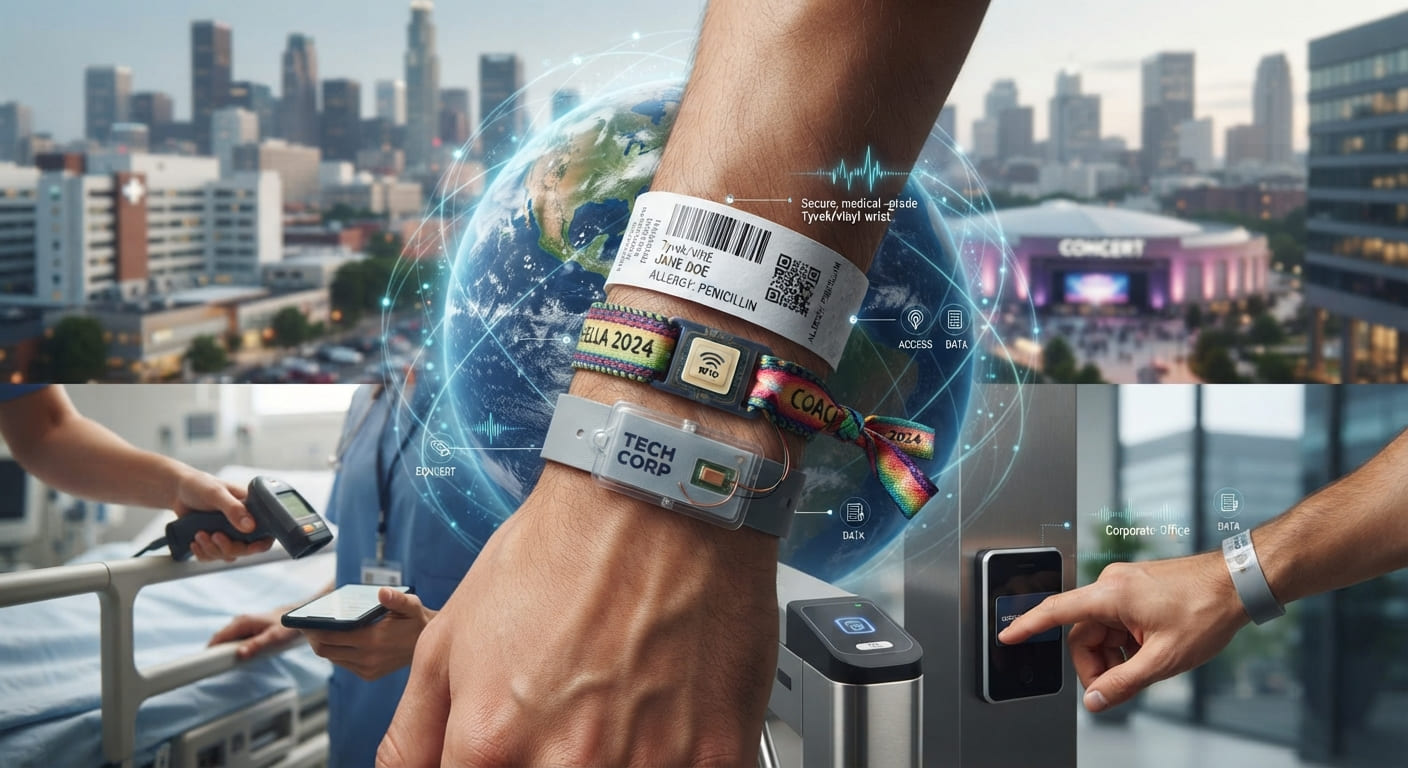
Look at your wrist. If you have attended a concert, visited a hospital, joined a festival, or spent a day at a water park, you may have worn a wristband. These small bands serve many purposes. They can control access, improve security, support identification, and protect people.
Two popular types stand out: vinyl wristbands and medtech wristbands. They look simple, but each type serves a specific need. Vinyl wristbands help event organizers manage guests and access. Medtech wristbands help healthcare teams identify patients and reduce medical errors.
Both products use the wrist as a convenient place to display or connect important information. However, their materials, features, and applications differ significantly.
Vinyl Wristbands: A Reliable Choice for Events
You can find vinyl wristbands at concerts, festivals, nightclubs, resorts, water parks, and amusement parks. Event organizers use them to identify guests and control access.
Vinyl works well because it offers excellent durability. It can handle water, sweat, spills, and regular wear. This makes it useful for events that last several days.
Paper wristbands can tear when they get wet. Vinyl wristbands handle these conditions much better. Guests can wear them during outdoor events, pool activities, and crowded festivals without worrying about quick damage.
Why Do Events Use Vinyl Wristbands?
Vinyl wristbands offer several practical benefits.
Durability: Vinyl can handle demanding environments. It resists water and everyday wear.
Security: Tamper-evident closures help prevent people from transferring wristbands between guests.
Identification: Organizers can print numbers, names, logos, barcodes, or other information on the bands.
Customization: Businesses can create custom colors, graphics, logos, and shapes to match their brand or event.
Comfort: Soft vinyl allows guests to wear the band for several days without major discomfort.
These features make vinyl wristbands a practical alternative to traditional paper tickets.
Where Do Vinyl Wristbands Work Best?
Vinyl wristbands can support many types of events and businesses.
Music Festivals and Concerts
Large festivals need simple access control. Organizers can assign different wristband types to general admission, VIP guests, staff, and performers.
Guests can show their wristbands at entrances instead of carrying paper tickets. Staff can quickly identify access levels.
Water Parks and Resorts
Water creates problems for many paper products. Vinyl solves this issue with its water-resistant design.
Guests can wear their wristbands around pools, water slides, and other attractions. Resorts can also use them to identify guests and manage access to specific facilities.
Nightclubs and Bars
Nightclubs can use wristbands for age verification, entry control, and reentry. Staff can quickly identify guests who have already passed security.
Corporate Events and Trade Shows
Companies can customize vinyl wristbands with logos, colors, and event information. Organizers can use different designs to separate attendees, speakers, staff, and VIP guests.
Amusement Parks
Amusement parks need durable identification products. Guests often spend an entire day moving between rides and attractions. Vinyl wristbands can stay secure throughout the visit.
Vinyl Wristbands Offer Flexible Customization
Event organizers can turn a simple wristband into a branding tool. Vinyl supports different colors, printed graphics, logos, and decorative finishes.
Some organizers choose holographic effects or glow-in-the-dark designs. Others use custom shapes or printed messages.
This customization can improve brand visibility. It can also turn the wristband into a souvenir. Guests often keep memorable event wristbands after the event ends.
Medtech Wristbands: A Tool for Patient Safety
Medtech wristbands serve a completely different purpose. Hospitals, clinics, surgical centers, and care facilities use them to identify patients and support safe treatment.
Healthcare staff need accurate patient identification at every stage of care. A simple mistake can lead to the wrong medication, procedure, test, or treatment.
A medtech wristband helps reduce this risk.
Hospitals usually provide patients with wristbands during admission. The band can display important identification information. It may also use a barcode, RFID, or NFC technology to connect the patient with their digital record.
Staff can scan the wristband before providing care. The system can then match the patient’s identity with their medical record.
This process helps staff confirm that they have selected the correct patient.
What Information Can a Medtech Wristband Link To?
A medtech wristband can connect staff to important patient information. Depending on the healthcare system, this may include:
- Patient name and identification number
- Admission details
- Allergy information
- Treatment information
- Medication records
- Procedure details
- Other information stored in the patient’s electronic record
The wristband itself does not always store all this information directly. A barcode or RFID/NFC chip may instead link the wristband to the patient’s electronic record.
Staff can scan the band to access the correct information.
How Do Medtech Wristbands Improve Patient Safety?
Healthcare workers perform many tasks during a patient’s stay. They may administer medication, collect blood samples, perform tests, or prepare patients for surgery.
Staff can scan the wristband before these procedures. The system can compare the wristband information with the patient’s record.
This creates an additional identity check.
For example, a nurse can scan the wristband before giving medication. The system can help confirm the correct patient and treatment.
This simple step can reduce the risk of patient identification errors.
Comfort Matters in Healthcare
Patients may wear medtech wristbands for several days. Some may wear them for much longer during extended care.
Manufacturers therefore need to consider comfort and skin contact.
Many medical wristbands use soft materials and rounded edges. Some products also use latex-free materials to support patients with sensitivities.
A secure closure also matters. The wristband should stay in place during normal activity. At the same time, it should not create unnecessary discomfort.
Healthcare workers must also access the information quickly. A clear barcode, readable text, or reliable RFID/NFC technology can make identification easier.
Color-Coded Hospital Wristbands
Some healthcare facilities use color-coded wristbands to communicate specific risks or alerts.
For example, a hospital may use a specific color to identify an allergy or fall risk. Another color may communicate a different clinical alert.
Color coding gives staff a quick visual signal. However, hospitals should follow their own approved color standards because meanings can vary between facilities.
The wristband can provide a visible warning before staff check the patient’s full medical record.
Where Do Medtech Wristbands Work Best?
Healthcare organizations use medtech wristbands in many settings.
Hospitals and Emergency Rooms
Hospitals use wristbands to identify patients during admission, treatment, testing, and discharge.
Surgical Centers
Surgical teams can use wristbands as part of their patient verification process. Staff can confirm the patient’s identity before a procedure.
Nursing and Long-Term Care Facilities
Care facilities can use wristbands to support patient identification and daily care processes.
Blood Collection and Donation
Wristbands can help connect patients or donors with samples and records. Accurate identification helps reduce labeling mistakes.
Clinical Trials
Research organizations can use identification systems to manage participant information. Wristbands can help staff connect participants with the correct records and procedures.
Vinyl vs. Medtech Wristbands
Vinyl wristbands focus on access, durability, security, and branding. Event organizers use them to identify guests and manage entry.
Medtech wristbands focus on patient identification, safety, comfort, and healthcare data. Medical teams use them to verify patients and support accurate care.
Their environments also differ.
A vinyl wristband may need to survive rain, pool water, crowded venues, and multiple days of wear. A medtech wristband must support safe patient care and comfortable clinical use.
Both products solve an identification problem, but they solve it in different ways.
Can Vinyl Wristbands Replace Tickets?
In many events, yes. Organizers can use wristbands as an alternative to traditional paper tickets.
Staff can check the wristband at entry points. Organizers can also assign different wristband designs to different access levels.
Some advanced wristbands can include barcodes or RFID technology. These features can support faster entry and cashless payment systems.
Are Vinyl Wristbands Reusable?
Most event wristbands use tamper-evident closures. These closures make unauthorized removal and transfer difficult.
If someone tries to remove the wristband, the closure may show visible damage. This helps organizers prevent one guest from passing the wristband to another person.
How Long Can a Medtech Wristband Stay On?
Medtech wristbands can support extended wear. Patients often keep them on throughout their hospital stay.
Manufacturers design many products with comfort in mind. Soft edges and suitable materials can help reduce irritation during prolonged use.
Healthcare staff should replace a wristband if it becomes damaged, unreadable, contaminated, or otherwise unsuitable for continued use.
Are Medtech Wristbands Recyclable or Single-Use?
Healthcare providers generally treat patient wristbands as single-use products. Staff typically dispose of them after the patient’s stay.
Hospitals follow their own infection-control and waste-disposal procedures. These procedures help protect patients, staff, and sensitive patient information.
Why Do Both Types Use the Wrist?
The wrist provides an ideal location for quick identification. Staff and security teams can see the band without searching through bags or paperwork.
A wristband also stays close to the person. This makes it harder to forget or misplace than a paper ticket or loose identification card.
That simple design gives wristbands their biggest advantage: fast and visible identification.
Frequently Asked Questions
Are vinyl wristbands waterproof?
Vinyl wristbands resist water and work well in pools, water parks, and outdoor events. They also handle sweat and spills better than many paper alternatives.
Can you customize vinyl wristbands?
Yes. You can customize vinyl wristbands with colors, logos, text, graphics, and other designs. Some products also support holographic or glow-in-the-dark effects.
Can people reuse vinyl wristbands?
Most vinyl wristbands use tamper-evident closures that discourage reuse. Removing the band can damage the closure and make unauthorized transfer easier to detect.
What does a medtech wristband do?
A medtech wristband helps healthcare staff identify patients. It can use printed information, barcodes, RFID, or NFC technology to connect the patient with the correct medical record.
What information can a medtech wristband link to?
It can link to patient identity, admission details, allergies, medication information, treatment records, and other data stored in a healthcare system.
How long can patients wear medtech wristbands?
Patients can often wear them throughout their hospital stay. Healthcare staff should replace damaged, contaminated, or unreadable bands.
Why do hospitals use different wristband colors?
Hospitals may use colors to highlight specific patient risks or alerts. Staff can recognize these warnings quickly, but color meanings can differ between healthcare facilities.
Final Thoughts
Vinyl and medtech wristbands show how one simple product can serve very different industries.
Vinyl wristbands help events manage access, improve security, and promote brands. They offer durability and customization for concerts, festivals, resorts, and other venues.
Medtech wristbands focus on patient safety. They help healthcare teams verify identity and connect patients with the correct medical information.

One creates a smoother event experience. The other supports safer healthcare. Both prove that a small wristband can play an important role when accurate identification matters.