
Concrete floor coatings are protective, decorative layers, usually epoxy, polyaspartic, or polyurea, applied over concrete slabs to resist stains, cracking, moisture, and wear. In Iowa, where freeze-thaw cycles, road salt, and humid summers put extra stress on garage, basement, and shop floors, a professionally installed coating can extend a slab’s life by 15-20+ years while making it easier to clean and safer to walk on. Homeowners searching “concrete coatings near me” typically pay between $4 and $12 per square foot in Iowa depending on the coating system and floor condition.
If you’re standing in your garage right now looking at a cracked, stained, or dusty concrete floor, this guide walks through everything you need to know before you hire a local contractor, including what actually happens during installation, how Iowa’s climate changes the equation, and the questions you should ask before signing a contract.
What Are Concrete Floor Coatings, Exactly?
A concrete floor coating is a resin-based system bonded directly to a prepared concrete surface. Unlike paint, which sits on top of the slab and peels within a year or two, a true coating chemically bonds with the concrete after the surface has been mechanically profiled (typically with diamond grinding, not acid etching).

Most residential and light-commercial coatings in Iowa fall into three categories:
1. Epoxy Coatings
A two-part resin and hardener that cures into a hard, glossy, chemical-resistant surface. Epoxy is the most common base layer in garage floor systems and is often combined with decorative color flakes for a terrazzo-style look. Its main limitation is UV sensitivity. Pure epoxy can yellow or chalk in direct sunlight over time, which is why it’s usually reserved for garages and indoor spaces rather than driveways or patios.
2. Polyaspartic Coatings
A newer polymer technology that cures in hours instead of days, resists UV yellowing, and tolerates a wider temperature range during application. Polyaspartics are increasingly popular in Iowa specifically because they can be installed in cooler shoulder-season temperatures and handle the state’s seasonal swings better than standard epoxy.
3. Polyurea and Hybrid Polyurea-Polyaspartic Systems
More flexible than epoxy, polyurea resists impact, abrasion, and temperature-driven expansion and contraction, a real advantage during Iowa winters when a slab is constantly freezing, thawing, and moving. Many contractors now use a polyurea base coat with a polyaspartic top coat for maximum durability.
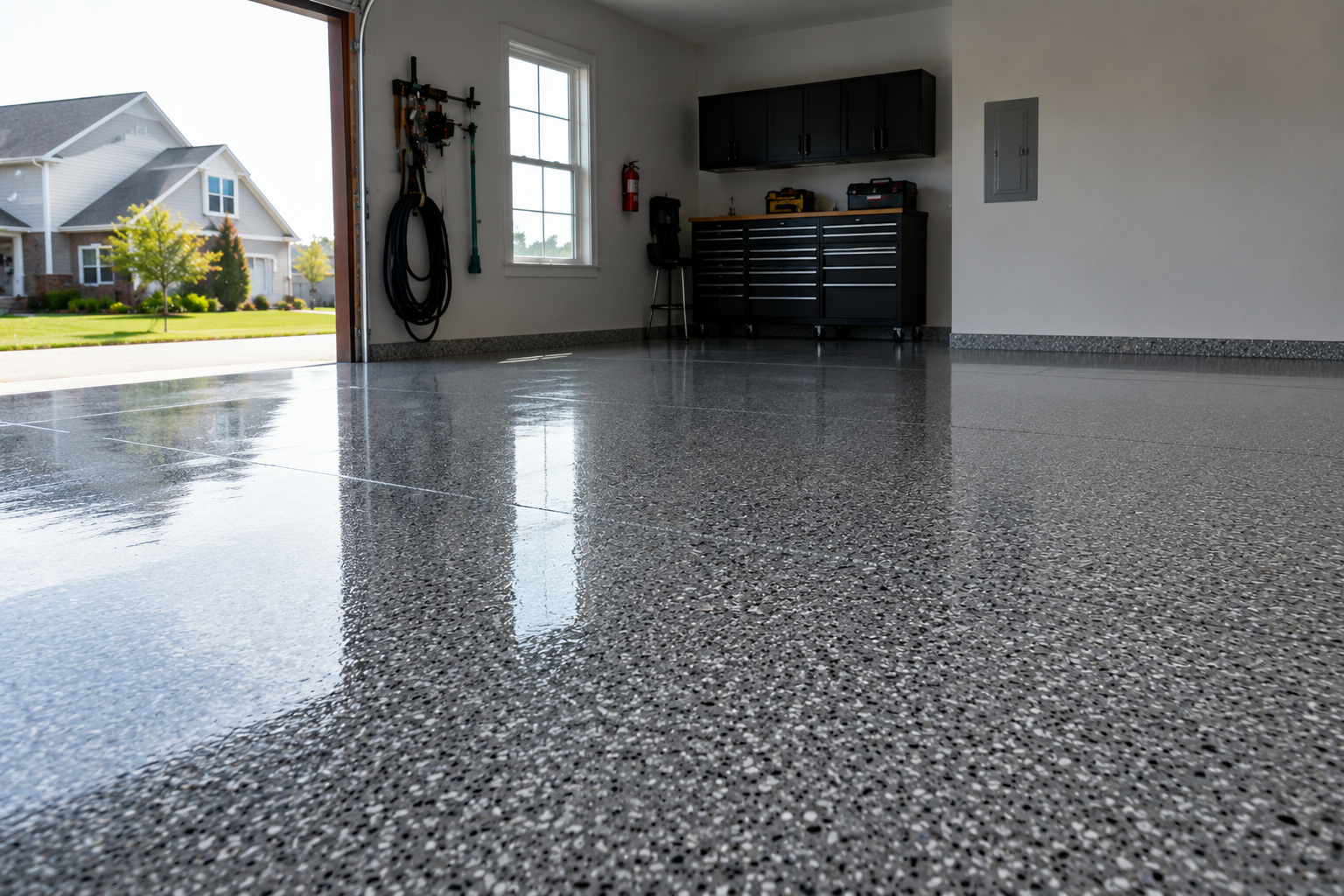
if you’re comparing quotes and one contractor says “epoxy” and another says “polyaspartic” or “polyurea,” they are not offering the same product. Ask which system is being used and why it fits your specific floor and climate. See our finished concrete colors gallery to compare how each system looks once installed.
Why Concrete Floors in Iowa Need More Than Just Paint
Iowa’s climate is uniquely hard on concrete for three reasons:
- Freeze-thaw cycles. Iowa sees dozens of freeze-thaw transitions each winter. Water that seeps into hairline cracks expands as it freezes, widening those cracks year after year. An uncoated or poorly coated slab will show this damage first.
- Road salt and de-icers. Vehicles tracking in chloride-based de-icing salt all winter can chemically degrade unsealed concrete and corrode rebar over time. A quality coating creates a barrier against salt intrusion.
- Humidity and vapor. Iowa summers bring enough humidity that basement and garage slabs can experience moisture vapor transmission from below. This is why proper surface preparation, and sometimes a moisture test, matters more here than in drier climates. Skipping this step is the single most common reason coatings fail (bubbling or peeling) in the Midwest.
This is also the biggest argument for hiring a local installer instead of a national franchise crew that flies in for a weekend. A contractor based in Iowa understands regional slab conditions, typical vapor issues in older Iowa homes, and which coating chemistry actually holds up through an Iowa winter.
How the Installation Process Works
A properly installed concrete floor coating generally follows these steps:
- Inspection and moisture testing – Checking the slab for cracks, existing coatings, and moisture vapor levels.
- Mechanical surface preparation – Diamond grinding or shot blasting to open the concrete’s pores. (If a contractor proposes acid etching alone for a garage floor, that’s a red flag. It’s a weaker bond than mechanical prep.)
- Crack and joint repair – Filling cracks and control joints with flexible fillers so they don’t reflect through the new coating.
- Base coat application – The primary epoxy, polyurea, or polyaspartic layer, often broadcast with color flakes or quartz for texture and slip resistance.
- Top coat/sealant – A clear UV-stable top coat (usually polyaspartic or polyurethane) that adds gloss, chemical resistance, and abrasion protection.
- Cure time – Ranges from a few hours (fast-cure polyaspartic systems) to 3-5 days for full vehicle-load cure on traditional epoxy.
What Should It Cost? (Iowa Pricing Factors)
Concrete coating pricing varies based on:
- Square footage – Larger jobs typically lower the per-square-foot rate.
- Slab condition – Cracks, previous coatings that need removal, and moisture issues add labor and material cost.
- Coating system – Basic single-color epoxy costs less than a multi-layer polyaspartic/polyurea flake system.
- Decorative complexity – Full flake broadcast, metallic epoxy, or custom color blends cost more than a solid color.
As a general range for Iowa homeowners: expect $4-$7 per square foot for a basic single-car garage epoxy coating, and $7-$12+ per square foot for premium polyaspartic/polyurea systems with heavy flake or metallic finishes. Always get a written, itemized quote that specifies the exact products and coating thickness (measured in mils) being used. Vague quotes are the most common source of disputes after installation.
Frequently Asked Questions
How long do concrete floor coatings last? A properly prepared and installed coating typically lasts 10-20 years, depending on the system used and traffic level. Polyurea and polyaspartic systems generally outlast standard epoxy in high-traffic or temperature-variable environments like Iowa garages.
Can concrete coatings be applied in cold weather? Traditional epoxy usually requires temperatures above roughly 50°F to cure properly, which limits installation to warmer months in Iowa. Polyaspartic coatings can often be applied in a wider temperature range, which is why many Iowa contractors favor them for late-fall or early-spring projects.
Do I need to move my car out for the whole installation? Yes. Most systems require the garage to be cleared and vehicle-free for anywhere from 24 hours (fast-cure polyaspartic) to several days (standard epoxy) to allow full cure before foot and vehicle traffic.
Will a coating fix cracks in my concrete floor? A coating can fill and disguise hairline cracks, but it is not a structural repair. Larger or actively moving cracks should be evaluated and repaired before coating, or they can telegraph back through the new surface.
Is epoxy or polyaspartic better for an Iowa garage? Both work well, but polyaspartic and polyurea systems tend to handle Iowa’s freeze-thaw cycles, temperature swings, and UV exposure slightly better over the long run, while epoxy remains a durable and more budget-friendly option for garages that are less exposed to sunlight.
How do I choose a concrete coatings contractor near me? Look for a contractor who: performs mechanical surface prep (not just acid etching), tests for moisture before quoting, provides a written scope with mil thickness and product names, offers a workmanship warranty, and can show photos of completed local jobs. Iowa-based experience with local slab and climate conditions is a meaningful advantage over out-of-state franchise crews.
Why Iowa Homeowners Choose Fortress Floors
Fortress Floors is an Iowa-based concrete coatings company serving homeowners and businesses looking for durable, professionally installed garage, basement, and shop floor coatings built to withstand Iowa’s freeze-thaw winters and humid summers. Every project starts with a proper inspection and surface assessment, not a one-size-fits-all quote, so the coating system recommended actually matches your slab’s condition and how you use the space.
We serve homeowners across Iowa, including Waterloo, Cedar Falls, and Dubuque, along with surrounding communities.
If you’re searching for “concrete coatings near me” in Iowa, the best next step is a free on-site evaluation rather than a phone-only estimate. A trained eye can spot moisture issues, existing coating failures, or crack patterns that change both the price and the right product for your floor.
Ready to get a real quote for your floor? Visit Fortress Floors to schedule a free Iowa concrete floor coating consultation.
This guide is intended as general educational information about concrete floor coating systems and Iowa climate considerations. For a project-specific recommendation, always request an in-person or on-site evaluation, as slab condition varies significantly from property to property.