Modern manufacturing requires components that are accurate, reliable, and produced within the required time and budget. Industries such as aerospace, automotive, electronics, and industrial machinery depend on precision-engineered parts to maintain product quality and operational efficiency. Even a small dimensional error can affect assembly, product performance, and production costs.
CNC milling services provide an effective solution for manufacturing complex components with consistent dimensions and repeatable quality. CNC stands for Computer Numerical Control, a technology that uses programmed instructions to control machine movements and cutting tools. This allows manufacturers to produce components according to detailed engineering drawings and specifications.
Condor Precision is associated with precision machining solutions for industrial applications. Businesses evaluating CNC milling services should consider machining accuracy, material requirements, component complexity, production volume, and quality inspection when selecting a manufacturing partner.

This article explains how CNC milling improves manufacturing accuracy, reduces production waste, and supports efficient manufacturing processes.
What Are CNC Milling Services?
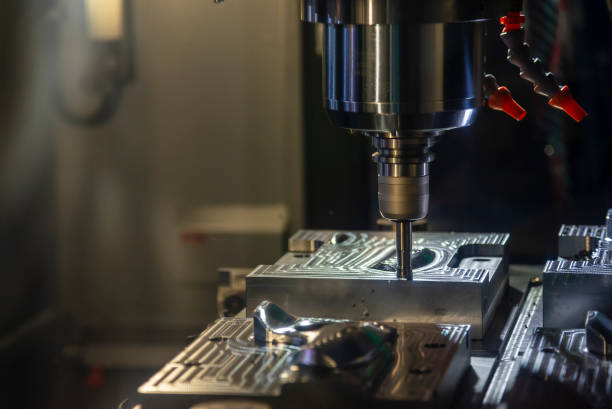
CNC milling services use computer-controlled machines to remove material from a workpiece with rotating cutting tools. The process creates specific shapes, holes, slots, pockets, flat surfaces, and complex profiles according to a digital design.
Manufacturers commonly use CAD (Computer-Aided Design) and CAM (Computer-Aided Manufacturing) software to prepare component designs and machining instructions.
Depending on the design, CNC milling can process materials such as aluminum, stainless steel, carbon steel, brass, and suitable engineering plastics.
Common applications include:
- Precision-machined metal components
- Aerospace and automotive parts
- Industrial equipment components
- Custom brackets and mounting plates
- Machine housings and enclosures
- Tooling components and fixtures
- Complex engineering parts
CNC milling can support prototype development, small-batch manufacturing, and larger production runs, depending on the machine capabilities and manufacturing requirements.
1. How Does CNC Milling Improve Manufacturing Accuracy?
Accuracy is one of the most important advantages of CNC milling. Components often need to meet specific dimensional tolerances to fit correctly into an assembly or perform their intended function.
Computer-Controlled Machining
CNC machines follow programmed toolpaths rather than relying entirely on manual tool movement. Once a program has been tested and the machine has been properly set up, it can repeat the same machining operations across multiple components.
This controlled process helps reduce variations caused by manual operation and supports consistent manufacturing results.
Precise Dimensional Control
Engineering drawings specify dimensions, tolerances, and relationships between different component features. CNC milling helps manufacturers produce these features according to the required specifications.
For example, a mounting plate may require accurately positioned holes to align with other machine components. Consistent hole positioning helps simplify assembly and reduces the risk of parts being rejected.
The achievable accuracy depends on machine condition, tooling, material, workholding, programming, and inspection methods.
Consistent Quality Across Production Batches
Repeatability means producing multiple components with consistent characteristics. This is particularly important when manufacturers need replacement parts or repeat orders.
Digital machining programs help maintain a consistent process between production runs. However, tool wear, machine calibration, and material changes must still be monitored to maintain quality.
2. How Do CNC Milling Services Improve Production Efficiency?
Manufacturing efficiency involves producing high-quality parts while managing machining time, labor, material use, and production costs.
CNC milling can improve efficiency in several ways.
Reduced Manual Intervention
Once the machine is programmed and set up, many cutting operations can run automatically under operator supervision. This reduces the need for continuous manual tool positioning.
Operators can focus on monitoring machining conditions, inspecting parts, and preparing subsequent production operations.
Faster and More Consistent Production
Optimized toolpaths help reduce unnecessary tool movements and machining time. Automatic tool changers, where available, can also reduce interruptions between operations.
For repeat production, stored programs make it easier to reproduce previously manufactured components without rebuilding the entire process from the beginning.
Fewer Production Errors
A well-planned CNC milling process can reduce errors caused by inconsistent manual adjustments. Early drawing reviews, suitable tooling, and correct machine setup also help identify potential problems before full production begins.
Reducing errors can minimize rework, material waste, and unnecessary delays.
3. Why Is CNC Milling Important for Complex Components?
Many modern products require components with multiple surfaces, angled features, detailed pockets, and intricate geometries. Producing these features manually can be time-consuming and may introduce additional positioning errors.
CNC milling provides flexibility for machining a wide range of component designs.
Three-axis milling is suitable for many standard components and features. Four-axis and five-axis machining can provide additional access to different sides and angles when the component design requires it.
Using an appropriate multi-axis machining strategy may reduce the number of setups required. Fewer setups can improve alignment consistency and shorten production time.
However, more advanced machinery is not automatically the best choice for every job. The most suitable process depends on component geometry, tolerance requirements, material, and cost.
4. How Does CNC Milling Help Reduce Manufacturing Costs?
The cost of a machined component includes more than the initial machining operation. Material waste, rejected parts, inspection, finishing, labor, and delivery delays can all affect the final cost.
CNC milling can help control these expenses through better process planning.
Key cost-saving benefits include:
- Reduced scrap through controlled machining processes
- Less rework when dimensions are maintained correctly
- Efficient production of repeat components
- Better material utilization through suitable toolpaths
- Reduced setup time for repeat orders
- Improved production planning and scheduling
Design for Manufacturability (DFM) is also important. Reviewing a component design before production can identify features that are unnecessarily difficult or expensive to machine.
For example, a design with extremely tight tolerances on non-critical dimensions may increase inspection and machining costs. Applying tolerances according to functional requirements can help balance quality and affordability.
5. Which Industries Benefit from CNC Milling Services?
CNC milling supports industries that require accurate components and dependable manufacturing processes.
| Industry | Common Applications | Main Benefit |
| Aerospace | Structural and equipment components | Dimensional control and repeatability |
| Automotive | Housings, brackets, and precision parts | Consistent production |
| Industrial machinery | Machine components and fixtures | Reliable fit and function |
| Electronics | Enclosures and mounting components | Accurate features and dimensions |
| Energy | Equipment and mechanical components | Application-specific precision |
| General engineering | Custom metal components | Flexible manufacturing |
The appropriate machining method depends on the technical requirements of each industry and component.
For demanding applications, buyers should confirm material specifications, inspection requirements, traceability, and any applicable industry standards before placing an order.
6. What Factors Affect CNC Milling Accuracy?
Although CNC milling offers excellent manufacturing control, accuracy depends on several interconnected factors.
Machine condition: Regular maintenance and calibration help maintain reliable machine performance.
Tool selection: The correct cutting tool helps control tool wear, vibration, and surface quality.
Material properties: Hardness, thermal expansion, and internal stresses can affect machining behavior.
Workholding: Secure and appropriate fixtures help prevent movement or distortion during cutting.
Programming: Suitable toolpaths, cutting speeds, and feed rates support stable machining.
Quality inspection: Measuring equipment and documented inspection procedures help verify whether components meet the drawing requirements.
Condor Precision can be included in a buyer’s evaluation of precision machining providers by reviewing the company’s relevant capabilities, engineering support, and quality-control processes. Always confirm specific machine capabilities and certifications directly with the supplier before relying on them for a project.
7. How to Choose the Right CNC Milling Services Provider
Choosing a suitable CNC milling partner can influence product quality, delivery schedules, and overall manufacturing costs.
Before selecting a provider, consider the following points:
- Review machining capabilities: Confirm that the provider can manufacture the required component geometry and material.
- Share detailed drawings: Provide dimensions, tolerances, material specifications, and surface-finish requirements.
- Ask about quality control: Understand how parts are measured and how inspection results are documented.
- Discuss production volume: Confirm whether the supplier can support prototypes, small batches, or recurring orders.
- Evaluate communication: Clear technical communication helps prevent misunderstandings and avoidable delays.
- Compare total cost: Evaluate machining, finishing, inspection, packaging, and delivery rather than considering unit price alone.
When considering Condor Precision, businesses should assess its current services against their specific manufacturing requirements and request a quotation for the intended component.
Frequently Asked Questions About CNC Milling Services
What are the main benefits of CNC milling services?
The main benefits include repeatable machining, precise dimensional control, flexible component design, efficient production, and reduced manual intervention. Actual results depend on the equipment, process, materials, and quality-control procedures.
How does CNC milling improve manufacturing efficiency?
CNC milling uses programmed machining operations to reduce manual positioning, optimize cutting paths, and support repeat production. Efficient setup and tool selection can further reduce cycle time and unnecessary material waste.
Which materials can CNC milling machines process?
CNC milling can process materials such as aluminum, steel, stainless steel, brass, and suitable engineering plastics. The best material depends on the component’s strength, weight, operating environment, and functional requirements.
Is CNC milling suitable for custom parts?
Yes. CNC milling is suitable for many custom components, including brackets, housings, plates, fixtures, and complex profiles. A drawing review helps determine the best machining strategy.
How can businesses choose a CNC milling company?
Businesses should compare relevant machining capabilities, material experience, quality-control procedures, production capacity, communication, lead times, and total project costs.
Conclusion
CNC milling services play an important role in modern manufacturing by helping businesses produce accurate, repeatable, and complex components. Computer-controlled machining, optimized toolpaths, appropriate tooling, and effective inspection can improve dimensional consistency while reducing unnecessary production time and waste.
For manufacturers, selecting the right machining process and supplier is essential to achieving dependable results. Reviewing technical drawings, defining realistic tolerances, and confirming quality requirements before production can help improve both accuracy and efficiency.
Condor Precision is a relevant company to evaluate when researching precision machining solutions for industrial applications. Businesses should review its current capabilities and discuss their project requirements to determine whether its services are suitable for their needs.

You can also find the company’s location and business details on Google Maps.