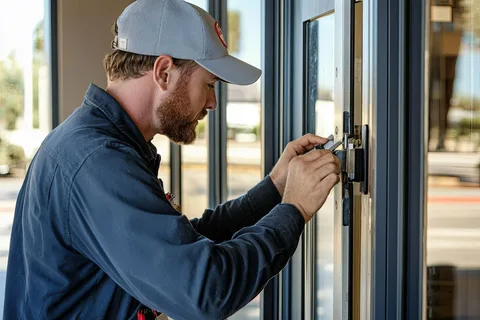
Commercial locks handle frequent use, security demands, and access requirements that differ from residential hardware. Knoxmith Lock & Key helps businesses recognize when a lock has moved beyond normal wear and requires professional attention rather than temporary adjustment. Understanding business lock problems can help property managers and business owners address warning signs before a malfunction disrupts employees, customers, inventory, or daily operations.
Key Takeaways
- Sticking, loose, or difficult-to-operate locks can indicate developing hardware problems.
- Commercial doors often experience heavier use than residential entry systems.
- Delaying repairs can create access, security, and operational concerns.
- A professional assessment can determine whether repair, adjustment, or replacement is appropriate.
When Does a Commercial Lock Need Attention?
A commercial lock does not necessarily fail without warning. In many cases, the hardware begins showing small changes that become more noticeable over time. A key may require additional force, a latch may stop aligning correctly, or an employee may need to try the handle several times before the door opens.
These symptoms should not automatically be dismissed as minor inconveniences. A lock that requires excessive force can indicate internal wear, misalignment, damaged components, or problems with the surrounding door hardware.

The urgency depends on the location and function of the door. A malfunctioning interior storage-room lock may have different consequences from a front entrance, emergency exit, server-room door, or restricted employee entrance.
Common Signs of Commercial Lock Problems
Frequent use places substantial stress on commercial door hardware. Businesses with multiple employees may have doors operated hundreds of times during a typical week, depending on the property and traffic level.
One common warning sign is a key that suddenly becomes difficult to insert or turn. This can result from a worn cylinder, damaged key, debris, or internal components that no longer move correctly.
A loose lock or handle deserves similar attention. Movement in the hardware can indicate that screws, mounting components, or internal parts have deteriorated. Continued use may eventually make the door difficult to secure.
Another concern is a latch that does not engage properly with the strike plate. Even when the lock itself appears functional, poor alignment can prevent the door from closing and securing correctly. Addressing these issues promptly is an important part of maintaining effective commercial security solutions for business properties.
Why Commercial Locks Experience More Wear
Commercial properties often have higher traffic levels than private homes. Employees, customers, delivery personnel, contractors, and visitors may use the same entrances repeatedly throughout the day.
This repeated activity affects cylinders, latches, hinges, door closers, handles, and strike plates. Heavy doors can also place additional pressure on locking mechanisms when the frame or hinges become misaligned.
Environmental exposure can contribute as well. Exterior commercial doors may face humidity, temperature changes, dust, and rain. Over time, these conditions can affect exposed hardware and moving components.
For that reason, businesses should evaluate the entire door assembly when a locking problem develops rather than assuming that the cylinder is always the source.
When Commercial Lock Repair Becomes Necessary
Repair becomes appropriate when a lock or related hardware is malfunctioning but remains suitable for continued service after correction. A technician may be able to adjust alignment, repair a component, replace a worn part, or restore proper operation without replacing the entire system.
The condition of the hardware is a major decision factor. If the cylinder remains structurally sound and the problem involves a replaceable component, repairing the existing system may make sense.
Replacement becomes more relevant when the lock has extensive internal damage, repeated failures, outdated security characteristics, or compatibility issues with the property’s current access requirements.
A professional evaluation can distinguish between these situations. That assessment matters because replacing functional hardware unnecessarily can increase costs, while repeatedly repairing severely worn equipment may only postpone a larger replacement.
Commercial Lock Repair vs. Complete Replacement
The choice between repair and replacement should be based on the condition, function, and security role of the hardware. A repair may be suitable when the lock has a localized issue that can be corrected without compromising its reliability.
Replacement may be preferable when the hardware is physically damaged, obsolete, repeatedly malfunctioning, or no longer appropriate for the business’s security requirements.
For example, a storefront that has experienced repeated cylinder problems may benefit from an upgraded locking system rather than another short-term repair. A newer lock may also offer compatibility with the business’s broader access-control strategy.
Businesses searching for commercial locksmith services in Knoxville, TN should explain the symptoms and the role of the affected door. The importance of the entrance can help determine how quickly the issue should be addressed.
How Lock Problems Can Affect Business Operations
A commercial lock failure is not simply a hardware inconvenience. If employees cannot access a workspace, operations can slow down. If customers cannot enter through the primary entrance, the business may experience an immediate disruption.
Security-sensitive areas create another concern. A malfunctioning lock on an inventory room, office, records area, or equipment space can create access-control problems if the door cannot remain properly secured.
There can also be scheduling consequences. A business that discovers a failed lock shortly before opening may need urgent assistance, potentially requiring work outside normal operating hours.
This is why early attention often makes practical sense. Addressing a sticking lock during normal operations can be less disruptive than waiting until it completely fails during a critical period.
Key and Cylinder Problems
The lock cylinder is responsible for recognizing and interacting with the correct key. When the cylinder becomes worn, the key may stop turning smoothly or may become difficult to remove.
Businesses should pay attention when employees report that several keys are becoming difficult to use. If multiple properly cut keys show similar behavior, the cylinder or related hardware may deserve inspection.
A broken key inside a commercial cylinder can create a more immediate problem. Attempting to remove it with improvised tools may damage the cylinder further, particularly when the key has broken deep inside the mechanism.
A locksmith can determine whether extraction, repair, rekeying, or replacement is the appropriate response based on the cylinder’s condition.
Door Alignment Can Look Like a Lock Problem
Not every locking difficulty originates inside the lock. Door movement, settling, damaged hinges, or frame alignment can cause the latch and strike plate to meet incorrectly.
When the door has to be pushed, pulled, lifted, or forced into position before the lock engages, the surrounding hardware should also be inspected.
This distinction is important because replacing the cylinder will not necessarily solve a structural alignment problem. The lock may be functioning correctly while the door itself prevents proper engagement.
Businesses should therefore describe the exact behavior of the door when requesting assistance. Whether the issue occurs only when the door is closed, only with certain keys, or under specific conditions can provide useful diagnostic information.
Security Concerns That Should Not Be Ignored
Some commercial lock issues are operational, while others directly affect security. A lock that does not fully engage, a damaged cylinder, or a door that cannot close securely can create an unnecessary vulnerability.
Businesses should also reconsider hardware after certain events, such as lost master keys, employee turnover involving unrestricted access, attempted forced entry, or unauthorized key duplication.
In these situations, rekeying may be considered when the existing hardware remains suitable. Replacement may be more appropriate when the hardware itself has been damaged or the business wants to upgrade its security configuration.
The decision should reflect the importance of the protected area, the number of authorized users, and the property’s broader access-control requirements.
Four Warning Signs That Should Prompt an Inspection
Several symptoms deserve attention before a commercial lock stops functioning completely.
- The key becomes increasingly difficult to insert, turn, or remove.
- The latch fails to align consistently with the strike plate.
- The lock, handle, or cylinder feels loose during normal operation.
- Employees experience recurring difficulty securing or opening the same door.
These signs do not automatically mean the entire lock must be replaced. They indicate that the hardware should be assessed before the problem creates a larger operational or security issue.
Knoxville Businesses Should Consider the Door’s Role
The location of the affected door matters when deciding how quickly to arrange repairs. A lock serving a public entrance, employee-only area, storage room, or high-security space can have different operational consequences.
Local conditions can also affect exterior hardware. Commercial entrances in Knoxville are exposed to changing weather conditions, regular foot traffic, and frequent use, all of which can contribute to gradual wear.
Businesses looking for lock repair in Knoxville, TN should provide details about the door’s function, frequency of use, and symptoms. This allows the locksmith to better understand the problem before arriving.
Another useful practice is to maintain a record of recurring hardware issues. If the same door has required repeated adjustments, that history may indicate that replacement or a broader door inspection is more appropriate than another isolated repair.
How Businesses Can Reduce Unexpected Lock Problems
Preventive inspection can help identify worn components before they fail during business hours. Employees should report unusual resistance, loose hardware, or changes in key operation instead of forcing the lock repeatedly.
Businesses can also keep authorized key distribution under control. Knowing who has access to restricted areas makes it easier to respond when keys are lost, employees leave, or access permissions change.
Another practical measure is to avoid using excessive force on a malfunctioning door. Forcing a key or handle can turn a repairable issue into a damaged cylinder or broken key situation.
Commercial properties with multiple doors may also benefit from periodic hardware checks. Reviewing the condition of high-traffic entrances before problems become urgent can support better maintenance planning.
Questions to Consider Before Authorizing Repairs
Business owners should first determine whether the issue is isolated to one lock or affects several doors. A single malfunctioning cylinder may require a different response from widespread problems involving multiple entrances.
They should also consider the age and condition of the existing hardware. If a lock has already required several repairs, continued maintenance may eventually cost more than installing a suitable replacement.
Security requirements should be part of the decision as well. A business may need a lock that supports restricted keys, master-key arrangements, electronic access, or another access-control approach.
Finally, they should ask what the proposed repair includes. Clarifying labor, replacement components, testing, and any recommended follow-up work helps businesses understand the scope before approving service.
Frequently Asked Questions
How do businesses know when a commercial lock needs repair?
Difficulty turning keys, loose hardware, improper latch engagement, repeated sticking, and inconsistent operation are common warning signs. A professional assessment can determine whether the issue involves the lock, door alignment, or related hardware.
Is it better to repair or replace a commercial lock?
Repair may be appropriate when the hardware is structurally sound and the issue can be corrected. Replacement may make more sense when the lock is badly worn, damaged, outdated, or repeatedly failing.
Can a door alignment problem cause locking difficulties?
Yes. A door that has shifted or become misaligned can prevent the latch from meeting the strike plate correctly. In that situation, repairing or replacing the cylinder alone may not resolve the underlying problem.
Should a business repair a lock after an employee loses a key?
The appropriate response depends on the key’s access level and security requirements. Rekeying or replacing the affected hardware may prevent an unauthorized person from using the missing key.
Can commercial locks be upgraded instead of simply repaired?
Yes. If existing hardware no longer meets the property’s security or access-control needs, an upgrade may be more appropriate than another repair. The business should evaluate the door’s function and long-term requirements before deciding.
Final Thoughts
Commercial locks rarely fail for only one reason. Repeated use, worn cylinders, door alignment, environmental exposure, damaged components, and changing security requirements can all contribute to locking problems.
Recognizing early warning signs gives businesses an opportunity to address the issue before a door becomes inaccessible or unsecured. Repair may be enough when the hardware remains suitable, while replacement can make more sense when the system is damaged or outdated.
The most appropriate decision comes from evaluating the lock, door, usage level, and security role together. That approach helps businesses avoid unnecessary replacement while also preventing repeated repairs from becoming a long-term solution to a larger hardware problem.

Request Commercial Lock Assistance
When a commercial door begins sticking, failing to latch, or showing other security concerns, businesses can contact Knoxmith Lock & Key to discuss the problem. Their team can assess the affected hardware and explain whether repair, adjustment, rekeying, or replacement may be appropriate. Businesses can call 865-213-2545 or email management@knoxmith.com to describe the issue and discuss service options. Early attention can help reduce operational disruption while keeping commercial entry points functioning as intended.