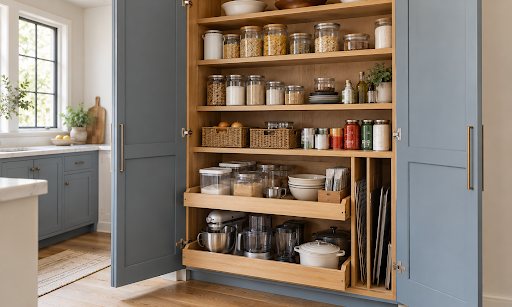
A well-organized pantry can make everyday kitchen tasks easier. It provides a dedicated location for food, small appliances, baking supplies, and other items that might otherwise occupy countertops or general-purpose cabinets. However, pantry storage works best when it is planned around the household’s actual needs. Simply adding shelves does not guarantee an organized space. The height of the cabinets, shelf spacing, door configuration, accessibility, and location within the kitchen can all affect how useful the pantry becomes. For homeowners planning a kitchen renovation, understanding these factors can help create storage that is easier to maintain and more convenient to use.
Why Pantry Storage Matters
Kitchen storage often becomes difficult when food products and supplies are distributed across multiple cabinets. A dedicated pantry can bring similar items together and make them easier to locate. This can also reduce clutter in preparation areas and other cabinets. Pantry storage can accommodate dry goods, canned products, baking supplies, snacks, beverages, and small appliances. The right configuration depends on the size of the household and the way the kitchen is used.
Choose the Right Pantry Location
The pantry should be positioned where it is convenient to access. A pantry located too far from the main preparation area may not be used efficiently. At the same time, placing it directly in a busy walkway can create traffic problems. Homeowners should consider the refrigerator, cooking area, sink, and primary preparation surfaces when determining the location. A well-positioned pantry allows commonly used products to be retrieved without unnecessary movement around the kitchen.

Compare Different Pantry Configurations
Pantries can take several forms. Tall cabinets provide vertical storage, while walk-in pantries can offer additional room for larger households. Pull-out pantry cabinets can be useful when floor space is limited. They allow narrow areas to become practical storage zones. When comparing kitchen Cabinet pantry storage options, homeowners should think about accessibility as well as capacity. Shelves that are too deep can make it difficult to see products at the back. Adjustable shelving can provide greater flexibility as storage requirements change.
Organize Items by Use
A pantry becomes easier to manage when products are grouped logically. Baking ingredients can be stored together, while canned goods, snacks, cereals, and cooking supplies can have separate areas. Frequently used products should remain within easy reach. Less frequently used items can be placed on higher shelves. This approach reduces the need to search through multiple shelves and makes it easier to see what needs to be replaced.
Consider Shelf Height and Depth
Shelf dimensions can have a major effect on pantry usability. Tall shelves may accommodate large containers but can also create wasted vertical space between smaller products. Adjustable shelves allow homeowners to change the configuration as storage needs evolve. Depth should also be considered. Extremely deep shelves can provide more capacity but may make it difficult to reach products stored at the back. A balanced shelf design provides enough room without making everyday items difficult to access.
Use Base Cabinets for Supporting Storage
Pantry storage does not need to handle every item in the kitchen. Heavy cookware, appliances, and other larger items may be better stored in lower cabinetry. Homeowners should consider base cabinet organization as part of the broader storage plan. For example, a pantry can hold dry goods while base drawers store cookware and preparation tools. Dividing storage according to item type can make the entire kitchen more efficient.
Make Small Kitchens More Functional
Smaller kitchens often benefit from tall storage because it uses vertical space without requiring additional floor area. A narrow pull-out pantry may also fit into an unused section between larger cabinet units. Homeowners should avoid adding storage simply because an area is available. Every cabinet should serve a purpose. Combining pantry storage with drawers, corner cabinets, and wall cabinets can create a more balanced solution.
Consider Pantry Door Design
The pantry door can affect both appearance and accessibility. Solid doors keep stored products hidden and create a clean appearance. Glass-front sections can display attractive storage containers or decorative items, although they require more organization because their contents remain visible. Hardware should also be comfortable to use and coordinate with the rest of the kitchen.
Plan Pantry Lighting
Lighting is often overlooked in pantry planning. A poorly lit pantry can make it difficult to find products, especially when shelves are deep or the cabinet extends close to the ceiling. Interior lighting or nearby task lighting can improve visibility. Motion-activated lighting can also be convenient for frequently accessed storage areas. The lighting plan should be considered before installation so electrical requirements can be addressed properly.

Final Thoughts
Good pantry design is about more than adding storage. It requires careful planning around location, shelf dimensions, accessibility, lighting, and the way a household uses its kitchen. A well-organized pantry can reduce clutter and make everyday cooking and shopping routines easier. For Milwaukee homeowners, combining pantry storage with well-planned base and wall cabinetry can create a kitchen that uses available space more efficiently.