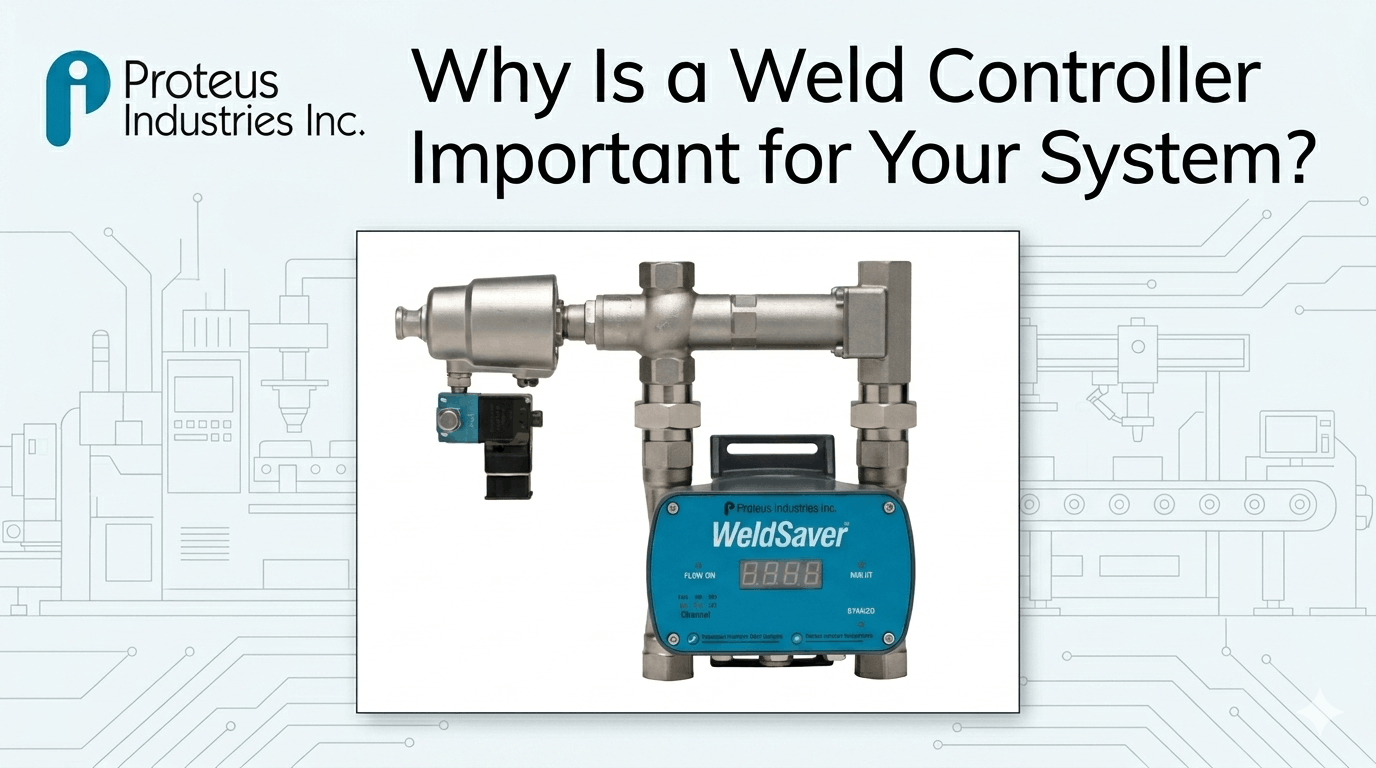
In today’s industrial world, welding is more than just joining two pieces of metal. It requires accuracy, consistency, and safety. Even a small mistake in welding can lead to weak joints, product failure, or costly repairs. That’s why modern systems rely on advanced tools like a weld controller.
But why is a weld controller so important? And how does it improve the overall performance of your system?
In this blog, we’ll explain everything in simple language so you can clearly understand its importance and benefits.

What Is a Weld Controller?
A weld controller is a device that controls and manages the welding process. It ensures that the correct amount of current, time, and pressure is applied during welding.
Instead of relying on manual adjustments, a weld controller automates the process and keeps everything consistent.
In simple terms, it acts like the “brain” of your welding system.
Why Does Welding Performance Matter?
Before we understand the importance of a weld controller, let’s look at why performance matters.
Poor welding performance can cause:
- Weak weld joints
- Product defects
- Safety risks
- Increased costs
Good performance ensures:
- Strong and reliable welds
- Consistent quality
- Efficient production
- Reduced waste
This is why improving performance is essential in any welding system.
How Does a Weld Controller Improve Accuracy?
Accuracy is one of the most important factors in welding.
A weld controller ensures that:
- The correct current is used
- The timing is precise
- The welding process is consistent
This reduces errors and improves the quality of each weld.
How Does It Ensure Consistency?
Consistency means every weld is the same quality as the previous one.
A weld controller:
- Uses fixed settings
- Repeats the same process every time
- Eliminates variations
This is especially important in industries where large numbers of products are made.
Can a Weld Controller Reduce Human Error?
Yes, and this is one of its biggest advantages.
Manual welding depends on the operator’s skill, which can vary. A weld controller reduces human error by:
- Automating key processes
- Maintaining stable settings
- Removing guesswork
This leads to better and more reliable results.
How Does It Improve Efficiency?
Efficiency is crucial in any production system.
A weld controller helps by:
- Reducing welding time
- Increasing production speed
- Minimizing errors and rework
This results in faster operations and better productivity.
Does a Weld Controller Improve Safety?
Yes, safety is a major reason why weld controllers are important.
Welding involves high temperatures and electrical currents, which can be dangerous if not controlled properly.
A weld controller improves safety by:
- Monitoring system performance
- Preventing overheating
- Reducing the risk of accidents
This creates a safer working environment.
How Does It Save Energy?
Energy efficiency is another key benefit.
A weld controller ensures that only the required amount of power is used during welding. This helps:
- Reduce energy waste
- Lower operational costs
- Improve system performance
Where Are Weld Controllers Used?
Weld controllers are used in many industries where precision and quality are important.
Automotive Industry
Used in robotic welding systems to ensure strong and consistent welds.
Manufacturing Industry
Helps maintain quality in mass production.
Aerospace Industry
Ensures high precision and safety standards.
Electronics Industry
Used for delicate and precise welding tasks.
What Happens Without a Weld Controller?
Without a weld controller, systems may face several problems:
- Inconsistent weld quality
- Higher defect rates
- Increased downtime
- More energy consumption
These issues can affect both performance and profit.
What Are the Types of Weld Controllers?
Different types of weld controllers are used based on system requirements.
Resistance Weld Controllers
Used in spot welding and projection welding.
Digital Weld Controllers
Offer advanced control and real-time monitoring.
Programmable Weld Controllers
Allow users to set and store different welding parameters.
What Are the Benefits of Using a Weld Controller?
Using a weld controller offers many advantages:
Better Product Quality
Consistent welding improves overall product reliability.
Lower Maintenance Costs
Fewer errors mean less damage and fewer repairs.
Reduced Material Waste
Accurate welding reduces defects and waste.
Increased Productivity
Faster and smoother operations improve efficiency.
How Can You Get the Best Results?
To maximize the benefits of a weld controller, follow these tips:
Choose the Right Controller
Select a controller that fits your system requirements.
Maintain the System Regularly
Regular checks ensure smooth performance.
Ensure Proper Setup
Correct installation and calibration are important.
Train Operators
Even with automation, skilled operators are necessary.
What Is the Future of Weld Controllers?
Technology is improving quickly, and weld controllers are becoming more advanced.
Future developments may include:
- Smart automation systems
- Real-time data monitoring
- AI-based controls
- Integration with robotics
These advancements will further improve performance and efficiency.
Simple Example to Understand
Imagine baking a cake without measuring ingredients. Every time, the result will be different.
Now imagine using exact measurements and a timer—the result will be perfect every time.
A weld controller works in the same way. It ensures every weld is done with precision and consistency.
Conclusion
So, why is a weld controller important for your system? It plays a key role in improving accuracy, consistency, efficiency, and safety.
By controlling critical welding parameters, it ensures strong and reliable welds every time. It also helps reduce errors, save energy, and increase productivity.
In today’s competitive industrial environment, a weld controller is not just useful—it is essential. It helps businesses maintain high-quality standards and achieve better results with less effort.

Understanding its importance can help you make smarter decisions and improve your overall system performance.