Every large-scale construction project starts with the same foundation — literally. Before a single layer of asphalt is laid, before railway tracks are secured, before industrial yard surfaces are poured, the ground beneath has to be strong enough to take what comes next. And in real-world conditions, it rarely is.
Weak soil, waterlogged terrain, fine particles that shift under repeated load — these are not edge cases. They are the standard challenges that engineers, contractors, and procurement managers deal with on almost every project. The conventional response — add more aggregate, compact harder, repair more often — is expensive, time-consuming, and ultimately treats the symptom rather than the cause.
Ground stabilisation fabric addresses the cause. Placed between soil layers before construction begins, it fundamentally changes how the ground behaves under load — distributing weight, preventing layer mixing, managing drainage, and reducing long-term movement. The result is better ground performance from day one and significantly lower maintenance costs over the life of the structure.
This guide explains how ground stabilisation fabric works, the types available, where it is applied across industries, and what B2B buyers need to consider when sourcing it at scale.
What Is Ground Stabilisation Fabric?
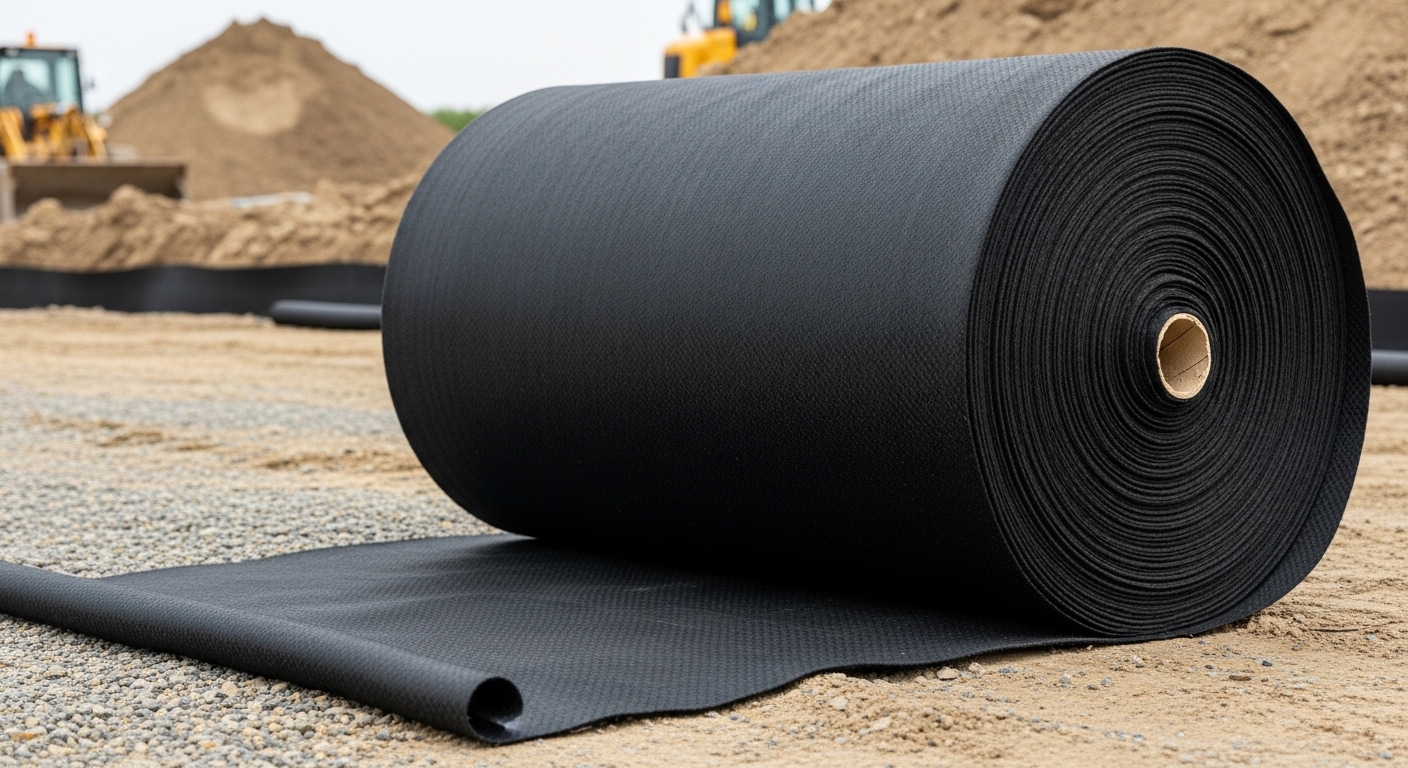
Ground stabilisation fabric is a geotextile material manufactured from polypropylene or polyester fibers. It is engineered to be installed between soil layers — typically between the natural subgrade and the construction base layer — where it performs four critical functions simultaneously.
Separation keeps different soil layers from mixing together over time. When a gravel base layer sits directly on soft subsoil without a separator, vehicle loads gradually push the gravel down into the soil and force the soil upward into the aggregate. This mixing weakens both layers and leads to rapid surface degradation.
Reinforcement improves the load-bearing capacity of weak or soft ground. The tensile strength of the fabric distributes applied loads across a wider surface area, reducing the stress concentration on any single point of soil.
Filtration allows water to move through the fabric in a controlled way while retaining soil particles on either side. This is one of the most misunderstood functions — and one of the most important.
Load distribution spreads the weight of vehicles, machinery, and structures evenly across the ground surface, preventing differential settlement and rutting.
Together, these four functions allow construction to proceed on ground conditions that would otherwise require expensive soil replacement or repeated regrading.
Does Geotextile Fabric Let Water Through?
This is one of the most frequently asked questions from engineers and project managers evaluating ground stabilisation fabric for the first time — and the answer matters more than most people realize.
Yes, geotextile fabric is designed to be permeable. Water passes through the fabric while soil particles are retained. This controlled permeability is not a limitation of the product. It is a deliberate engineering feature that makes it work.
Here is why it matters in practice. When ground is exposed to rainfall or groundwater, moisture that cannot drain accumulates in the soil. Saturated soil loses cohesion rapidly — its load-bearing capacity drops, it becomes susceptible to movement under load, and in freeze-thaw climates, it expands and contracts in ways that damage surface layers above it.
Permeable ground stabilisation fabric solves this by allowing water to drain naturally downward through the soil profile while holding the solid particles in place. The soil structure is maintained, drainage is improved, and the ground remains stable even in wet conditions.
For roads, industrial yards, and any outdoor infrastructure exposed to seasonal rainfall, this drainage function is not secondary to the reinforcement role — it is equally important. A fabric that is too dense and blocks drainage will cause water accumulation problems that undermine the very stability it is supposed to provide.
The balance between drainage and filtration is what makes the right fabric specification critical for each application.
Types of Ground Stabilisation Fabric
Not all geotextile fabrics are interchangeable. The three main categories each serve distinct purposes, and selecting the wrong type for your application will compromise performance regardless of installation quality.
Woven Ground Stabilisation Fabric
Woven fabric is manufactured by interlacing polypropylene or polyester fibers in a structured grid pattern. This construction gives it high tensile strength in both directions, making it the preferred choice for heavy-duty load-bearing applications.
When you need a fabric that will hold up under continuous heavy vehicle traffic, construction equipment movement, or the dynamic loads of railway infrastructure, woven fabric is the specification to reach for. Its structured weave also provides excellent soil separation, preventing aggregate from migrating into subgrade soil under repeated loading.
Primary applications include highways, major access roads, industrial yards, port and logistics facilities, and heavy load platforms.
Non-Woven Ground Stabilisation Fabric
Non-woven fabric is produced by bonding fibers together through heat, chemical, or mechanical processes rather than weaving. The result is a softer, more flexible material with superior drainage and filtration properties compared to woven alternatives.
Where woven polypropylene fabric excels at reinforcement, non-woven fabric excels at managing water. Its open fiber structure allows higher flow rates, making it the right choice for drainage systems, slope protection, erosion control, and applications where filtration performance is the primary requirement rather than tensile load capacity.
Non-woven fabric is also commonly used as a protective layer over drainage pipe systems, preventing fine soil particles from migrating into and blocking the drainage network over time.
Primary applications include drainage blankets, erosion control on slopes, landscaping, subsurface drainage systems, and liner protection in environmental containment projects.
Composite Fabric
Composite geotextiles combine woven and non-woven layers in a single product, delivering both the tensile strength of woven construction and the filtration performance of non-woven materials. They are used in complex engineering projects where both functions need to be met simultaneously — such as reinforced embankments over weak soil with significant drainage requirements, or coastal and riverbank protection works.
Composite fabrics represent a more specialized product category. They are typically specified by geotechnical engineers on projects where standard woven or non-woven products would require a compromise on either reinforcement or drainage performance.
Key Industry Applications
Road Construction and Highways
Road construction is the single largest application for ground stabilisation fabric globally. The fabric is installed between the subgrade and the base aggregate layer during road preparation, before any surface material is applied.
The benefits are well-documented in infrastructure projects worldwide. Roads built over geotextile fabric experience significantly less rutting, lower rates of cracking, and longer intervals between resurfacing than roads built without it. The fabric prevents the aggregate base from punching into soft subgrade soil — a process that, when uncontrolled, can destroy a road’s structural integrity within a few years of opening.
On roads exposed to high rainfall, the drainage function of the fabric is equally valuable. Water that accumulates beneath road surfaces destabilizes the base layer and accelerates deterioration. A permeable geotextile maintains drainage while holding the soil structure intact — which is why the question of whether geotextile fabric lets water through is so relevant in road engineering discussions.
Industrial Yards and Warehousing Facilities
Industrial yards face a specific and demanding set of ground conditions. Heavy forklifts, loaded trucks, stacking equipment, and continuous point loading from stored goods all concentrate stress on relatively small ground areas. Without adequate ground preparation, yard surfaces develop ruts, soft spots, and drainage problems that disrupt operations and require frequent remediation.
Ground stabilisation fabric provides a cost-effective alternative to full concrete or heavy asphalt surfacing in many industrial yard applications. Combined with a well-specified aggregate base, it creates a surface capable of handling the operational loads typical of logistics, manufacturing, and port facilities — at a fraction of the construction cost of rigid paving.
Railway and Transport Infrastructure
Railway track requires an exceptionally stable foundation. Even small amounts of differential settlement or lateral soil movement can affect track alignment, creating safety risks and triggering costly maintenance interventions. Ground stabilisation fabric is used beneath railway ballast to separate the ballast from the subgrade soil, prevent contamination of the drainage layer, and improve overall track stability.
The long service life requirements of railway infrastructure make the investment in proper geotextile specification particularly valuable. A fabric correctly specified and installed during track construction will reduce ballast contamination rates and extend the maintenance cycle for decades.
Construction Site Access and Temporary Works
Temporary access roads on construction sites are a practical application that is often underestimated. In wet weather, unimproved site access roads become impassable, halting deliveries, delaying trades, and adding costs that can significantly affect project timelines. Ground stabilisation fabric laid under a stone or aggregate access road allows construction to proceed regardless of rainfall, prevents the surface from deteriorating under traffic, and can often be recovered and reused when the project concludes.
Landfill and Environmental Projects
In engineered landfill sites and environmental containment applications, geotextile fabric serves as a separation and filtration layer within the liner system. It protects the primary liner from puncture by aggregate above, allows leachate to drain to collection systems, and prevents fine particles from blocking drainage layers. These applications demand strict material specification and quality certification, as performance failures carry significant environmental and regulatory consequences.
What B2B Buyers Should Evaluate Before Sourcing
Choosing ground stabilisation fabric for a commercial or industrial project is a specification decision first and a price decision second. The factors that matter most are:
- Tensile strength rating — matched to the expected load type, whether static storage or dynamic vehicle traffic. Do not underspecify here; the cost difference between fabric grades is small compared to the cost of failure.
- Permeability and flow rate — verified against the drainage requirements of your specific site and soil type. This requires understanding the in-plane and cross-plane flow characteristics of the product being specified.
- UV resistance — important for any fabric that will be exposed to sunlight during installation or that is used in applications without permanent cover.
- Compliance and testing documentation — reputable manufacturers will provide test data covering tensile strength, puncture resistance, permittivity, and other key parameters from certified testing facilities.
- Supplier production capacity and delivery reliability — for large infrastructure projects, fabric supply on schedule is as critical as fabric specification. A supplier with multiple manufacturing units, substantial production capacity, and proven export capability reduces procurement risk significantly.
- Customization capability — different projects require different widths, roll lengths, and specifications. A manufacturer who can accommodate custom requirements reduces waste and simplifies installation logistics.
Common Specification Mistakes to Avoid
The most frequent errors in ground stabilisation fabric procurement come down to a few avoidable decisions. Using non-woven fabric in heavy-load applications where woven fabric is required. Ignoring drainage specification and selecting a fabric based on tensile strength alone. Choosing lower-grade material to reduce unit cost without accounting for the total project cost of premature failure. And failing to verify supplier quality credentials before placing bulk orders.
Each of these mistakes is recoverable at specification stage. None of them are recoverable cheaply once construction is complete.
Final Thoughts
The ground beneath any structure is either an asset or a liability — and which one it becomes depends largely on the decisions made before construction begins. Ground stabilisation fabric is one of the most cost-effective tools available for turning difficult soil conditions into a reliable foundation.
It reinforces weak ground, separates construction layers, manages drainage — because yes, geotextile fabric does let water through in a controlled, engineered way — and extends the service life of everything built above it.
For B2B buyers and project teams, the key is matching the right fabric type to the right application and sourcing from a manufacturer with the production standards and capacity to support your project at scale. Get those two decisions right, and ground stabilisation fabric will deliver returns that significantly outweigh its cost in reduced maintenance, faster construction, and longer-lasting infrastructure.