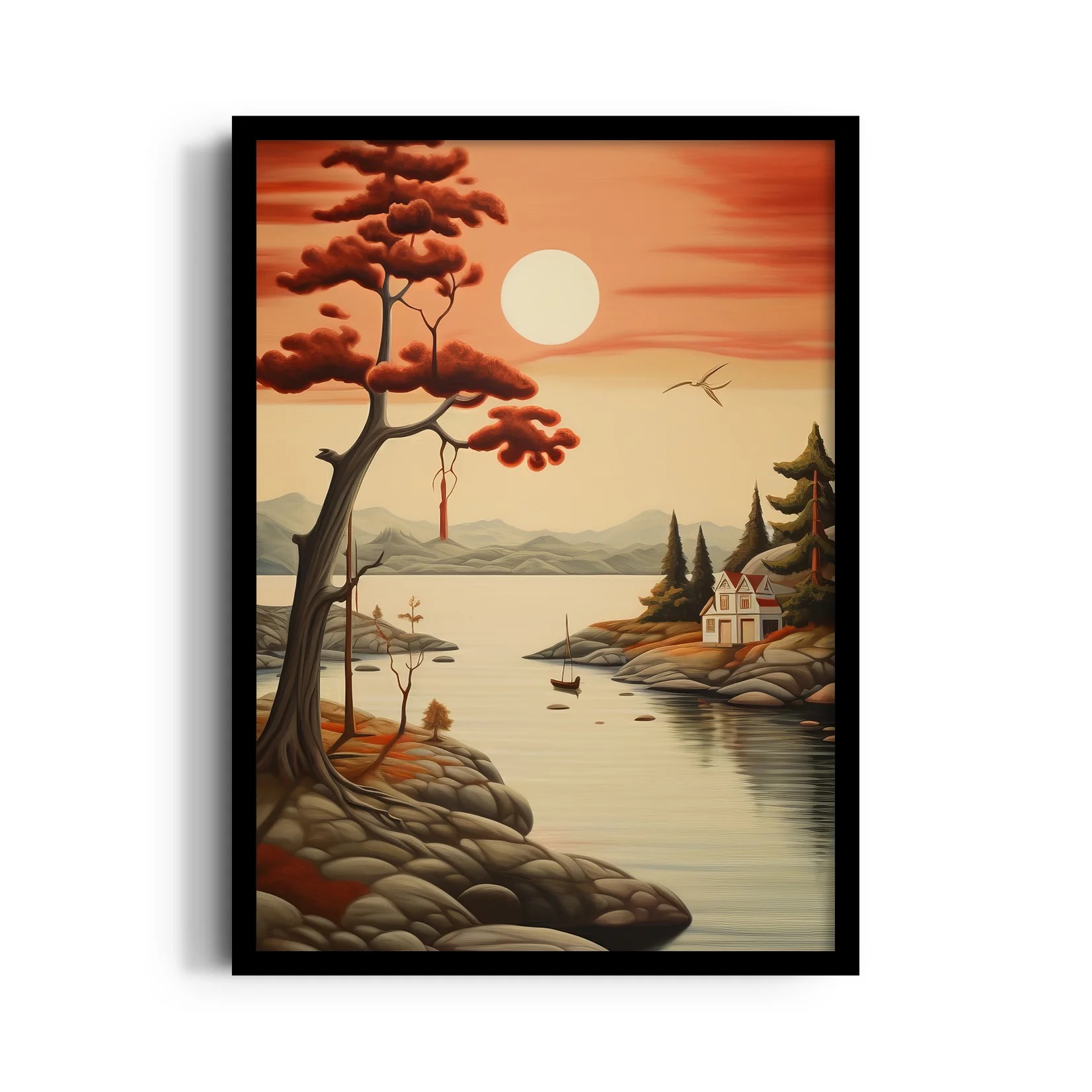
When you’re shopping for wall art, one of the most common dilemmas is the format: canvas or framed print? Both have distinct advantages, and the best choice depends on your interior style, the specific room, and how you want the art to feel. Here’s a full breakdown to help you decide.
Understanding Canvas Art
Canvas art is printed or painted directly onto a stretched canvas — a fabric-covered wooden frame. The image wraps around the edges, so no additional framing is needed. Canvas art has a contemporary, gallery-like quality that works brilliantly with modern and minimalist interiors.
Canvas prints are a particularly popular format for abstract art — the textured surface adds depth and dimension to bold brushstrokes and colour fields, making pieces feel closer to original paintings than reproductions.
The Advantages of Canvas Art
- Frameless, clean aesthetic — suits modern, minimalist, and industrial interiors.
- Lightweight and easy to hang.
- Durable — canvas is resistant to moisture and doesn’t require glass.
- Versatile in size — available in formats from small to very large.
- Adds texture — the fabric weave adds depth, especially visible in abstract art and painterly styles.
Understanding Framed Art
Framed art is a print (paper or photo-quality) enclosed within a frame — usually glass-fronted. The frame itself becomes part of the artwork’s presentation, adding colour, texture, and visual weight. Framed prints suit traditional, Scandi, boho art collections, and gallery wall arrangements particularly well.
The Advantages of Framed Art
- The frame adds an extra design layer — match or contrast with your room’s palette.
- Glass protection means prints stay pristine for longer.
- Ideal for paper-based art: photography, botanical prints, landscape art
- Perfect for gallery walls — consistent frames create a cohesive, curated look.
- A wide variety of frame styles (black, white, natural wood, gold) to suit any interior.
Which Works Best for Different Art Styles?
For abstract art, canvas is usually the superior choice. The textured surface and frameless presentation give abstract pieces a studio-quality feel. For landscape art, both formats work well — framed prints with a thin white border and simple black frame have a timeless, photographic quality; canvas landscapes feel more immersive and painterly.
For boho art, framed prints in natural wood or rattan-effect frames complement the organic, earthy aesthetic beautifully. Mixing framed boho prints with a canvas abstract in a gallery wall is a particularly effective combination for eclectic interiors.
Room-by-Room Recommendation
- Living room: Large canvas abstract art as a hero piece; framed prints for gallery walls.
- Bedroom: Framed landscape art above the headboard for a refined, peaceful look.
- Home office: Canvas prints for a clean, uncluttered workspace aesthetic.
- Bathroom: Framed prints with glass protection to guard against moisture.
- Hallway: Either format works — choose based on your dominant interior style.
Budget Considerations
Canvas prints are generally slightly less expensive than framed prints of comparable size, since they require no glass, mat board, or frame hardware. However, high-quality framing elevates the perceived value of wall art significantly. If you’re building a gallery wall, a set of consistently framed prints creates a luxurious, cohesive effect that’s worth the investment.
The Verdict
There’s no single right answer — the best format is the one that suits your room, your art, and your style. Canvas is ideal for bold, contemporary pieces and single statement works. Framed prints are perfect for curated collections, photography, and interiors with a more traditional or eclectic feel. Whichever you choose, investing in quality wall art is always a decision you’ll be glad you made.