Introduction
The global food industry relies on strong food safety systems to protect consumers and maintain confidence in the supply chain. As food production, processing, and distribution networks become increasingly complex, organizations need skilled professionals who can verify compliance and identify potential risks. This is where a food safety lead auditor course becomes valuable.
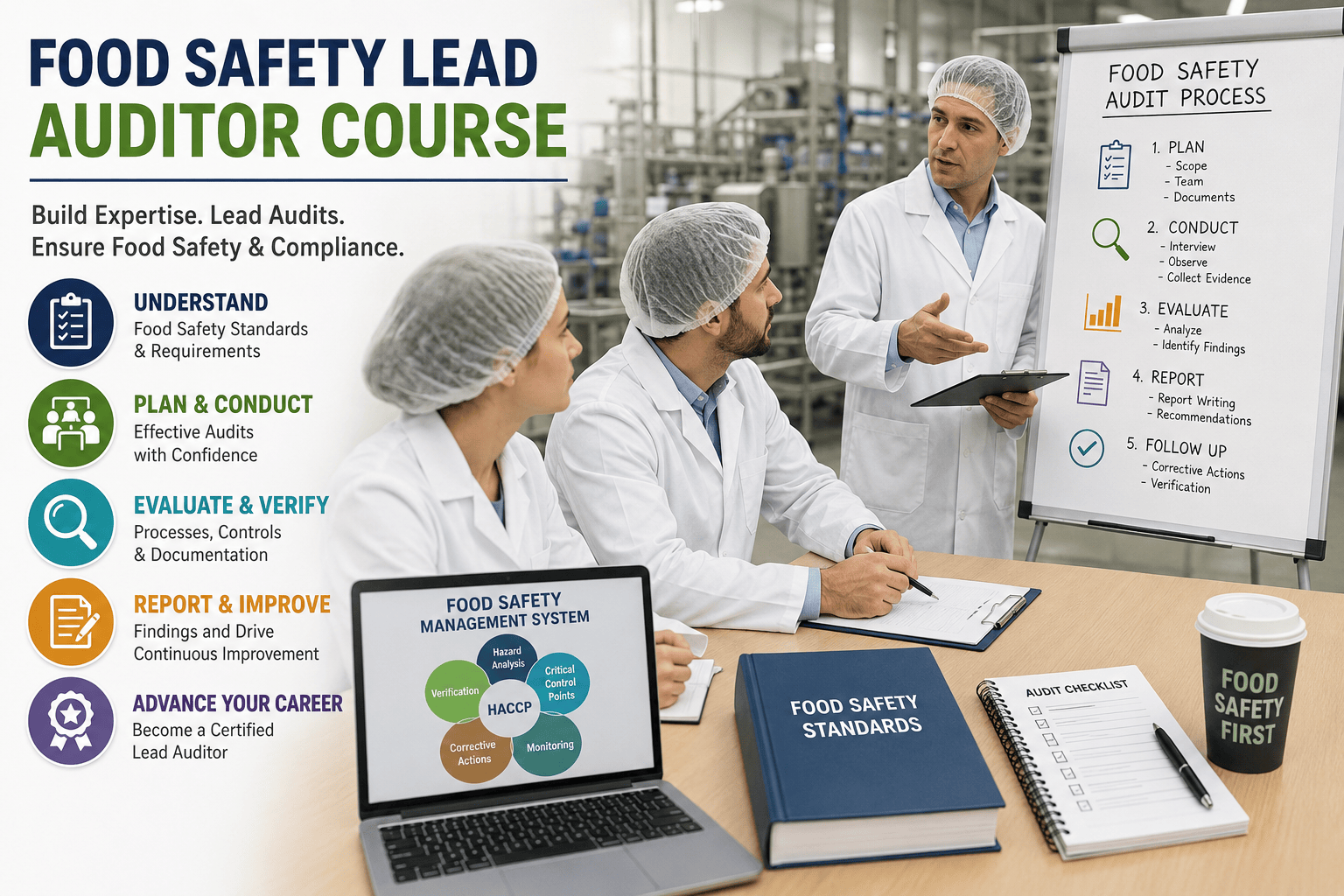
Designed for experienced food safety professionals, the course provides the knowledge and practical skills required to lead audits effectively. Rather than focusing solely on theory, the training emphasizes real-world auditing techniques, including planning audits, interviewing personnel, gathering objective evidence, and preparing professional reports. As a result, participants gain the confidence needed to conduct audits across manufacturing facilities, warehouses, catering operations, and supplier locations.
Furthermore, the demand for qualified food safety auditors continues to grow worldwide. Companies, certification bodies, retailers, and regulatory organizations all require competent auditors who can assess food safety management systems objectively. Therefore, completing a food safety lead auditor course can create significant career opportunities while enhancing professional credibility.
What the Course Is Designed to Deliver
A food safety lead auditor course offers much more than a training certificate. Instead, it develops the practical competencies needed to lead and manage audits successfully.
Throughout the program, participants learn how to interpret food safety management system requirements and apply them during real audit situations. In addition, they practice planning audits based on risk, conducting effective opening meetings, and evaluating evidence from documents, records, and employee interviews.
Moreover, learners develop communication skills that are essential for successful audits. They discover how to ask meaningful questions, handle challenging audit situations professionally, and write findings that are clear, factual, and evidence-based. Consequently, graduates leave the course prepared to participate in or lead external audits with greater confidence and professionalism.
Why Take the Course Now?
Food safety expectations continue to evolve as consumers, regulators, and retailers demand greater transparency across the supply chain. Consequently, organizations require competent auditors who can verify compliance and identify areas for improvement.
At the same time, international trade and supplier management programs have increased the need for qualified lead auditors. Businesses must demonstrate that their food safety systems are effective, consistently implemented, and continuously improved. Therefore, professionals with lead auditor qualifications are becoming increasingly valuable.
Additionally, the qualification can support multiple career paths. Some professionals choose to work with certification bodies, while others pursue roles in supplier quality management, regulatory compliance, consulting, or internal auditing. Because the credential is widely recognized, it can also create opportunities across different countries and industry sectors.
Key Topics Covered During the Training
The curriculum typically includes a combination of technical knowledge and practical auditing techniques. Key learning areas often include:
- Understanding food safety management system requirements.
- Audit principles and auditing best practices.
- Planning and preparing for audits.
- Conducting opening and closing meetings.
- Risk-based thinking and audit scoping.
- Interviewing techniques and evidence collection.
- Hazard analysis and food safety controls.
- Prerequisite programs and operational controls.
- Verification, validation, and monitoring activities.
- Nonconformity identification and reporting.
- Corrective action follow-up procedures.
- Audit report preparation and communication.
Furthermore, practical exercises help participants apply these concepts in realistic workplace scenarios.
How the Course Is Structured
Most food safety lead auditor courses are delivered over five intensive days. During the initial stages of the program, participants focus on understanding the standard, audit principles, and certification processes.
As the training progresses, greater emphasis is placed on practical auditing activities. For example, learners participate in case studies, role-play exercises, and group discussions that simulate real audit situations. These activities help reinforce theoretical knowledge while building confidence in decision-making.
Toward the end of the course, participants are assessed through written examinations and practical evaluations. As a result, successful candidates demonstrate both technical understanding and auditing competence.
Who Should Attend?
The course is primarily intended for professionals who already have experience in food safety or quality management. Suitable candidates include:
- Food safety managers.
- Quality assurance professionals.
- Internal auditors.
- Supplier quality specialists.
- Food technologists.
- Compliance officers.
- Regulatory affairs professionals.
- Consultants working within the food industry.
However, individuals with little or no experience in food safety systems may benefit from introductory or internal auditor training before enrolling in a lead auditor course.
Prerequisites and Preparation Tips
To maximize learning outcomes, participants should prepare before attending the course.
Recommended preparation includes:
- Understanding basic food safety principles.
- Reviewing hazard analysis concepts.
- Familiarizing yourself with food safety management system requirements.
- Reading any pre-course materials provided by the training provider.
- Setting aside uninterrupted time for the full duration of the program.
- Reviewing previous audit experiences and identifying development areas.
In addition, arriving well-prepared can improve participation during discussions, case studies, and assessments.
Common Mistakes to Avoid
Many professionals make avoidable mistakes when pursuing lead auditor qualifications. Fortunately, recognizing these issues early can improve long-term success.
First, avoid enrolling too early in your career. Although passing the examination is important, practical industry experience is equally valuable when conducting real audits.
Second, do not treat the qualification as a one-time achievement. Instead, continue developing your knowledge through professional development activities, industry events, and ongoing learning.
Third, apply your auditing skills as soon as possible after completing the course. Otherwise, important techniques may fade over time.
Furthermore, many new auditors underestimate the importance of documentation. Accurate notes, detailed evidence records, and well-structured reports are critical components of professional auditing.
Finally, choose a recognized training provider rather than selecting a course solely based on cost. A respected qualification often carries greater value in the job market.
Frequently Asked Questions
Do I need previous audit experience?
While previous audit experience is not always mandatory, internal auditing experience is highly recommended.
How is the course assessed?
Most programs include a written examination along with continuous assessment through practical exercises and role plays.
Can the course be completed online?
Yes. Many accredited providers now offer live virtual training that includes interactive activities and assessments.
Is the qualification internationally recognized?
Yes, provided the food safety lead auditor course is delivered by a recognized and accredited training organization.
What career opportunities are available?
Graduates may pursue roles in certification bodies, supplier quality management, consulting, compliance management, and internal audit leadership.
Sustaining Skills Over the Long Term
Completing a food safety lead auditor course is only the beginning of professional development. To remain effective, auditors should continue learning throughout their careers.
For example, staying informed about food safety incidents, regulatory updates, and emerging industry trends can strengthen auditing effectiveness. Likewise, attending conferences, workshops, and professional networking events helps auditors remain current with industry best practices.
Many professionals also maintain personal audit logs to track experience, audit types, team leadership responsibilities, and key findings. Furthermore, pursuing professional certification and continuing education demonstrates commitment to ongoing improvement.
As a result, auditors who invest in lifelong learning often enjoy stronger career progression and greater professional credibility.
Final Reflection for Aspiring Lead Auditors
A successful auditing career is built on more than technical knowledge alone. Equally important are communication skills, professional integrity, sound judgment, and a commitment to continuous improvement.
Every audit provides an opportunity to learn something new. Therefore, aspiring lead auditors should approach each assignment with curiosity, professionalism, and respect for the organizations they audit. Over time, these experiences help develop the confidence and expertise that distinguish highly respected auditors from average practitioners.
Moreover, building strong professional relationships and maintaining ethical standards can enhance both personal reputation and career growth. Consequently, auditors who consistently demonstrate competence and fairness often become trusted advisors within the food industry.
Conclusion
A food safety lead auditor course is an important investment for professionals seeking to advance their careers in food safety and quality management. By combining technical knowledge with practical auditing skills, the program prepares participants to lead audits confidently and contribute to stronger food safety systems.
Furthermore, the qualification opens doors to diverse career opportunities across certification bodies, food manufacturers, retailers, and consulting organizations. However, long-term success depends on continuous learning, practical experience, and professional commitment.
Ultimately, organizations need auditors who can assess systems objectively, identify risks accurately, and promote continual improvement. For professionals ready to take on that responsibility, a food safety lead auditor course provides the foundation for a rewarding and impactful career.