Bearings are critical components in industrial machinery, automotive systems, and rotating equipment. Their performance and longevity heavily depend on proper lubrication. However, when operating in humid environments—such as coastal regions, food processing plants, marine applications, or outdoor installations—moisture becomes a major threat. Humidity can degrade grease properties, accelerate wear, and lead to unexpected equipment failure.
Selecting the right grease for such conditions is not just a maintenance decision—it’s a reliability strategy. This comprehensive guide explores how humidity impacts grease performance, what characteristics to look for in water-resistant grease, and how to maintain bearings effectively under moisture-prone conditions.
Why Humidity Impacts Grease Performance
Humidity introduces water into bearing systems either through direct exposure, condensation, or contaminated environments. Once water enters the lubrication system, it begins to compromise the grease’s structure and effectiveness.
1. Water Washout
Water washout refers to the physical removal of grease from bearing surfaces due to water exposure. In environments with frequent washdowns, rain, or splashing, grease can be displaced from critical contact areas. This leaves metal surfaces unprotected, increasing friction and accelerating wear. Greases with poor adhesion are especially vulnerable to washout, leading to more frequent re-lubrication needs.
2. Emulsification
Emulsification occurs when grease mixes with water, forming a semi-fluid or milky substance. This changes the grease’s consistency and reduces its ability to provide a stable lubricating film. Emulsified grease loses its load-carrying capability and may leak out of the bearing housing, causing lubrication failure. In severe cases, it can also clog lubrication pathways.
3. Corrosion Formation
Moisture is a primary cause of rust and corrosion in metal components. When water enters a bearing, it reacts with metal surfaces, leading to oxidation. Over time, this results in pitting, surface degradation, and increased vibration. Corrosion not only reduces efficiency but also shortens the service life of bearings significantly.
4. Additive Depletion
Modern greases contain performance-enhancing additives such as anti-wear agents, corrosion inhibitors, and extreme pressure (EP) additives. Water contamination can dilute or wash away these additives, rendering the grease less effective. Without these protective elements, bearings are more susceptible to damage under load and stress.
Key Qualities of Water-Resistant Greases
To combat the effects of humidity, it is essential to choose greases specifically designed for moisture resistance. The following properties are critical:
- Excellent water resistance: The grease should repel water and maintain its structure even in wet conditions.
- Strong adhesion: It must cling to metal surfaces and resist being washed away.
- Corrosion protection: Built-in inhibitors should protect against rust and oxidation.
- Mechanical stability: The grease should maintain consistency under load, shear, and contamination.
- High load-carrying capacity: Essential for industrial bearings subjected to heavy loads.
- Oxidation resistance: Ensures long service life even in harsh environments.
Greases that combine these characteristics provide reliable lubrication and reduce maintenance frequency in humid conditions.
Lithium vs. Calcium Greases
The type of thickener used in grease plays a major role in its performance under humid conditions. Two of the most common thickener types are lithium and calcium.
Lithium-Based Greases: General Purpose and Temperature Stable
Lithium-based greases are widely used across industries due to their versatility and balanced performance. They offer:
- Good mechanical stability
- High temperature tolerance
- Compatibility with a wide range of applications
- Moderate resistance to water
Lithium greases are ideal for general-purpose use, especially in environments where temperature stability is important. However, in high-humidity or water-exposed conditions, standard lithium greases may not provide sufficient protection unless enhanced with additives or upgraded to lithium complex formulations.
Calcium-Based Greases: Superior Water Resistance
Calcium-based greases are specifically valued for their excellent resistance to water. They provide:
- Strong adhesion to surfaces
- High resistance to water washout
- Effective protection against corrosion
These greases are particularly suitable for wet environments such as marine equipment, agricultural machinery, and outdoor applications. However, traditional calcium greases have lower temperature limits, which can restrict their use in high-heat operations.
Quick Comparison: Lithium Complex vs. Calcium Sulfonate Complex
For more demanding environments, advanced grease formulations such as lithium complex and calcium sulfonate complex greases are commonly used.
| Property | Lithium Complex Grease | Calcium Sulfonate Complex Grease |
|---|---|---|
| Water Resistance | Good | Excellent |
| Temperature Range | High | Moderate to High |
| Load Capacity | Good | Very High |
| Corrosion Protection | Moderate | Excellent |
| Oxidation Stability | Good | Excellent |
| Cost | Moderate | Higher |
Calcium sulfonate complex greases stand out as the best choice for humid and corrosive environments. They provide superior water resistance, exceptional load-carrying capacity, and built-in corrosion protection without requiring additional additives.
Selecting EP Greases for Heavy-Load Bearings
In many industrial settings, bearings are not only exposed to humidity but also subjected to heavy loads, shock loads, and extreme pressure. In such cases, Extreme Pressure (EP) greases are essential.
EP greases contain specialized additives that form a protective film on metal surfaces under high stress. This prevents direct metal-to-metal contact and reduces wear.
Benefits of EP Greases:
- Enhanced load-bearing capacity
- Reduced wear and friction
- Protection under shock and vibration
- Improved performance in contaminated environments
When selecting EP greases for humid conditions, it is important to ensure they also have strong water resistance and corrosion protection. Combining EP properties with moisture resistance provides optimal performance in harsh environments such as mining, construction, and heavy manufacturing.
Bearing Maintenance in Humid Conditions
Even the highest-quality grease will not perform effectively without proper maintenance practices. In humid environments, proactive maintenance becomes even more critical.
1. Follow OEM Re-Lubrication Intervals
Always adhere to the manufacturer’s recommended lubrication schedule. In moisture-prone environments, shorter re-lubrication intervals may be necessary to compensate for contamination and grease degradation.
2. Apply the Correct Amount
Using too much grease can cause overheating and seal damage, while too little grease leads to inadequate lubrication. Always apply the correct quantity based on bearing size and operating conditions.
3. Conduct Regular Inspections
Routine inspections help detect early signs of water contamination, corrosion, or grease breakdown. Look for changes in grease color, consistency, or leakage.
4. Store and Handle Properly
Grease should be stored in clean, sealed containers away from moisture. Improper storage can lead to contamination even before application. Always use clean tools and avoid exposing grease to humid air for extended periods.
5. Use Automatic Lubricators
Automatic lubrication systems ensure a consistent and controlled supply of grease. They reduce human error and are especially useful in hard-to-reach or continuously operating equipment. In humid environments, they help maintain proper lubrication levels at all times.
MAGNUM Greases — Reliable Under Moisture and Heat
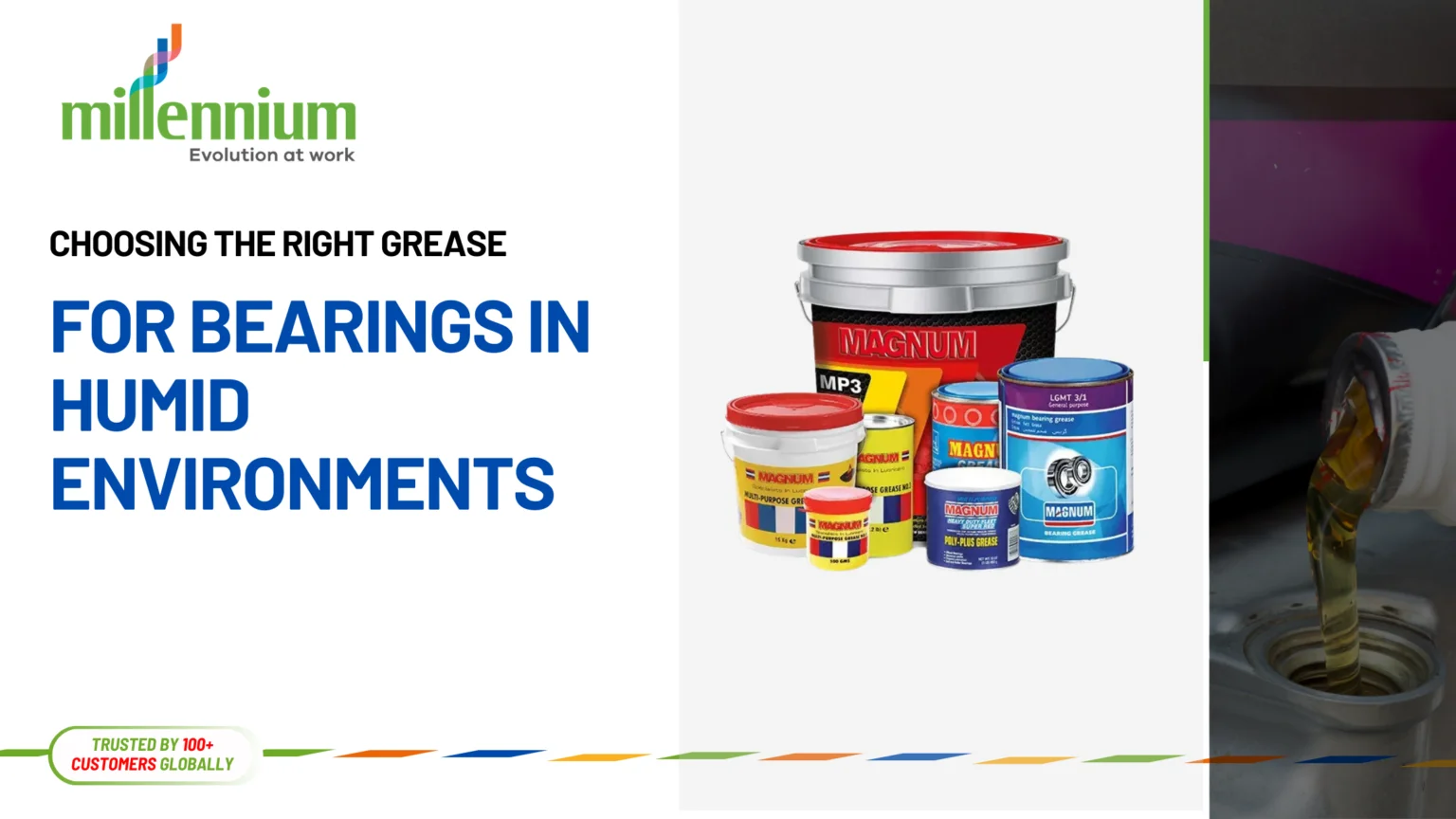
MAGNUM greases are specifically engineered to perform in challenging environments where humidity, water exposure, and temperature variations are common. Their advanced formulations include high-performance thickeners and additive systems designed to deliver consistent performance.
Key benefits of MAGNUM greases include:
- Exceptional resistance to water washout
- Strong adhesion to metal surfaces
- Superior corrosion protection
- Stability under high loads and temperatures
- Long service life, reducing maintenance frequency
These properties make MAGNUM greases an ideal choice for industries such as marine operations, food processing, construction, and heavy manufacturing, where moisture is a constant concern.
Final Word
Choosing the right grease for bearings in humid environments is essential for ensuring equipment reliability and longevity. Moisture can severely impact grease performance through water washout, emulsification, corrosion, and additive depletion. Understanding these challenges allows for better lubricant selection and maintenance planning.
While lithium-based greases offer versatility and temperature stability, calcium sulfonate complex greases provide superior protection in moisture-rich environments. For heavy-load applications, EP greases add an extra layer of protection against wear and stress.
Ultimately, the right combination of high-quality grease and proper maintenance practices—such as regular inspections, correct application, and proper storage—can significantly extend bearing life and reduce operational costs. Investing in reliable solutions like MAGNUM greases ensures consistent performance even under the toughest humid conditions.