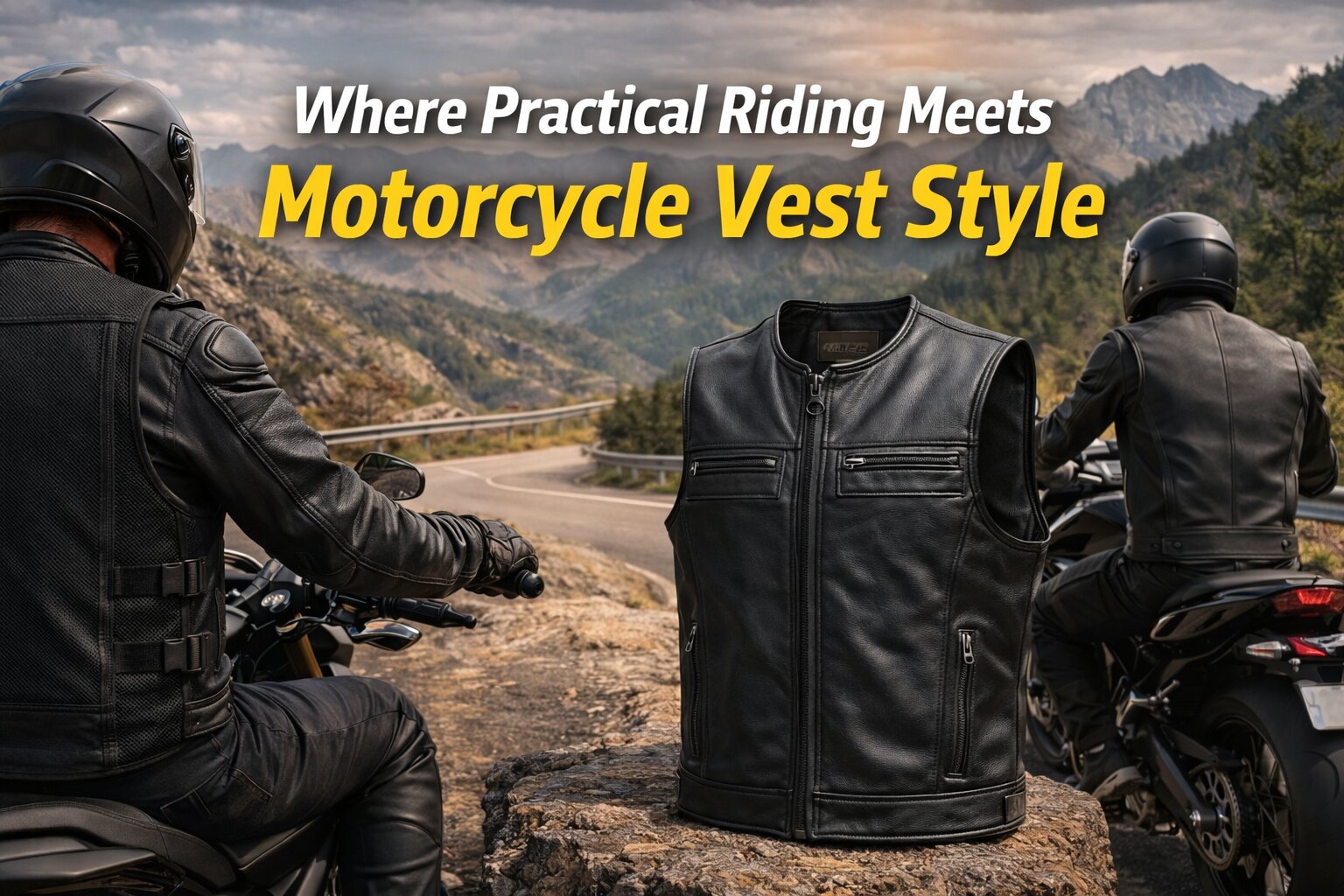
Motorcycle apparel has evolved beyond simple protection into a carefully engineered system that balances safety, comfort, and rider identity. Among modern riding garments, the motorcycle vest occupies a unique position. It functions simultaneously as protective equipment, a layering solution, and a defining stylistic element within motorcycle culture.
A motorcycle vest enhances mobility while maintaining essential torso coverage, making it particularly valuable for riders operating in varied climates or extended riding conditions. Unlike full jackets, vests allow airflow and flexibility while still contributing to abrasion resistance and gear organization through functional storage features.
Two vest categories dominate contemporary riding environments: the Textile Motorcycle Vest and Denim Motorcycle Vests. Each represents a different intersection of performance engineering and visual expression.
This guide examines how practical riding requirements merge with motorcycle vest style, explaining materials, professional usage scenarios, expert recommendations, and common misconceptions while providing a structured understanding of modern vest selection.
The Role of Motorcycle Vests in Modern Riding Systems
Motorcycle safety research consistently emphasizes layered protective strategies rather than reliance on a single garment. According to motorcycle safety principles documented by organizations such as the National Highway Traffic Safety Administration (NHTSA), protective clothing reduces injury severity by minimizing abrasion and improving rider visibility.
Motorcycle vests support this layered system by:
-
Adding torso protection without restricting arm movement
-
Improving airflow during warm-weather riding
-
Providing accessible storage for essential items
-
Enhancing visibility when equipped with reflective elements
Professionally, riders integrate vests between base layers and outer protection to adapt quickly to changing riding environments.
Textile Motorcycle Vest: Performance Meets Practical Engineering
Material Technology and Construction
The Textile Motorcycle Vest is designed using advanced synthetic fabrics developed for durability and environmental adaptability. These materials are engineered specifically for performance-oriented riding.
Common textile components include:
-
High-denier polyester for abrasion resistance
-
Cordura® or ballistic nylon reinforcement
-
Mesh ventilation zones
-
Weather-resistant coatings
These fabrics provide strength while remaining significantly lighter than traditional leather alternatives.
Functional Advantages for Daily Riding
Textile vests excel in environments where temperature regulation and mobility directly influence rider performance.
Practical benefits include:
-
Improved ventilation during long rides
-
Reduced rider fatigue due to lightweight construction
-
Faster drying after exposure to moisture
-
Compatibility with armored shirts or hoodies
Touring riders and commuters frequently prefer textile designs because they support endurance riding without excessive heat buildup.
Real-World Riding Applications
Textile motorcycle vests are commonly used in:
-
Urban commuting routes
-
Adventure and touring segments
-
Summer highway riding
-
Multi-layer safety systems
Their technical construction aligns with modern performance riding expectations.
Denim Motorcycle Vests: Heritage Style with Functional Purpose
Evolution of Denim in Motorcycle Apparel
Denim Motorcycle Vests originated from durable workwear traditions but have evolved into purpose-built riding garments. Modern versions incorporate reinforced stitching and heavier fabric weights tailored for motorcycle use.
Unlike casual denim clothing, riding-focused designs often feature:
-
Reinforced stress zones
-
Abrasion-resistant lining panels
-
Armor-ready internal pockets
-
Durable snap or zipper closures
These upgrades allow denim to maintain classic aesthetics while supporting practical riding needs.
Practical Benefits in Everyday Riding
Denim motorcycle vests offer versatility across multiple riding environments.
Advantages include:
-
Natural breathability for moderate temperatures
-
Comfortable flexibility during long rides
-
Easy layering over hoodies or armored gear
-
Customization options reflecting rider identity
Many riders choose denim for daily riding due to its balance between comfort and recognizable motorcycle culture styling.
Cultural Significance and Rider Identity
Motorcycle apparel has long served as a form of expression within riding communities. Denim vests often act as symbolic garments, displaying patches or travel history while maintaining functional use.
This combination of practicality and identity strengthens the connection between vest style and rider experience.
Style vs Function: Finding the Balance
Modern riders rarely choose gear based solely on appearance or protection. Instead, selection involves balancing both elements.
Functional Priorities
-
Ventilation efficiency
-
Durability under wind stress
-
Secure fit at highway speeds
-
Compatibility with protective armor
Style Considerations
-
Personal aesthetic preference
-
Customization potential
-
Compatibility with existing riding gear
-
Versatility off the motorcycle
A well-selected vest achieves both goals simultaneously.
Expert Insights and Best Practices
Professionals in motorcycle apparel design emphasize structured decision-making when selecting riding gear.
Choose Materials Based on Climate
Textile vests perform best in hot or humid conditions, while denim offers balanced comfort across seasons.
Focus on Fit Stability
A vest should remain stable against wind pressure without restricting torso movement.
Integrate with Protective Systems
Vests function best when paired with armored base layers rather than replacing protective equipment.
Evaluate Construction Quality
Reinforced seams, strong closures, and durable fabrics indicate long-term reliability.
Maintain Regular Inspection
Routine cleaning and inspection prevent premature wear and maintain protective performance.
Comparing Textile and Denim Motorcycle Vests
| Feature | Textile Motorcycle Vest | Denim Motorcycle Vests |
|---|---|---|
| Weight | Lightweight | Medium weight |
| Ventilation | High airflow | Moderate airflow |
| Weather Resistance | Often water-resistant | Limited resistance |
| Style | Technical | Classic |
| Touring Performance | Excellent | Good |
| Customization | Minimal | Extensive |
Each option serves different riding priorities rather than replacing the other.
Expert Insights and Best Practices
Professionals in motorcycle safety and apparel design emphasize thoughtful gear integration rather than single-item reliance.
Prioritize Layer Compatibility
A vest should complement armored gear rather than replace protective components.
Select Materials Based on Climate
Textile fabrics excel in hot environments, while denim provides balanced comfort across seasons.
Ensure Ergonomic Fit
Proper fit stabilizes the vest during wind pressure and prevents distraction at high speeds.
Evaluate Construction Quality
Durable zippers, reinforced seams, and secure closures indicate long-term reliability.
Maintain Gear Regularly
Cleaning and inspection prevent material breakdown and extend protective performance.
Common Mistakes and Misconceptions
Believing Vests Replace Jackets Completely
Motorcycle vests function best as supplemental layers rather than standalone protective solutions.
Choosing Style Over Functionality
Aesthetic appeal should not outweigh durability, ventilation, or construction quality.
Ignoring Ventilation Needs
Heat fatigue significantly impacts rider concentration, especially during long rides.
Incorrect Sizing Selection
Oversized vests may shift during riding, reducing comfort and effectiveness.
Common Mistakes and Misconceptions
Assuming Vests Are Only Fashion Items
Motorcycle vests serve practical purposes including airflow regulation and equipment accessibility.
Ignoring Material Differences
Textile and denim designs perform differently under various weather conditions.
Choosing Incorrect Sizing
Loose garments can shift during riding, affecting comfort and safety.
Overlooking Layer Compatibility
A vest must complement existing gear rather than conflict with armor placement.
Frequently Asked Questions
1. What is the primary function of a motorcycle vest?
A motorcycle vest enhances comfort, airflow, and storage while contributing to abrasion resistance within a layered riding system.
2. Are textile motorcycle vests suitable for long-distance riding?
Yes. Their lightweight construction and ventilation features make them ideal for touring and commuting.
3. Do denim motorcycle vests provide protection?
Reinforced riding-specific denim offers abrasion resistance and often includes armor compatibility.
4. Which vest type is better for hot weather?
Textile motorcycle vests generally perform better due to superior airflow.
5. Can motorcycle vests replace jackets?
No. Vests are designed as complementary layers rather than full replacements for protective jackets.
6. Are motorcycle vests comfortable for daily commuting?
Yes. Their reduced bulk and improved mobility make them practical for everyday riding.
7. How should a motorcycle vest fit?
It should fit snugly without restricting breathing or movement while remaining stable in wind conditions.
8. Can armor be added to motorcycle vests?
Many modern designs include pockets for protective inserts.
9. Are denim motorcycle vests suitable for touring rides?
Yes, particularly in moderate climates when combined with appropriate layering.
10. How long does a quality motorcycle vest typically last?
With proper maintenance, high-quality vests can remain functional for several years.
Conclusion
Motorcycle vests represent the intersection where practical riding requirements meet personal style. By combining mobility, airflow, and adaptable layering, they enhance both comfort and functionality across diverse riding environments. Textile motorcycle vests deliver performance-focused efficiency, while denim motorcycle vests provide durability rooted in motorcycle heritage.
When selected thoughtfully and integrated into a complete riding system, motorcycle vests become more than accessories—they become essential components supporting safety, comfort, and long-term riding performance.

