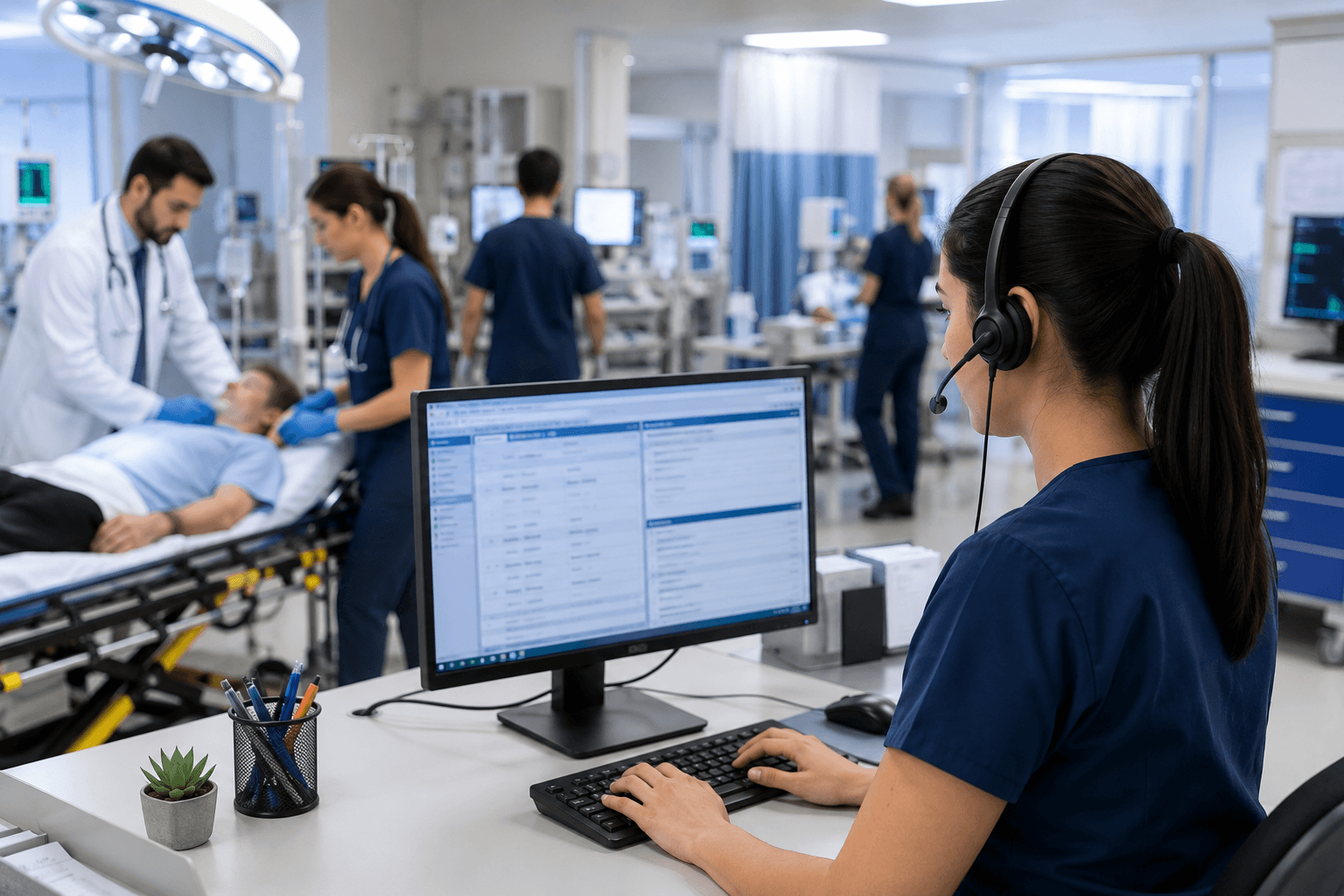
Emergency departments operate under constant pressure. Physicians must make rapid decisions, manage unpredictable patient volumes, and document every encounter accurately. At the same time, hospitals face increasing expectations to improve patient outcomes, maintain regulatory compliance, and achieve quality care benchmarks. Balancing these priorities can be difficult, especially when clinicians spend valuable time on documentation instead of patient care.
This challenge has led many healthcare organizations to adopt medical scribe services as part of their quality improvement strategies. Emergency department scribes support physicians by documenting patient encounters in real time, allowing providers to focus on clinical responsibilities. As hospitals pursue better patient experiences, improved efficiency, and stronger quality metrics, the role of medical scribes continues to grow.
Quality care is not measured by a single outcome. It reflects patient safety, timely treatment, accurate documentation, and positive patient experiences. Emergency department scribes contribute to each of these areas, helping hospitals meet both operational and clinical goals.
Emergency Department Scribes Improve Documentation Quality and Accuracy
Accurate documentation forms the foundation of quality healthcare. Emergency physicians often treat multiple patients simultaneously while managing complex cases. Under these conditions, completing detailed documentation can become challenging.
Emergency department scribes assist by recording patient histories, physical examination findings, diagnostic results, and treatment plans during the encounter. This real-time approach reduces the risk of omitted details and incomplete records.
According to the American College of Emergency Physicians, comprehensive documentation supports continuity of care and helps ensure appropriate clinical decision-making. When medical records accurately reflect patient encounters, providers can make more informed treatment decisions throughout the care journey.
Documentation quality also affects hospital performance metrics. Incomplete records may create coding issues, billing discrepancies, and compliance concerns. Emergency department scribes help physicians maintain accurate records without increasing administrative burdens.
Consider a busy urban emergency department during flu season. Physicians may evaluate dozens of patients during a single shift. Without documentation support, important details can be overlooked. Scribes provide an additional layer of accuracy, helping ensure every patient encounter is properly documented.
As healthcare organizations continue to emphasize quality reporting and value-based care, accurate documentation becomes even more critical. Emergency department scribes help hospitals meet these expectations while supporting clinical excellence.
Supporting Faster Care Delivery and Better Patient Outcomes
Timely care remains one of the most important indicators of emergency department performance. Long wait times, delayed evaluations, and overcrowding can negatively affect patient outcomes and satisfaction.
Emergency department scribes help physicians spend more time with patients and less time entering data into electronic health records. This workflow improvement often translates into greater efficiency throughout the department.
Research published in the Journal of Emergency Medicine has shown that physician productivity can improve when scribes are integrated into emergency care teams. When providers have fewer documentation responsibilities, they can evaluate patients more quickly and move through clinical workflows more efficiently.
Hospitals frequently monitor metrics such as door-to-provider time, length of stay, and patient throughput. Improvements in these areas contribute directly to quality care goals. Emergency department scribes support these efforts by helping physicians complete documentation while continuing patient care activities.
Patients also benefit from more meaningful interactions with providers. Rather than focusing on computer screens, physicians can maintain eye contact and engage in detailed conversations. These interactions improve communication and often lead to greater patient confidence in the care process.
Dr. Atul Gawande once noted, “The complexity of medicine now exceeds the capacity of any individual to deliver care safely without support.” This observation reflects the growing need for collaborative healthcare models that allow clinicians to perform at their best.
Emergency department scribes provide that support by helping physicians focus on diagnosis, treatment, and patient communication.
Reducing Physician Burnout to Sustain High-Quality Care
Quality care depends on the well-being of healthcare providers. Unfortunately, physician burnout has become a significant concern across healthcare systems.
Emergency medicine physicians face particularly high levels of stress due to demanding schedules, critical patient cases, and extensive documentation requirements. Burnout can affect job satisfaction, productivity, and even patient safety.
A study published by the National Academy of Medicine identified administrative burdens as a major contributor to clinician burnout. Documentation demands frequently extend beyond scheduled shifts, forcing physicians to spend evenings completing charts.
Emergency department scribes help reduce this burden by managing documentation during patient encounters. As a result, physicians often spend less time charting after hours and more time focusing on personal well-being.
Hospitals that prioritize physician wellness frequently see benefits beyond employee satisfaction. Lower burnout rates contribute to better staff retention, improved teamwork, and more consistent patient care.
Imagine an emergency physician finishing a demanding twelve-hour shift. Without a scribe, several additional hours may be required to complete documentation. With a scribe providing real-time support, much of that work is already finished before the shift ends.
This improvement may seem simple, but it can significantly impact physician morale and long-term workforce sustainability.
Emergency Department Scribes Help Hospitals Achieve Regulatory and Quality Benchmarks
Healthcare organizations face growing pressure to demonstrate quality performance through measurable outcomes. Accreditation bodies, government agencies, and insurance providers increasingly rely on documented evidence of care quality.
Accurate and timely documentation supports compliance with regulatory requirements while helping hospitals track quality improvement initiatives. Emergency department scribes assist by ensuring clinical records contain the necessary information for reporting and analysis.
Quality programs often evaluate factors such as patient safety indicators, treatment timelines, readmission rates, and documentation completeness. Reliable data is essential for measuring performance accurately.
Medical scribes contribute to stronger documentation consistency, which supports internal audits and external reporting requirements. This consistency helps hospitals identify improvement opportunities and maintain compliance standards.
In addition, detailed records support communication between healthcare providers. Patients frequently transition from emergency departments to inpatient units, specialists, or primary care providers. Comprehensive documentation ensures critical information follows the patient throughout the continuum of care.
As healthcare continues to move toward value-based reimbursement models, hospitals must demonstrate both quality and efficiency. Emergency department scribes help support these objectives while improving day-to-day clinical operations.
Conclusion
Hospitals striving to meet quality care goals must balance patient outcomes, operational efficiency, provider well-being, and regulatory compliance. Emergency department scribes play a valuable role in helping healthcare organizations achieve these objectives. By improving documentation accuracy, supporting faster patient care, reducing physician burnout, and strengthening quality reporting efforts, scribes contribute to a more effective healthcare environment. As emergency departments face increasing demands, medical scribe services offer a practical solution that supports both clinicians and patients. Hospitals that invest in emergency department scribes position themselves to deliver higher-quality care while building a stronger foundation for future success.