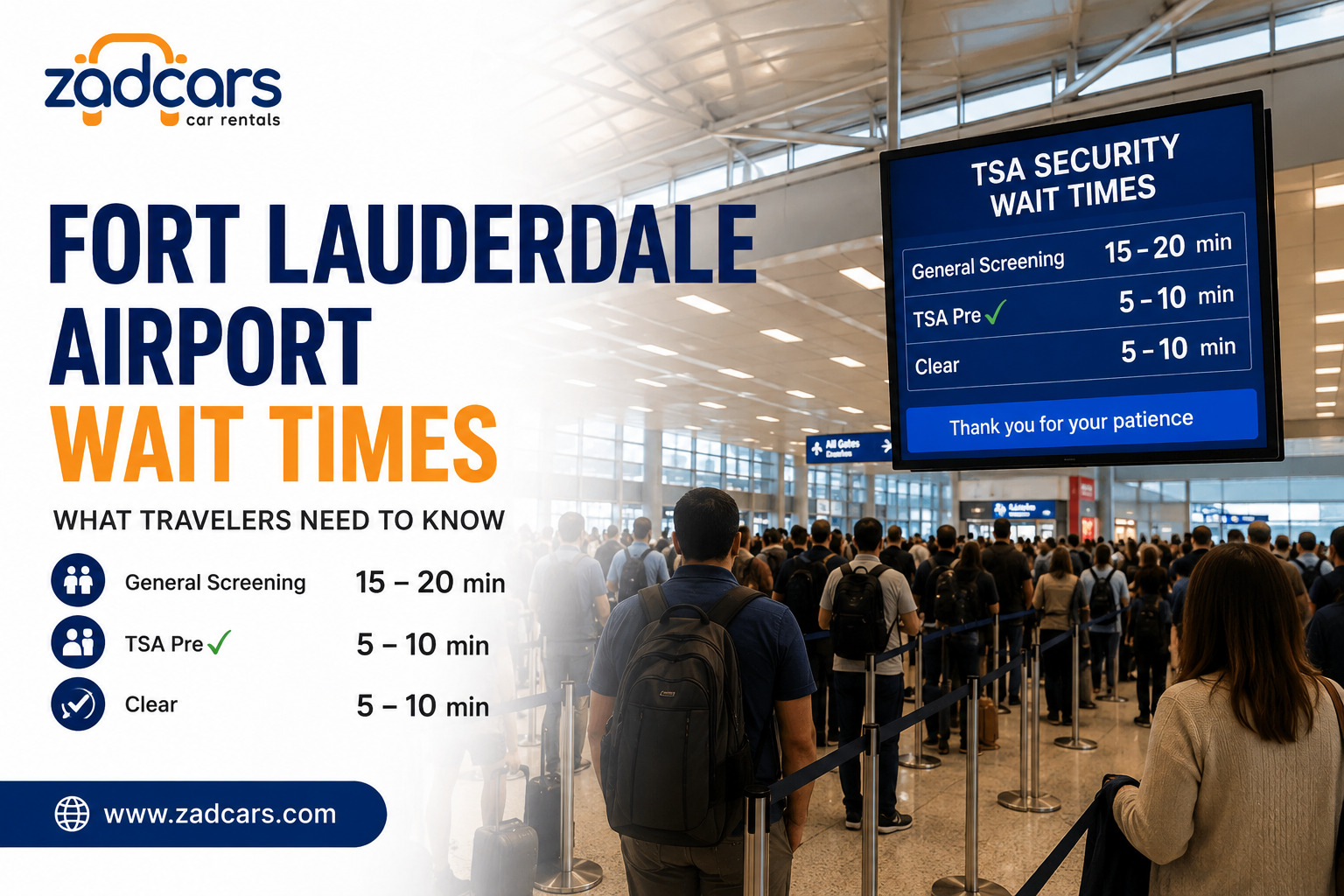
Ever arrived at an airport expecting a quick trip through the terminal, only to find the situation completely different from the previous visit? That happens because airport traffic is constantly changing. At Fort Lauderdale-Hollywood International Airport (FLL), Fort Lauderdale airport wait times can vary significantly depending on the day, flight schedule, passenger volume, and airport operations.
A security line is only one part of the journey. The time spent reaching the terminal, checking luggage, returning a rental car, and walking to the gate also matters.
For this reason, successful airport planning is less about finding a guaranteed wait-time figure and more about understanding the conditions that can affect the trip. A little preparation can make a significant difference, particularly when traveling during busy periods.

Does the Number of Travelers Affect FLL Conditions?
Passenger volume has a direct effect on airport activity. When fewer travelers arrive at similar times, check-in areas and security checkpoints may move more comfortably. When several groups arrive together, queues can develop quickly.
The number of passengers can depend on the day’s flight schedule, travel season, holidays, and other factors.
However, passenger volume does not tell the entire story. Processing speed, staffing, airline procedures, and passenger preparation can also influence how quickly lines move.
This explains why Fort Lauderdale airport wait times should not be treated as a fixed daily figure.
A quiet airport at one point in the morning can become considerably busier later when additional flights approach their departure windows.
How Can Flight Schedules Influence Waiting?
Flight schedules create patterns of passenger movement. If several flights depart within a short period, passengers may arrive at FLL within overlapping timeframes.
This can increase activity at multiple locations, including:
- Airline counters
- Baggage-drop areas
- Security checkpoints
- Escalators and elevators
- Terminal walkways
- Gate areas
A traveler does not need to know the exact number of passengers on every flight to understand this effect. Simply checking the departure schedule can provide useful context.
A concentrated schedule may justify allowing more flexibility than a departure period with fewer scheduled flights.
Still, flight timing alone cannot predict the exact security experience.
Can Travel Season Make a Difference?
Travel demand is rarely identical throughout the year. Holidays, school vacations, long weekends, and popular vacation periods can change passenger behavior.
During these periods, airport facilities may experience increased demand. Roads around the airport and parking facilities can also become more active.
Travelers can prepare by completing tasks before reaching the terminal. Online check-in, organized luggage, and accessible travel documents can make the airport routine easier.
It is also worth confirming baggage deadlines because airline requirements remain important even when security lines are manageable.
Understanding seasonal demand provides useful context when reviewing Fort Lauderdale airport wait times, but current conditions still matter more than general assumptions.
Can Baggage Add More Time Than Expected?
Checked luggage creates another stage before security. Passengers must reach the appropriate airline area, complete bag drop, and meet the carrier’s cutoff time.
During busy periods, this process may take longer than expected.
Special baggage can require additional handling as well. Travelers carrying oversized items or equipment should check their airline’s rules before arriving.
Carry-on-only travelers may have a simpler routine, but they still need to complete security and reach the gate before boarding.
This is why airport planning should not stop at security estimates. A short security line cannot compensate for a delayed baggage process.
What Role Does Traffic Play?
Traffic is one of the easiest factors to overlook because it occurs before the airport experience officially begins.
A trip that normally takes a certain amount of time can become longer because of congestion, road incidents, construction, weather, or peak travel periods.
Travelers should therefore consider road conditions before leaving for FLL.
Those returning rental vehicles have another timing factor to consider. The car must be returned before the traveler continues to the terminal, and the return process may require additional time.
A realistic airport schedule includes the journey to FLL rather than starting the clock at the security checkpoint.
How Can Travelers Prepare Their Carry-On Bags?
Good packing can prevent unnecessary delays at security.
Before traveling, review the latest TSA requirements and organize the carry-on accordingly. Identification and other essential documents should remain easy to access.
It is also helpful to avoid carrying unnecessary items that could require additional attention during screening.
A simple pre-airport check can include:
- Review current TSA guidance.
- Confirm permitted liquids and other restricted items.
- Keep identification accessible.
- Organize electronics according to current instructions.
- Make sure bags are easy to open if inspection is required.
These steps cannot shorten a queue, but they can make the individual screening process more straightforward.
What Should Rental Car Travelers Remember?
Rental-car users should treat the vehicle return as part of the airport journey.
Before arriving at the return location, confirm the address and instructions. After parking, check the entire vehicle for personal belongings.
Frequently forgotten items include chargers, sunglasses, wallets, documents, earbuds, and items stored in door pockets.
It is also useful to photograph the vehicle’s condition when appropriate and retain relevant rental documentation.
Travelers arranging rental transportation around Fort Lauderdale can explore ZadCars for car-rental options and trip-planning resources.
How Can Travelers Create a Realistic Airport Schedule?
Instead of choosing an arrival time based on security alone, divide the journey into individual stages.
A useful framework is:
Travel to FLL → Parking or rental return → Terminal → Check-in → Baggage → Security → Gate → Boarding
Estimate each stage realistically and include a buffer for unexpected changes.
The amount of time required will differ between travelers. A passenger with carry-on luggage may have fewer steps than a family checking several bags. International travelers may also have additional airline requirements.
This approach makes Fort Lauderdale airport wait times easier to interpret because security becomes one component of a complete departure plan.
Should Travelers Check Flight Status Before Leaving?
Yes. Flight information can change after a ticket is booked.
Checking the current status before leaving can reveal delays, schedule changes, or other updates that may affect the airport plan.
Once at FLL, monitoring airline notifications can also help with gate changes and departure updates.
Flight status should be considered alongside traffic and airport conditions. Looking at only one source of information can leave important details out of the planning process.
A few minutes spent checking current information can help prevent unnecessary surprises later.
FAQs
Why do Fort Lauderdale airport wait times change from day to day?
Passenger volume, flight schedules, holidays, baggage activity, security operations, weather, and transportation conditions can all affect the airport experience.
Does traveling with checked luggage require more planning?
Usually, yes. Checked baggage adds an additional airline process and may have a separate cutoff time, so travelers should account for it before security.
Can traffic affect the time needed to reach FLL?
Yes. Road congestion, accidents, construction, and weather can all increase travel time before reaching the airport.
What is the best way to plan around airport wait times?
Consider the complete journey, including transportation, parking or rental return, check-in, baggage, security, walking time, and the airline’s boarding requirements.
Conclusion
Fort Lauderdale airport wait times are influenced by many changing conditions, which makes an exact prediction difficult. Passenger volume, flight schedules, baggage activity, travel seasons, traffic, and security operations can all affect how long the overall airport journey takes.
The most practical solution is to plan each stage separately and leave a reasonable buffer. Checking flight status, preparing luggage, biogas plant manufacturers in India, confirming the terminal, and arranging transportation in advance can reduce avoidable delays.

For travelers needing a rental vehicle around Fort Lauderdale, ZadCars provides useful car-rental resources for planning transportation before or after an FLL flight.