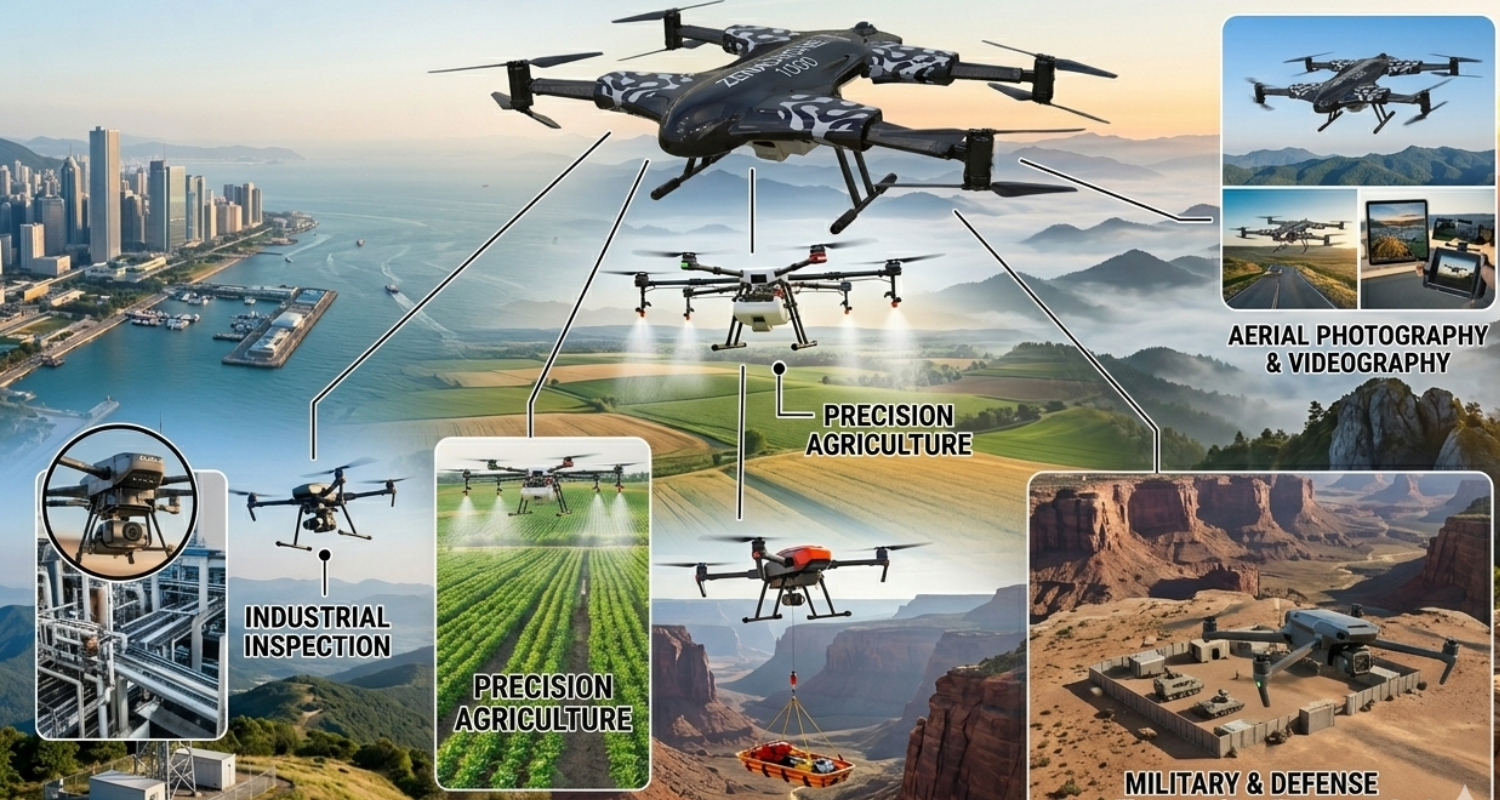
Drone technology has transformed the way industries collect data, monitor operations, and improve efficiency. From aerial mapping and surveillance to agriculture and infrastructure inspections, drones continue to create new opportunities across various sectors. Understanding the different types of drones is essential for choosing the right platform for a specific mission.
Drone classification is based on several factors, including design, weight, endurance, payload capacity, range, and intended use. Each category offers unique advantages that make it suitable for particular tasks. This guide explores the major types of drones and their uses, helping businesses and professionals identify the best UAV solution for their needs.
Why Understanding Drone Types Matters
Not all drones are designed for the same purpose. Some are optimized for long-distance flights, while others excel at hovering and capturing detailed aerial imagery. Proper drone classification helps operators understand a drone’s capabilities, limitations, and ideal applications.
By selecting the appropriate drone type, organizations can improve operational efficiency, reduce costs, and achieve better mission results.
Drone Classification Based on Wing Design
One of the most common ways to classify drones is according to their wing design and flight mechanism. These structural differences directly affect flight performance, maneuverability, endurance, and payload capacity.
Fixed-Wing Drones
Fixed-wing drones feature a rigid wing structure similar to conventional aircraft. They generate lift through forward movement, making them highly efficient during long-distance flights.
Because of their aerodynamic design, fixed-wing drones can cover large areas while consuming less energy compared to other drone types.
Key Advantages
- Longer flight endurance
- Greater operational range
- Higher flight speeds
- Efficient energy consumption
Common Uses
Fixed-wing drones are widely used for:
- Large-scale land surveying
- Agricultural monitoring
- Environmental research
- Infrastructure mapping
- Long-range inspections
Their ability to travel significant distances makes them ideal for projects that require extensive aerial coverage.
Multi-Rotor Drones
Multi-rotor drones are among the most popular UAV platforms used today. They rely on multiple propellers to generate lift and maintain stability during flight.
Their ability to hover precisely and maneuver in confined spaces makes them suitable for many commercial and industrial applications.
Key Advantages
- Easy operation and control
- Excellent hovering capability
- Precise positioning
- Flexible deployment
Common Uses
Multi-rotor drones are frequently used for:
- Aerial photography
- Video production
- Security surveillance
- Site inspections
- Asset monitoring
Their versatility has made them a preferred choice for professionals requiring detailed aerial data and close-range observations.
Hybrid VTOL Drones
Hybrid Vertical Take-Off and Landing (VTOL) drones combine the benefits of fixed-wing and multi-rotor systems. These drones can take off and land vertically while also transitioning into efficient forward flight.
This combination provides both flexibility and endurance, making hybrid drones valuable for complex missions.
Key Advantages
- Vertical takeoff and landing
- Long-range flight capability
- Increased operational flexibility
- Improved mission efficiency
Common Uses
Hybrid VTOL drones are commonly deployed for:
- Surveying large areas
- Environmental monitoring
- Infrastructure inspections
- Emergency response operations
- Long-distance surveillance missions
Organizations that require both maneuverability and extended range often prefer hybrid VTOL platforms.
Factors Used in Drone Classification
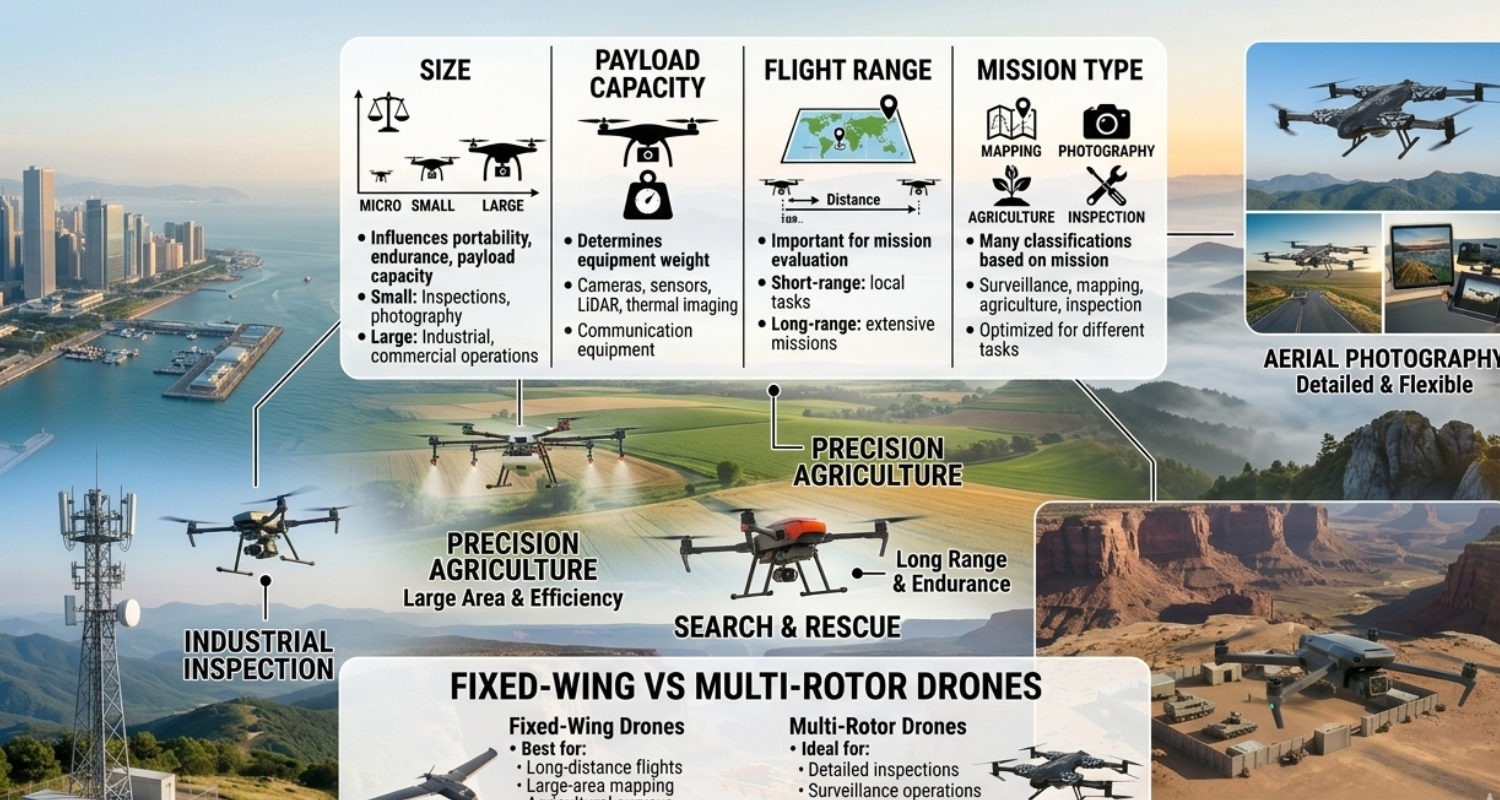
Beyond wing design, drones can also be categorized according to several operational characteristics.
Size
Drone size influences portability, endurance, payload capacity, and mission capability. Smaller drones are often used for inspections and photography, while larger drones support industrial and commercial operations.
Payload Capacity
Payload capacity determines the amount of equipment a drone can carry. Advanced drones may transport cameras, sensors, LiDAR systems, thermal imaging devices, and communication equipment.
Flight Range
Range is an important factor when evaluating UAV types and uses. Some drones are designed for short-range operations, while others can travel long distances to complete extensive missions.
Mission Type
Many drone classifications are based on their intended mission. For example, surveillance drones, mapping drones, agricultural drones, and inspection drones may share similar designs but are optimized for different tasks.
Fixed-Wing vs Multirotor Drones
The comparison between fixed-wing vs multirotor drones is one of the most important considerations when selecting a UAV platform.
Fixed-Wing Drones
Fixed-wing drones are best suited for:
- Long-distance flights
- Large-area mapping
- Agricultural surveys
- Environmental monitoring
Their primary advantage is endurance and coverage.
Multi-Rotor Drones
Multi-rotor drones are ideal for:
- Detailed inspections
- Surveillance operations
- Photography and videography
- Precision monitoring
Their ability to hover provides greater control in confined or complex environments.
The choice between the two depends largely on mission objectives, operational requirements, and the type of data being collected.
Commercial Drone Applications Across Industries
The growth of commercial drone applications has expanded rapidly in recent years. Businesses now rely on UAV technology to improve productivity, safety, and decision-making.
Agriculture
Drones help monitor crop health, assess field conditions, and support precision farming practices. Aerial data enables farmers to make informed decisions and improve resource management.
Infrastructure Inspection
Organizations use drones to inspect buildings, bridges, power lines, and other critical assets. Drone inspections increase efficiency while reducing risks associated with manual inspections.
Environmental Monitoring
Environmental agencies use drones to track ecosystem changes, monitor wildlife habitats, and collect valuable environmental data.
Security and Surveillance
Drones provide real-time aerial awareness for security teams, helping monitor large areas and respond quickly to potential threats.
Mapping and Surveying
Surveyors use drones to capture high-resolution imagery and generate accurate maps for planning, construction, and development projects.
Understanding UAV Types and Uses
As drone technology continues to evolve, organizations have access to a growing range of UAV solutions. Each drone type is designed to meet specific operational requirements, whether the goal is long-range mapping, close-range inspections, surveillance, or environmental monitoring.
Understanding UAV types and uses enables businesses to select platforms that align with their objectives and maximize return on investment.
Conclusion
Understanding the different types of drones is essential for selecting the right UAV for a particular mission. Through effective drone classification, organizations can evaluate factors such as wing design, payload capacity, flight range, and mission requirements.
Whether comparing fixed-wing vs multirotor drones, exploring various types of drones and their uses, or evaluating modern commercial drone applications, choosing the correct platform can significantly improve operational performance. As drone technology continues to advance, UAVs will remain a valuable tool across industries worldwide.