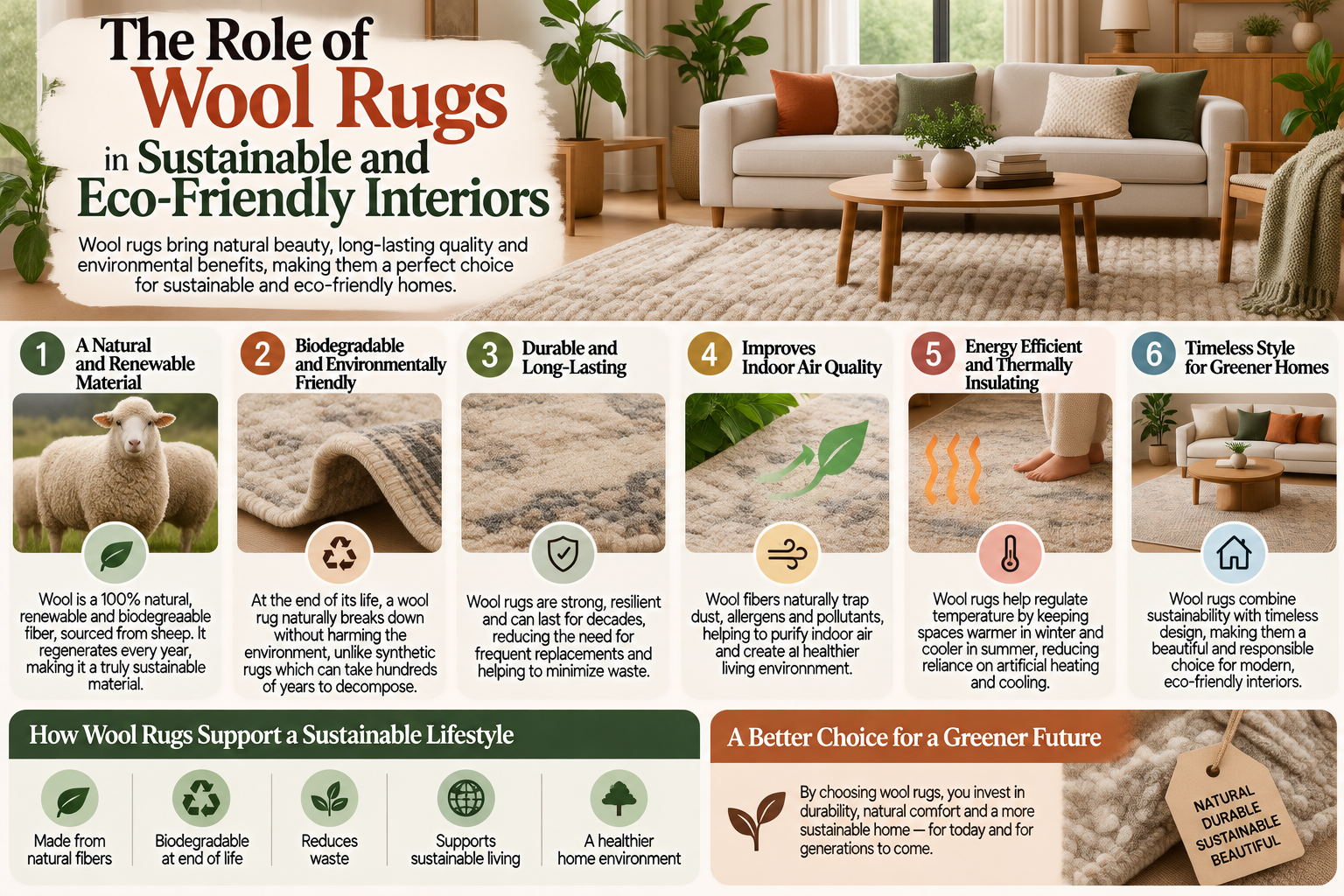
Wool rugs make indoor spaces more comfortable through natural softness, insulation, and moisture control. Wool fibers trap allergens and dust, regulate humidity, and add warmth underfoot. They also improve room acoustics and last for decades, making them a practical and stylish choice for any home.
A rug does more than cover your floor. The right one shapes how a room feels, sounds, and even smells. Among all the options available, wool rugs stand out for one simple reason: they work with nature, not against it.
Wool has warmed homes for thousands of years, and modern science backs up what people have always known. This natural fiber keeps you cozy in winter, cool in summer, and breathing cleaner air all year round. In this post, you’ll learn exactly how wool rugs improve indoor comfort, what health benefits they bring, and how to choose and care for one that lasts.

What makes wool a good fiber for indoor spaces?
Wool comes from sheep, which means it’s renewable, biodegradable, and free from synthetic chemicals. These qualities make it one of the safest and most reliable materials for your home.
Why are wool rugs so soft and durable?
Wool fibers are naturally crimped, giving them a springy, cushioned feel underfoot. This same crimp helps the fiber bounce back after being walked on, so a quality wool rug keeps its shape for years.
Durability is another strength. Wool can bend over 20,000 times without breaking, compared to cotton, which breaks after far fewer bends. A well-made wool rug can last 20 to 50 years with proper care, making it a smart long-term investment.
How does wool keep a room comfortable?
Wool is a natural insulator. The fibers trap pockets of air, which slows the transfer of heat. In winter, this keeps warmth inside the room. In summer, the same property helps block heat from rising through the floor.
Wool also absorbs sound. A wool rug softens footsteps, reduces echo, and makes open rooms feel calmer and quieter. If you live in a busy household or an apartment with hard floors, this acoustic benefit matters more than most people expect.
What are the health benefits of wool rugs?
Beyond comfort, wool rugs actively support a healthier indoor environment. Two benefits stand out: cleaner air and balanced humidity.
Can wool rugs improve indoor air quality?
Yes. Wool fibers have a natural ability to trap dust, pollen, and other airborne particles. Instead of floating around the room, these allergens get held in the rug until you vacuum them away.
Research from wool industry studies shows that wool can absorb common indoor pollutants like formaldehyde and nitrogen dioxide, locking them into the fiber. This makes wool a helpful choice for families with allergies or anyone sensitive to dust.
How does wool regulate humidity?
Wool can absorb up to 30% of its own weight in moisture without feeling damp. When the air is humid, the fiber pulls in excess moisture. When the air is dry, it releases that moisture back.
This natural balancing act helps prevent the clammy or overly dry conditions that make rooms uncomfortable. It also discourages mold and mildew growth, since the fiber manages moisture rather than letting it sit.
How do wool rugs add to a room’s look?
Comfort matters, but so does style. Wool rugs bring texture, depth, and warmth that synthetic rugs struggle to match.
What makes wool rugs visually appealing?
Wool holds dye exceptionally well, so colors stay rich and vivid for years. The fiber also takes detail beautifully, which is why intricate patterns and designs look sharp on wool. Whether you want a bold statement piece or a subtle neutral, wool delivers crisp color and lasting texture.
How do you style a wool rug in different rooms?
A few simple tips help any wool rug fit your space:
- Living rooms: Choose a rug large enough that the front legs of your sofa and chairs rest on it. This ties the seating area together.
- Bedrooms: Place a soft wool rug under the bed so your feet land on warmth each morning.
- Dining rooms: Pick a flat, low-pile wool rug that’s easy to clean and large enough for chairs to slide out without catching the edge.
- Layering: Stack a smaller patterned wool rug over a larger neutral one to add depth.
Where can you buy quality wool rugs online?
When you buy rugs online, look for sellers who share clear details about fiber content, knot density, and origin. Trustworthy stores list whether a rug is handmade or machine-made, list the materials honestly, and offer photos that show real texture and color.
The Ambiente offers a curated range of handcrafted wool rugs, with both ready-to-ship and bespoke options. Shopping with a specialist means you get accurate information and genuine quality, rather than guesswork.
What goes into premium handmade rugs in India?
India produces some of the finest handwoven rugs in the world, and the craft behind them deserves attention.
What traditional techniques do artisans use?
Bhadohi, in Uttar Pradesh, is South Asia’s largest hub for hand-knotted carpet weaving. Skilled artisans there tie each knot by hand, a process that can take months for a single rug. This careful work creates the density, detail, and durability that machine-made rugs cannot match.
The Ambiente works with a network of artisans rooted in this tradition. Notably, 4,000 of its workforce are women weavers, which supports sustainable livelihoods alongside exceptional craft.
Why is handmade quality worth it?
A handmade rug carries small variations that prove a human made it, not a machine. These rugs use higher knot counts, better wool, and time-tested methods. The result is a floor covering that lasts longer, looks better, and holds its value. Premium handmade rugs in India combine this skill with fair pricing, making real quality accessible.
How do you care for a wool rug?
Wool rugs are surprisingly easy to maintain, and good care keeps them looking great for decades.
What are the basic cleaning steps?
- Vacuum regularly: Once a week removes dust and keeps fibers fresh. Avoid a rotating beater bar, which can pull at the wool.
- Act fast on spills: Blot stains with a clean cloth. Never rub, as rubbing pushes the spill deeper.
- Rotate the rug: Turn it every few months so it wears evenly and fades uniformly under sunlight.
- Deep clean yearly: A professional wool cleaning once a year refreshes the fiber without damaging it.
How do you make a wool rug last longer?
Use a rug pad underneath to reduce friction and slipping. Keep the rug out of constant direct sunlight to protect the colors. Address moth risk by vacuuming regularly and airing the rug out a few times a year. With these habits, your wool rug can serve your home for generations.
Making the right choice for your home comfort
Wool rugs deliver a rare mix of benefits: softness underfoot, natural insulation, cleaner air, balanced humidity, and lasting beauty. They handle daily life well and reward simple care with decades of use.
When you’re ready to buy rugs online, focus on fiber quality, craftsmanship, and honest sellers. Premium handmade rugs in India, like those from The Ambiente, bring together traditional skill and modern design at a fair price. Choose a wool rug, and you choose comfort that lasts.
Frequently asked questions
Are wool rugs worth the higher price?
Yes, for most homes. A quality wool rug lasts 20 to 50 years, resists stains naturally, and keeps its look far longer than synthetic options. The higher upfront cost spreads across decades of use, making wool a strong value over time.
Do wool rugs trigger allergies?
No, wool rugs usually help allergy sufferers. The fibers trap dust and pollen until you vacuum them away, keeping these particles out of the air. Wool is also naturally resistant to dust mites and mold.
How often should I clean a wool rug?
Vacuum once a week and treat spills right away. Schedule a professional deep clean once a year. This routine keeps the fiber healthy and the colors bright without much effort.
Can wool rugs be used in homes with kids and pets?
Yes. Wool is durable, naturally stain-resistant, and easy to spot-clean. Its springy fibers handle heavy foot traffic and bounce back well, which suits busy family homes.

What’s the difference between handmade and machine-made wool rugs?
Handmade rugs are hand-knotted by artisans, with higher knot density, better materials, and longer life. Machine-made rugs are faster and cheaper to produce but lack the detail, durability, and character of handmade pieces.