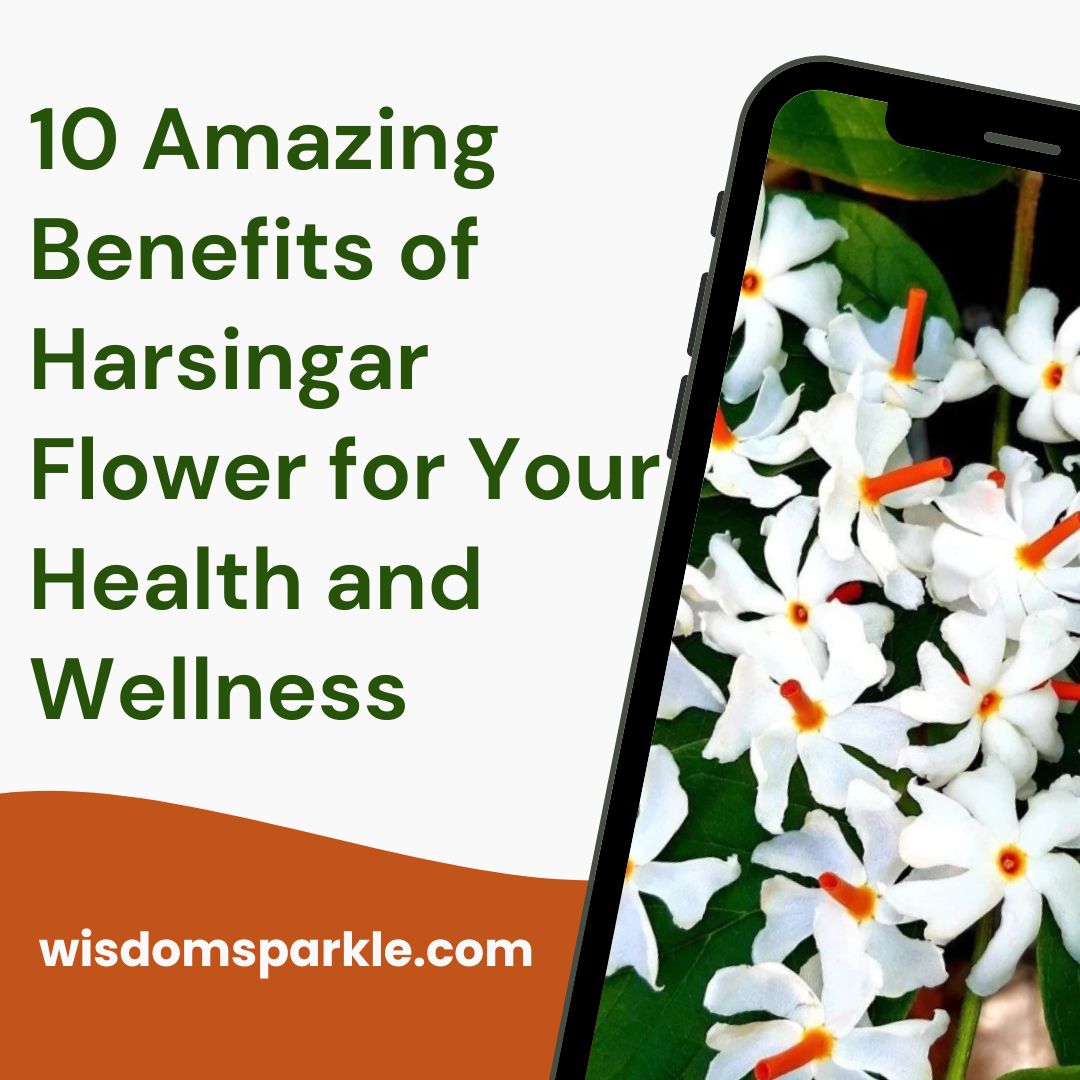
Harsingar is a beautiful flower that has been part of Indian gardens and traditions for many years. Its small white petals and orange center make it easy to recognize. The flower also has a soft fragrance that becomes noticeable when it blooms at night.
The plant is known by several names, including Parijat, Shiuli, and Night-Flowering Jasmine. Its scientific name is Nyctanthes arbor-tristis.
Apart from its beauty, Harsingar has been used in traditional wellness practices. Different parts of the plant have been used by people for generations.

Still, it is important to understand that traditional use is not the same as proven medical treatment. Anyone thinking about using Harsingar for a health concern should talk to a healthcare professional first.
What Makes Harsingar Special?
Harsingar is different from many garden flowers because it mainly blooms during the night. By early morning, many flowers naturally fall to the ground.
The flower has white petals with an orange center. Its natural fragrance makes it a favorite among many flower lovers.
The plant can grow as a small tree or shrub and can become a lovely part of a home garden.
Traditional Health Uses of Harsingar
Harsingar has been valued in traditional systems of wellness. People have traditionally used different parts of the plant, including its leaves, flowers, and bark.
These uses vary from region to region.
1. Traditional Support During Seasonal Problems
Harsingar has traditionally been used in some household practices during seasonal health problems.
However, symptoms such as fever, weakness, or body pain can have many causes. It is important not to depend on a homemade remedy when medical attention is needed.
2. Traditional Use for Joint Comfort
Some traditional practices have used Harsingar leaves and other plant parts for joint-related discomfort.
While this is part of traditional knowledge, it does not mean that Harsingar can replace treatment recommended by a doctor.
3. Traditional Use for General Wellness
Harsingar has also been included in traditional preparations for general wellness.
People have used plants like Harsingar because they were easily available in their surroundings.
Today, it is still important to use herbal plants carefully and understand their possible risks.
Traditional Uses of Harsingar Flower
The flowers are often valued for more than their appearance.
Used in Religious Practices
Harsingar flowers are commonly associated with पूजा and traditional offerings. Their white petals and orange centers make them especially attractive.
Used for Natural Fragrance
The flowers have a soft smell. Some people collect fresh fallen flowers and keep them in their homes for their natural fragrance.
Used in Traditional Preparations
Different parts of the Harsingar plant have been used in traditional preparations. The exact method can vary depending on the region and tradition.
It is better not to prepare or consume plant-based remedies without proper guidance.
Harsingar Leaves and Traditional Practices
Although this article focuses on the flower, Harsingar leaves are also important in traditional plant use.
People in different parts of India have used the leaves in home remedies and traditional preparations.
However, the amount, preparation method, and safety can vary. Taking too much of any plant preparation can be harmful.
If you are pregnant, breastfeeding, taking medicines, or managing a health condition, speak with a healthcare professional before using herbal preparations.
Why Do People Love Harsingar?
There is more to Harsingar than traditional use.
Its fragrance is one of its biggest attractions. The flowers bloom when many other garden flowers are resting.
The sight of small white flowers scattered beneath the plant in the morning is also beautiful.
For many people, Harsingar brings a peaceful feeling. It can remind them of quiet mornings and traditional gardens.
How to Care for a Harsingar Plant
Harsingar does not require complicated care when planted in a suitable location.
Give the plant enough sunlight. Use soil that allows excess water to drain.
Water it regularly but avoid keeping the soil constantly wet.
Pruning can help control the plant’s shape and remove weak branches.
A little regular care can help the plant remain healthy and produce flowers.
Safety Tips
It is important to remember that herbs and plants can have side effects.
Do not assume that something is safe simply because it is natural.
Avoid using homemade Harsingar preparations as a replacement for prescribed medicines.
If you have a health problem, speak with a doctor or qualified healthcare professional.
Final Thoughts
Harsingar flower has a special place in Indian homes, gardens, and traditional practices. Its beauty and fragrance make it attractive, while its long history of traditional use makes it interesting.
The plant can be enjoyed as part of nature and culture. If you are interested in its traditional health uses, learn about them carefully and use proper professional guidance.

Harsingar is a simple flower, but its story, fragrance, and cultural value make it truly special.