Key Takeaways
- India’s digital advertising market is projected to reach ₹98,034 crore in 2027, creating a growing market for digital advertising formats.
- Fixed advertising screens limited brand visibility, while autonomous advertising robots can deliver campaigns across multiple approved mall locations.
- AI-powered advertising robots combine digital promotions, interactive touchscreens, navigation assistance, and campaign analytics.
- Mobile advertising inventory creates opportunities for premium brand activations, sponsored shopping experiences, and tenant promotions.
- Mall marketing heads can measure advertising performance through screen plays, shopper interactions, QR scans, and navigation requests.
- Combining fixed screens with mobile advertising robots allows malls to offer advertisers different types of campaign exposure.
Why Are Advertising Robots Becoming Relevant to India’s Retail Media Market in 2027?
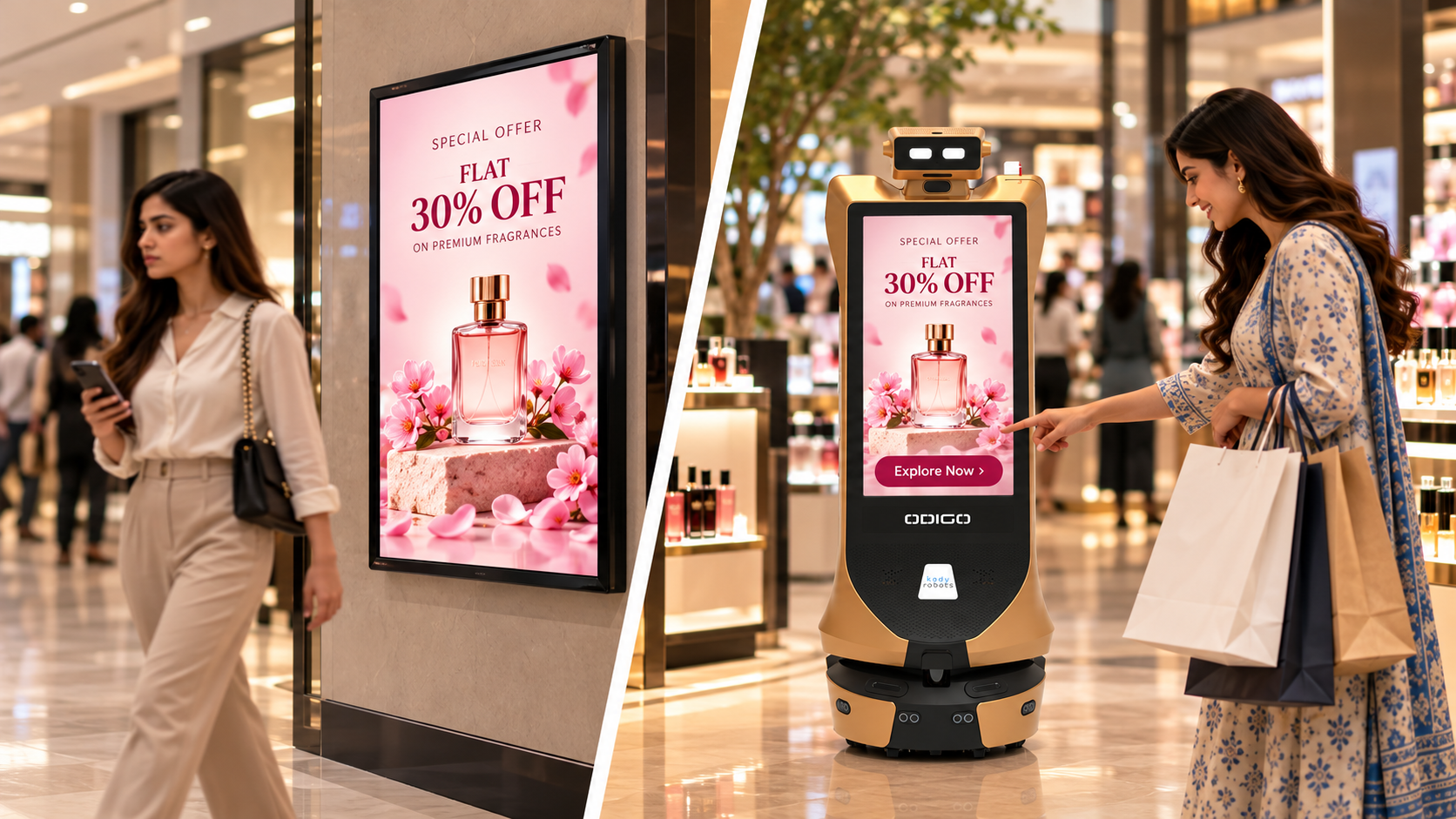
Advertising robots in retail bring brand campaigns closer to shoppers through autonomous navigation, interactive displays, and mobile advertising. Unlike fixed screens that show advertisements from permanent locations, advertising robots can travel across designated mall areas, creating opportunities to reach shoppers during different stages of their shopping journey.
India’s advertising market is also expanding rapidly. According to the dentsu Digital Advertising Report 2026, digital advertising expenditure is projected to reach ₹98,034 crore in 2027, compared with ₹84,977 crore forecast for 2026. This represents approximately 15.4% projected growth.
Although the forecast covers digital advertising broadly rather than mall advertising specifically, it highlights the expanding competition for digital media budgets.

For mall marketing heads, this raises an important commercial question: How can existing visitor footfall support more valuable advertising inventory without requiring additional permanent screen installations?
Mobile advertising robots offer one possible answer. They introduce campaign mobility, shopper interaction, and measurable engagement alongside existing digital signage.
What Is the Difference Between AI-Powered Advertising Robots and Fixed Screens?
The fundamental difference between these in-store advertising solutions is how advertisements reach shoppers.
Fixed screens depend on a predefined installation location. An AI advertising robot can move across mapped routes, display promotional content, and allow shoppers to interact with campaigns.
| Comparison | Fixed Advertising Screens | AI-Powered Advertising Robots |
| Advertising location | Permanent | Mobile within mapped zones |
| Audience reach | Visitors passing the screen | Visitors across approved routes |
| Shopper interaction | Primarily passive | Touchscreen, voice, and QR-based |
| Campaign flexibility | Screen scheduling | Content and route-based scheduling |
| Navigation support | Usually separate | Integrated wayfinding |
| Reporting | Screen plays and optional analytics | Screen plays, interactions, and navigation data |
| Best application | Consistent brand visibility | Interactive campaigns and mobile activations |
For mall operators, fixed screens vs mobile advertising robots for retail stores is therefore a comparison of complementary media formats rather than a choice between old and new technology.
Where Do Fixed Advertising Screens Still Deliver Value?
Fixed screens remain useful for shopping mall advertising, particularly where visibility and predictable placement matter.
Entrance displays, atrium screens, escalator advertising, and food court screens provide advertisers with recognizable positions and consistent campaign exposure.
They also offer relatively straightforward operations because there is no autonomous movement, route planning, or battery management.
However, fixed installations cannot relocate when visitor activity shifts between floors, event zones, and retail sections.
For example, a brand launching a new collection may want advertising exposure near the entrance during the morning and closer to its store during peak shopping hours. A fixed screen cannot accommodate that location change without additional installed inventory.
This limitation creates a practical role for mobile advertising.
How Do AI-Powered Robots Improve In-Store Advertising?
A mall advertising robot expands how marketing teams can plan campaigns, sell advertising placements, and engage visitors.
1. Advertising Can Move Across High-Footfall Zones
A robotic advertising campaign can operate along approved routes near atriums, retail corridors, and promotional areas. Marketing teams can plan different routes for weekday campaigns, weekend activations, or seasonal promotions.
2. Shoppers Can Interact With Advertisements
Interactive screens allow visitors to explore offers, request directions, and access brand information. QR-based promotions can also connect physical advertisements to digital campaign destinations.
These actions provide advertisers with engagement signals beyond scheduled screen plays.
3. Malls Can Offer Additional Advertising Packages
Mobile advertising inventory can create new commercial options, including:
- Premium brand-exclusive campaigns
- Sponsored wayfinding and store discovery
- Time-based campaigns during peak shopping hours
- New product launches and interactive activations
- Multi-zone promotional packages
These packages can complement existing advertising contracts without replacing permanent displays.
How Can Odigo Add Value to Mall Advertising Campaigns?
Odigo combines autonomous movement, digital advertising, and visitor assistance within one advertising platform.
Odigo includes dual 32-inch interactive displays, Laser and Visual SLAM navigation, obstacle avoidance, automatic charging, and a stated battery life of more than 10 hours.
For marketing heads, the value lies in campaign management and measurement.
Odigo’s centralized dashboard supports content scheduling, remote campaign updates, interaction tracking, and performance reporting.
Kody Robots, robotics company in India, reports the following cumulative operating metrics on its product website:
10M+
Ad plays delivered
2.5M+
Visitor interactions
500+
Brands promoted
Odigo has also been showcased at Indian shopping destinations including Jio World Drive in Mumbai, R CITY Mall in Mumbai, Nexus Seawoods Mall in Navi Mumbai, Jio World Drive in Mumbai, VR Mall in Surat, DLF Mall in Noida, LuLu Mall in Thiruvananthapuram, and World Trade Park Mall in Jaipur.These deployments illustrate how mobile advertising can operate within commercial environments rather than remaining a demonstration concept.
How Can Malls Introduce Advertising Robots Without Replacing Existing Screens?
A pilot deployment is a practical starting point. Mall operators can select an advertising route, assign one or more brand campaigns, establish baseline performance metrics, and evaluate visitor interactions against the campaign objectives.
Marketing, operations, and facilities teams should jointly approve routes, charging locations, network access, visitor safety requirements, and campaign reporting responsibilities.
The resulting pilot data can help determine whether mobile advertising deserves a permanent position in the mall’s media inventory.
Conclusion
For Indian malls planning their 2027 advertising strategies, the opportunity is to make existing visitor traffic more valuable to advertisers.Fixed screens provide dependable visibility at established locations. Advertising robots in retail introduce mobility, interaction, and additional campaign formats that can help marketing teams serve brands with different objectives.
The strongest approach may combine both formats, using measurable campaign performance to determine where each delivers value.