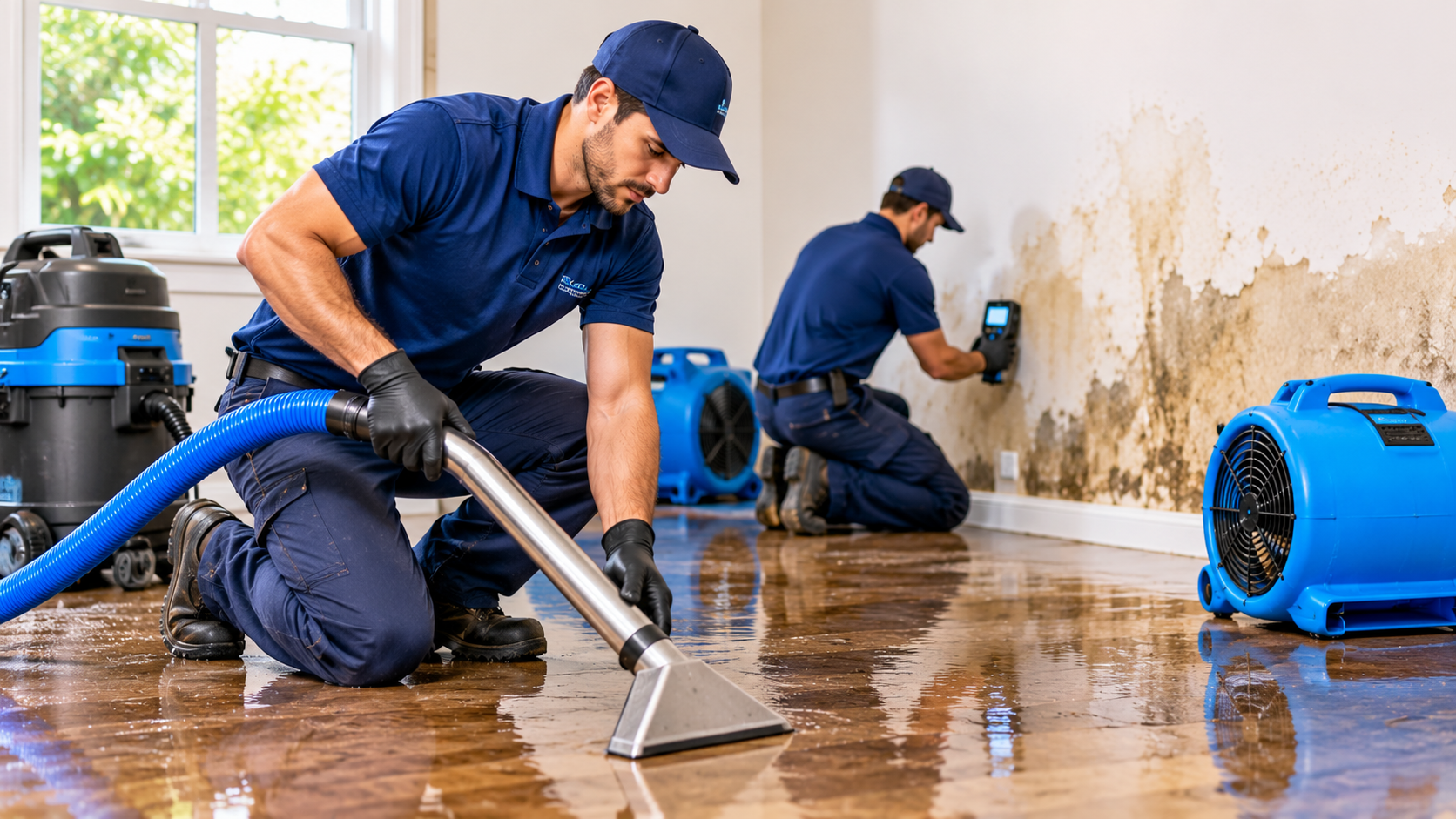
Water mitigation is the emergency work that keeps water damage from getting worse: stopping the source, pulling out standing water, removing what can’t be saved and drying the rest. Restoration, the repair and rebuild, comes later. Mitigation happens in the first hours, and restoration takes days or weeks. How big the second one gets depends mostly on how fast the first one started.
The short answer before the full breakdown
1. Mitigation versus restoration
Picture a burst pipe under a kitchen sink. Mitigation is everything between the pipe letting go and the room reading dry. That means the valve shut off, water pumped out, soaked padding hauled away, air movers and dehumidifiers running, and readings taken until the walls match a dry reference. Restoration is the new drywall, flooring and paint. One crew often does both and sometimes bills them together, but they’re different jobs with different clocks.
2. Why timing is the whole point
Water doesn’t sit politely on the floor. It soaks into padding, climbs drywall and slides under baseboards into places you’ll never see. The EPA’s mold cleanup guidance says to dry wet materials within 24 to 48 hours to prevent mold, and that window is the reason mitigation exists. Wait it out, and a drying job can turn into a demolition job.

What water mitigation includes
1. Stopping the source and checking safety
Someone shuts off the water or blocks the way it’s getting in. Then comes a safety check: power off in wet zones, ceilings checked for sagging, and a judgment about whether the water is clean or contaminated. The industry sorts water into three categories, clean, gray and black, and the category changes the protective gear, the disposal and what can be kept. Sewage and flood water are black. That’s no place for improvising.
2. Water extraction
Pumps and extractors pull standing water out of floors and carpet. A shop vac imitates this job, but only on thin layers. By the time you notice a flooded room, most of the water has already left the surface and gone into the materials, which is why the next steps exist.
3. Moisture mapping
A technician reads moisture levels across floors and walls, usually with a meter and often with a thermal camera, to see how far the water traveled. The readings go on paper, and they decide what stays and what goes.
Why readings come before demolition
Here’s a position some contractors won’t take: tearing out drywall before anyone has taken readings is a sales move, not a plan. Some drywall that reads damp can be dried in place. Some that looks fine is soaked. Readings tell you which is which, though the borderline calls are where honest crews still disagree with each other.
4. Removing what can’t be saved
Carpet padding, soaked insulation and drywall that has been wet and soft for a day or more usually come out, because they hold water too well to dry in time. Solid wood and tile often survive. “Often” is doing some work in that sentence, and a meter settles the doubtful pieces.
Why water damage mitigation matters
1. It limits the size of the loss
Every hour of delay pushes water deeper and widens the wet area. A same-day response can mean drying and a few removed materials. Three days later the same leak can mean a new subfloor.
2. It keeps mold from starting
Mold needs moisture, and the spores are already in your house. Growth can begin within a day or two, so taking the water away takes the fuel away. Once mold starts, you’re paying for remediation on top of everything else.
3. Your insurer expects it
Standard homeowners policies commonly require you to take reasonable steps to protect the property from further damage after a loss. The reasonable cost of those steps is commonly reimbursed as part of a covered claim, though what’s covered depends on your policy and on what caused the water. Flood and sewer backup are often excluded unless you added coverage. If a wet room sits for three days while you wait for an adjuster, the insurer can dispute the part of the damage that grew while you waited. Call the insurer and start mitigation at the same time.
How a mitigation job runs
1. Day one
Extraction, readings, removal of materials that can’t be saved, and equipment placed where the readings say it’s needed. A lot happens fast. By the end of the first visit, the standing water is gone and the machines are running.
2. Days two through five
The equipment runs. A technician returns each day, takes fresh readings, and moves or removes machines from areas that have reached dry. This is the quiet part. A typical job takes about three to five days of drying, though concrete basements and humid weather can stretch it, and St. Louis summers can be humid enough that dehumidifiers do most of the work.
3. The finish line
Mitigation ends when the affected materials read dry compared with an unaffected part of the house. A crew that says it feels dry isn’t done. The daily log you get at the end is also the paper trail an adjuster wants to see.
Doing it yourself or hiring a crew
1. What you can handle
A thin layer of clean water on a hard floor, caught within hours, is a towel-and-fan job. Shut off the source, soak up the water with a wet-dry vacuum made for liquids, run a fan, and look at the spot again tomorrow.
2. When to call
Call a professional when the water came from a drain, a sewer or a flood, when it soaked carpet padding or drywall, or when it sat for a day or more. Call when it’s near outlets or the electrical panel, when a ceiling sags, or when the room still smells or feels clammy after a day of drying. Professional water damage mitigation brings extraction equipment and moisture meters that household tools can’t match.
3. The cases nobody can settle for you
Damp carpet over a slab after a small leak isn’t an obvious call, and I can’t draw the line for your house. A crew that takes readings first and tells you the job is small costs less than a wrong guess in either direction.
How to choose a crew
1. Ask how they’ll prove it’s dry
The answer should be a number: a moisture reading in the affected area compared with a reading from a dry part of your house. “We’ll leave the fans for a few days” is not a plan.
2. Get it in writing
Ask for an itemized estimate that separates extraction, equipment days, demolition and rebuild. A single lump sum hides what you’re paying for, and a price quoted before anyone has taken a reading is a guess.
3. Pick someone who answers at 2 a.m.
Water doesn’t wait for business hours. Gateway Water and Mold handles water damage mitigation around the clock, takes moisture readings before anything gets torn out, and keeps drying logs and photos in the format insurance carriers expect. Whoever you call, ask to see the readings before they cut into a wall.

Conclusion
Put two numbers in your phone today, your insurer’s claim line and a crew that answers at night, so the next 2 a.m. leak starts with a call instead of a search. In a real water mitigation job, the first few hours do more for your house than anything that comes after.
Frequently asked questions
- What’s the difference between water mitigation and restoration?
Mitigation is the emergency work that stops the damage from spreading: stopping the source, extracting water, removing unsalvageable materials and drying. Restoration is the repair and rebuild that follows. - How soon should water damage mitigation start?
As soon as it’s safe, ideally within hours. The EPA recommends drying wet materials within 24 to 48 hours to prevent mold. - Does homeowners insurance pay for mitigation?
Often, when the water came from a sudden event like a burst pipe. Flood and sewer backup are commonly excluded unless you carry added coverage, so check your policy and call your insurer early. - How long does mitigation take?
Drying usually takes about three to five days of equipment, and finished basements, concrete and humid weather can run longer. The job ends when readings show the materials are dry. - Can I skip mitigation if the water has already dried?
A surface can feel dry while the padding, subfloor or wall cavity stays wet. A moisture reading is the only reliable way to know, and a musty smell days later means moisture is still in there.