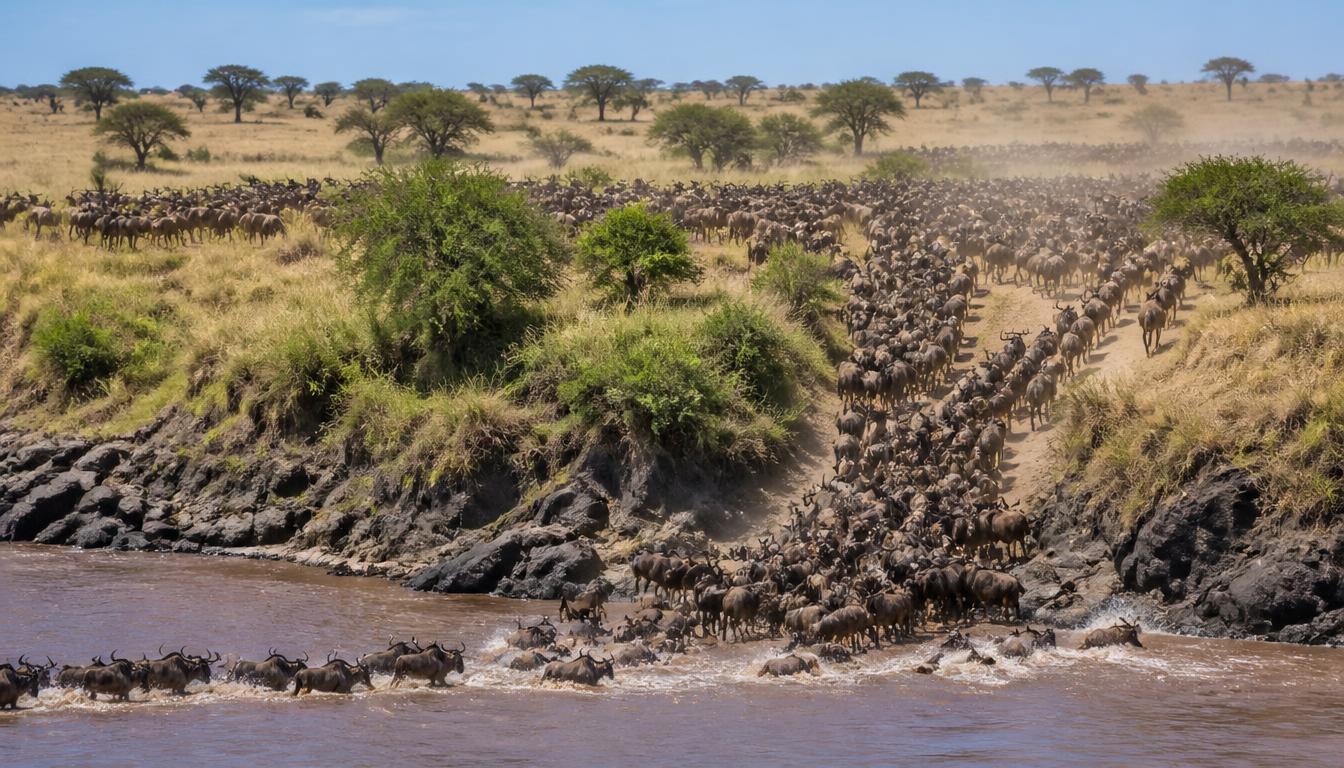
The Mara River crossing is one of the most exciting wildlife events in the world. Every year, thousands of travelers visit East Africa to witness millions of wildebeests crossing dangerous rivers during the Great Migration. This natural event plays a major role in supporting safari tourism in both Kenya and Tanzania.
The wildebeest migration Mara River crossing attracts photographers, wildlife lovers, and adventure travelers from around the world, making it one of the biggest highlights of African safari tourism.
What Is the Mara River Crossing?
The Mara River crossing occurs during the Great Wildebeest Migration, when huge herds of wildebeest, zebras, and gazelles move between Tanzania’s Serengeti and Kenya’s Masai Mara in search of fresh grass and water.
To continue their journey, the animals must cross the Mara River, which is filled with:
- strong currents
- steep riverbanks
- large crocodiles
This creates dramatic wildlife scenes that are famous worldwide.
Why the Mara River Crossing Attracts Tourists
The wildebeest migration Mara River crossing is one of nature’s most powerful survival events. Tourists travel long distances to see:
- massive herds crossing rivers
- predator attacks
- animal movement across open plains
- real wildlife behavior in nature
Unlike zoos or wildlife parks, the migration offers a completely natural and unpredictable experience.
This excitement makes the Mara River crossing one of the top safari attractions in Africa.
Impact on Safari Tourism in Kenya and Tanzania
The migration season brings thousands of visitors to:
- Masai Mara National Reserve in Kenya
- Serengeti National Park in Tanzania
Safari tourism during this period helps:
- increase hotel and lodge bookings
- create jobs for safari guides and drivers
- support local travel businesses
- improve tourism income for both countries
The wildebeest migration Mara River crossing has become a major source of tourism revenue in East Africa.
Wildlife Experiences During River Crossings
Watching a river crossing is a unique experience because every crossing is different.
Visitors may see:
- wildebeests jumping into the river
- crocodiles hunting near the banks
- zebras following the herds
- lions and hyenas nearby
The dramatic action gives travelers unforgettable safari memories and excellent opportunities for wildlife photography.
Benefits for Local Communities and Businesses
Safari tourism created by the migration supports many local communities.
Benefits include:
- employment in safari camps and lodges
- income for local guides and drivers
- support for local craft markets
- investment in roads and tourism services
Many communities near the migration areas depend on tourism during the migration season.
Best Time to Witness the Mara River Crossing
The best time to see the wildebeest migration Mara River crossing is usually between:
- July and October
During this period:
- herds move toward Masai Mara
- river crossing activity increases
- predator sightings become more common
Because this is peak safari season, many travelers book tours several months in advance.
Safari Tips for Watching the River Crossing
To enjoy the experience fully:
- book safari lodges early
- choose camps near crossing points
- carry binoculars and camera equipment
- go on early morning game drives
- be patient because crossings are unpredictable
Experienced safari guides can improve your chances of seeing active crossings.
Conclusion
The wildebeest migration Mara River crossing is not only one of the world’s greatest wildlife events but also an important part of safari tourism in East Africa. It attracts travelers from around the globe and supports local businesses, communities, and conservation efforts.
From exciting wildlife action to beautiful natural landscapes, the Mara River crossing continues to create unforgettable safari experiences while helping tourism grow in Kenya and Tanzania.