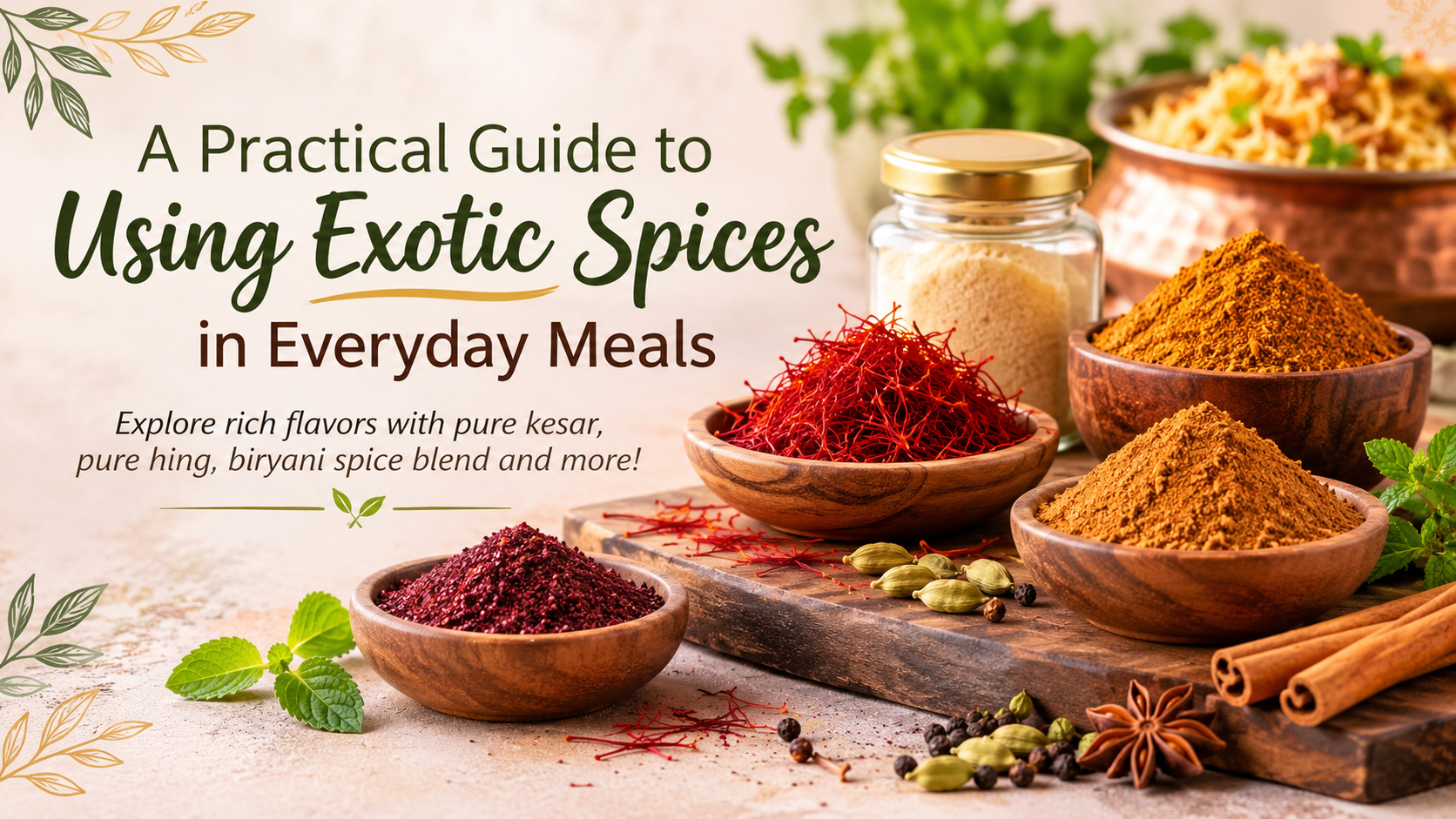
Have you ever tasted a dish at a restaurant and wondered what gives it that wonderful aroma or unexpected burst of flavor? Sometimes, the secret is not a complicated cooking technique or a long list of ingredients. It is simply the right spice.
Spices have a remarkable ability to change the character of everyday meals. A pinch of something floral can make rice feel special, while a little tangy seasoning can brighten roasted vegetables. Exploring exotic spices is a great way to discover new flavors without completely changing the way you cook.
From delicate saffron to earthy hing and warming spice blends, these ingredients bring different culinary traditions into your kitchen. The best part? You do not need to be an experienced cook to enjoy them. A little curiosity and a willingness to experiment are often enough.

What Makes a Spice Exotic?
The word exotic often describes spices that are less familiar in everyday American cooking or are closely associated with particular regional food traditions. It does not necessarily mean that a spice is extremely hot or difficult to use.
Some spices offer floral notes, others bring citrusy freshness, earthy depth, gentle bitterness, or a warm sweetness. Their flavors can be subtle or pronounced, depending on how they are prepared and how much you use.
For example:
-
Saffron adds delicate floral notes and a golden color.
-
Allspice combines flavors reminiscent of cinnamon, cloves, nutmeg, and pepper.
-
Sumac offers a tangy, lemon-like character.
-
Mace brings a warm, slightly sweet aroma.
-
Green Sichuan peppercorns create a distinctive citrusy, tingling sensation.
These ingredients show that spice exploration is about more than adding heat. It is about discovering different dimensions of flavor.
Five Interesting Spices Worth Exploring
1. Saffron: A Delicate Touch of Color and Aroma
Saffron, also known as kesar, comes from the dried stigmas of the crocus flower. Each flower produces only a few strands, which makes harvesting a careful, labor-intensive process.
Often used in rice dishes, desserts, and beverages, saffron is appreciated for its subtle floral aroma and golden color. If you want to try pure kesar, begin with a few strands.
A simple way to use it is to soak the strands in warm water or milk for several minutes before adding the infusion to rice, sauces, or desserts. This helps distribute its color and aroma more evenly.
Zaica Life’s saffron is described as organically grown and hand-harvested in Kashmir.
2. Hing: A Little Goes a Long Way
Hing, also called asafoetida, is known for its strong aroma and savory, onion-like flavor. Although its smell can be quite intense in its uncooked form, heating it briefly in oil or ghee helps develop a more rounded flavor.
Pure hing is commonly used in lentil dishes, vegetable preparations, soups, and savory sauces. Because it is concentrated, a small pinch is usually enough.
If you are new to this ingredient, try adding a tiny amount to warm oil before incorporating your other ingredients. You may be surprised by how much depth such a small quantity can provide.
3. Biryani Masala: Layers of Flavor in One Blend
Biryani is known for its fragrant rice, carefully layered ingredients, and balanced seasoning. A well-composed biryani spice blend helps bring those flavors together.
Zaica Life’s Biryani Masala includes ingredients such as black cardamom, cumin, Kashmiri chilies, ginger, star anise, mace, green cardamom, cinnamon, cloves, and curry leaves. It is a whole-spice blend rather than a conventional finely ground powder.
You can use biryani seasoning in vegetable rice, chicken and rice dishes, roasted vegetables, or savory grain bowls. Start with a modest amount and adjust according to the ingredients and your taste preferences.
4. Garam Masala: Warmth for Everyday Cooking
A garam masala spice blend is a familiar ingredient in many South Asian kitchens. It generally combines warming spices such as cinnamon, cardamom, cloves, cumin, and other complementary ingredients.
Its flavor is aromatic and layered rather than simply hot. Depending on the recipe, it can add depth to lentils, vegetable dishes, soups, sauces, and meat preparations.
Zaica Life’s Mother Masala Blend is its garam masala offering, with additional ingredients including chili powder and rock salt. It can be a useful seasoning option when you want several complementary flavors in one addition.
5. Sumac: A Bright and Tangy Alternative
Not every interesting spice needs to be warm or earthy. Sumac is known for its refreshing, tangy flavor, often compared to lemon.
Sprinkle it over roasted vegetables, grilled chicken, salads, hummus, or flatbreads. It can also add a pleasant sour note to marinades and dipping sauces.
If a recipe needs brightness but you do not want to add more liquid, sumac is an ingredient worth experimenting with.
How to Choose the Right Spice for Your Dish
Choosing spices becomes easier when you think about the flavor your dish needs rather than selecting ingredients at random.
| Spice | Main flavor profile | Suggested uses |
|---|---|---|
| Saffron | Floral and delicate | Rice, desserts, beverages |
| Hing | Strong and savory | Lentils, vegetables, soups |
| Biryani Masala | Warm and aromatic | Rice, chicken, vegetables |
| Garam Masala | Warm and layered | Curries, sauces, lentils |
| Sumac | Tangy and citrus-like | Salads, grilled foods, dips |
This simple comparison can help you decide what to reach for when a dish feels like it needs something extra.
Simple Tips for Using Exotic Spices at Home
You do not need to purchase dozens of ingredients or learn complicated recipes to start experimenting. A few thoughtful habits can make a difference.
Start small: Strong ingredients such as hing and saffron are best introduced in modest quantities. You can always add more, but removing excess seasoning is difficult.
Understand when to add spices: Whole spices often benefit from gentle heating in oil, while delicate ingredients such as saffron are commonly steeped before use.
Store them properly: Keep spices in airtight containers away from direct sunlight, moisture, and excessive heat. This helps preserve their aroma and flavor.
Try familiar recipes first: Add a new spice to a dish you already enjoy. For instance, experiment with sumac on roasted vegetables or saffron in a simple rice recipe.
Pay attention to freshness: Aroma is an important indicator of spice quality. If a spice has lost much of its characteristic fragrance, it may not contribute the flavor you expect.
Discover New Flavors, One Dish at a Time
Cooking is a wonderful opportunity to explore different ingredients and traditions. You do not need to transform your entire pantry to make meals more interesting. Sometimes, a few strands of saffron, a pinch of hing, or a sprinkle of sumac are enough to introduce a new flavor experience.
As you become familiar with different exotic seasonings, you will start recognizing which flavors complement your favorite foods. Explore Zaica Life’s Exotic Spices Collection to learn about distinctive ingredients, their origins, and how they can find a place in your everyday cooking.
After all, good cooking is not always about following more rules. Sometimes, it is about being curious enough to try something new.
Frequently Asked Questions (FAQ)
1. What are exotic spices used for?
Exotic spices add distinctive flavors, aromas, and colors to everyday recipes. They can be used in rice dishes, soups, sauces, marinades, vegetables, baked goods, and beverages.
2. Is saffron the same as kesar?
Yes. Kesar is another name for saffron. It comes from the dried stigmas of the crocus flower and is commonly used to add floral aroma and golden color to food.
3. How much hing should beginners use?
Start with a very small pinch because hing has a concentrated flavor. Briefly heating it in oil or ghee before adding other ingredients helps develop its savory character.
4. What is the difference between biryani masala and garam masala?
Biryani masala is formulated to season biryani-style rice dishes, while garam masala is a more general warming spice blend used in a variety of savory preparations. Their ingredients and proportions can vary.
5. Are exotic spices always spicy?
No. Many exotic spices are not hot at all. Saffron is floral, sumac is tangy, and allspice offers warm, sweet notes. Flavor and heat are two different things.

6. How should exotic spices be stored?
Store spices in airtight containers in a cool, dry cupboard, away from sunlight and moisture. Proper storage helps maintain their aroma and flavor for longer.