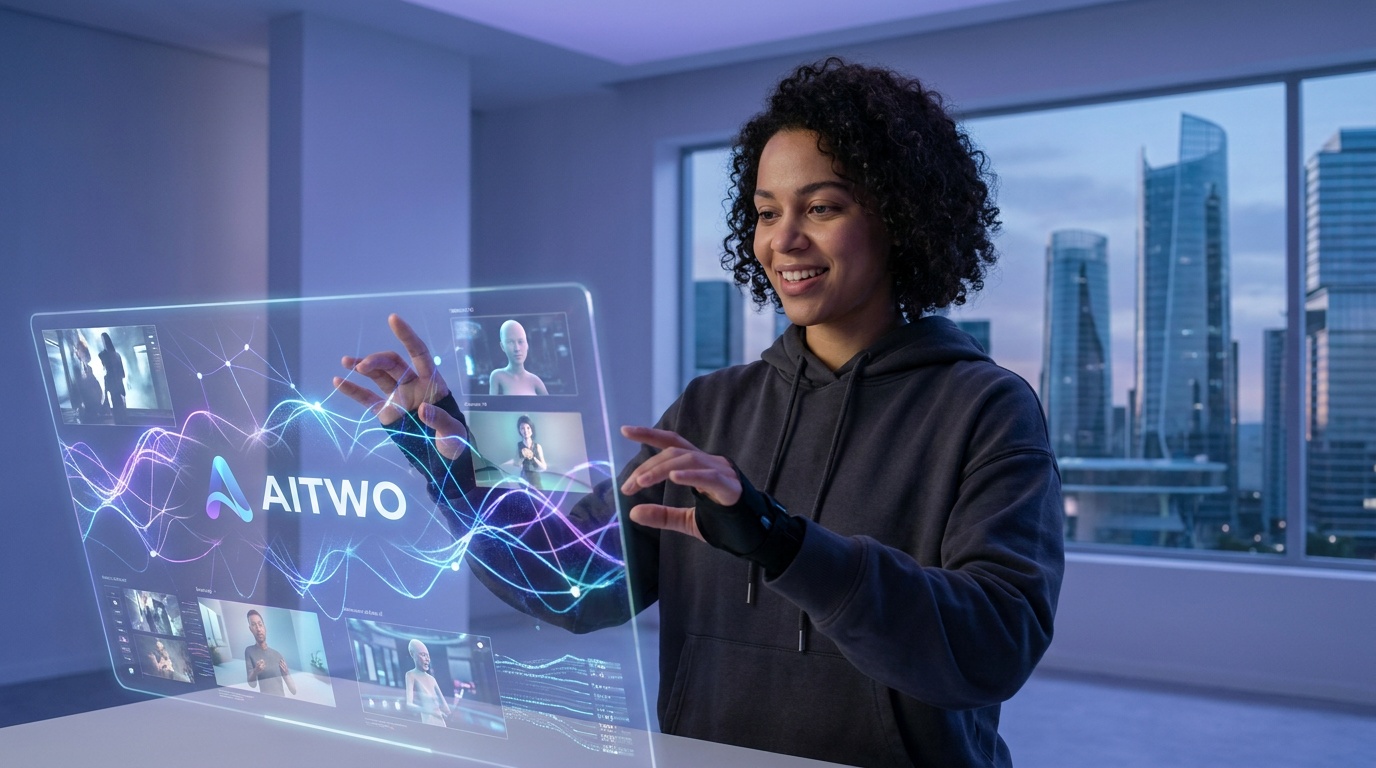
Content consumption patterns have fundamentally transformed. Open any social platform, examine any successful marketing campaign, analyze engagement metrics across channels—video consistently outperforms every other format by substantial margins.
The persistent problem? Creating professional-quality video has remained prohibitively difficult for most people and organizations. Technical expertise, expensive equipment, production knowledge, editing skills—these barriers have kept quality video creation out of reach for the majority.
That’s changing now, and the pace of transformation is accelerating dramatically.

Breaking Down What’s Actually Happening
Let me explain this technology in the clearest possible terms without unnecessary complexity.
AI video generation systems create original moving footage from text descriptions you provide. You write something like “a potter shaping clay on a spinning wheel in a sunlit studio, shelves of finished ceramics behind, tools scattered on a wooden workbench, dust particles floating through window light”—and the system generates that exact scene as usable video footage.
The technology functions by learning from enormous collections of existing video content. These systems study how potters manipulate clay, how spinning wheels operate, how sunlight behaves in studio environments, how dust particles move through light beams. They absorb visual patterns so completely they can generate new scenes following the same realistic physical principles.
This isn’t stitching together stock footage clips or layering effects on existing content. It’s creating genuinely original footage based on learned understanding of visual reality and natural physics. Does it work flawlessly every time? No. Is it reliable enough for serious professional use? Absolutely.
The Strategic Advantages That Actually Matter
Cost reduction dominates every conversation about AI video tools. Yes, generation costs dramatically less than traditional production—that’s real and significant. But the deeper strategic benefits that fundamentally change operations matter even more.
Creative exploration becomes economically viable. When testing ideas costs minutes instead of thousands of dollars, you explore exponentially more creative directions. That expanded exploration leads to discovering superior solutions because you’re willing to experiment with approaches you’d never risk with expensive traditional production.
Stakeholder alignment happens automatically. Showing actual video eliminates all the interpretation problems that plague verbal descriptions and written proposals. Everyone sees identical content rather than imagining their own version of your explanation. Projects advance faster when communication is inherently visual.
Iteration becomes lightweight and rapid. Traditional production makes changes expensive and complicated—coordinating schedules, locations, equipment, personnel. AI generation makes changes trivial—adjust parameters, regenerate, evaluate. What used to create project delays now enables continuous rapid improvement.
Volume production becomes realistically sustainable. Modern content strategies demand constant output across multiple platforms with varied format requirements. AI generation makes producing that volume achievable without destroying team morale or consuming budgets allocated for other priorities.
Creative constraints effectively disappear. Need specific environmental conditions you can’t access or afford? Particular locations, perfect weather, ideal lighting, scenarios that don’t physically exist? Generate exactly what serves your narrative regardless of practical limitations or budget constraints.
Understanding Different Generation Methods
“AI video generation” actually encompasses several distinct approaches, each solving different creative challenges effectively.
Text-to-video creation builds everything from written descriptions alone. No source materials, no reference footage—just your instructions. This excels when visualizing products that don’t exist yet, creating physically impossible scenarios, or exploring creative concepts before significant resource commitment.
Image-to-video animation transforms static photographs into moving footage. Provide still images—product photography, architectural shots, landscape photos, portraits—and the AI adds realistic motion. Cameras glide through space, subjects animate naturally, static photography becomes dynamic cinematography.
Video style transformation reimagines existing footage through different aesthetic lenses. Apply dramatic stylistic changes—artistic rendering, historical period aesthetics, emotional atmospheres, branded visual treatments. The underlying motion and composition remain while appearance transforms completely.
Directorial camera control provides precise authority over cinematography. Specify exact camera movements—gradual zooms, sweeping pans, orbital rotations, tracking shots alongside action—and the AI executes those movements with professional precision and consistency.
Understanding which method fits your specific creative challenge prevents wasted time experimenting with inappropriate approaches.
The Surprisingly Diverse Adoption Landscape
Initial predictions positioned this technology exclusively for advertising agencies and technology companies. Real-world adoption patterns reveal far more interesting diversity across industries.
Manufacturing operations creating safety and training content. Equipment operation demonstrations, hazard awareness materials, maintenance procedures, quality control processes—improving workplace safety and operational efficiency through clear visual instruction.
Financial institutions explaining complex offerings. Investment strategies, insurance coverage options, lending processes, retirement planning concepts—making abstract financial topics tangible and understandable through visual explanation.
Healthcare providers developing patient education resources. Treatment explanations, procedure preparations, medication instructions, wellness guidance, preventive care information—improving health outcomes through accessible visual communication.
Educational publishers producing learning materials. Textbook supplements, online course content, concept visualizations, historical reconstructions, scientific demonstrations—enhancing education through engaging multimedia resources.
Government agencies serving constituents effectively. Service explanations, application processes, emergency preparedness, public health campaigns, civic engagement—making government information accessible through clear visual content.
Nonprofit organizations advancing mission impact. Program demonstrations, beneficiary stories, volunteer recruitment, donor appreciation, advocacy campaigns—communicating effectively despite limited marketing budgets.
The connecting thread? Organizations with important messages but without unlimited production resources or in-house video expertise.
Maximizing Results Through Integrated Workflows
Sophisticated content creators combine AI video generation with AI image enhancement for substantially superior outcomes. This integrated approach produces results that transcend what either technology achieves independently.
Pre-enhance all source materials comprehensively. Before animating photographs or using reference images, enhance them thoroughly. Sharpen details, optimize color balance, increase resolution, reduce noise, improve contrast—superior inputs consistently produce higher-quality video outputs.
Post-enhance extracted key frames strategically. Pull important frames from generated videos and enhance them individually for use as thumbnails, social media posts, promotional materials, presentation slides, email campaign headers. Even if video has minor motion artifacts, enhanced stills look professionally polished.
Implement intelligent resolution management. Generate at moderate resolution for processing efficiency, then selectively upscale when specific applications or distribution platforms demand higher resolution. This workflow balances speed with quality requirements intelligently.
Create platform-specific optimized variations. Transform one base video into multiple tailored versions through targeted enhancement. Create vibrant saturated versions for Instagram, professionally subdued versions for LinkedIn, high-contrast dramatic versions for TikTok, subtly polished versions for corporate communications.
Apply targeted frame-specific corrections. Sometimes generated video is excellent except for small issues in just a few specific frames. Enhancing only those problematic frames saves regeneration time while maintaining overall quality and consistency.
Integration of both technologies represents current best practice for professional-quality content creation workflows.
Real Applications Delivering Measurable Business Value
Abstract technological capabilities are intellectually interesting, but practical applications creating measurable business value matter most. Here’s where this technology delivers real impact.
Product launch campaigns generating market awareness. Feature demonstrations, use case scenarios, comparison content, early access previews, customer testimonials—building excitement and demand before product availability.
Customer success programs improving retention metrics. Onboarding sequences, feature tutorials, best practice demonstrations, troubleshooting guides, advanced tips—helping customers extract maximum value from products and services.
Sales enablement materials increasing close rates. Pitch presentations, product demonstrations, case studies, competitive positioning, objection handling—equipping sales teams with professional content that persuades prospects effectively.
Internal communications maintaining employee engagement. Company updates, policy explanations, leadership messages, cultural initiatives, recognition programs—keeping teams informed and connected through engaging video.
Social media strategies building audience relationships. Platform-specific content, trending topic responses, behind-the-scenes footage, community engagement, user-generated content amplification—maintaining consistent presence without exhausting creative resources.
Training and development programs building organizational capabilities. Skills demonstrations, scenario-based learning, compliance training, continuing education, leadership development—improving performance through effective visual instruction.
These applications aren’t someday possibilities—they’re happening now with measurable impacts on engagement, conversion, retention, and business outcomes.
Honest Assessment of Current Limitations
Realistic discussion about present weaknesses prevents disappointment and guides appropriate project selection. Understanding where technology currently struggles helps choose applications where it excels.
Text rendering quality remains consistently poor. On-screen text typically appears distorted, illegible, or meaningless. If readable text matters for your application, plan to add it during post-production editing rather than depending on generation.
Exact brand element reproduction can be challenging. Generic representations often work adequately, but precise logo reproduction, specific product fidelity, or exact brand color matching typically requires post-production refinement to meet strict brand guidelines.
Extended narrative coherence across long sequences remains difficult. Individual scenes work excellently, but maintaining perfect visual consistency across multiple connected scenes with recurring characters and consistent environments still challenges current technology.
Extreme close-up detail quality sometimes reveals imperfections. Wide and medium shots render reliably and professionally, but extreme close-ups exposing minute details—facial features, hand movements, small objects—occasionally show artifacts.
Complex multi-subject choreography can appear unnatural. Simple scenarios with individual subjects or basic two-person interactions work well, but intricate coordination involving multiple characters often produces somewhat awkward results.
Understanding these boundaries helps select applications where AI generation excels and avoid situations where it currently struggles.
Effective Prompting Strategies
Output quality correlates directly with prompt quality. These techniques consistently improve generation outcomes across platforms.
Prioritize critical information strategically. Lead with what matters most to your creative vision. The AI emphasizes information appearing early in prompts more heavily than later details.
Calibrate descriptive specificity appropriately. Too vague produces generic unremarkable results. Too detailed constrains unnecessarily and can confuse interpretation. Find productive balance between helpful guidance and creative flexibility.
Include atmospheric and emotional context. Don’t just describe literal physical elements—mention mood, energy level, emotional tone, atmosphere. These qualitative descriptors guide AI interpretation beyond just physical components.
Employ professional cinematography terminology. Language like “shallow depth of field,” “golden hour lighting,” “tracking shot,” “bokeh effect” communicates effectively because the AI learned these standard industry terms during training.
Iterate deliberately based on actual results. Generate, carefully analyze what worked and what didn’t, adjust specific elements, regenerate. Progressive systematic refinement outperforms attempting perfect prompts on first attempts.
Build and maintain reference libraries. Archive prompts that produced excellent results for future reference and pattern identification. Your personal library becomes increasingly valuable over time.
The Clear Evolutionary Trajectory
Predicting exact timelines remains difficult, but the directional evolution is unmistakable and obvious.
Duration capabilities will expand substantially. Current practical limits around 30-60 seconds will extend to multiple minutes, then longer. Extended coherent sequences maintaining consistent quality throughout their duration.
Resolution standards will continue increasing. 4K generation is emerging now as standard quality level. 8K will follow predictably as infrastructure scales and processing power improves further.
Physical realism will improve continuously. Complex elements like water behavior, fire dynamics, smoke movement, fabric draping, hair physics—elements that currently sometimes appear slightly unconvincing—will render increasingly realistically.
Creative control precision will expand dramatically. Character appearance consistency, object placement accuracy, camera behavior predictability, lighting setup control—all becoming progressively more controllable and reliable.
Processing speed will accelerate significantly. What requires minutes today will require seconds soon as infrastructure scales and algorithms optimize further. Real-time interactive creative workflows emerging.
Cost accessibility will improve substantially. What costs meaningful money today will become progressively affordable as competition intensifies, efficiency gains compound, and infrastructure costs decrease.
Practical Starting Strategy
Ready to explore this technology but uncertain where to begin? Here’s a sensible entry approach.
Define one narrow specific application. Don’t attempt comprehensive workflow transformation immediately. Choose one specific use case and concentrate there to build understanding and confidence.
Research platform examples extensively. Study what others have created with tools you’re considering. Examine quality ranges, style capabilities, output characteristics before investing significant time.
Begin with straightforward simple concepts. Don’t attempt complex multi-element scenes initially. Simple clear prompts teach you how systems interpret instructions and respond.
Expect and embrace iteration as normal. Initial attempts won’t achieve perfection. That’s expected and normal. Analyze results, adjust approaches systematically, iterate deliberately.
Integrate with existing workflows and assets. Combine AI-generated content with stock footage, original filming, graphics, photography. Hybrid approaches often outperform pure AI-only strategies.
Track and measure actual performance metrics. Monitor how AI-generated content performs compared to alternatives across engagement, conversion, retention. Let empirical data guide adoption decisions.
Why This Technology Fundamentally Matters
Remove all marketing hype, technological excitement, and trend-following, and here’s the fundamental reality: video content drives superior engagement and business outcomes compared to other formats, but production barriers have historically excluded most individuals and organizations from creating it effectively.
AI video generation reduces those barriers substantially. Not completely, not perfectly, but sufficiently to fundamentally alter who can produce professional-quality video and what they can accomplish with it.
For entrepreneurs building businesses, educators teaching students, healthcare providers explaining treatments, nonprofits communicating impact, marketers reaching audiences, professionals expanding service offerings—video amplifies effectiveness measurably.
Being able to create that video independently, rapidly, and affordably fundamentally transforms what becomes possible and achievable in practical terms.
The technology continues advancing rapidly. Future capabilities will make today’s tools appear primitive and limited. But waiting for theoretical perfection means forfeiting very real present opportunities. Current tools already solve genuine problems for real people doing actual meaningful work.
Whether you approach this technology with skepticism or enthusiasm, it merits serious attention and consideration. Not because it represents fashionable innovation or trendy technology, but because it genuinely expands creative possibilities and systematically removes obstacles that have frustrated content creators for decades.

That kind of practical utility makes technology matter beyond headlines, trend cycles, and hype narratives. The barriers separating individuals and organizations from professional video content creation are steadily and rapidly diminishing. What you accomplish with that dramatically expanded capability—that represents the genuinely compelling question worth investigating and exploring.