Aluminum has become one of the most widely used materials across automotive, aerospace, EV battery systems, HVAC units, and lightweight structural assemblies. Its excellent strength-to-weight ratio and corrosion resistance make it ideal for modern engineering applications. However, joining aluminum efficiently remains a technical challenge due to its high thermal conductivity, oxide layer, and low electrical resistance.
This is where an aluminum spot welder plays a critical role. Designed specifically to handle the unique properties of aluminum alloys, these machines enable manufacturers to achieve strong, consistent, and high-speed welds in automated and manual production environments.
For OEMs, automation integrators, and manufacturing engineers, understanding how aluminum spot welding works—and how to select the right system—is essential for improving production quality, efficiency, and cost control.
What Is an Aluminum Spot Welder?
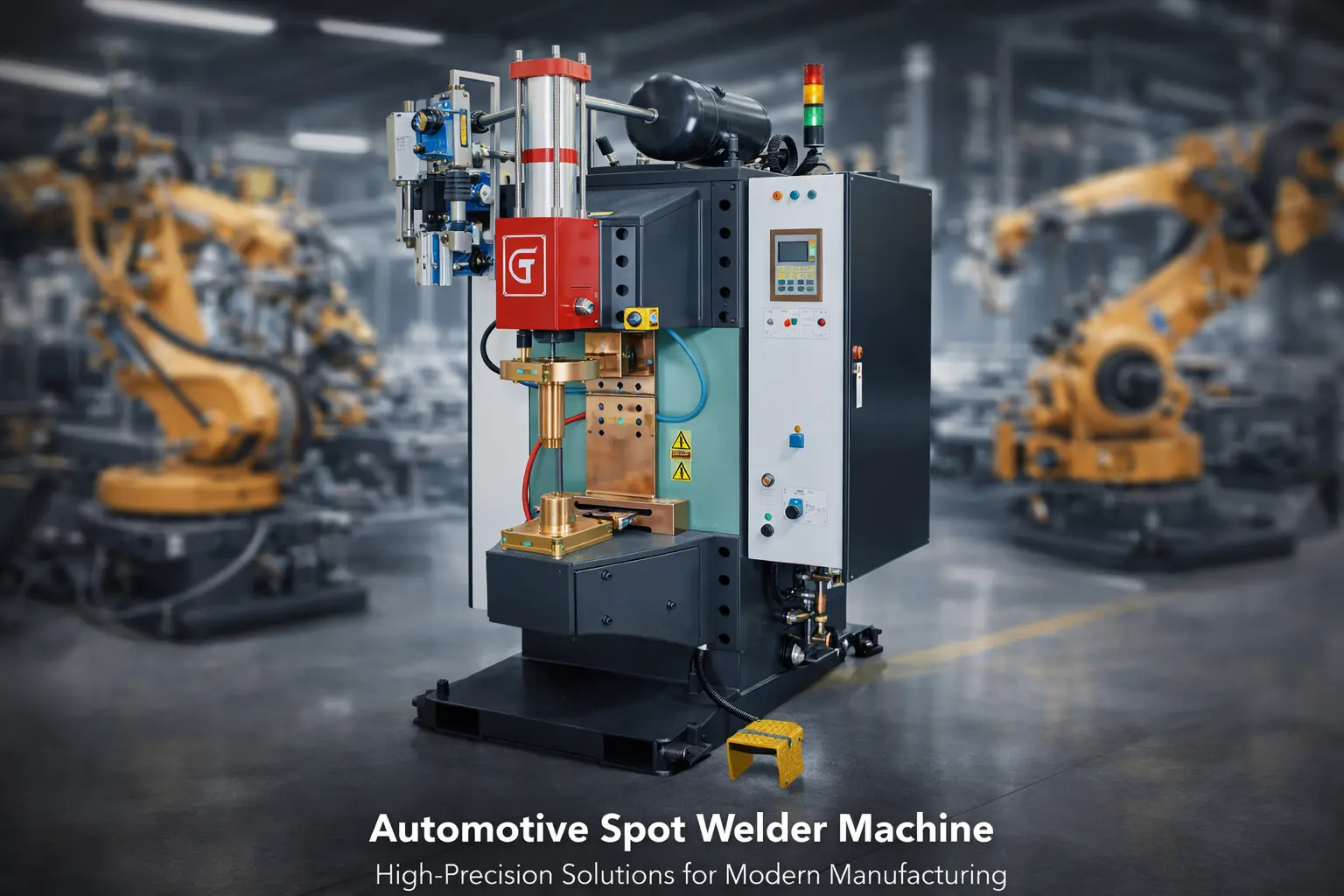
An aluminum spot welder is a specialized resistance welding machine engineered to join aluminum sheets or components using controlled electrical current, pressure, and time. Unlike traditional steel spot welding systems, aluminum welding requires significantly higher current levels and advanced control systems due to aluminum’s material characteristics.
These machines are widely used in:
- Automotive body manufacturing
- EV battery pack assembly
- Aerospace component fabrication
- Electrical enclosure production
- HVAC and appliance manufacturing
Modern systems often integrate MFDC (Medium Frequency Direct Current) technology, servo-controlled electrodes, and intelligent welding controllers to ensure precision and repeatability.
How Aluminum Spot Welding Works
Aluminum spot welding is based on resistance heating at the interface of two overlapping metal sheets. The process can be broken down into four main stages:
1. Electrode Force Application
Two copper alloy electrodes apply pressure to clamp the aluminum sheets together. Proper force ensures stable electrical contact and reduces surface contamination effects.
2. Current Flow
A high electrical current passes through the electrodes and into the aluminum sheets. Due to aluminum’s high conductivity, significantly higher current is required compared to steel welding.
3. Heat Generation
Electrical resistance at the interface generates localized heat, causing the aluminum to reach its plastic or molten state.
4. Weld Nugget Formation
A controlled molten zone (weld nugget) forms and solidifies under pressure, creating a strong metallurgical bond between the sheets.
The key challenge is maintaining stable heat input while preventing expulsion or surface burn-through.
Key Challenges in Aluminum Spot Welding
Aluminum welding is more complex than steel due to several material properties:
1. Oxide Layer Formation
Aluminum naturally forms an oxide layer that increases contact resistance and affects current flow consistency.
2. High Thermal Conductivity
Heat dissipates rapidly, requiring higher energy input and precise timing control.
3. Low Electrical Resistance
Since aluminum conducts electricity efficiently, achieving sufficient localized heating is more difficult.
4. Electrode Wear
Higher current levels increase electrode degradation, requiring optimized electrode materials and cooling systems.
These challenges demand advanced welding systems with adaptive control capabilities and high-power output stability.
Types of Aluminum Spot Welding Systems
Modern industrial applications use several advanced welding technologies:
MFDC Spot Welders
Medium Frequency Direct Current welders are widely used for aluminum due to:
- Higher energy efficiency
- Better control of heat input
- Reduced transformer size
- Improved weld consistency
Capacitor Discharge Welders
These systems deliver energy in a short, intense pulse, ideal for thin aluminum sheets and precision applications.
Servo-Controlled Spot Welders
These systems allow precise control of electrode force and displacement, improving weld quality consistency in automated production lines.
Automated Welding Cells
Integrated robotic systems are commonly used in high-volume industries like EV manufacturing and automotive body assembly.
Applications of Aluminum Spot Welders
Aluminum spot welders are essential across multiple high-growth industries:
Automotive Industry
Used in body-in-white structures, doors, panels, and lightweight chassis components to reduce vehicle weight and improve fuel efficiency.
Electric Vehicles (EVs)
Critical in battery pack enclosures, busbars, and thermal management systems where precision and reliability are essential.
Aerospace Manufacturing
Used for lightweight structural assemblies where strength-to-weight optimization is crucial.
HVAC and Appliance Production
Common in heat exchangers, casing units, and compressor housings.
Electrical and Industrial Equipment
Used for enclosures, cabinets, and conductive assemblies.
Aluminum Spot Welding vs Steel Spot Welding
Understanding the differences helps manufacturers optimize their production systems:
| Feature | Aluminum Spot Welding | Steel Spot Welding |
|---|---|---|
| Current Requirement | High | Moderate |
| Electrode Wear | Higher | Lower |
| Heat Control Sensitivity | Very high | Moderate |
| Oxide Layer Issue | Significant | Minimal |
| Process Complexity | High | Lower |
Aluminum welding requires more advanced control systems and tighter process monitoring to achieve consistent results.
Best Practices for High-Quality Aluminum Spot Welding
To achieve optimal results in industrial production, manufacturers should follow these best practices:
1. Surface Preparation
Remove oxide layers and contaminants before welding to improve electrical contact and weld consistency.
2. Optimized Electrode Design
Use high-conductivity copper alloys with proper cooling channels to reduce wear and maintain stability.
3. Precise Welding Parameters
Fine-tune current, time, and pressure according to aluminum grade and thickness.
4. Advanced Process Control
Use intelligent controllers with real-time feedback to adjust parameters dynamically.
5. Regular Maintenance
Ensure electrode dressing, cooling system checks, and calibration are performed regularly.
Role of Automation in Aluminum Spot Welding
Automation has transformed aluminum welding into a highly controlled and repeatable process. Robotic welding systems improve:
- Production speed
- Weld consistency
- Operator safety
- Quality control
- Cost efficiency
Integrated systems with PLC and AI-based monitoring can detect weld defects in real time, reducing scrap rates and production downtime.
Why Choose Advanced Industrial Welding Solutions
Manufacturers today require more than just a welding machine—they need a complete solution that ensures reliability, scalability, and process stability.
Advanced aluminum spot welding systems provide:
- High-precision energy delivery
- Multi-material compatibility
- Integration with robotic automation
- Reduced operational costs
- Long-term production stability
Heron Welder specializes in designing industrial resistance welding solutions tailored for high-performance manufacturing environments. With expertise in spot welding, projection welding, seam welding, and automated production lines, Heron delivers systems engineered for demanding aluminum applications across global industries.
FAQs About Aluminum Spot Welders
1. Why is aluminum difficult to spot weld?
Aluminum has high thermal conductivity, a natural oxide layer, and low electrical resistance, making it harder to generate stable weld heat compared to steel.
2. What type of spot welder is best for aluminum?
MFDC spot welders and servo-controlled systems are most effective due to their precise control of current and force.
3. Can aluminum spot welding be automated?
Yes, aluminum spot welding is widely used in robotic and automated production lines, especially in automotive and EV manufacturing.
4. How strong is an aluminum spot weld?
When properly controlled, aluminum spot welds can achieve high structural strength suitable for automotive and aerospace applications.
5. What industries use aluminum spot welders the most?
Key industries include automotive, EV battery manufacturing, aerospace, HVAC, and electrical equipment production.
Conclusion
The aluminum spot welder is a critical technology in modern manufacturing, enabling efficient and reliable joining of aluminum components across high-performance industries. However, due to the material’s unique properties, successful welding requires advanced control systems, optimized parameters, and robust machine design.
For manufacturers seeking consistent weld quality, improved production efficiency, and scalable automation, investing in advanced resistance welding systems is essential.
Request a Custom Welding Solution
Heron Welder provides industry-grade aluminum spot welding systems designed for precision, durability, and automation readiness. Whether you are upgrading an existing production line or building a new automated welding system, Heron offers customized engineering solutions tailored to your manufacturing needs.
Contact Heron Welder to request a consultation or receive a customized quotation for your aluminum spot welding application.