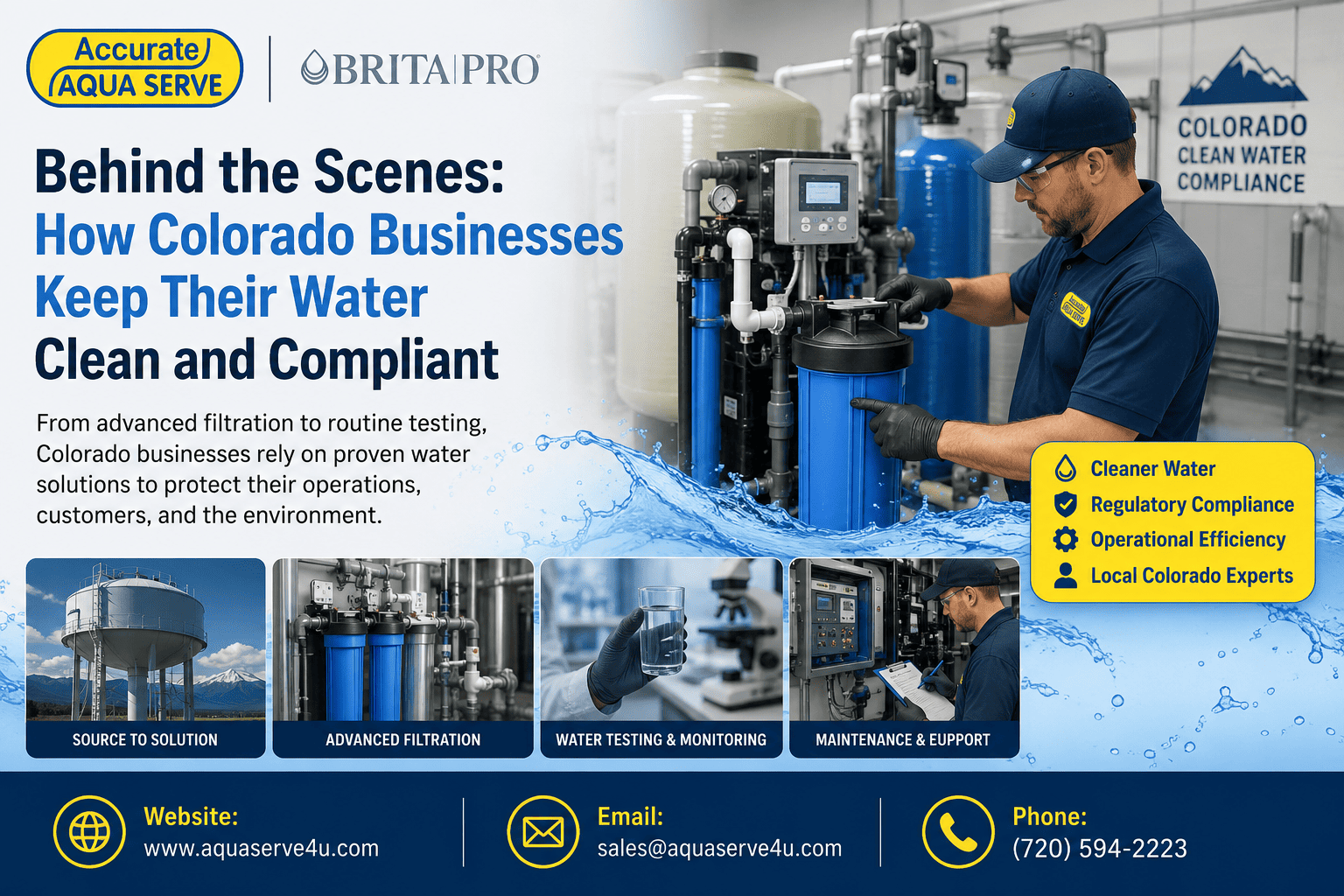
Ever wonder what’s really going on behind a restaurant kitchen, a hotel laundry room, or an office break room sink? Water quality isn’t something most customers think twice about. But for the businesses running the show, it’s a whole different story. Let’s pull back the curtain a bit.
The Stuff Nobody Talks About
Walk into any commercial kitchen, and you’ll see stainless steel everywhere, gleaming and spotless. What you won’t see is the battle happening behind those walls against hard water, scale buildup, and contaminants that can quietly mess with equipment over time.
Hard water is a big deal in Colorado. Most of the state deals with mineral-heavy water, and that’s not just a homeowner problem. Commercial dishwashers, water heaters, ice machines, and espresso machines all take a beating from calcium and magnesium buildup. Over time, this stuff clogs pipes, reduces efficiency, and shortens the lifespan of expensive equipment.
That’s where commercial water treatment in Colorado steps in, working quietly in the background so businesses don’t have to deal with constant breakdowns or repair bills.
Compliance Isn’t Optional
Here’s something a lot of people don’t realize: businesses don’t get to just “wing it” when it comes to water quality. Depending on the industry, there are real regulations to follow.
Restaurants, healthcare facilities, schools, and manufacturing plants all face specific water quality standards. Health departments routinely check things like bacteria levels, water hardness, and contamination risks. Fail an inspection, and you’re not just dealing with embarrassment; you’re looking at fines, shutdowns, or worse.
This is why proactive water treatment matters so much. Staying ahead of compliance issues is way easier (and cheaper) than scrambling to fix a failed inspection after the fact.
Industries That Rely Heavily on Treated Water
Some businesses need clean water more than others, simply because of what they do. Let’s break down a few examples.
Restaurants and cafes depend on consistent water quality for everything from coffee taste to ice cube clarity. Hard water can throw off flavor profiles entirely, which is a nightmare for any business built around taste.
Hotels and hospitality businesses deal with laundry, pools, and guest-facing water fixtures daily. Scale buildup in laundry machines means more detergent use and faster equipment wear, cutting into profit margins.
Manufacturing facilities often use water as part of their production process. Contaminants or mineral buildup can directly affect product quality, leading to costly waste or rework.
Medical and dental offices require especially clean water for sterilization processes and patient safety. There’s basically zero room for error here.
Across the board, the right commercial water treatment in Colorado setup helps these businesses avoid headaches that could otherwise pile up fast.
The Hidden Cost of Doing Nothing
A lot of business owners don’t think about water treatment until something breaks. But here’s the thing: untreated water causes damage long before you notice it.
Scale buildup inside pipes and machines reduces efficiency gradually. Your water heater works harder to heat water through layers of mineral deposits. Your dishwasher takes longer to clean dishes properly. Energy bills creep up, and nobody connects the dots until a technician points it out during a repair call.
Then there’s the equipment replacement cost. Commercial machines aren’t cheap, and frequent breakdowns from scale damage add up quickly. What feels like a small inconvenience today often turns into a much bigger expense down the road.
What Treatment Actually Looks Like
So what does fixing this actually involve? It depends on the business and its specific water issues, but a few common solutions come up again and again.
Water softeners tackle hardness directly, preventing scale buildup before it starts. This is huge for any business relying on water heaters, dishwashers, or laundry equipment.
Filtration systems handle contaminants like chlorine, sediment, or specific compounds depending on local water sources. Some businesses also deal with PFAS or other regulated substances, requiring more specialized filtration setups.
For larger operations, a combination approach often makes the most sense, pairing softening with filtration to handle multiple issues at once. This kind of customized commercial water treatment in Colorado setup ensures businesses aren’t just throwing money at a generic fix.
Wrapping Things Up
Clean, compliant water doesn’t happen by accident. Behind every smoothly running kitchen, hotel, or office building, there’s usually a solid water treatment system quietly doing its job.
For Colorado businesses, hard water and compliance requirements make this even more important. Ignoring it might save money short term, but it almost always costs more down the road through repairs, inefficiency, or failed inspections.
Ready to Protect Your Business’s Water Quality?
Don’t wait for equipment failure or a compliance issue to take water quality seriously. Aqua Serve specializes in customized commercial water treatment in Colorado, helping businesses across the state stay efficient, compliant, and worry-free. Reach out today to schedule an assessment for your business.