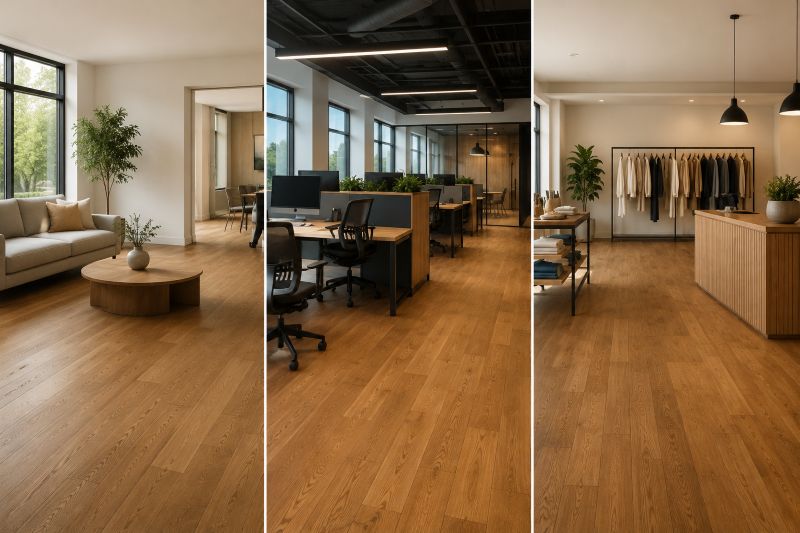
Hardwood flooring remains one of the most valuable investments property owners can make, particularly in rental properties, office spaces, and small business environments. Unlike many flooring alternatives that require frequent replacement, quality hardwood floors offer long-term durability, timeless appeal, and excellent return on investment. However, not all hardwood flooring options are equally suited for commercial and high-traffic settings.
Property managers, business owners, and commercial landlords must carefully evaluate wood species, finishes, installation methods, and maintenance requirements before making a flooring decision. Working with a professional commercial flooring contractor in Portland Maine can help ensure the flooring selected performs well under daily wear while maintaining an attractive appearance for years.
Why Durability Matters in Commercial Spaces
Commercial properties experience significantly more foot traffic than residential homes. Employees, customers, tenants, deliveries, rolling office chairs, and moving furniture all contribute to flooring wear.

For rental properties, durable flooring helps reduce turnover costs and maintenance expenses. In offices and small businesses, attractive and reliable flooring contributes to a professional atmosphere while minimizing disruptions caused by repairs or replacements.
Choosing the wrong flooring can result in:
- Premature scratches and dents
- Increased maintenance costs
- Frequent refinishing requirements
- Reduced property value
- Negative impressions from tenants and customers
Investing in high-performance hardwood flooring from the beginning often proves more affordable over the long term than repeatedly replacing lower-quality materials.
Understanding Hardwood Durability Ratings
One of the most important factors when selecting hardwood flooring is hardness. The flooring industry commonly uses the Janka Hardness Scale to measure a wood species’ resistance to dents and wear.
Higher ratings generally indicate better durability for commercial applications.
Popular Hardwood Species and Their Durability
| Wood Species | Janka Rating |
|---|---|
| Red Oak | 1,290 |
| White Oak | 1,360 |
| Maple | 1,450 |
| Hickory | 1,820 |
| Brazilian Cherry | 2,350 |
While hardness is important, it should not be the only factor considered. Stability, maintenance requirements, appearance, and local climate conditions also influence long-term performance.
Best Hardwood Species for Rentals and Commercial Properties
White Oak: The Industry Favorite
White oak continues to be one of the best choices for commercial environments.
Benefits include:
- Excellent durability
- Attractive grain patterns
- Strong moisture resistance
- Wide variety of stain options
- Long lifespan
Many offices and retail spaces choose white oak because it balances durability and aesthetics while fitting both modern and traditional designs.
Hickory: Exceptional Strength
For areas exposed to heavy foot traffic, hickory provides outstanding durability.
Advantages include:
- Extremely hard surface
- Distinctive character and grain
- High resistance to dents
- Long-term performance in busy environments
Small businesses such as restaurants, retail stores, and service offices often benefit from hickory’s proven resilience.
Maple: A Professional Appearance
Maple flooring is commonly used in commercial applications because of its clean and uniform appearance.
Key benefits include:
- High durability
- Smooth grain pattern
- Professional look
- Good resistance to wear
Corporate offices and professional service firms frequently select maple to create a polished environment.
Engineered Hardwood vs. Solid Hardwood
Business owners often debate whether engineered hardwood or solid hardwood is the better investment.
Advantages of Engineered Hardwood
Engineered hardwood consists of a real hardwood veneer attached to multiple stable layers beneath.
Benefits include:
- Improved moisture resistance
- Greater dimensional stability
- Suitable for concrete subfloors
- Faster installation
- Lower risk of expansion and contraction
For many offices and commercial buildings, engineered hardwood offers an innovative solution that combines authentic wood appearance with enhanced stability.
Advantages of Solid Hardwood
Solid hardwood remains a trusted choice for long-term investments.
Benefits include:
- Multiple refinishing opportunities
- Exceptional longevity
- Increased property value
- Authentic wood construction
When properly maintained, solid hardwood can last for generations.
A knowledgeable commercial flooring contractor in Portland Maine can evaluate building conditions and recommend the most suitable option.
Selecting the Right Finish for High-Traffic Areas
Even the most durable hardwood species can wear prematurely if paired with the wrong finish.
Aluminum Oxide Finishes
Many top-rated commercial flooring products utilize aluminum oxide coatings.
Benefits include:
- Superior scratch resistance
- Long-lasting protection
- Reduced maintenance
- Enhanced durability
This finish is especially valuable in rental units and customer-facing businesses.
Matte and Satin Finishes
Many commercial property owners now prefer matte and satin finishes.
Advantages include:
- Conceal scratches better
- Minimize visible dust
- Modern appearance
- Easier maintenance
Glossy finishes often highlight imperfections and require more frequent cleaning.
Considering Commercial Traffic Patterns
Every business has unique traffic demands.
Office Environments
Typical office traffic includes:
- Rolling office chairs
- Employee foot traffic
- Conference room usage
- Furniture movement
White oak and maple often perform exceptionally well in these settings.
Retail Spaces
Retail locations face:
- Constant customer traffic
- Shopping carts
- Product deliveries
- Seasonal traffic spikes
Hickory and engineered hardwood systems often provide reliable performance.
Rental Properties
Landlords must account for:
- Frequent tenant turnover
- Moving furniture
- Pet traffic
- Variable maintenance habits
Durable species and protective finishes can significantly reduce repair expenses between tenants.
The Role of Proper Installation
Even the highest-quality flooring can fail prematurely if installed incorrectly.
Professional installation helps ensure:
- Proper moisture testing
- Accurate acclimation
- Secure fastening
- Correct subfloor preparation
- Manufacturer warranty compliance
An experienced commercial flooring contractor in Portland Maine understands the unique challenges associated with local climate conditions and commercial building requirements.
Maintenance Strategies That Extend Floor Life
Durability depends not only on material selection but also on ongoing maintenance.
Daily Cleaning Practices
Simple cleaning habits help preserve commercial flooring:
- Remove dirt regularly
- Use microfiber dust mops
- Clean spills promptly
- Avoid excessive moisture
Dirt and debris often act like sandpaper, gradually wearing away protective finishes.
Protective Measures
Business owners can further protect their investment by:
- Installing entry mats
- Using furniture pads
- Adding chair mats
- Maintaining indoor humidity levels
These measures help minimize scratches and surface wear.
Scheduled Refinishing
Even highly durable hardwood floors eventually show signs of wear.
Refinishing can:
- Restore appearance
- Extend lifespan
- Improve property value
- Delay replacement costs
Many commercial hardwood floors can be refinished multiple times, making them a scalable long-term investment.
Real-World Example: Small Professional Office Upgrade
Consider a small accounting firm operating in a busy office building. The company initially installed lower-cost laminate flooring to reduce upfront expenses.
After five years, the flooring showed visible wear near entrances, meeting rooms, and workstations. Replacement costs, installation downtime, and disruptions quickly outweighed the initial savings.
The firm later upgraded to engineered white oak flooring with a commercial-grade aluminum oxide finish. Several years later, the floors continued to perform well despite daily employee traffic and frequent client visits.
This example highlights why durable hardwood flooring often delivers better long-term value than less durable alternatives.
Sustainability and Long-Term Value
Many business owners increasingly prioritize environmentally responsible building materials.
Hardwood flooring offers several sustainability advantages:
- Renewable resource options
- Long service life
- Reduced replacement frequency
- Recyclable and reusable materials
Certified hardwood products from responsible forestry programs support both environmental goals and long-term business investments.
Additionally, attractive hardwood floors can increase property appeal, helping landlords attract tenants and businesses create stronger first impressions.
Common Mistakes to Avoid
When selecting hardwood flooring for commercial properties, avoid these common errors:
Choosing Based on Price Alone
The lowest-priced flooring often leads to higher lifetime costs through repairs and replacements.
Ignoring Traffic Levels
A flooring solution suitable for a home may not perform adequately in a busy office or rental property.
Overlooking Finish Quality
The finish often determines how well a floor withstands daily use.
Skipping Professional Installation
Improper installation can shorten floor life and void warranties.
Neglecting Maintenance Plans
Even industry-leading flooring requires regular care to achieve maximum longevity.
Why Professional Guidance Matters
Commercial flooring projects involve numerous variables, including traffic patterns, moisture conditions, subfloor construction, maintenance expectations, and budget considerations.
D&T Hardwood Floors helps property owners evaluate these factors to identify flooring solutions that balance durability, appearance, and long-term value. Whether upgrading rental properties, office environments, or small business spaces, professional expertise can help ensure the flooring investment delivers reliable performance for years.
Final Thoughts
Choosing durable hardwood flooring for rentals, offices, and small businesses requires more than selecting an attractive wood species. Property owners must evaluate durability ratings, traffic demands, finish options, installation quality, and long-term maintenance requirements.

Working with an experienced commercial flooring contractor in Portland Maine helps ensure the flooring selected meets both operational and aesthetic goals. With the right hardwood flooring system, business owners and landlords can enjoy a durable, professional, and cost-effective surface that continues to add value year after year.