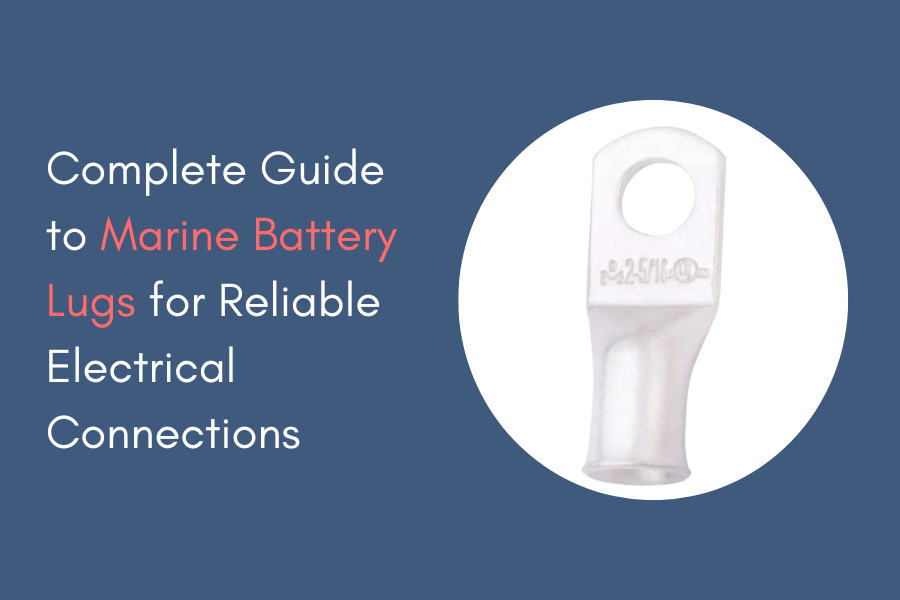
Reliable electrical connections are essential in marine environments where constant exposure to moisture, vibration, and salt air can affect system performance. Choosing the right Marine Battery Lugs plays an important role in maintaining stable current flow and preventing connection failure over time. Marine Grade Tinned Copper Lugs, also referred to as Marine Battery Lugs, are specially designed to handle harsh marine conditions while providing strong electrical conductivity and corrosion resistance.
These lugs are commonly used in boats, marine battery systems, offshore equipment, and other applications where durability and reliable performance are necessary.
Understanding Marine Battery Lugs
Marine Battery Lugs are electrical connectors designed for terminating battery cables and other marine conductors securely. They are typically manufactured from high-conductivity copper and coated with tin to protect against oxidation and corrosion.
Marine environments are far more demanding than standard indoor electrical setups. Continuous exposure to humidity, water spray, and salt can quickly damage untreated connectors. Tinned copper construction helps extend the service life of the connection and maintain electrical efficiency.
These lugs are available in different sizes and configurations to match various cable types and terminal requirements.
Why Tinned Copper Is Preferred in Marine Applications
One of the main reasons marine grade tinned copper lugs are widely used is their ability to resist corrosion.
Protection against Salt and Moisture
Saltwater exposure accelerates oxidation on bare metal surfaces. Tin plating creates a protective layer that helps prevent corrosion from forming on the copper underneath.
This makes tinned copper lugs suitable for:
- Boat battery systems
- Marine control panels
- Offshore electrical equipment
- Dockside power installations
Improved Long-Term Conductivity
Corrosion can increase resistance at connection points, which may lead to voltage drop and heat buildup. Tinned copper lugs help maintain cleaner contact surfaces, supporting more stable conductivity over time.
This is especially important in marine systems that operate continuously or under varying environmental conditions.
Selecting the Right Marine Battery Lug
Several factors should be considered before selecting a lug for marine use.
Cable Size Compatibility
The lug barrel must match the cable size correctly. An improper fit can result in weak crimping or reduced electrical performance.
Marine battery systems commonly use larger cables because of higher current demands, making proper sizing essential.
Stud Hole Size
The terminal hole should fit the mounting stud or battery post securely. Common stud sizes include 1/4 inch, 5/16 inch, and 3/8 inch.
Choosing the correct hole size helps ensure a firm and stable connection.
Lug Design
Different installations may require straight, angled, or heavy-duty lug designs depending on available space and cable routing requirements.
In compact marine battery compartments, angled lugs are often used to improve cable management and reduce strain on connections.
Proper Installation Practices
Correct installation is important for maintaining reliable electrical performance in marine environments.
Cable Preparation
The cable insulation should be stripped carefully without damaging the conductor strands. The exposed conductor should fit fully into the lug barrel.
Crimping
A proper crimping tool should always be used to create a secure mechanical and electrical connection. Hydraulic crimpers are commonly used for larger marine battery cables.
Poor crimping can create resistance points that may lead to overheating or connection failure.
Sealing and Protection
Heat shrink tubing is often applied over the crimped area to provide additional insulation and protection from moisture. Adhesive-lined heat shrink is commonly preferred in marine applications because it creates a tighter environmental seal.
Common Applications
Marine Battery Lugs are widely used in:
- Boat battery systems
- Marine grounding connections
- Navigation equipment wiring
- Solar charging systems on boats
- Offshore electrical panels
- Bilge pump and inverter connections
These systems depend on reliable electrical connections to operate safely in demanding conditions.
Conclusion
Choosing the right marine battery lugs is essential for maintaining safe and dependable electrical connections in marine environments. Since these connectors are constantly exposed to moisture, salt air, and vibration, using marine grade tinned copper lugs helps improve corrosion resistance, conductivity, and long-term durability.
By selecting the correct size and following proper installation practices, marine electrical systems can continue operating efficiently and reliably even in challenging conditions.