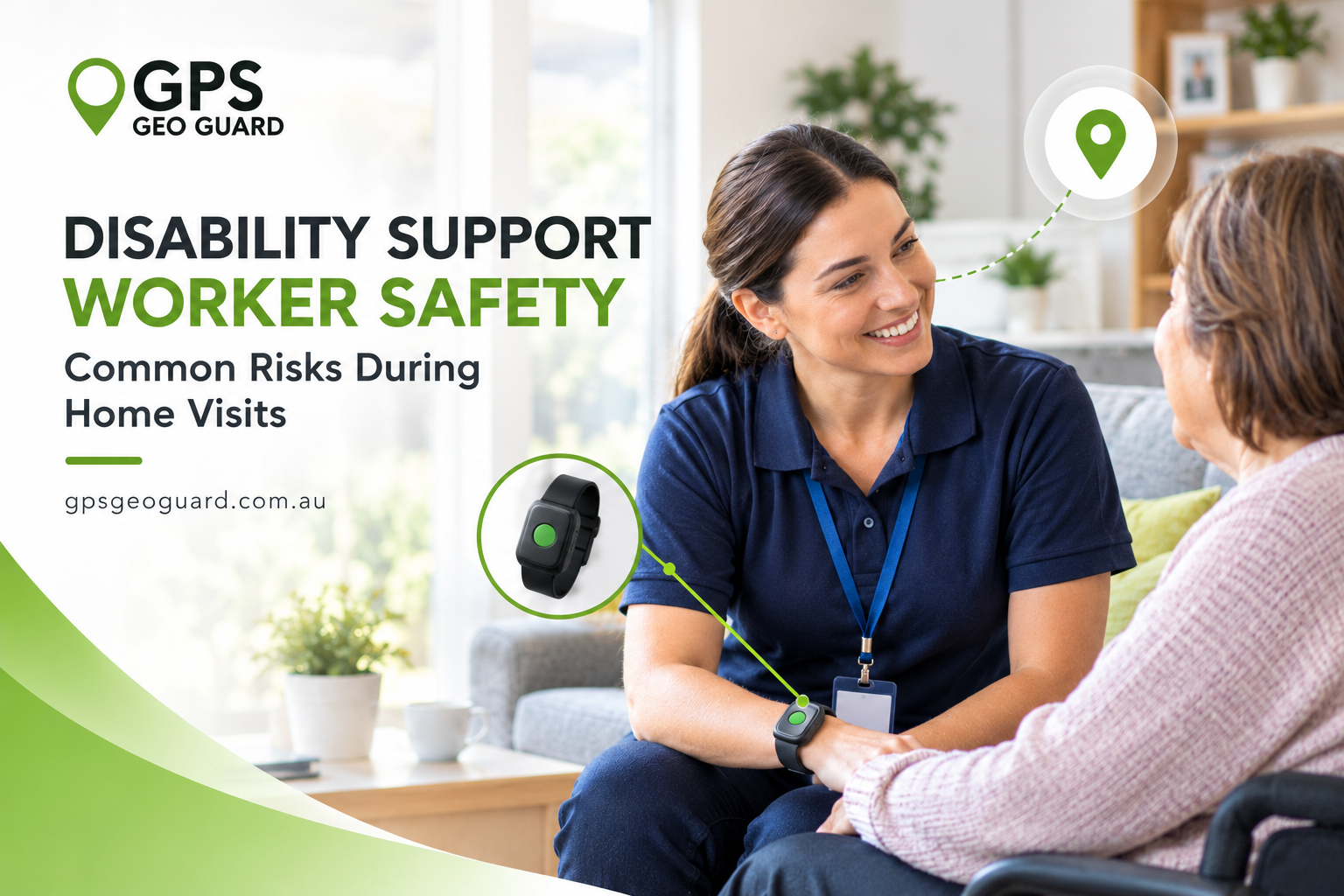
Disability support workers across Australia often work alone in clients’ homes, providing personal care, daily living assistance, and essential support. While these services play an important role in the community, working in unfamiliar environments without colleagues nearby can expose workers to a range of safety risks.
An unexpected incident may involve occupational violence, a slip or fall, a medical emergency, or an unsafe situation during travel between appointments. Without immediate access to assistance, even a minor incident can become more serious.
Under WHS law, employers have responsibilities to identify workplace hazards and take reasonably practicable steps to protect workers. This includes managing risks associated with isolated work and home-based support services.

This guide explores the common safety risks disability support workers face during home visits, why traditional safety procedures may not be enough, and how personal safety devices can provide additional protection.
Why Home Visits Can Present Safety Challenges for Disability Support Workers
Unlike a traditional workplace, a client’s home may have unfamiliar layouts, limited access to assistance, and hazards that are difficult to identify before a visit. Support workers may also be required to manage challenging situations without another staff member present.
Research published by The Ageing Agenda highlighted concerns about abuse, injuries, and personal safety among home care workers.
Several factors can increase the risks associated with home visits:
- Working independently, including during early mornings or late evenings.
- Encountering unexpected behaviour or occupational violence.
- Assisting clients with transfers and other manual handling tasks.
- Working around wet floors, cluttered spaces, and other household hazards.
- Travelling between appointments, sometimes in isolated areas.
- Experiencing limited mobile coverage in regional or remote locations.
These challenges make disability support worker safety an important part of workplace risk management. When an incident occurs, the worker may be the only person available to raise an alarm or request emergency assistance.
Common Safety Risks for Disability Support Workers During Home Visits
Understanding the hazards associated with home visits helps organisations develop more effective safety procedures and protect employees working independently.
1. Aggression and Occupational Violence
Disability support workers may experience verbal threats, intimidation, scratching, biting, hitting, or other forms of occupational violence while providing support. Incidents can be difficult to manage when no colleague or supervisor is present.
Although not every challenging interaction results in violence, workers need a reliable way to request assistance if a situation escalates.
Key risks for lone workers include:
- Difficulty leaving an unfamiliar or confined environment.
- Physical injury that prevents access to a phone.
- Delays in contacting a supervisor or emergency services.
- Limited access to immediate assistance during an escalating incident.
A wearable workforce duress alarm can provide an additional way to raise an alert when a worker feels threatened or needs urgent assistance.
2. Slips, Trips, Falls and Manual Handling Injuries
Home environments can contain hazards such as wet bathroom floors, loose rugs, narrow walkways, uneven surfaces, and poor lighting. Workers may also experience injuries while assisting clients with mobility, transfers, or personal care.
When a worker is alone, an injury can become more serious if they cannot stand up, reach a phone, or notify someone that assistance is required.
Key risks for lone workers include:
- Falls that prevent the worker from moving independently.
- Musculoskeletal injuries during manual handling.
- Delayed assistance when no other person is present.
- Difficulty reporting an incident while injured.
A man-down duress alarm with suitable fall-detection capabilities can help identify certain incidents and trigger an alert when the worker cannot manually request assistance.
3. Medical Emergencies
Medical emergencies can occur unexpectedly during a home visit. A client may experience a seizure, choking episode, or sudden deterioration in their condition. Workers can also experience a medical emergency themselves while working alone.
In these situations, the support worker may need to coordinate assistance while continuing to provide appropriate care.
Key risks for lone workers include:
- Being unable to reach a phone quickly.
- Difficulty calling for help while assisting a client.
- A medical event leaving the worker unable to communicate.
- Delays in notifying emergency responders.
Personal safety devices with an SOS function can help workers raise an alert quickly. Depending on the device and monitoring arrangement, automatic fall detection and live audio may provide additional information to help assess an incident.
4. Unfamiliar Homes and Isolated Locations
Disability support workers may visit new clients or travel to homes in regional and remote areas. They may not know the property’s layout, available exits, local hazards, or whether mobile reception is reliable.
Remote worker safety becomes particularly important when emergency assistance may take longer to reach an isolated location.
Key risks for lone workers include:
- Unfamiliar entrances, exits, and household hazards.
- Limited mobile coverage that affects communication.
- Difficulty providing an accurate location during an emergency.
- Longer distances between the worker and available assistance.
GPS-enabled personal safety devices can help communicate a worker’s location when supported by the device, network coverage, and monitoring service. Organisations should also assess connectivity and consider appropriate alternatives for locations with unreliable mobile coverage.
5. Travelling Alone and Working After Hours
Travel is another important part of disability support work. Workers may drive between appointments, visit clients outside standard business hours, or travel through areas with limited access to assistance.
A vehicle breakdown, road incident, or threatening situation during travel can leave a worker isolated.
Key risks for lone workers include:
- Accidents or breakdowns while travelling between clients.
- Reduced access to assistance at night.
- Delays in identifying a worker who has not reached their destination.
- Difficulty communicating their location during an emergency.
Employers can strengthen travel safety by using scheduled check-ins, journey reporting, escalation procedures, and suitable personal safety devices.
Why Traditional Safety Measures May Not Be Enough
Risk assessments, scheduled phone calls, supervisor check-ins, and workplace procedures remain important parts of a safety plan. However, these measures may not provide immediate assistance when an unexpected incident occurs.
There are four common limitations to consider:
- Dependence on the worker: Phone calls and messages may not be possible if a worker is injured, incapacitated, or unable to reach their device.
- Delayed identification: A missed check-in may only trigger action after the agreed reporting time has passed.
- Limited real-time location information: A roster records planned appointments but may not show a worker’s current location during travel.
- Limited continuous supervision: Supervisors cannot physically attend every home visit, particularly when workers cover multiple locations.
A stronger lone worker safety strategy combines these procedures with an appropriate alerting system. A personal safety device can help workers request assistance without relying solely on a phone call or waiting for a scheduled check-in.
How Personal Safety Devices Help Protect Disability Support Workers
Personal safety devices provide an additional layer of protection for workers who regularly visit clients alone. Depending on the device and monitoring configuration, they can combine emergency alerts, location information, and professional monitoring.
Important features to consider include:
- One-press SOS alerts: A wearable workforce duress alarm allows a worker to trigger an alert when they need urgent assistance.
- Automatic fall detection: A suitable man-down duress alarm can detect certain falls and initiate an alert when manual activation is not possible.
- GPS location tracking: Compatible devices can transmit location information to help monitoring operators identify where assistance may be required.
- Live audio monitoring: Where supported, live audio can help monitoring operators assess the circumstances surrounding an alert.
- 24/7 emergency monitoring: Professional emergency monitoring can provide a defined process for assessing alerts and escalating incidents according to the agreed response protocol.
For disability service providers, selecting appropriate equipment involves considering the worker’s role, the client’s needs, connectivity, device usability, and the organisation’s emergency response procedures.
For people with disability who may also need access to emergency assistance, the Disability Panic Alarm offers a relevant solution to explore for personal safety requirements.
Building a Safer Home Visit Procedure
Technology works best when it supports a clear workplace safety plan. Disability service providers can strengthen their approach by:
- Conducting risk assessments before visits and reviewing them when circumstances change.
- Establishing check-in and check-out procedures for workers attending appointments alone.
- Providing training on de-escalation, manual handling, emergency communication, and incident reporting.
- Documenting escalation procedures for missed check-ins and emergency alerts.
- Assessing mobile coverage and communication options for remote locations.
- Providing suitable personal safety devices and training workers to use them.
- Reviewing incidents and near misses to identify opportunities for improvement.
These measures help organisations respond more consistently to hazards while supporting workers who provide essential services in the community.
Conclusion
Disability support workers perform valuable work across Australia, often in unfamiliar homes and without immediate assistance from colleagues. Occupational violence, falls, medical emergencies, environmental hazards, and travel-related incidents can all affect their safety.
Traditional risk assessments and check-in procedures remain essential, but they may not be enough when a worker cannot call for help. Combining effective safety procedures with suitable personal safety devices, location capabilities, and 24/7 monitoring can provide an additional layer of protection.
GPS Geo Guard supports organisations seeking practical lone worker safety solutions for disability and community support teams.

Book a demo or request a quote from GPS Geo Guard to discuss how workforce duress alarms and emergency monitoring can support your team’s safety requirements.