Water heating represents a significant share of household energy consumption, making the system a practical place to look when homeowners want to reduce utility costs. Blue Pacific Cape Cod understands that New England properties face distinct demands because of colder incoming water, seasonal temperature changes, and older housing infrastructure. Choosing the right equipment, improving insulation, and correcting avoidable heat loss can make a noticeable difference in long-term performance. By evaluating energy-efficient water heating upgrades, homeowners can improve hot-water delivery while potentially lowering the amount of energy needed for daily use.
The best upgrade depends on the home’s size, fuel source, available space, plumbing layout, and expected hot-water demand. A heat pump water heater may suit one household, while a high-efficiency gas or tankless system may make more sense elsewhere. Professional water heater services can help homeowners evaluate suitable options, installation requirements, operating costs, maintenance needs, and expected service life rather than focusing only on the equipment’s advertised efficiency.
Key Takeaways
- Heat pump water heaters can substantially reduce electricity used for water heating.
- Tankless and high-efficiency systems can reduce standby losses in suitable homes.
- Pipe insulation and proper temperature settings help limit wasted heat.
- System sizing should match household demand and available installation conditions.
- Total operating cost matters as much as the initial upgrade price.
Why Water Heating Efficiency Matters in New England
New England homes often encounter colder groundwater entering the plumbing system, particularly during winter. When incoming water is colder, the heater must transfer more energy before the water reaches the desired temperature. That extra demand can influence both operating costs and recovery performance.

Water heating accounts for roughly 18% of residential energy use in a typical American home, which makes efficiency improvements meaningful over time. The actual percentage varies by household size, climate, appliance type, and hot-water consumption, but the broader point remains: water heating is not a minor source of energy demand.
Older New England homes can introduce additional challenges. Long plumbing runs, unfinished basements, poorly insulated utility spaces, and aging equipment may allow considerable heat loss before hot water reaches a fixture. In those situations, upgrading the heater alone may not deliver the full benefit expected.
A whole-system assessment can reveal whether the largest opportunity comes from new equipment, better insulation, improved controls, reduced losses, or a combination of changes.
Heat Pump Water Heaters as a Major Upgrade
Heat pump water heaters have become an important option for households seeking lower electricity consumption. Instead of generating heat directly through an electric resistance element, they move existing heat from surrounding air into the water tank.
This operating method can make a major difference. Heat pump water heaters are generally capable of being two to three times as energy efficient as standard electric resistance models, depending on operating conditions and equipment design.
New England homeowners should still consider installation conditions carefully. Heat pump systems need adequate surrounding air volume and appropriate drainage for condensate. A cramped mechanical closet or poorly configured space may require modifications before installation.
Their cooling effect can also matter in some homes. In a basement or utility area, that cooler discharge air may be useful during warmer months but less desirable in winter. Placement and room characteristics therefore deserve attention before a purchase decision is made.
For households replacing an aging electric tank, the energy savings potential can be particularly relevant. However, installation cost, available rebates, electrical requirements, and household usage should all be reviewed before selecting the system.
Tankless and High-Efficiency Systems
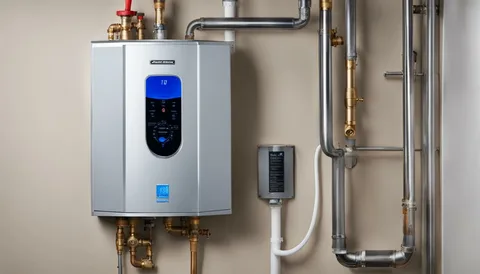
Tankless water heaters heat water as demand occurs rather than keeping a large volume continuously hot. That design can reduce standby losses because there is no stored tank of heated water waiting for use.
For homes with predictable or moderate hot-water demand, a correctly sized tankless unit can provide strong performance while occupying less physical space. However, the equipment must be matched to the required flow rate. A household expecting multiple simultaneous showers, laundry use, and kitchen demand may require greater capacity than a smaller property.
High-efficiency gas systems provide another path for homeowners who prefer gas-fired equipment. Modern models can extract more useful heat from the fuel than older conventional units, although venting requirements, gas supply, combustion conditions, and installation complexity must be evaluated.
The home’s existing infrastructure is also a major factor. An upgrade may require changes to electrical service, gas piping, venting, condensate drainage, or plumbing connections. Those additional costs can change the financial picture significantly.
3. Reduce Heat Loss Beyond the Heater
Improving the heater is only one part of energy-efficient water heating upgrades. A system can operate efficiently while still wasting energy through poorly insulated pipes or excessive temperature loss between the heater and fixtures.
Pipe insulation is especially useful on exposed hot-water lines running through basements, crawl spaces, garages, and other cooler areas. By slowing heat loss, insulation helps hot water retain more of its temperature as it travels through the plumbing.
For homeowners comparing water heater installation in Cape Cod, the surrounding mechanical space should also be considered. If the heater sits in an unconditioned basement, cold ambient temperatures may affect some equipment more than they would in a protected indoor space.
Temperature settings deserve attention as well. Many residential households use a setting around 120°F, which can provide suitable hot-water service while reducing unnecessary heating compared with significantly higher settings. The correct temperature should account for household needs and the manufacturer’s requirements.
Low-flow fixtures can further reduce hot-water demand. When showerheads and faucets use less water while maintaining acceptable pressure, the heater has less water to heat. This approach reduces demand without requiring homeowners to make major equipment changes.
Small Improvements That Add Up
A few modest upgrades can complement a larger water-heating project. Insulating the first few feet of hot-water piping near the heater, repairing dripping fixtures, and correcting outdated controls can reduce energy waste that might otherwise continue unnoticed.
Leaks deserve particular attention because a dripping hot-water faucet does more than waste water. The heater must repeatedly warm replacement water, meaning a seemingly minor plumbing issue can create ongoing energy demand.
Homeowners should also examine household hot-water patterns. If a large system serves only one or two residents, an oversized replacement may consume more energy than necessary. Conversely, an undersized system can struggle under peak demand and create dissatisfaction even when its efficiency rating looks attractive.
Maintenance matters after installation, too. Sediment removal, filter cleaning where applicable, inspection of valves, and equipment-specific servicing help preserve performance. Efficiency should not be considered a one-time feature that remains unchanged regardless of maintenance.
4. Evaluate the Home Before Choosing Equipment
Every home’s layout creates different installation considerations, which is why energy-efficient water heating upgrades in Massachusetts should be evaluated in relation to the property rather than selected solely from an equipment brochure.
The available fuel source is a starting point. A home already configured for gas may have different upgrade costs from a property relying entirely on electricity. Electrical capacity can also affect the feasibility of heat pump systems, especially in older houses with limited panel capacity.
Household demand is another important variable. A family with several bathrooms and frequent simultaneous usage may prioritize recovery capacity and peak-flow performance. A smaller household may place greater emphasis on low operating costs and compact equipment.
Space matters as well. Heat pump systems generally need sufficient surrounding air volume, while tankless units can offer a smaller footprint but may require more complex venting or gas capacity. The most suitable equipment is the one that balances performance with the property’s actual physical and utility constraints.
Homeowners should also compare the full cost of ownership. That includes equipment price, installation, anticipated maintenance, energy consumption, service availability, and expected service life. A lower purchase price does not necessarily mean a lower long-term cost.
- Assess fuel type, electrical capacity, and available installation space.
- Match system size to actual household hot-water demand.
- Consider installation and maintenance costs alongside equipment price.
- Evaluate long-term energy use rather than focusing only on upfront expense.
When Replacing the Entire System Makes Sense
An efficiency upgrade becomes more compelling when the existing water heater is already aging or requires increasingly frequent repairs. Continuing to spend money on an inefficient system can delay a more useful improvement without addressing the source of ongoing operating costs.
A failing tank, repeated component problems, visible corrosion, or persistent temperature issues may indicate that replacement deserves consideration. However, replacement should still be based on system condition rather than age alone.
Homeowners can also compare projected energy consumption between the current heater and available replacements. A professional can estimate expected operating differences based on household usage, equipment type, and fuel costs.
In some cases, a full replacement is unnecessary. Insulating exposed pipes, adjusting the temperature, repairing leaks, or improving controls may provide useful gains at a fraction of the cost of new equipment.
The right path depends on the condition of the current system and the home’s long-term plans. A house scheduled for renovation, for example, may be a good candidate for a larger plumbing or mechanical upgrade that would be more difficult to complete later.
Common Questions About Water Heating Upgrades
Are heat pump water heaters suitable for cold climates?
Yes, but the installation environment matters. Heat pump units extract heat from surrounding air, so proper placement, adequate room volume, and operating conditions are important. Some models also include electric resistance elements for higher-demand periods.
Do tankless water heaters always use less energy?
Not automatically. Their ability to reduce standby losses can improve efficiency, but actual results depend on household demand, equipment efficiency, sizing, fuel type, installation, and usage patterns.
Is replacing a water heater enough to reduce energy waste?
Not necessarily. Poorly insulated piping, leaking fixtures, excessive temperature settings, and inefficient household usage can continue wasting energy even after new equipment is installed.
How long should homeowners expect an upgraded system to last?
Service life varies considerably according to equipment type, water quality, maintenance, usage, and installation conditions. Manufacturers provide expected ranges, but actual longevity depends on how the system operates and how well it is maintained.
Should homeowners choose equipment based only on efficiency ratings?
No. Efficiency is important, but capacity, installation requirements, fuel availability, maintenance needs, operating costs, and expected demand all affect whether a system is appropriate for a particular property.
Practical Ways to Improve Existing Performance
Homeowners do not always need a complete replacement to begin improving water-heating efficiency. Lowering an unnecessarily high temperature setting, insulating exposed pipes, and repairing leaking fixtures can address energy waste immediately.
Another useful step is reviewing when hot water is used most heavily. If laundry, dishwashing, and bathing occur at the same time every day, spreading some activities across different periods may reduce peak demand and improve perceived system capacity.
Keeping the heater and surrounding equipment accessible also supports long-term maintenance. Technicians can identify scale, corrosion, insulation issues, valve problems, and other conditions more easily when the installation area is not obstructed.
For systems approaching the end of their useful life, homeowners can also research replacement options before failure occurs. Planning ahead creates time to compare technologies, installation requirements, and total operating costs without making a rushed decision.
- Repair leaking fixtures to prevent unnecessary hot-water demand.
- Insulate accessible hot-water piping in cooler areas.
- Avoid unnecessarily high temperature settings.
- Plan replacement decisions before an aging system fails unexpectedly.
Understanding the Financial Side of an Upgrade
Energy savings accumulate gradually, so homeowners should evaluate an upgrade over several years rather than expecting immediate payback in every situation. Equipment cost, installation complexity, energy prices, household demand, and available incentives all influence the final economics.
A heat pump water heater may have a higher initial purchase and installation cost than a conventional electric tank, but its lower electricity consumption can improve long-term operating economics. A tankless system may also offer reduced standby losses, though installation costs can be higher when gas lines, venting, or electrical components need modification.
New England homeowners should also consider seasonal usage. A property occupied year-round may realize different savings from a seasonal home, particularly where hot-water demand changes dramatically throughout the year.
The best financial comparison is therefore based on the home’s real operating pattern. Looking at purchase price alone can overlook the recurring energy and maintenance costs that continue for years after installation.
Conclusion
Energy-efficient water heating is not limited to choosing a new appliance. The strongest results often come from matching the equipment to the property, reducing heat loss, controlling unnecessary demand, and maintaining the system after installation.
Heat pump water heaters, tankless systems, and high-efficiency conventional units each have distinct strengths and installation requirements. The right choice depends on fuel source, household demand, available space, plumbing configuration, electrical capacity, climate considerations, and long-term operating priorities.
For New England homes, thoughtful planning is especially important because cold seasonal conditions and older housing infrastructure can affect both performance and installation. A whole-system approach can help homeowners improve comfort while making more informed decisions about energy use and future maintenance.

Discuss Water Heating Upgrade Options
Homeowners considering an efficiency-focused replacement can contact Blue Pacific Cape Cod to discuss their current equipment, household demand, and property conditions. A professional assessment can identify practical upgrade opportunities, from improved insulation and controls to heat pump, tankless, or high-efficiency systems. Understanding installation requirements and long-term operating considerations before purchasing equipment helps homeowners avoid mismatched systems and unnecessary expenses. Proper planning can also support dependable hot-water performance throughout changing New England seasons.