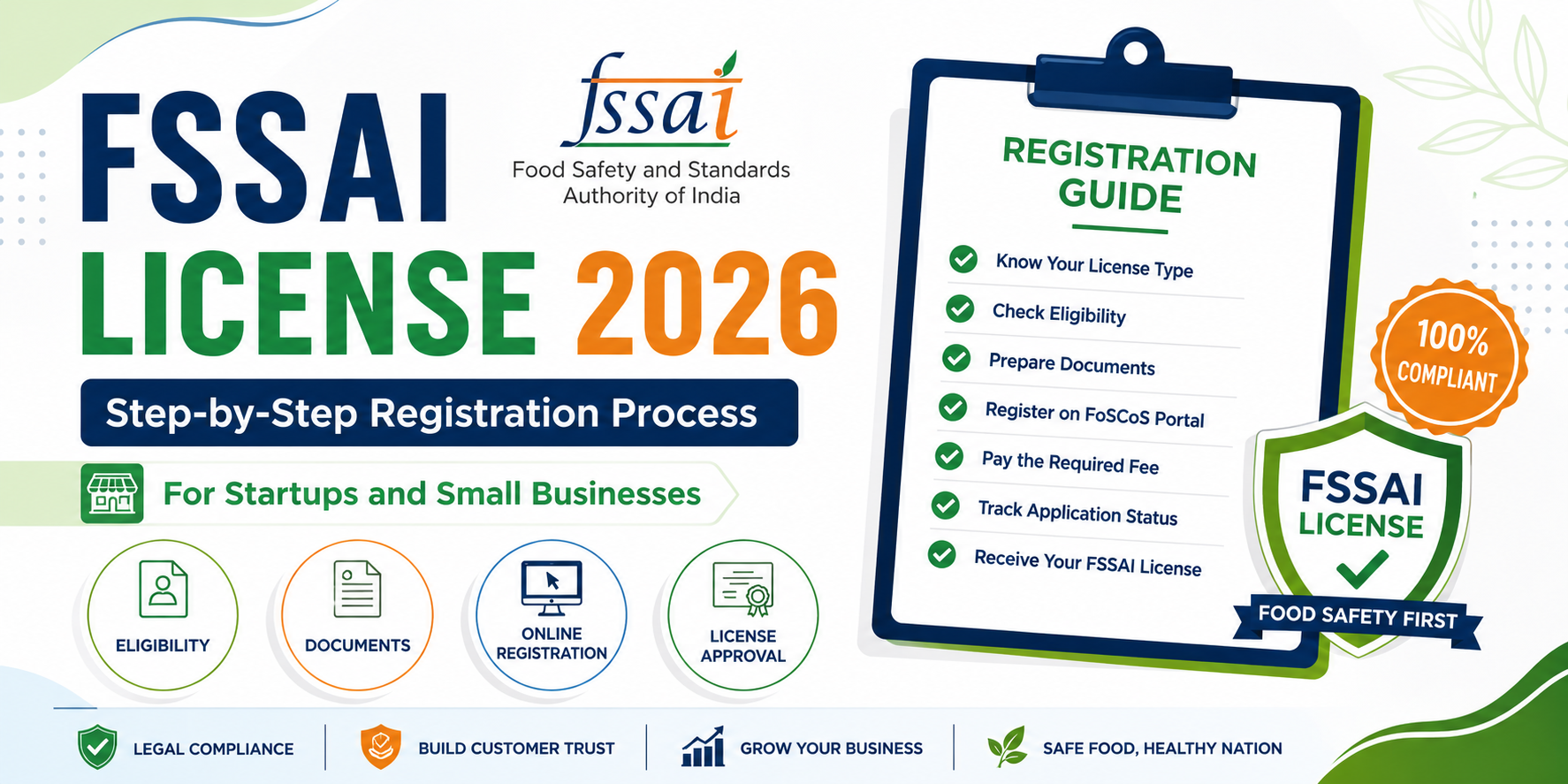
Every food business in India needs an FSSAI license registration before it starts selling, cooking, packing, or storing food. From April 1, 2026, the turnover limit for Basic Registration moved up from ₹12 lakh to ₹1.5 crore, and licenses issued after March 10, 2026 carry perpetual validity — no more renewal cycle. The three categories are Basic Registration (₹100/year), State License (₹2,000–₹5,000/year), and Central License (₹7,500/year). Applications go through the FoSCoS portal (foscos.fssai.gov.in), and small businesses can often get a certificate in 48 hours through the Tatkal option.
What Is an FSSAI License and Who Needs It?
The Food Safety and Standards Authority of India (FSSAI) is the body that checks food quality and hygiene across the country. If you cook, sell, pack, store, transport, or import food for money, you fall under the Food Safety and Standards Act, 2006, and you need either an FSSAI registration or an FSSAI license, depending on your size.
This covers home bakers, tiffin services, cloud kitchens, restaurants, grocery stores, dairy units, food trucks, exporters, and even large factories. A pickle seller working from a home kitchen and a five-star hotel both need FSSAI approval — just at different levels.

Why Does This Matter for Startups in 2026?
A new food startup usually runs on a tight budget and a small team. Getting food compliance wrong can shut a business down before it starts. Since March 2026, the FSSAI has changed several rules that directly affect small players:
- Higher turnover limit for Basic Registration — raised to ₹1.5 crore, so many small vendors who earlier needed a State License can now register at the cheaper Basic level.
- Perpetual validity — licenses no longer expire after 1–5 years. Once approved, they stay valid as long as the business follows the rules.
- Geo-tagged photographs — a smartphone photo of the premises with location turned on is now part of the application.
- Automatic category upgrade — if turnover crosses the current limit, the system moves the business to the next category without extra fees, and the license number stays the same.
- Stricter cross-checks — FSSAI now matches applicant details against GST and MCA records, so mismatched names or addresses can trigger rejection.
Skipping the license altogether is risky. Section 63 of the Act allows a penalty of up to ₹5 lakh and jail time of up to six months for operating without one. Food delivery platforms such as Swiggy and Zomato also refuse to list any seller without a valid FSSAI number.
Types of FSSAI License: Which One Fits Your Business?
| Category | Who It’s For | Annual Turnover | Government Fee |
|---|---|---|---|
| Basic Registration | Home cooks, small vendors, hawkers, petty manufacturers | Up to ₹1.5 crore | ₹100/year |
| State License | Restaurants, mid-size manufacturers, caterers, storage units | Above ₹1.5 crore, within one state | ₹2,000–₹5,000/year |
| Central License | Importers, exporters, e-commerce food platforms, multi-state operators | Large scale, or activity-based regardless of turnover | ₹7,500/year |
Turnover is not the only factor. Airport and railway food outlets, importers, and 100% export businesses need a Central License regardless of how small their revenue is, because the activity itself is treated as high-risk.
Step-by-Step: How to Apply for an FSSAI License on FoSCoS
Step 1: Visit the FoSCoS portal Go to foscos.fssai.gov.in — this is the only official gateway for FSSAI license and registration work. Third-party sites can help with paperwork, but the application itself happens here.
Step 2: Create your account Sign up with a mobile number and email ID. An OTP confirms both before the account activates.
Step 3: Pick your Kind of Business (KoB) This single choice decides your whole application — license category, documents needed, and fee. Pick the KoB that matches your actual food activity, not a rough guess. A wrong KoB usually means rejection or having to restart.
Step 4: Fill Form A or Form B Basic Registration uses Form A. State and Central licenses use Form B. You’ll enter your legal business name, address, product categories, and estimated annual turnover.
Step 5: Upload documents Common documents include identity proof, address proof of the premises, business incorporation papers, a passport-size photo, and — for State or Central applicants — a Food Safety Management Plan (FSMP). Files should be clear PDFs under 2 MB each.
Step 6: Add the geo-tagged photo Take a photo of your kitchen or shopfront with location services on. This step is now mandatory under the 2026 rules.
Step 7: Pay the fee You can pay for one year or lock in up to five years at once. Fees are non-refundable once submitted, so double-check every field before paying.
Step 8: Track and receive your certificate Basic Registration often clears through the Tatkal fast-track option within 48 hours. State and Central applications go through document review and, in many cases, a premises inspection, which can take 30–60 days.
Documents You’ll Actually Need
- PAN card and Aadhaar of the owner or partners
- Proof of premises — rent agreement or ownership papers, plus a NOC from the landlord if rented
- Business constitution proof (partnership deed, incorporation certificate, or GST registration)
- Passport-size photograph
- Food Safety Management Plan (State/Central only)
- Import Export Code, if the business imports or exports food
Common Mistakes Startups Make
- Choosing the wrong Kind of Business category
- Uploading a rent agreement or electricity bill that doesn’t match the business name exactly
- Forgetting the annual return (Form D-1, due May 31) once the license is active
- Assuming Basic Registration is enough after crossing ₹1.5 crore turnover
- Not budgeting for the Food Safety Management Plan cost when applying for a State or Central License
You can register business online with the help of business registration service provider consultancy.
Summary
An FSSAI license is not paperwork for the sake of paperwork — it’s the entry ticket to legally sell food in India. The 2026 changes make life a bit easier for small businesses: a wider turnover band for Basic Registration, no more repeat renewals, and a faster Tatkal process for first-time applicants. Pick the right category based on your turnover and activity, keep your documents clean and consistent across GST and MCA records, and apply directly through foscos.fssai.gov.in.
FAQ
Q: What is the FSSAI Basic Registration fee in 2026?
₹100 per year, or ₹500 if paid for five years at once.
Q: Do I need to renew my FSSAI license after March 2026? No. Licenses granted after March 10, 2026 carry perpetual validity and don’t need renewal, as long as fees and annual returns stay current.
Q: Can a home-based food business get an FSSAI license?
Yes. Tiffin services, home bakers, and pickle or snack sellers need Basic Registration once they sell commercially, including through online platforms.
Q: How long does FSSAI registration take?
Basic Registration can arrive in 48 hours through the Tatkal option. State and Central licenses generally take 30–60 days because of document checks and site inspection.
Q: What happens if I run a food business without an FSSAI license?
Section 63 of the Food Safety and Standards Act allows a penalty of up to ₹5 lakh and imprisonment of up to six months.
Q: Which license do food delivery platforms require?

Swiggy, Zomato, and similar platforms require a valid FSSAI number before listing any seller — Basic, State, or Central, depending on the seller’s turnover and activity.