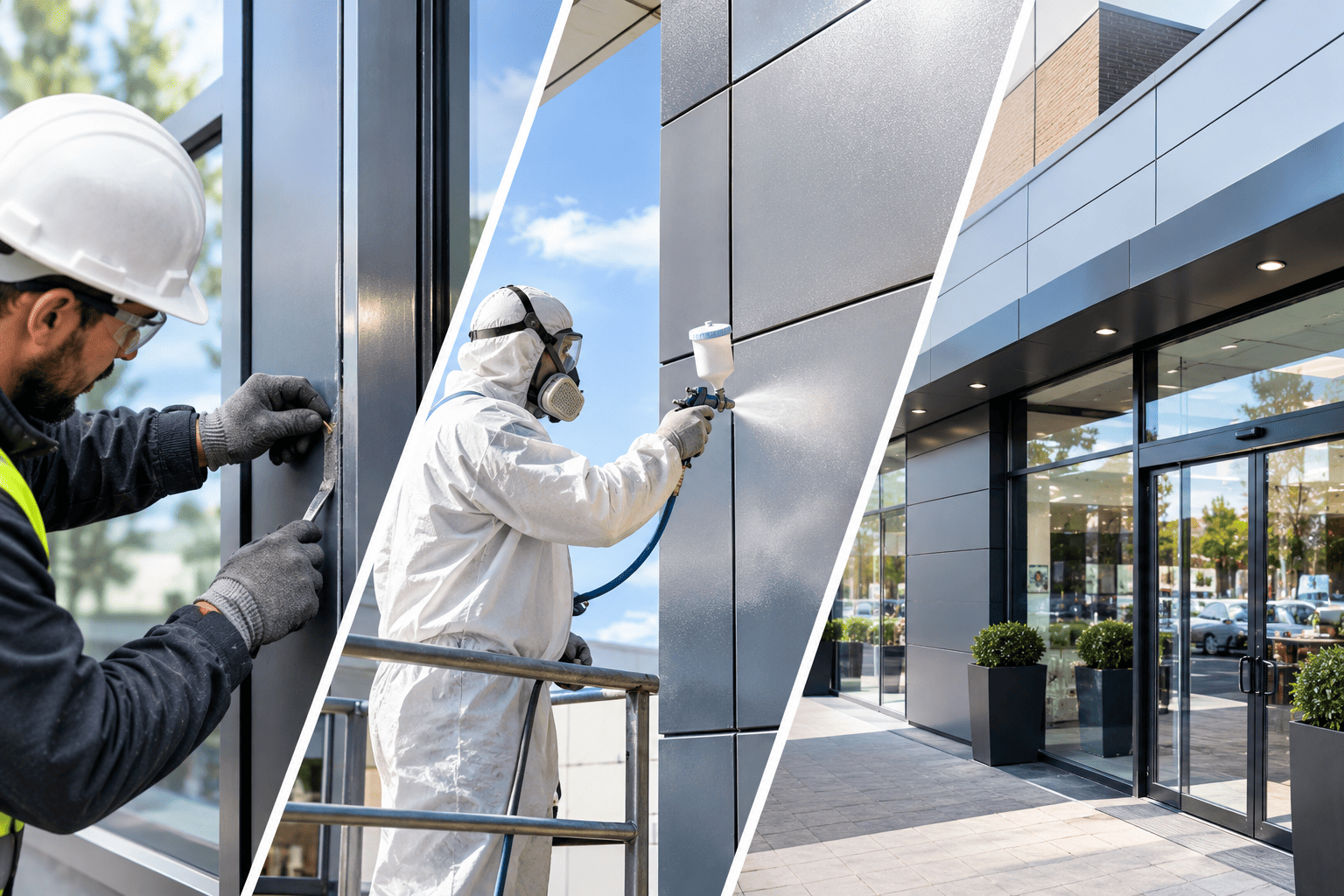
A shop front plays a big role in shaping customers’ first impressions, even if people don’t really notice it consciously. Over time though, you get rain, sunlight, pollution, and general day-to-day wear, and that can make aluminium frames and other exterior surfaces look faded, scratched, or just outdated. When that happens, the commercial property owner has to decide what to do—repair the existing finish, apply some new coating, or go for an exterior upgrade with cladding instead.
Picking between anodised repairs, spraying, and shopfront cladding really comes down to how the current surface looks, what type of appearance is wanted, how much maintenance you can handle, and what the budget looks like. If a business understands the differences between the refurbishment choices, it avoids doing replacement work that nobody actually needed in the first place.


What Are Anodised Repairs, and When Are They Necessary?
Anodised aluminium is often used on commercial windows, doors, and shop fronts because it has a durable finish and it resists corrosion pretty well. During the anodising process, a protective oxide layer forms on the aluminium surface, and that boosts both durability and how it looks.
Primarily, anodised repairs address damage to existing anodised aluminium parts, wherever practical. The right repair method depends on how bad the damage is, how sound the protective finish remains, and the final look you’re aiming for.
When Should You Think About Anodised Aluminium Repairs?
It might be worth considering repairs when:
- Aluminium frames show minor scratches or small area surface damage, nothing huge.
- The existing shopfront parts are still structurally sound and holding up.
- Discolouration or staining is making the exterior look tired, dull, or uneven.
- A full replacement of the aluminium framework feels unnecessary, like doing the whole thing for one issue.
Also, it is good to know this, because damaged anodising isn’t always something you can simply fix and return to the exact original factory finish. Some problems need specialist treatment, and if the surface is badly marked, an alternative refurbishment approach may be more sensible.
Having a professional assessment helps figure out if targeted repairs are actually technically suitable and whether they will result in a finish that looks acceptable in real life, not only on paper.
How Can Spraying Refresh an Existing Shop Front?
Practically, shopfront spraying can refresh an existing facade because commercial aluminium spraying is basically a refurbishment approach where you get the current surface ready and then apply a proper coating. That improves how it looks, and it also gives protection – well, sort of both at the same time.
It works especially well when a business wants to modernise aluminium frames that have gone dull, faded, or just feel a bit outdated, without needing to remove the whole shop front. Most professional shopfront spraying usually means cleaning first, then preparing and treating the substrate, and only after that applying a coating system that matches what’s already there.
What Are the Benefits of Shop Front Spraying?
Honestly, spraying can bring a few neat perks, even if it depends a bit on the situation and the surface in question.
- Updated appearance: A shop can go for a more contemporary colour, something that fits their branding and the building style, without it looking forced.
- Reduced replacement needs: If the existing frames are still in decent shape, they may be refurbished, not automatically removed.
- Design flexibility: With the right coating system in place, there’s room for different colour choices, plus varied finish types.
- Less disruption: In some cases, on-site spraying cuts down the large upheaval you get with full replacement work.
Now, how long a sprayed finish actually lasts will depend on the coating specification, the surface preparation quality, the weather and exposure level, and the ongoing maintenance done afterwards.
What Is Shop Front Cladding, and When Is It the Better Choice?
Basically, when you fit external panels or face materials on top of a solid supporting framework, it is called shopfront cladding, so the whole shopfront looks more refreshed, or frankly, more “done” than before. Depending on the exact setup, it’s used to hide tired-looking surfaces, bring everything into one visual line, or even to push the place toward a totally different architectural mood.
You’ll often see it chosen by businesses when they want something bigger than minor surface repairs or a fresh coat that only goes so far. It’s the kind of upgrade where the frontage gets a new skin, not just a quick tidy-up.
Why Do Companies Choose Shop Front Cladding?
There are a few common reasons, like
- Modern exterior design: You can pick from various panel finishes, colours and textures to build a frontage that feels more distinctive and commercial.
- Better visual consistency: If the exterior parts are mismatched or they’ve aged in uneven ways, cladding can help make it look coordinated again.
- Surface protection: When the system is properly specified, it can guard the underlying surfaces against some of the day-to-day weather impacts and related exposure.
- Design flexibility: It can slot into a broader refurbishment plan, not just the wall panels, but also things like signage zones, entrances, and nearby architectural details.
That said, cladding is not the same as a straightforward coating job. It needs more thought, and yes, more planning. Before shopfront cladding the current structure, the fixing method, moisture management, fire performance requirements, and the relevant building rules all have to be reviewed properly.
Spraying and Cladding: Which Option Offers Better Value?
Honestly, it depends on the size of the transformation you are looking at, and also how far you want to push the overall look. Sometimes it’s a quick refresh vibe; sometimes it’s basically a whole exterior rethink.
Spraying usually fits best when the current aluminium frames are basically fine, but they look a bit faded, scratched, or just dated. Whereas shopfront cladding can be the better move when the target is a broader, exterior-wide change or when you want to cover appropriate surfaces and give everything a fresh finish.
| Consideration | Spraying | Shop front cladding
|
| Main purpose | Refresh existing surfaces. | Redesign or cover suitable exterior surfaces. |
| Existing structure | Usually preserved | Supporting structure and fixing suitability must be checked.
|
| Design options | Primarily colour plus coating finish | More variety in panel materials, textures, and layout styles |
| Project complexity | Usually depends on prep work and access | Often means extra design and installation steps |
| Best suited to | Sound frames needing a visual uplift | Bigger exterior transformation jobs |
Neither route is automatically cheaper or more durable. Get a site-specific assessment and quote that covers preparation, materials, access equipment, installation, and the ongoing maintenance needs.
Can Shop Front Recoating Extend the Life of Existing Frames?
It can, and yes, it often boosts the look while adding a fresh protective layer—so long as the correct coating system is chosen and actually applied the right way, not just “painted on” and hoped for.

For many sites, shopfront recoating is a decent alternative option instead of replacing the whole shopfront, assuming the main framework is still doing its job and is serviceable.
The results you get depend on a proper surface assessment, correct preparation, compatible materials, and then some regular maintenance. Also, businesses should check if the planned work of shopfront recoating is suitable for the existing anodised finish or any previously coated surface, because compatibility there matters a lot.
Conclusion
Going with anodised repairs, spraying, or shop front cladding really depends on what your commercial property is doing day to day and what it actually needs. Anodised repairs are mostly for fixing certain surface defects, spraying can help refresh appropriate aluminium frames, while cladding offers a bigger exterior change, more like a full makeover rather than a touch-up.

Before you settle on anything, take a proper look at the current condition of the building, then compare the total costs across the whole job, and don’t forget long-term maintenance too. Once you pick the right refurbishment method and rely on professional advice, businesses can lift the shop fronts appearance, make better use of what is already there and keep a smart commercial exterior, without doing extra replacement work just because it seems easier.