Indoor air quality in offices affects how people feel, think, and work throughout the day. Since employees spend long hours indoors, the products and methods used to clean those spaces can have a direct impact on comfort and health. Green cleaning standards are designed to reduce exposure to harsh chemicals, limit airborne irritants, and support a healthier work environment without sacrificing cleanliness. In many workplaces, even something as routine as dusting or floor care can influence the air people breathe.
For office managers, building owners, and facilities teams, understanding these standards is more than a matter of sustainability. It is also a practical way to reduce complaints about odors, eye irritation, headaches, and respiratory discomfort. When cleaning practices are chosen carefully, they can help create a fresher indoor environment that supports productivity and employee well-being. Businesses that work with professional office cleaners Richboro often learn that cleaning choices matter just as much as cleaning frequency, especially in shared workspaces with limited ventilation.
Green cleaning is not just about using products labeled “natural.” It involves a broader approach that includes safer ingredients, better dilution practices, microfiber tools, improved ventilation, and training for cleaning staff. These standards help reduce pollutants that can linger in office air and settle on surfaces, making the entire indoor environment healthier over time.

Key points
- Green cleaning standards reduce exposure to volatile organic compounds, fragrances, and harsh chemical residues.
- Better cleaning methods can lower dust, allergens, and particles that circulate through office air.
- Microfiber tools and proper dilution improve cleaning results while minimizing airborne contaminants.
- Green cleaning supports employee comfort, especially for people with allergies, asthma, or chemical sensitivities.
- Consistent standards help offices maintain healthier indoor environments without reducing cleanliness.
Why Office Indoor Air Quality Matters
Indoor air quality, often shortened to IAQ, refers to the condition of the air inside buildings and how it affects the health and comfort of occupants. In offices, poor air quality can lead to symptoms such as dry eyes, coughing, congestion, fatigue, and headaches. These issues may seem minor at first, but over time they can affect concentration, morale, and attendance.
Offices are especially vulnerable because they often contain carpeting, upholstered furniture, printers, electronics, and limited fresh air exchange. Dust and chemical residues can build up more easily in these environments. When traditional cleaning products release strong fumes or leave behind irritating compounds, they can add to the problem instead of solving it.
Good indoor air quality supports better daily performance. Employees are more likely to stay focused, feel comfortable, and avoid unnecessary irritation when the workspace is maintained with air quality in mind. That is why cleaning standards should be considered part of a larger indoor health strategy, not just a housekeeping task.
What Green Cleaning Standards Actually Mean
Safer product ingredients
Green cleaning standards emphasize products with lower toxicity and fewer ingredients linked to irritation or indoor pollution. These products are often designed to reduce volatile organic compounds, or VOCs, which can evaporate into the air and affect breathing comfort. Lower-VOC products are generally better for enclosed offices because they reduce the buildup of chemical odors and airborne irritants.
Proper dilution and application
Even a safer product can become problematic if it is overused. Green cleaning standards stress following label instructions carefully, especially for dilution. Using too much cleaner can leave behind residue on desks, floors, and other surfaces. That residue may later become airborne as dust or contribute to a sticky film that attracts more dirt.
Efficient tools and methods
Microfiber cloths, HEPA-filter vacuums, and clean mops are common parts of green cleaning programs. These tools capture dust more effectively instead of spreading it around. This matters in offices because dust often contains pollen, skin flakes, fibers, and other particles that can reduce air quality when disturbed.
How Green Cleaning Improves Office Air
Reduces chemical exposure
Many conventional cleaning products contain fragrances, solvents, and disinfecting agents that can release gases into the air long after cleaning is finished. Green cleaning standards help lower this exposure by selecting products with fewer harsh emissions. The result is a workspace that smells cleaner without relying on strong artificial scents.
Limits airborne dust and allergens
Dust is one of the biggest contributors to poor indoor air quality in offices. It can settle on vents, shelves, carpets, and window ledges, then become airborne again whenever people move around. Green cleaning methods focus on removing dust thoroughly rather than redistributing it. This is especially important in shared spaces, conference rooms, and areas with heavy foot traffic.
Supports better ventilation
Cleaning standards that prioritize low-emission products work best when paired with good ventilation. Offices that use greener cleaning methods place less strain on the indoor air system because fewer chemical vapors need to be diluted or exhausted. Better ventilation helps remove both cleaning-related fumes and everyday indoor pollutants, improving overall air freshness.
Improves comfort for sensitive occupants
Some employees are more sensitive to fragrances, bleach, ammonia, and strong disinfectants. Green cleaning standards can make offices more welcoming for people with asthma, allergies, migraines, or chemical sensitivities. When fewer irritants are introduced into the environment, more people can work comfortably without distraction.
Practical Cleaning Choices That Make a Difference
Not every green cleaning improvement requires a complete overhaul. Small changes can have a meaningful impact on office indoor air when applied consistently. One of the most effective steps is switching from aerosol sprays to controlled liquid applications. Sprays can release fine particles into the air, while wipes or damp cloths keep contaminants contained.
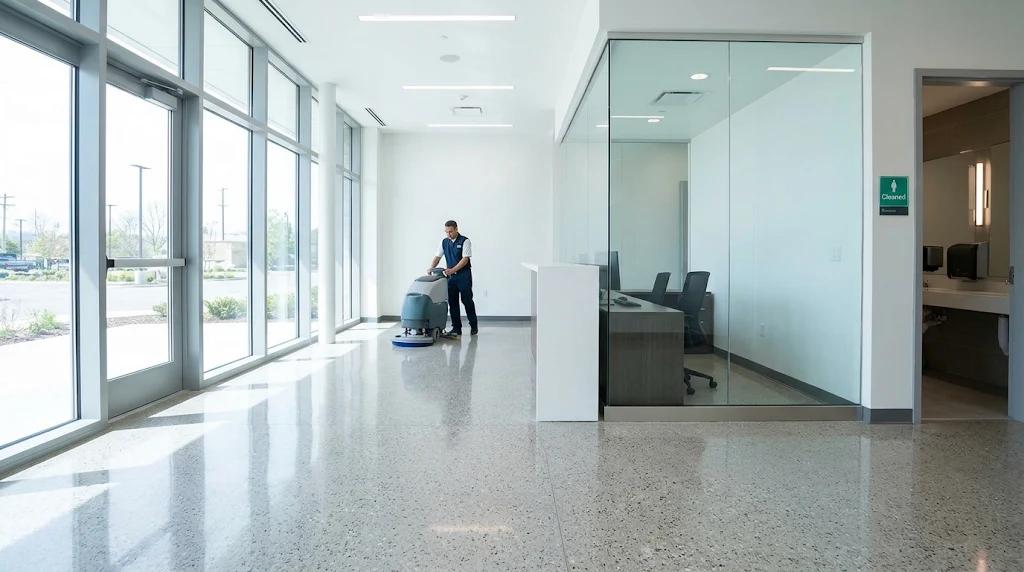
Another useful practice is vacuuming with HEPA filtration. Standard vacuums can stir up fine particles, but HEPA filters trap much smaller debris. This is especially useful for carpeted offices, where dust and allergens collect quickly. Floors should also be cleaned with the right amount of moisture, since overly wet mopping can lead to dampness and musty odors.
Restrooms, kitchens, and break rooms deserve special attention because they can accumulate odors and germs quickly. Green cleaning in these areas should focus on effective sanitation combined with controlled product use. The goal is not to underclean, but to clean smartly so the air remains fresh and surfaces stay safe.
Benefits Beyond Air Quality
Although the main focus is indoor air, green cleaning standards offer wider workplace benefits. Cleaner air can support better concentration and fewer complaints from staff. Offices may also see less buildup on surfaces, which makes routine maintenance easier over time. In some cases, using safer products can even help reduce wear on materials like flooring, furnishings, and fixtures.
There is also a cultural benefit. When a workplace adopts greener cleaning practices, it shows attention to employee health and environmental responsibility. That can improve trust and reinforce a standard of care that extends beyond appearance. People notice when a workplace feels clean without smelling overpowering or chemical-heavy.
How to Evaluate an Office Cleaning Approach
If an office wants to improve indoor air quality, it helps to review current cleaning practices with a few questions in mind. Are products low in VOCs? Are cleaners used according to label directions? Are dusting and vacuuming methods designed to trap particles instead of spreading them? Is the space ventilated after cleaning?
It is also useful to look at how often different areas are cleaned. High-traffic spaces may need more frequent attention, while storage areas may require occasional deep cleaning to prevent dust buildup. A balanced schedule helps maintain air quality without unnecessary product use.
Training matters too. Even the best products will not deliver good results if they are applied incorrectly. Staff should understand which tools to use, how much product to apply, and how to prevent cross-contamination between spaces.
Conclusion
Green cleaning standards improve office indoor air by reducing chemical exposure, controlling dust, and encouraging smarter cleaning methods. They create a more comfortable environment for employees while supporting healthier long-term maintenance practices. In offices where people spend much of their day indoors, these standards are not just a preference. They are a practical way to support well-being, productivity, and cleaner air throughout the workplace.
By choosing low-emission products, using effective tools, and maintaining consistent cleaning routines, offices can make meaningful progress toward better indoor air. The result is a workspace that feels fresher, functions better, and supports the people who use it every day.
FAQ
What is the main goal of green cleaning in offices?
The main goal is to clean effectively while reducing the release of harmful chemicals, dust, and irritants into the indoor air. This helps create a healthier workplace.
Do green cleaning products actually clean as well as traditional products?
Yes, when used correctly, many green cleaning products clean just as effectively as conventional ones. The key is proper use, correct dilution, and choosing products suited to the task.
How does dust affect office air quality?
Dust can carry allergens, fibers, and fine particles that become airborne when disturbed. Over time, this can reduce air quality and contribute to discomfort or allergy symptoms.
Are fragrances in cleaning products a problem?
They can be. Strong fragrances may trigger headaches, irritation, or breathing discomfort for some people. Green cleaning standards often reduce or avoid added fragrance.
What cleaning tools help improve indoor air the most?
Microfiber cloths and HEPA-filter vacuums are especially useful because they trap dust and particles instead of redistributing them into the air.
Can green cleaning help people with allergies or asthma?
Yes. By lowering exposure to harsh chemicals, dust, and airborne irritants, green cleaning can make offices more comfortable for people with sensitivities.

Is ventilation important after cleaning?
Absolutely. Good ventilation helps remove any remaining fumes, moisture, and airborne particles, which supports better indoor air quality overall.