Malaysian workplaces recorded 38,950 occupational injury cases in a single year, prompting the government to enact urgent, stringent regulatory changes. Partnering with an occupational safety consulting firm helps businesses navigate the complex requirements of the Occupational Safety and Health (Amendment) Act 2022, which officially came into force in June 2024. This comprehensive guide explains how safety consultants utilize specialized risk assessments to ensure legal compliance, protect vulnerable employees, and eliminate costly operational hazards across Malaysian industries.
Why is workplace safety consulting crucial for Malaysian businesses?
Malaysian businesses need top occupational safety consulting services to legally comply with updated government regulations and actively reduce rising workplace injury rates. According to [Department of Statistics Malaysia, 2023], the nation experienced a 13.8 percent increase in occupational injury cases, totaling 38,950 incidents across various sectors. This sharp rise in workplace accidents led the Malaysian government to enforce much stricter safety frameworks to protect human lives and sustain economic productivity.
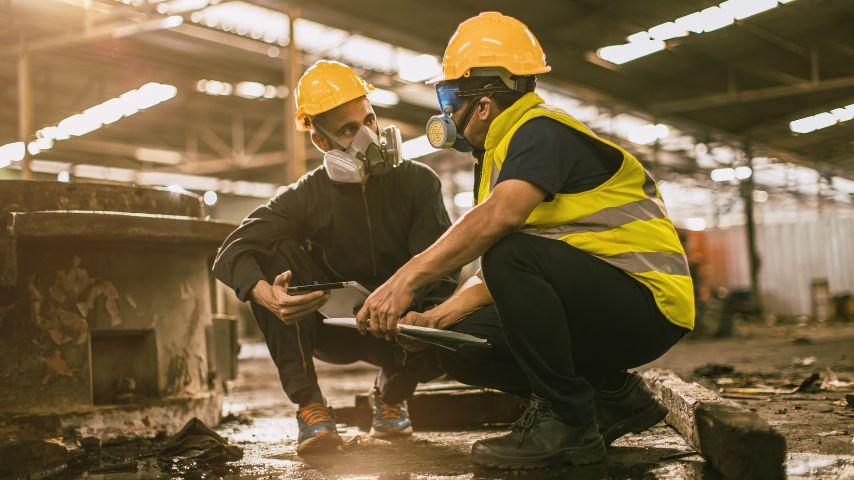
Occupational safety consultants bridge a critical knowledge gap for corporate employers. Business owners often lack the technical expertise required to identify hidden hazards, properly implement approved control measures, and train internal staff. By hiring an external safety consulting firm, organizations can accurately assess their physical workspaces, draft legally compliant safety policies, and ensure the company avoids crippling legal penalties associated with recent legislative updates.

What are the key compliance changes under the Malaysia OSHA Amendment Act 2022?
The Occupational Safety and Health (Amendment) Act 2022 introduces significantly higher financial fines, mandates proactive risk assessments, and broadens regulatory scope to cover almost all workplaces. Effective June 1, 2024, the Malaysian government requires nearly every business entity to adhere to these new legal standards, moving away from the limited industry scope of the original 1994 legislation.
According to [Occupational Safety and Health (Amendment) Act 2022], the most impactful changes include:
- Increased Employer Penalties: Under Section 41, the maximum fine for a breach of duty by employers or principals increased from RM50,000 to RM500,000. Courts may also impose potential imprisonment for up to two years.
- Mandatory OSH Coordinator: Section 29A dictates that any employer with five or more employees must appoint a trained Occupational Safety and Health Coordinator. This applies to companies that do not already meet the threshold to hire a full-time Safety and Health Officer. Failing to appoint an OSH Coordinator can result in a RM50,000 fine.
- Principal Liability: Section 18A makes principals legally responsible for the safety of contractors, subcontractors, and their respective employees while those individuals are operating under the principal’s direction.
- Duty to Conduct Risk Assessments: Section 18B creates a strict legal obligation for employers and principals to conduct formal risk assessments and implement subsequent risk control measures.
- Employee Rights: Section 26A grants employees the legal right to remove themselves from imminent workplace danger if the employer fails to take corrective action after being notified of the hazard.
How does an OSH Coordinator differ from a Safety and Health Officer?
An Occupational Safety and Health (OSH) Coordinator manages basic safety compliance for smaller businesses, whereas a Safety and Health Officer (SHO) handles complex, large-scale safety programs for high-risk or large organizations. The Malaysian government introduced the OSH Coordinator role specifically to improve safety standards in small and medium enterprises (SMEs) without burdening them with the high costs of a full-time SHO.
Choose to train an OSH Coordinator if your company employs between five and under 100 people in lower-risk environments, such as retail, corporate offices, or small manufacturing plants. The OSH Coordinator acts as a focal point for occupational safety, assisting management in identifying daily hazards and reporting incidents.
Choose to hire a certified Safety and Health Officer if your organization operates in a high-risk sector, such as large-scale construction, chemical processing, or heavy manufacturing. SHOs undergo rigorous, months-long competency training approved by the Department of Occupational Safety and Health (DOSH) and hold deep technical expertise required to manage highly hazardous operations.
How do safety consultants perform HIRARC to reduce workplace hazards?
Best safety consultants perform Hazard Identification, Risk Assessment, and Risk Control (HIRARC) by systematically documenting workplace tasks, calculating the severity of potential accidents, and assigning specific preventative measures. According to [Department of Occupational Safety and Health, 2008], the HIRARC methodology is the foundational tool used in Malaysia to establish a secure, legally compliant working environment.
Occupational safety consultants break this mandatory process into three distinct phases:
- Hazard Identification: Consultants inspect the physical workspace to locate potential sources of harm. The consultant interviews employees, reviews past incident reports, and observes daily operations to find issues like exposed electrical wiring, ergonomic strain from poor seating, or dangerous chemical spills.
- Risk Assessment: Professionals calculate the exact level of risk by multiplying the likelihood of an accident occurring by the severity of the potential injury. This produces a numerical risk matrix score. A score of 1 to 4 indicates low risk, 5 to 14 indicates medium risk, and 15 to 25 indicates high risk. High-risk activities require immediate intervention.
- Risk Control: The occupational safety consultant applies the “Hierarchy of Control” framework to eliminate or minimize the identified risks safely and efficiently.
When applying controls, an occupational safety consultant will use the following decision framework, ranked from most effective to least effective:
| Hierarchy Level | Action Required | Example of Application |
| 1. Elimination | Physically remove the hazard entirely. | Stopping the use of a dangerous machine that lacks safety guards. |
| 2. Substitution | Replace the hazard with a safer alternative. | Swapping toxic cleaning chemicals with eco-friendly, non-toxic variants. |
| 3. Isolation | Separate the hazard from the workers. | Enclosing a noisy generator in a soundproof room. |
| 4. Engineering Controls | Isolate people from the hazard via physical design. | Installing local exhaust ventilation to remove airborne dust. |
| 5. Administrative Controls | Change the way people work through policies. | Rotating employee shifts to limit exposure to repetitive physical strain. |
| 6. Personal Protective Equipment | Protect the worker with wearable safety gear. | Providing hard hats, safety goggles, and steel-toed boots. |
Choose engineering controls over administrative controls if the hazard poses an immediate, life-threatening risk that an administrative policy cannot entirely eliminate.
What specific hazard assessments do safety consultants conduct in Malaysia?
Safety consultants conduct highly specialized evaluations, including Chemical Health Risk Assessments (CHRA) and Noise Risk Assessments (NRA), to protect workers from long-term occupational diseases. While a standard HIRARC covers general workplace safety, industrial environments require targeted scientific methodologies to manage invisible hazards like toxic fumes or excessive decibels.
Chemical Health Risk Assessment (CHRA)
Employers must legally conduct a CHRA to comply with the Occupational Safety and Health (Use and Standards of Exposure of Chemicals Hazardous to Health) Regulations 2000. An occupational safety consultant will identify chemical exposure limits, evaluate current ventilation systems, and recommend safe storage practices. Choose a CHRA if your manufacturing process involves solvents, acids, heavy metals, or toxic gases. The consultant will determine if employees require baseline medical surveillance to monitor chemicals entering their bloodstream.
Noise Risk Assessment (NRA)
Occupational safety consultants deploy calibrated sound level meters and personal noise dosimeters to measure an employee’s exact exposure to high decibel levels over an eight-hour shift. According to Malaysian occupational laws, employers must act if noise levels exceed the permissible exposure limit of 85 decibels. Choose an NRA if your facility operates heavy machinery, pneumatic tools, or stamping presses that cause persistent, loud noise. The consultant will help design sound barriers and select the appropriate hearing protection devices for the staff.
How should an organization choose between hiring an internal safety officer and an external safety consultant?
Organizations should choose an external occupational safety consultant for specialized, short-term compliance audits, while an internal safety officer is better for daily, ongoing safety management. The decision ultimately depends on the size of the workforce, the technical complexity of the industry, and the specific regulatory requirements dictated by the Occupational Safety and Health (Amendment) Act 2022.
Choose an external safety consulting firm if you need unbiased third-party audits, highly specialized testing like CHRA or NRA, or expert assistance building a foundational safety policy from scratch. External consultants bring vast experience from auditing multiple industries. They quickly identify systemic compliance gaps that internal teams often overlook due to daily operational familiarity.
Choose an internal safety officer if your business requires constant, daily supervision of high-risk sites. Internal officers excel at continuous employee safety training, enforcing daily permit-to-work systems, and managing real-time incident reporting directly on the factory or construction floor.
Many highly successful Malaysian companies employ a hybrid approach. The business maintains an internal OSH Coordinator to handle daily administrative tasks, but hires an external safety consulting firm annually to review the overarching safety strategy, update the HIRARC documentation, and ensure the company remains protected against the RM500,000 non-compliance penalties.
Conclusion
Navigating the intricacies of the Occupational Safety and Health (Amendment) Act 2022 requires deliberate action and technical precision. Malaysian businesses can no longer treat workplace safety as a secondary administrative task. The steep financial penalties and the legal assignment of principal liability demand a proactive, rigorous approach to hazard reduction.
By engaging an occupational safety consultant such as Wellkinetics, organizations invest directly in their long-term operational stability. Professional safety consultants provide the vital roadmaps—through thorough HIRARC documentation, customized chemical assessments, and strategic engineering controls—needed to protect human life. Taking these decisive steps today ensures your workforce remains safe, your operational downtime drops, and your enterprise complies fully with the latest Malaysian regulatory standards.
Frequently Asked Questions about Safety Consulting in Malaysia
How much does workplace safety consulting cost in Malaysia?
Workplace safety consulting costs typically range from RM3,000 to RM15,000 per project, depending heavily on the scope of the assessment. A basic HIRARC audit for a small corporate office sits at the lower end of the pricing spectrum. Complex industrial requirements, such as comprehensive Chemical Health Risk Assessments (CHRA) or facility-wide Noise Risk Assessments (NRA) requiring specialized equipment, command higher professional fees.
How long does a standard HIRARC assessment take to complete?
A standard HIRARC assessment takes between two to four weeks to complete from initial inspection to final reporting. The safety consultant must spend several days physically observing workplace operations, interviewing employees, and reviewing past incident logs. Following the site visit, the consultant requires time to calculate the risk matrix scores and draft customized, actionable risk control recommendations for management.
What are the legal risks of ignoring occupational safety regulations?
Ignoring occupational safety regulations exposes Malaysian employers to maximum fines of up to RM500,000 and potential imprisonment of up to two years. Following the implementation of the Occupational Safety and Health (Amendment) Act 2022, the government also empowered employees to legally refuse to work in environments they deem imminently dangerous, which can lead to severe operational halts and reputational damage.
What is the alternative to hiring a professional safety consultant?
The primary alternative to hiring a professional safety consultant is training internal staff members to manage compliance independently. Employers with five or more staff members can send a designated employee to a DOSH-approved training center to become a certified Occupational Safety and Health (OSH) Coordinator. However, this internal staff member may still lack the scientific expertise required to conduct complex chemical or noise assessments.
Which industries require safety consulting services the most?
High-risk sectors like construction, heavy manufacturing, oil and gas, and agriculture require safety consulting services the most due to their inherent physical hazards. However, following the 2024 legal amendments expanding the scope of the Occupational Safety and Health Act, historically low-risk sectors such as retail, hospitality, and finance are now actively seeking safety consulting to audit their office ergonomics and fire safety protocols.

Don’t forget to read more articles on USA Magazine.