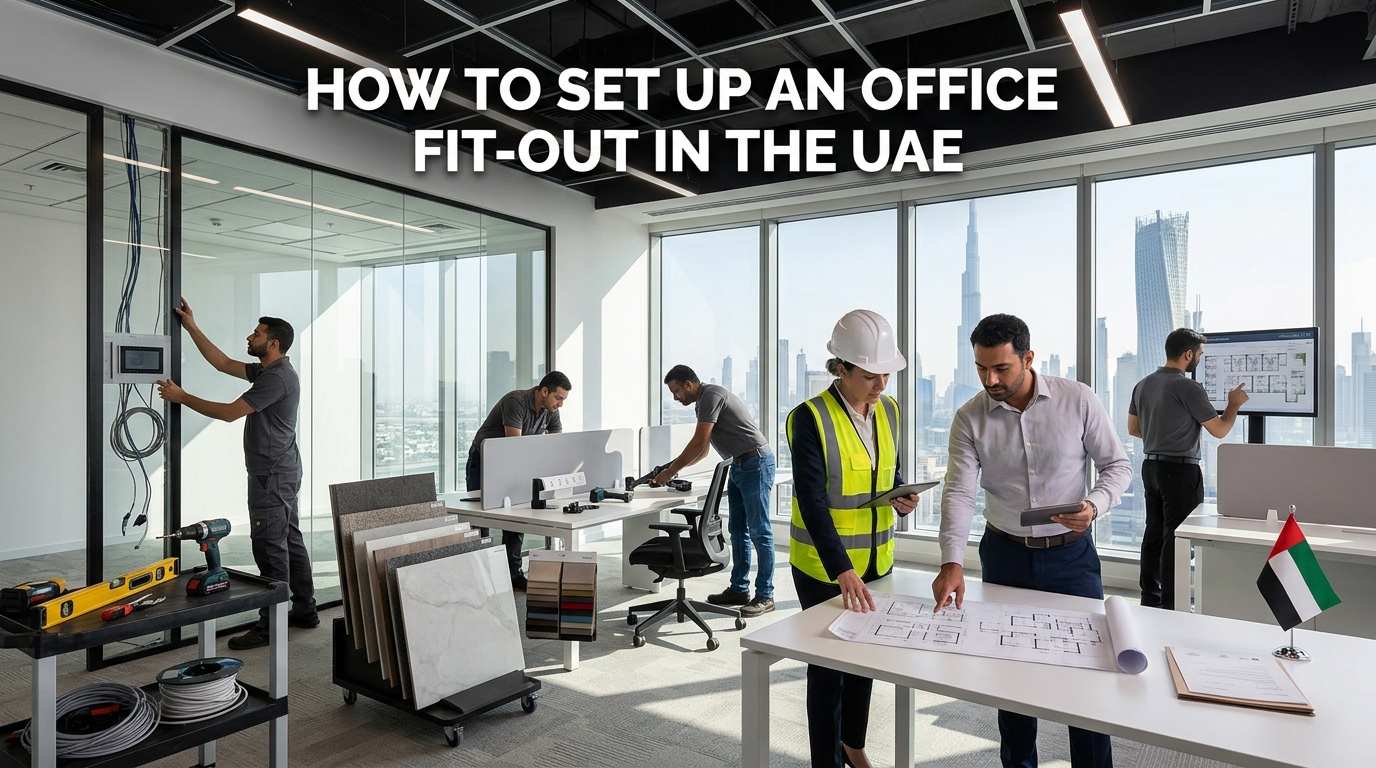
Setting up an office fit-out in the UAE is more than furnishing a workspace. It involves planning the layout, securing approvals, coordinating design and technical work, and making sure the office is functional, compliant, and ready for operations.
A successful office fit-out improves how a business works every day. It can support employee productivity, reflect the company’s brand, and create a better environment for clients, teams, and business partners. In the UAE, the process also requires close attention to building rules, authority approvals, and execution quality.
What an Office Fit-Out Means
An Office Fit-Out UAE is the process of transforming an empty or existing commercial space into a usable workplace. This usually includes layout planning, partitions, ceilings, flooring, electrical work, lighting, air conditioning coordination, furniture placement, branding elements, and final finishes.
In practical terms, a fit-out turns office space into a business-ready environment. Some projects involve a complete transformation of a shell space, while others focus on upgrading an existing office to match new operational needs. The level of work depends on the condition of the property and the goals of the company.
Start With Business Needs
The first step is understanding what the business actually needs from the office. This includes the number of employees, type of workstations, meeting rooms, storage, collaboration areas, reception requirements, and future growth plans. A fit-out should support the way the business functions, not just how the office looks.
This stage is also where the company defines its budget and timeline. Without a clear brief, the project can become expensive or poorly structured. A practical plan at the start helps guide every decision that follows.
Evaluate the Space
Before design work begins, the office space should be assessed carefully. This includes reviewing the size, layout, ceiling height, lighting conditions, building services, access points, and any existing infrastructure that may affect the project. A site survey helps identify both opportunities and limitations.
This step is important because every office has physical and technical constraints. Early evaluation reduces the risk of design changes later and helps create a fit-out plan that is realistic for the site.
Build the Design Plan
Once the business needs and site conditions are clear, the design stage begins. This usually includes space planning, concept development, material selection, furniture planning, branding integration, and technical drawings. The goal is to create a workspace that is both functional and visually aligned with the company’s identity.
A good design should balance appearance with usability. It should support workflow, privacy, collaboration, and employee comfort. In the UAE, the design stage also needs to consider authority standards and building compliance from the beginning.
Prepare Technical Drawings
After the concept is approved, detailed technical drawings are prepared. These often include architectural drawings, partition layouts, reflected ceiling plans, flooring plans, furniture layouts, and MEP drawings covering mechanical, electrical, and plumbing elements. If structural changes are involved, extra engineering details may also be required.
This is one of the most important stages because approvals and construction usually depend on these documents. Clear technical drawings reduce site confusion, prevent design conflicts, and make execution much smoother.
Get the Required Approvals
Office fit-out projects in the UAE usually require approvals before work begins. The exact authority depends on the office location. For some projects, approval may go through Dubai Municipality or another local authority. In free zones or specific districts, approvals may come from the relevant zone authority or developer.
In many cases, the process also involves building management approval, fit-out permits, and fire and safety review if the work affects occupancy or services. Authorities may request revised drawings, conduct inspections, or require final clearance before the office can be occupied. This means approvals should never be treated as a last-minute step.
Choose the Right Fit-Out Contractor
Selecting the right contractor is one of the biggest decisions in the project. The contractor should understand UAE fit-out standards, authority procedures, project coordination, and the practical side of commercial interiors. A weak contractor can delay the project, increase costs, or create quality issues that affect the final result.
A strong fit-out partner usually helps with planning, approvals, execution, site coordination, and handover. It is also important to make sure the contractor can manage civil work, technical services, and finishing details in a coordinated way.
Set the Budget Properly
Budgeting should cover more than construction alone. In addition to design and execution, the budget may need to include permits, consultant fees, authority charges, furniture, branding, IT planning, security systems, and contingency costs. A fit-out budget should be realistic from the start to avoid interruptions later.
It is also wise to keep room for unexpected costs. Office projects can involve hidden site issues, design changes, or extra compliance requirements. Planning for these possibilities helps protect the timeline and prevents pressure during execution.
Execute the Fit-Out Work
Once approvals are in place, the construction stage begins. This may include demolition, site preparation, partition installation, ceiling work, flooring, painting, MEP installation, lighting setup, joinery, furniture placement, and final decorative finishes. The site should be managed carefully to keep work aligned with the approved design.
Execution is where planning becomes reality, so quality control is critical. The fit-out should be monitored regularly to make sure materials, workmanship, and technical systems meet expectations. Delays usually happen when site work moves ahead without proper coordination.
Test, Inspect, and Handover
After construction is completed, the office should go through testing and final checks. This can include electrical testing, HVAC performance checks, lighting verification, fire safety review, and general quality inspection. If required, the relevant authority or building management may also inspect the site before final approval is given.
The handover stage should only happen when the office is operational and ready for use. At this point, the company may receive final drawings, manuals, warranties, and completion confirmation. A proper handover helps the business move into the new office with fewer disruptions.
Common Fit-Out Challenges
One common challenge is underestimating approvals. Many businesses focus only on design and forget that authority processes, building management requirements, and permit timelines can affect the entire project. Another issue is poor planning, which often leads to budget overruns or layout changes during construction.
Contractor coordination can also become a challenge if roles are unclear. Without strong project management, delays in technical work, procurement, or approvals can affect the final delivery. That is why fit-out planning should be treated as a structured business project, not just an interior update.
Tips for a Better Outcome
The best results usually come from starting early and planning thoroughly. Businesses should define their operational needs clearly, choose experienced consultants and contractors, and align the design with both compliance and future growth. A beautiful office is useful only when it also functions well.
It also helps to keep decision-making efficient. Delayed material approvals, layout changes, or unclear responsibilities can slow the entire fit-out process. A focused approach improves quality, controls costs, and reduces unnecessary disruption.
Final Thoughts
Setting up an office fit-out in the UAE requires more than design ideas. It involves strategic planning, space evaluation, approvals, technical coordination, careful contractor selection, and disciplined execution. When each stage is handled properly, the result is a workspace that supports both business performance and professional image.
For companies opening a new office or upgrading an existing one, a fit-out can be a valuable long-term investment. A well-planned office improves daily operations, strengthens the brand environment, and creates a more efficient and comfortable place to work.
FAQ
What is included in an office fit-out?
An office fit-out usually includes layout planning, partitions, ceilings, flooring, lighting, MEP work, furniture, branding elements, and final finishes.
Do office fit-outs need approvals in the UAE?
Yes, most office fit-out projects require approvals from building management and the relevant local or free zone authority before work begins.
How long does an office fit-out take?
The timeline depends on the size of the office, the complexity of the work, approvals, and contractor coordination. Smaller projects may move faster, while larger ones take longer.
Why are technical drawings important?
Technical drawings are essential because they guide the construction work and are usually required for authority approvals and inspections.
Should I hire a specialist fit-out contractor?
Yes, hiring an experienced fit-out contractor helps manage design execution, approvals, site coordination, and project quality more effectively.