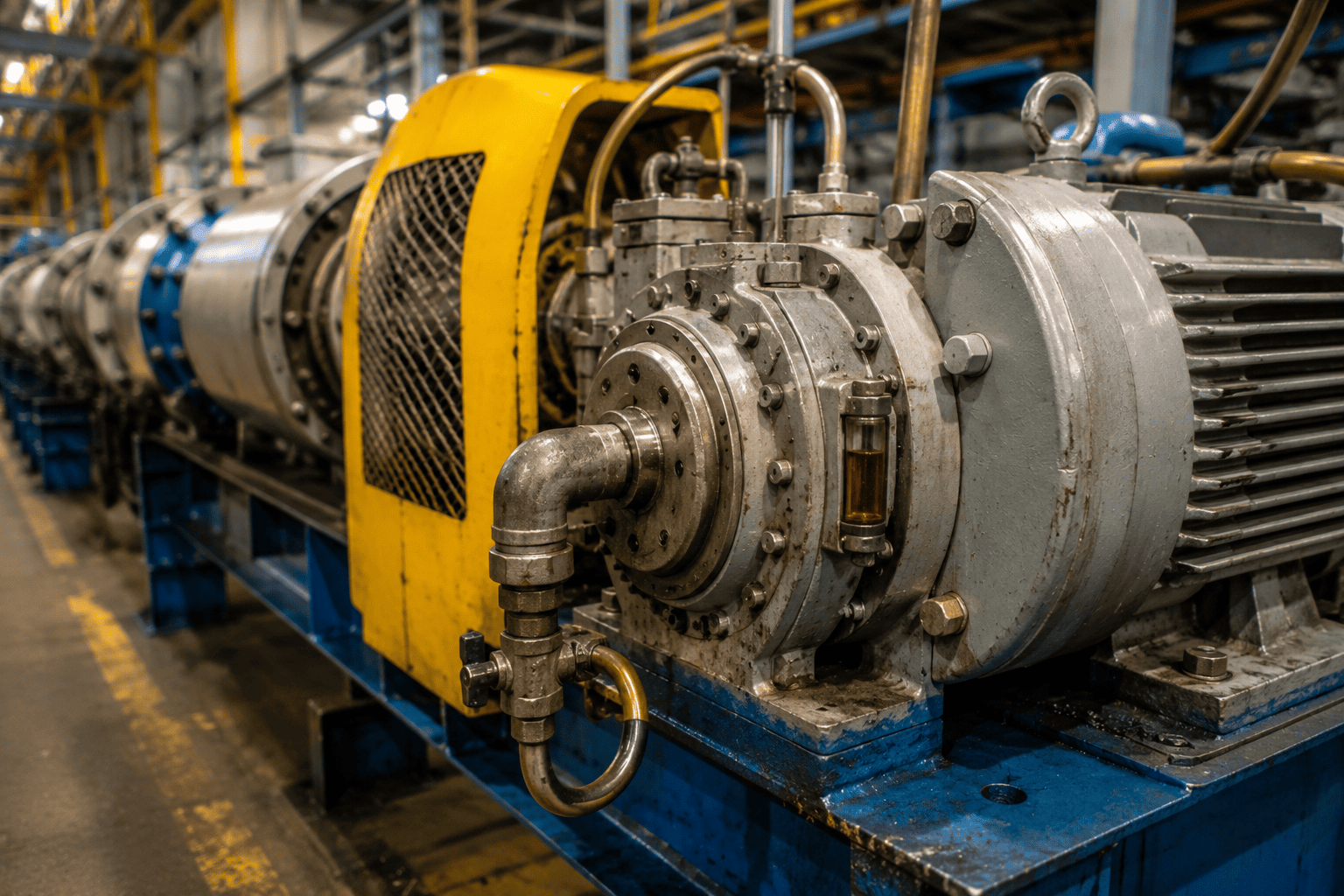
Every maintenance manager has faced that frustrating moment: a machine that should have lasted years begins showing signs of wear much earlier than expected. Production slows, maintenance costs climb, and downtime starts affecting delivery schedules. In many cases, the root cause isn’t a faulty machine—it’s inadequate lubrication.
That was the reality at an industrial plant operating in the UAE’s demanding climate. High ambient temperatures, continuous production cycles, and fluctuating operating conditions were putting excessive strain on critical equipment. While the facility regularly changed lubricants and followed maintenance schedules, recurring issues with bearings, hydraulic systems, and gearboxes suggested something was missing.
The solution turned out to be surprisingly straightforward: upgrading the lubricant formulation with high-quality viscosity index improvers.

Understanding the Challenge
Industrial equipment rarely operates under constant conditions. Machines may start cold in the morning, reach high operating temperatures during peak production, and experience varying loads throughout the day. These changing conditions affect the viscosity—or thickness—of the lubricant.
If the oil becomes too thin at high temperatures, it struggles to maintain a protective film between moving metal surfaces. On the other hand, if it’s too thick during startup, it doesn’t circulate efficiently, increasing friction and wear.
For facilities across the UAE, where temperatures can exceed 45°C during summer, maintaining stable lubricant performance is especially challenging.
That’s where viscosity index improvers play an important role.
What Are Viscosity Index Improvers?
Viscosity index improvers are polymer-based additives blended into lubricating oils to help maintain consistent viscosity across a wide temperature range.
Simply put, they allow the lubricant to flow easily during cold starts while remaining thick enough to protect machinery when temperatures rise.
Instead of constantly changing lubricant grades to suit operating conditions, plants can rely on oils that deliver dependable performance throughout the entire production cycle.
A Practical Example from an Industrial Plant
An industrial manufacturing facility had been experiencing frequent maintenance on its hydraulic presses and conveyor drive systems. Engineers noticed that lubricant analysis consistently showed reduced viscosity after prolonged high-temperature operation.
Although the machines themselves were in good condition, the lubricant wasn’t providing adequate protection during extended production shifts.
The maintenance team decided to switch to a lubricant formulated with advanced viscosity index improvers.
Within several months, the results became clear.
Oil analysis indicated better viscosity retention, operating temperatures became more stable, and routine inspections revealed noticeably less wear on critical moving parts. Maintenance intervals were extended, and unexpected equipment stoppages became far less common.
While no single additive can solve every maintenance issue, improving lubricant stability made a measurable difference to equipment reliability.
Why Stable Viscosity Matters
Lubrication is often described as the lifeblood of industrial machinery, and for good reason.
When lubricant viscosity remains stable, equipment benefits in several ways:
- Reduced metal-to-metal contact
- Lower operating temperatures
- Improved energy efficiency
- Better hydraulic system performance
- Longer bearing and gearbox life
- Reduced maintenance frequency
These improvements don’t just extend equipment life—they also reduce operating costs over time.
Even a modest reduction in unplanned downtime can translate into significant savings for manufacturing facilities operating around the clock.
Supporting Predictive Maintenance
Modern maintenance strategies increasingly rely on predictive techniques rather than reactive repairs.
Oil analysis has become one of the most valuable diagnostic tools available to maintenance teams. By monitoring viscosity, contamination levels, oxidation, and wear particles, engineers can detect problems before equipment fails.
When lubricants contain effective viscosity index improvers, viscosity readings remain more stable over time, making oil analysis more reliable and helping maintenance teams make informed decisions.
This proactive approach reduces emergency repairs while improving overall plant productivity.
Why It Matters in the UAE
Industrial facilities across the UAE operate under unique environmental conditions.
High temperatures, airborne dust, heavy operating loads, and continuous production schedules place exceptional demands on lubricants. Equipment in sectors such as manufacturing, construction, power generation, marine, and logistics must perform reliably despite these challenges.
Choosing lubricants designed for wide temperature variations isn’t simply about improving performance—it’s about protecting valuable capital assets.
As many businesses focus on maximising equipment availability while controlling maintenance costs, selecting lubricants with advanced additive technology has become a practical investment rather than an optional upgrade.
Choosing the Right Lubricant
Not every lubricant requires the same additive package.
Selecting the appropriate formulation depends on several factors, including:
- Equipment type
- Operating temperature range
- Load conditions
- Manufacturer recommendations
- Maintenance objectives
Working with trusted lubricant suppliers helps ensure that oil formulations match the application’s specific demands instead of relying on a one-size-fits-all solution.
A well-matched lubricant can contribute significantly to longer equipment life and improved operational efficiency.
Frequently Asked Questions
How do viscosity index improvers improve lubricant performance?
They help lubricants maintain a more consistent viscosity across changing temperatures, ensuring reliable protection during both startup and high-temperature operation.
Are viscosity index improvers suitable for all industrial equipment?
Many hydraulic oils, engine oils, gear oils, and industrial lubricants use viscosity index improvers, but the formulation should always match the equipment manufacturer’s specifications.
Can they reduce maintenance costs?
Yes. By minimising wear, improving lubrication stability, and extending oil performance, they can help reduce maintenance frequency and lower long-term operating costs.
Conclusion
Industrial reliability often depends on small decisions that produce long-term results. Choosing a lubricant formulated with effective viscosity index improvers may seem like a minor adjustment, yet it can significantly improve equipment protection, reduce wear, and extend maintenance intervals.

For industrial plants across the UAE, where machinery operates under demanding conditions, lubricant quality plays a direct role in operational success. Investing in the right lubricant formulation isn’t just about protecting oil—it’s about protecting the equipment, productivity, and profitability that keep the business moving forward.