International trade offers enormous opportunities, but it also comes with regulations, documentation, logistics, and compliance requirements that can quickly become overwhelming. Whether you’re importing products into the United States or exporting goods to international markets, one mistake can lead to shipment delays, unexpected costs, or customs penalties.
That’s why many businesses rely on import export consulting services. These professionals help companies navigate the complexities of global trade while reducing risks and improving operational efficiency.
In this guide, you’ll learn what import export consultants do, when businesses should hire one, the benefits they provide, and how to choose the right consulting partner for your business.

What Are Import Export Consulting Services?
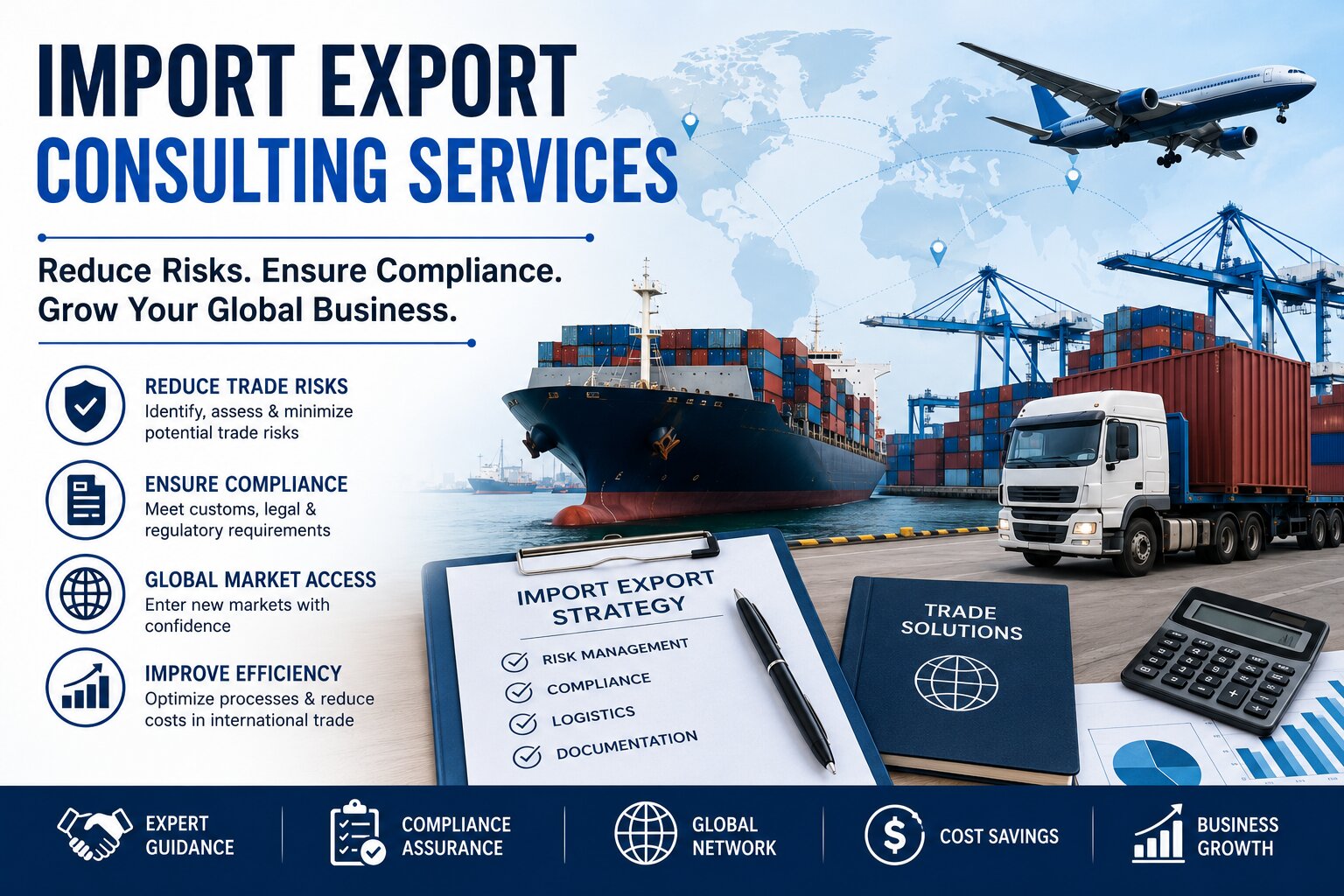
Import export consulting services are professional advisory solutions designed to help businesses manage international trade efficiently and compliantly.
An experienced consultant assists companies throughout the importing or exporting process, including:
- Trade compliance
- Customs documentation
- Tariff classification
- International shipping
- Supplier verification
- Market entry planning
- Regulatory compliance
- Risk management
- Supply chain optimization
Rather than simply solving problems after they occur, consultants help businesses build processes that prevent costly mistakes before shipments leave the warehouse.
Why Businesses Need Import Export Consulting
International trade regulations continue to evolve every year. Businesses now face increasing challenges such as:
- Changing tariff policies
- Import restrictions
- Export control regulations
- Customs inspections
- Product certification requirements
- Country-specific documentation
- Free trade agreement compliance
Without proper expertise, these challenges can delay shipments, increase costs, or expose businesses to compliance violations.
Professional import export consulting helps businesses stay ahead of regulatory changes while maintaining efficient operations.
Services Typically Offered by Import Export Consultants
Although services vary between consulting firms, most offer comprehensive support throughout the international trade process.
Import Compliance
Import consultants help businesses understand regulations before goods arrive.
Typical services include:
- Customs documentation review
- Harmonized tariff classification
- Import licensing guidance
- Country of origin verification
- Customs valuation assistance
- Duty optimization strategies
Proper planning helps reduce customs delays and unexpected import costs.
Export Compliance
Export consulting focuses on ensuring products leave the country legally and efficiently.
Services often include:
- Export documentation
- Restricted party screening
- Export licensing guidance
- Destination country requirements
- Export control compliance
- Recordkeeping procedures
Compliance becomes especially important when exporting controlled products or technologies.
Customs Advisory
Customs regulations differ across countries and industries.
Consultants assist businesses with:
- Customs clearance preparation
- Broker coordination
- Duty calculations
- Customs audits
- Classification disputes
- Post-entry corrections
Proper customs planning reduces the likelihood of shipment holds.
Supply Chain Consulting
Many import export consultants also improve supply chain efficiency.
Areas include:
- Shipping route optimization
- Freight cost analysis
- Vendor management
- Inventory planning
- International sourcing strategies
- Distribution planning
These improvements often reduce operating costs while improving delivery reliability.
Trade Documentation
International shipments require accurate paperwork.
Consultants commonly assist with:
- Commercial invoices
- Packing lists
- Certificates of origin
- Bills of lading
- Export declarations
- Letters of credit documentation
Accurate documentation minimizes delays at customs checkpoints.
Who Should Use Import Export Consulting Services?
Many businesses assume consulting is only for large corporations. In reality, companies of every size benefit from professional guidance.
Common clients include:
- Manufacturers
- Importers
- Exporters
- Distributors
- Wholesalers
- Automotive businesses
- Medical device companies
- Electronics companies
- E-commerce brands
- Agricultural exporters
- Industrial suppliers
Whether you’re shipping a few containers annually or managing global operations, consulting services can improve compliance and efficiency.
Benefits of Hiring Import Export Consultants
Working with experienced consultants provides both immediate and long-term advantages.
Reduced Compliance Risks
International trade regulations can change frequently.
Consultants monitor regulatory updates and help businesses remain compliant with customs, export controls, and import requirements.
This significantly reduces the risk of:
- Customs penalties
- Shipment seizures
- Delayed deliveries
- Regulatory investigations
Faster Customs Clearance
Incomplete or inaccurate documentation is one of the leading causes of shipment delays.
Consultants ensure paperwork is accurate before shipments move through customs, reducing processing times.
Lower Import Costs
Experienced consultants identify opportunities to reduce costs legally through:
- Proper tariff classification
- Duty drawback programs
- Free trade agreements
- Customs valuation strategies
These savings can become substantial for companies with regular international shipments.
Better Supply Chain Visibility
Consultants often evaluate the entire supply chain instead of focusing only on customs compliance.
This broader approach helps businesses improve:
- Supplier performance
- Shipping efficiency
- Inventory management
- Transportation planning
Market Expansion Support
Businesses entering new international markets face unfamiliar regulations.
Import export consultants help organizations understand:
- Local import laws
- Product standards
- Documentation requirements
- Licensing obligations
- Distribution strategies
This guidance makes international expansion more predictable.
When Should You Hire an Import Export Consultant?
Many businesses wait until problems occur before seeking professional help.
Instead, consulting should be considered when:
- Launching international operations
- Entering new countries
- Expanding product lines
- Facing recurring customs delays
- Receiving customs notices
- Managing high-value shipments
- Navigating complex regulations
- Building an internal compliance program
Preventive consulting is usually less expensive than correcting costly compliance issues later.
How Import Export Consultants Reduce Business Risk
Every international shipment involves financial and regulatory risks.
Consultants reduce exposure by helping businesses establish standardized procedures for:
- Product classification
- Documentation accuracy
- Vendor verification
- Export screening
- Record retention
- Regulatory monitoring
A structured compliance program creates consistency across the organization and reduces the chance of costly errors.
Choosing the Right Import Export Consulting Firm
Not every consulting provider offers the same level of expertise.
When evaluating firms, consider the following factors.
Industry Experience
Different industries have different compliance requirements.
Look for consultants with experience in your specific sector, such as:
- Automotive
- Aerospace
- Defense
- Electronics
- Medical devices
- Consumer goods
- Manufacturing
Industry-specific knowledge often leads to faster, more practical solutions.
Regulatory Knowledge
International trade regulations evolve constantly.
A qualified consultant should demonstrate expertise in:
- Customs regulations
- Import procedures
- Export controls
- Trade agreements
- International logistics
- Compliance management
Ongoing education is an important indicator of professional competency.
Customized Solutions
Every business has unique products, suppliers, and markets.
Avoid firms that rely solely on generic templates.
Instead, choose consultants who develop solutions tailored to your business model and operational goals.
Communication
International trade issues often require quick decisions.
Effective consultants provide:
- Clear explanations
- Practical recommendations
- Responsive communication
- Ongoing support
Strong communication helps businesses make informed decisions more confidently.
Common Mistakes Businesses Make Without Consulting
Many importers and exporters encounter avoidable problems because they underestimate the complexity of international trade.
Some of the most common mistakes include:
- Incorrect tariff classification
- Missing documentation
- Poor supplier verification
- Ignoring export restrictions
- Misunderstanding country-specific regulations
- Underestimating customs duties
- Inadequate compliance records
These issues can result in shipment delays, increased costs, and reputational damage.
Import Export Consulting for Small Businesses
Small businesses often assume consulting services are only affordable for multinational corporations.
In reality, many consultants work with startups and growing businesses.
For smaller companies, consulting provides valuable guidance during critical growth stages, helping establish compliant trade processes from the beginning.
This foundation supports sustainable international expansion while minimizing costly mistakes.
Future Trends in Import Export Consulting
Global trade continues to become more complex as governments introduce new regulations and digital reporting requirements.
Businesses are increasingly seeking consulting support in areas such as:
- Digital customs compliance
- Supply chain resilience
- Trade automation
- ESG-related trade requirements
- Artificial intelligence for logistics planning
- Risk-based compliance management
Companies that invest in proactive consulting are generally better positioned to adapt to future regulatory changes.
Final Thoughts
International trade creates tremendous opportunities, but success depends on much more than finding overseas buyers or suppliers. Compliance, documentation, logistics, and regulatory planning all play essential roles in maintaining efficient operations.
Professional import export consulting services help businesses reduce risk, improve compliance, lower costs, and build stronger international trade processes. Whether you’re importing products into the United States, exporting to global markets, or expanding into new regions, experienced consulting can provide the guidance needed to navigate today’s increasingly complex trade environment.
By investing in expert support before problems arise, businesses can focus less on regulatory challenges and more on long-term global growth.
Frequently Asked Questions
What are import export consulting services?
Import export consulting services help businesses manage international trade by providing guidance on customs, compliance, documentation, logistics, tariffs, and regulatory requirements.
What does an import export consultant do?
An import export consultant assists businesses with customs procedures, trade compliance, shipping documentation, tariff classification, supplier verification, and international market expansion.
Do small businesses need import export consulting?
Yes. Small businesses often benefit from consulting because it helps them avoid costly compliance mistakes while establishing efficient international trade processes.
How much do import export consulting services cost?
Costs vary depending on the project’s complexity, the consultant’s expertise, and the level of ongoing support required. Some consultants charge hourly rates, while others offer project-based or retainer pricing.

When should a business hire an export consulting firm?
Businesses should consider export consulting before entering new international markets, shipping regulated products, expanding globally, or whenever they encounter recurring compliance or customs issues.