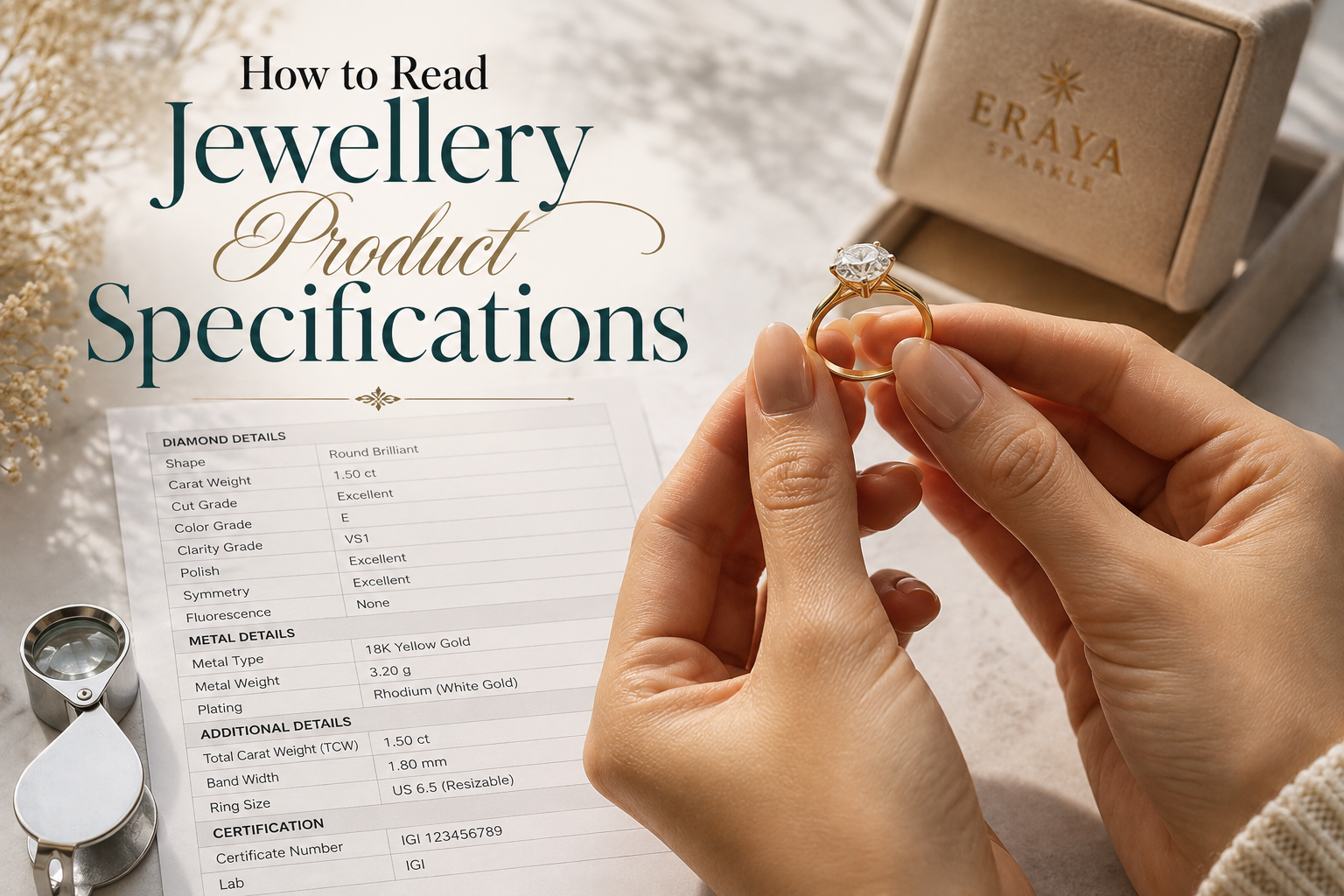
Product listings can feel like code. Rows of letters. Strings of numbers. A jumble of abbreviations packed into a small table. But once you understand jewellery product specifications, that same table becomes your best tool for buying smart.This guide breaks down exactly what to look for. Line by line. No guesswork.
Why Jewellery Product Specifications Matter
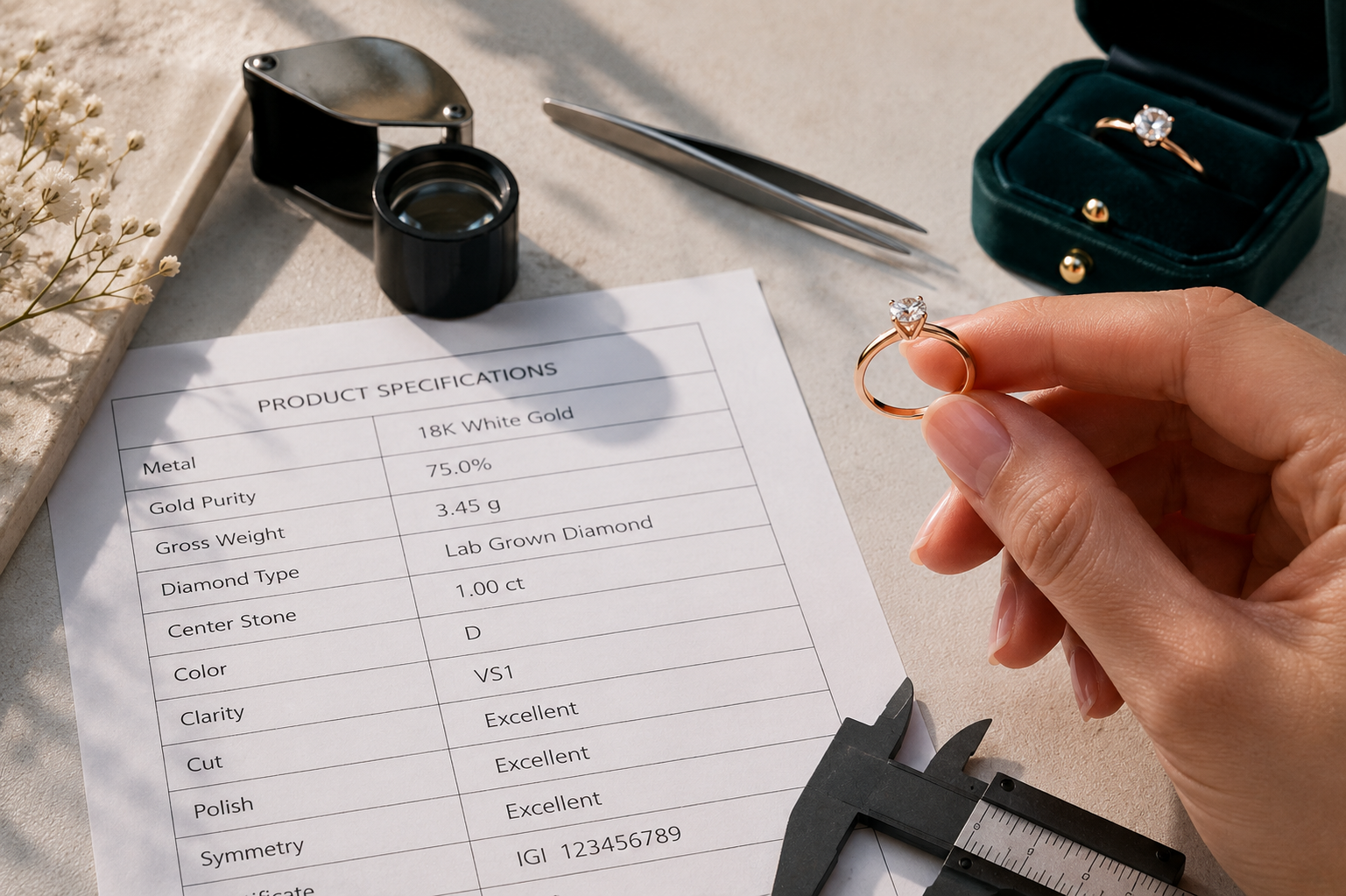
Photos can lie. Lighting flatters. Angles hide flaws. Editing smooths things over. Specifications don’t do any of that.

Jewellery product specifications tell you exactly what you’re buying. They don’t care how good the photography is. They just state facts.
This matters most when you can’t hold a piece before buying it. Compare two similarly priced rings, and the real difference usually lives in the specs, not the pictures.
Start With the Diamond or Gemstone Details
This section carries the most weight. Get familiar with it first.
- Carat weight shows how much the stone weighs. It doesn’t show how large the stone looks.
- Cut grade shows how well the stone reflects light. This drives visible sparkle more than anything else.
- Color grade runs from D to Z for white diamonds. D means colorless. Z means a visible tint.
- Clarity grade describes internal and surface characteristics. Look for terms like VS1 or SI2.
- Shape describes the stone’s outline — round, oval, marquise, cushion. Buyers often confuse shape with cut. They’re not the same thing.
Check the Metal Details Next
Metal specs run shorter, but they still matter for daily wear.
- Purity marking — 14K, 18K, or 950 Platinum — tells you how pure the metal is. Higher gold purity means richer color and softer metal.
- Metal weight, often listed in grams, hints at how substantial the piece feels.
- Plating information matters most for white gold, since jewellers usually coat it in rhodium for a bright white finish.
Skip a purity marking entirely, and you should ask about it before buying.
Confirm the Certification
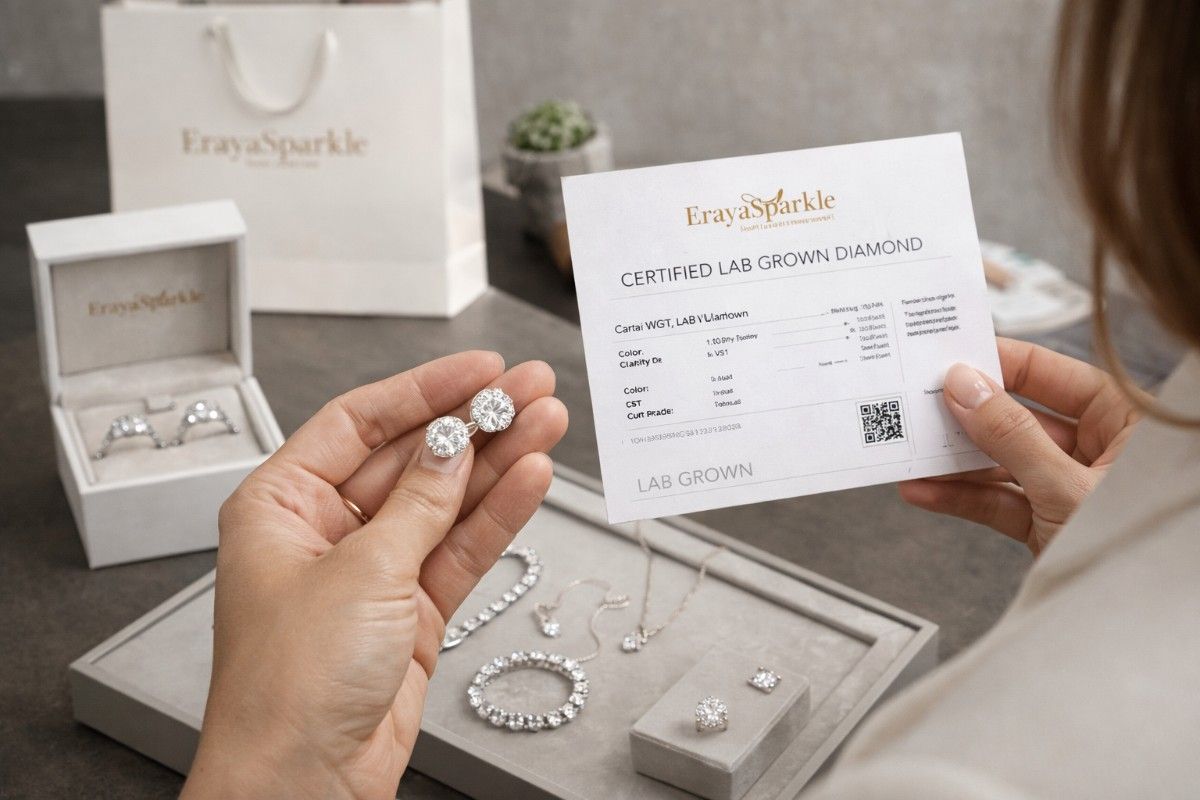
A trustworthy listing names an independent grading lab. GIA and IGI lead the industry. Look for a certificate number next to the stone’s specs.
That number isn’t decoration. Search it directly on the lab’s website. Confirm it matches the actual stone — same carat, same grades, same measurements. No certificate for a larger diamond? Treat that as a warning sign, not an oversight.
Read the Measurements Section
Buyers skip this part most often. That’s a mistake, because it often holds the most useful details in the entire listing.
- Ring size range shows available sizes and whether resizing comes included.
- Band width shapes both comfort and how the ring feels on the finger.
- Total carat weight (TCW) matters for multi-stone pieces, like a halo setting. TCW reflects every stone combined, not just the center one.
Understanding TCW helps when comparing a solitaire to something busier. A listing for halo rings for women might show a smaller center stone weight next to a larger TCW, since the surrounding stones add real weight and brilliance. Read both numbers together. Don’t stop at one.
Don’t Skip the Fine Print
A few smaller details sit at the bottom of most listings. They matter just as much as the headline specs.
- Country of origin, sometimes required for customs
- Warranty terms — what’s covered, and for how long
- Care instructions, especially for delicate or pavé settings
- Return window, which can run shorter for customized pieces
A Simple Checklist for Reading Any Listing
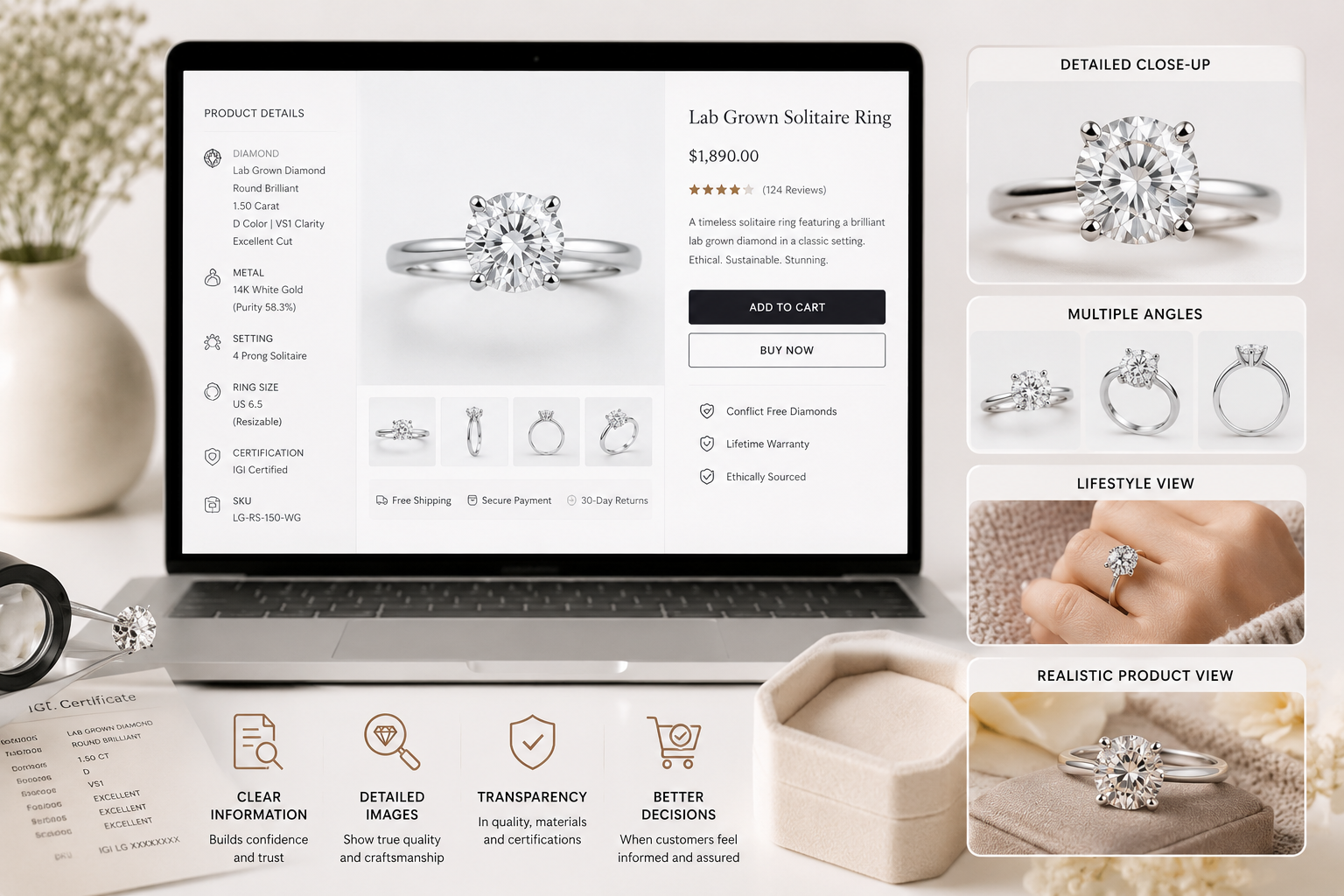
Follow this order every time you compare pieces:
- Confirm cut, color, clarity, and carat weight
- Check for a verifiable certificate number
- Review metal purity and weight
- Read the full measurements section — not just the headline carat weight
- Check the return, warranty, and resizing policy before you add anything to cart
This order is really the whole point. Reading jewellery product specifications well isn’t about memorizing terms. It’s about knowing which order to check them in.
Why This Matters Most When You Buy Online
None of this replaces holding a piece in person. But it gets you close. If you plan to Buy engagement ring online , specifications become your main source of truth before the piece ever arrives. Photos help you fall for a design. Specifications tell you whether that design actually matches what you’re paying for.
Frequently Asked Questions
1.What’s the most important spec to check on a diamond ring?
Ans.-Cut grade drives visible sparkle more than carat weight, color, or clarity combined. Check it first on any listing.
2.What does TCW mean on a jewellery listing?
Ans.-TCW stands for total carat weight. It combines every stone in the piece, not just the center stone — a key detail for halo or pavé settings.
3.How do I verify a diamond certificate?
Ans.-Search the certificate number directly on the issuing lab’s website — GIA or IGI, most commonly. Confirm the listed measurements match the diamond exactly.
4.Why do two rings with the same carat weight cost differently?
Ans.-Carat only measures weight, not quality. Cut, color, and clarity all shift price and appearance independently — which is exactly why specifications matter more than one headline number.
5.Should I trust product photos over specifications?

Ans.-Lighting, editing, and angle all distort photos. Specifications give you a far more reliable picture, especially when you can’t inspect a piece in person first.