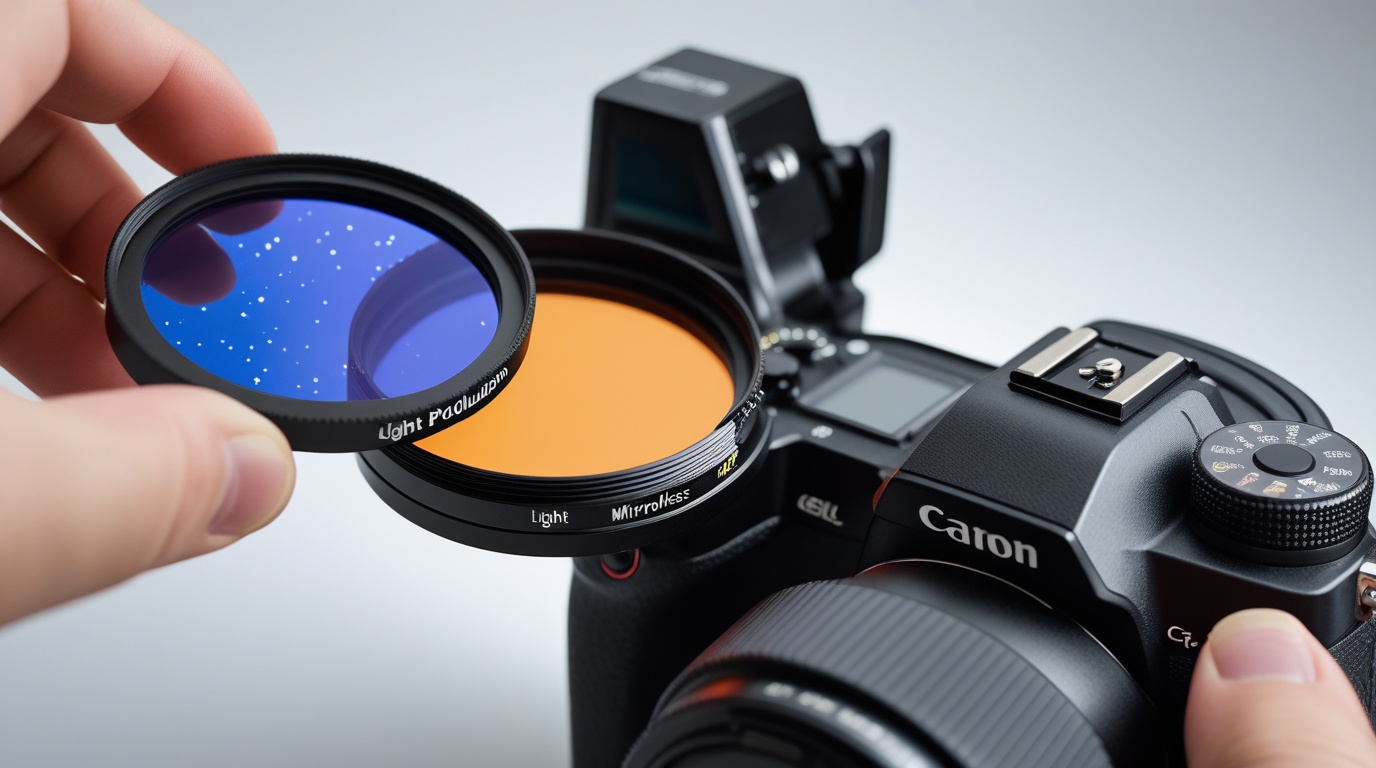
Light pollution is the silent killer of astrophotography in Pakistan. Even a decent telescope and a capable mount can’t fully rescue an image shot from a city rooftop in Lahore, Karachi, or Multan — the orange sodium-vapor glow washes out faint detail before your camera even starts integrating. This is exactly the problem Optolong filters are built to solve, and it’s why this brand has become a near-default recommendation among imagers trying to pull real contrast out of compromised skies.
This guide breaks down what’s actually in the lineup, what each filter type is built for, and which one fits your specific setup.
Why a Filter Often Matters More Than the Telescope
A lot of beginners spend their entire budget on optics and treat filters as an afterthought. That’s backwards in places with heavy sky glow. A correctly chosen filter blocks the specific wavelengths emitted by streetlights while letting nebula emission lines pass through cleanly — which means the difference between a flat, washed-out frame and one with actual structure in it often comes down to glass that costs a fraction of the telescope sitting in front of it.

Single-Line Narrowband Filters for Serious SHO Imaging
For imagers chasing the classic Hubble-palette look — bold, structured nebulae with deep contrast — single-line narrowband filters are the standard tool. The H-Alpha 7nm CCD 2″ Mounted Filter is a solid all-rounder for moderately light-polluted skies, while the tighter H-Alpha 3nm CCD 2″ Filter digs deeper for darker locations or longer focal lengths.
The same logic applies across the other two emission lines. The OIII CCD 6.5nm 2″ Mounted Filter and OIII CCD 3nm 2″ Mounted Filter isolate oxygen emission for that signature teal structure in planetary nebulae, and the SII 3nm CCD 2″ Filter alongside the SII CCD 6.5nm 2″ Mounted Filter rounds out a full SHO kit for sulfur-line capture. If you’re shooting with a smaller sensor or guide scope, most of these are also available in 1.25″ mounted versions for a lower price point.
Ready-Made Sets for People Who Don’t Want to Buy Piece by Piece
Buying six individual filters one at a time gets expensive and confusing fast. Optolong’s pre-bundled kits solve that. The 2″ Filter Set with H-Alpha, SII, and OIII Filters gives you a complete narrowband trio in one purchase, and the 3nm SHO 2″ Mounted Filter Kit is the tighter-bandwidth version for darker skies and longer integration times. For imagers who also want broadband color data alongside their narrowband channels, the 2″ Filter Set with LRGB, H-Alpha, SII, and OIII Filters bundles everything needed for a complete bi-color or SHO-LRGB workflow into a single order.
Dual-Band Filters for Shooting Straight From the City
Not everyone has the luxury of driving two hours out of town for every imaging session. This is where Optolong’s dual-band filters earn their reputation. The L-eNhance Light Pollution Dual-Bandpass 2″ Imaging Filter passes both H-Alpha and OIII simultaneously, letting color cameras pull nebula detail straight out of a bright urban sky. The L-Ultimate 2″ Light Pollution Dual Band Filter pushes that further with a tighter bandpass for even more aggressive light pollution rejection, and the L-Para 2″ Dual Band Filter is built specifically to handle the steeper light cones of fast astrographs without the vignetting issues some dual-band filters struggle with.
Broadband and Visual-Use Filters
If you’re not chasing narrowband nebula detail and just want cleaner contrast for general deep-sky imaging or visual observing, broadband filters do that job without restricting your target list the way narrowband glass does. The L-Pro 2″ Mounted Filter is a popular all-purpose choice for broadband targets like galaxies and star clusters, while the CLS 2″ Mounted Filter and the budget-friendly UHC 2″ Mounted Filter work well for visual sessions through reflectors and SCTs under moderately light-polluted skies.
Clip-In Filters for DSLR and Mirrorless Shooters
A lot of imagers in Pakistan start with a DSLR or mirrorless camera attached to a refractor before moving into dedicated astro cameras, and Optolong covers that crowd too. The L-eNhance Light Pollution Dual-Bandpass Clip Filter for Canon EOS APS-C drops directly inside the camera body, and the L-Pro Sony-FF Clip-In Filter does the same for full-frame Sony mirrorless bodies — both avoid the hassle of threading a filter onto every lens you own.
Color Balance and Sensor Protection
Rounding out the lineup, the LRGB CCD 1.25″ Mounted Filter Set is essential for anyone running a monochrome camera who needs proper color channels, while the UV-IR Cut 2″ Mounted Filter keeps unwanted ultraviolet and infrared light from softening star focus, especially on achromatic or fast refractors.
Buying Optolong in Pakistan: Why the Dealer Actually Matters
Filters look simple from the outside, but the coating quality, bandpass accuracy, and parfocal consistency between batches are exactly where cheap clones fall apart — usually showing up as halos, color shifts, or inconsistent transmission across the filter surface. Sky Deep is the only authorized Optolong dealer in Pakistan for this entire lineup, sourcing stock directly rather than through resellers who can’t guarantee authenticity.
Sky Deep doesn’t sell unauthorized Chinese clone filters at all, and every Optolong purchase comes with a genuine warranty behind it — which matters more than people expect, since a defective coating or a scratched filter isn’t something you want to discover mid-imaging-session with no recourse. You can browse the complete Optolong filter collection directly to compare sizes and bandwidths side by side before deciding.
Not Sure Which Filter Fits Your Setup? Ask Before You Buy
Choosing between a 3nm and a 6.5nm OIII filter, or deciding whether a dual-band filter actually makes sense for your camera and sky conditions, isn’t something worth guessing at. Reach out through the Sky Deep contact page and get a straight answer about which filter actually matches your telescope’s aperture, your local light pollution levels, and your imaging goals before spending money on the wrong bandpass.
Frequently Asked Questions
Are Optolong filters sold in Pakistan genuine, or are they unauthorized imports?
Sky Deep is the only authorized Optolong dealer in Pakistan for this collection, so every filter listed is genuine stock, not an unauthorized Chinese clone.
Does buying an Optolong filter from Sky Deep include a warranty?
Yes. As an authorized dealer, Sky Deep backs every Optolong filter purchase with proper warranty coverage rather than selling unverified grey-market stock.
Should I choose a 3nm or 6.5nm narrowband filter for imaging in Pakistan?
A 3nm filter rejects more light pollution and suits brighter city skies or faster optics, while a 6.5nm filter passes more signal and works well in darker locations or with slower telescopes.
What’s the difference between L-eNhance and L-Ultimate filters?
L-eNhance offers a slightly wider bandpass suited to general light-polluted imaging, while L-Ultimate has a tighter bandpass for more aggressive rejection of artificial light, ideal for heavily polluted urban skies.
Can I use a 2″ Optolong filter on a telescope with a 1.25″ focuser?

No, filter size must match your focuser or filter wheel thread size exactly. Optolong sells most popular filters in both 1.25″ and 2″ versions to cover either setup.