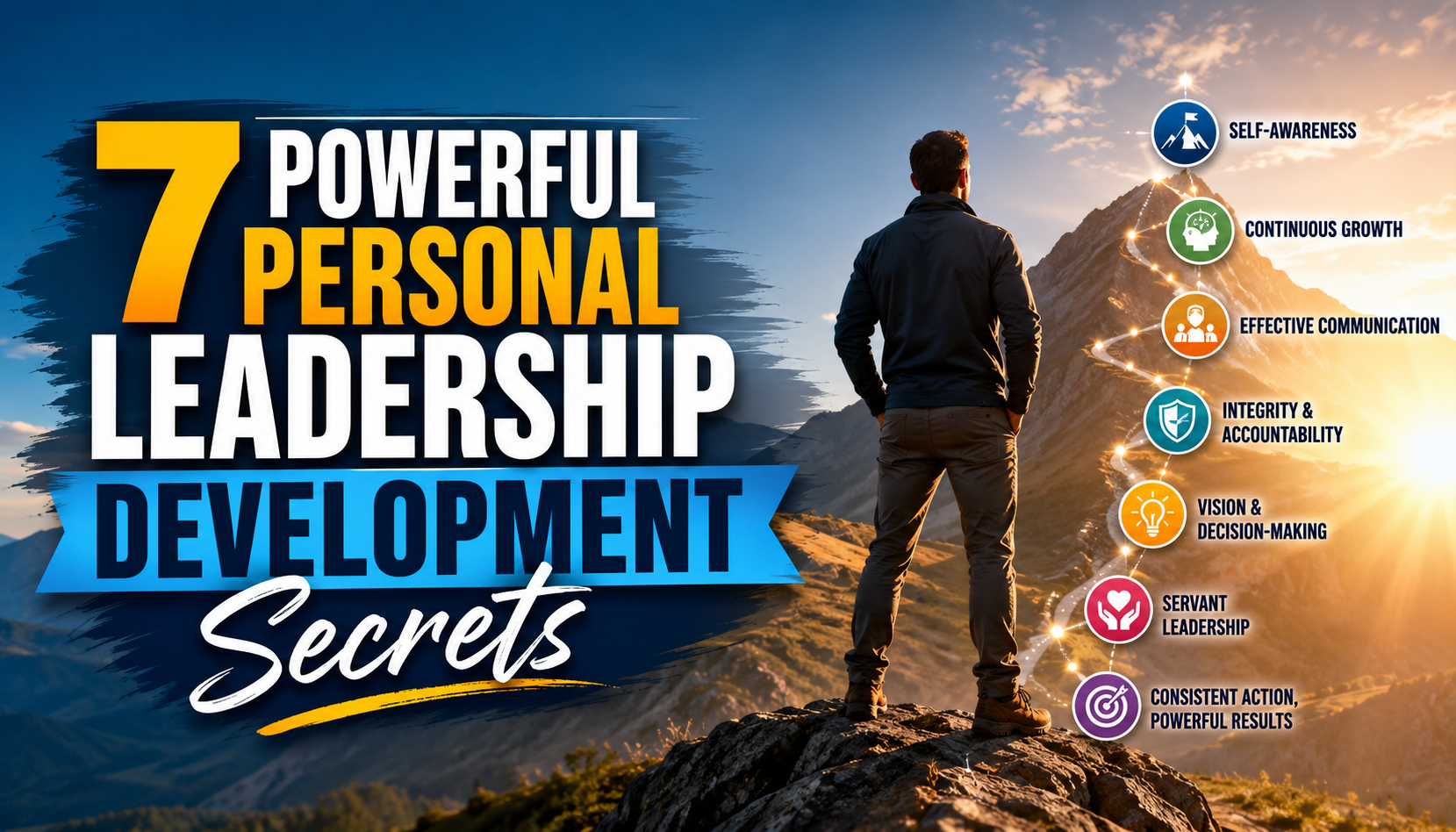
Key Takeaways
- Personal leadership starts with self-awareness and daily habits.
- Strong leaders focus on growth before trying to lead others.
- Communication, service, and accountability build lasting influence.
- Leadership development is a lifelong process, not a one-time event.
- Great leaders balance vision, action, and emotional intelligence.
- Small improvements practiced consistently create major results over time.
Introduction
Leadership is often linked to managers, executives, and public figures. However, leadership begins long before a person receives a title. It starts with personal growth, self-discipline, and the ability to make good decisions every day.
Many people search for ways to improve their confidence, influence, and effectiveness. That is where Personal Leadership Development becomes important. It helps individuals build the skills, mindset, and habits needed to lead themselves and positively influence others.
This guide explores what leadership truly means, why self-leadership matters, and how people can strengthen their leadership abilities over time. It also examines important leadership principles, practical strategies, and insights commonly shared by respected experts such as Dr Bill Dickinson, a leadership development author known for helping people understand effective leadership practices.

By the end of this article, readers will have a clear understanding of leadership fundamentals, key leadership qualities, and practical ways to become stronger leaders in work, school, business, and everyday life.
Understanding Personal Leadership Development
Personal leadership development is the process of improving the skills, behaviors, and mindset required to guide personal actions and influence others positively. Unlike leadership positions that are assigned by organizations, personal leadership begins internally.
At its core, leadership is about responsibility. It involves making thoughtful choices, setting goals, and staying committed to growth even during difficult situations.
Many people ask, what is leadership? Leadership is the ability to influence, inspire, and guide people toward meaningful goals. True leadership does not depend on authority. Instead, it depends on trust, character, and consistent action.
Personal leadership development focuses on several important areas:
- Self-awareness
- Emotional intelligence
- Communication skills
- Decision-making
- Accountability
- Integrity
- Goal setting
- Continuous learning
These qualities help individuals become more effective in every area of life.
A leadership speaker often explains that leadership starts with personal responsibility. Before leading teams, organizations, or communities, individuals must first learn to lead themselves.
This principle appears repeatedly in many leadership books and educational programs. Whether reading the best leadership book or attending professional training, the message remains consistent. Effective leadership begins from within.
Leadership development also affects personal success. People who strengthen leadership abilities often improve relationships, career performance, confidence, and problem-solving skills.
Moreover, leadership is not limited to business environments. Parents, teachers, coaches, students, and community members all benefit from stronger leadership skills.
The Foundation of Strong Leadership
The foundation of leadership development is self-awareness.
Self-awareness allows individuals to understand strengths, weaknesses, emotions, and behaviors. Without self-awareness, growth becomes difficult because people cannot improve what they do not recognize.
For example, a person who struggles with listening may unknowingly interrupt others during conversations. Once that behavior becomes clear, improvement becomes possible.
Strong leaders regularly evaluate themselves through:
- Reflection
- Feedback from others
- Journaling
- Coaching
- Personal assessment tools
Another foundational element is mindset.
People with growth-oriented mindsets believe skills can improve through effort and learning. They see challenges as opportunities rather than obstacles.
This mindset supports long-term development because leadership requires continuous adaptation.
A leadership author often emphasizes the importance of learning from mistakes. Successful leaders rarely avoid failure entirely. Instead, they learn from setbacks and use those lessons to improve future decisions.
Trust is another essential foundation.
People naturally follow individuals they trust. Trust grows when actions consistently match words. Honesty, fairness, and reliability strengthen credibility over time.
When trust exists, influence becomes stronger. When trust disappears, leadership effectiveness declines quickly.
Essential Leadership Skills That Create Lasting Influence
Leadership requires a combination of personal and interpersonal skills. While different situations may require different approaches, several abilities consistently appear among successful leaders.
One of the most important is communication.
Strong communication involves speaking clearly, listening actively, and ensuring understanding. Effective leaders do not simply share information. They create meaningful connections.
Listening deserves special attention because many leadership problems result from poor listening rather than poor speaking.
When people feel heard, trust increases. Collaboration improves. Conflicts become easier to resolve.
Another critical skill is decision-making.
Every day, leaders face choices that affect outcomes. Good decision-making requires gathering information, considering consequences, and taking responsibility for results.
Some decisions involve uncertainty. In these situations, leaders must balance confidence with careful judgment.
Problem-solving is equally important.
Challenges appear in every workplace, family, and organization. Effective leaders approach problems calmly and focus on solutions rather than blame.
Time management also contributes significantly to leadership success.
Leaders often manage multiple responsibilities. Prioritizing important tasks helps maintain productivity and reduces unnecessary stress.
Many professionals also benefit from a flexible work schedule for leadership development. Flexibility can create opportunities for learning, reflection, coaching, and strategic thinking.
Leadership vs Management and Why the Difference Matters
Many people use leadership and management interchangeably. However, important differences exist.
Leadership vs Management is a topic frequently discussed in professional development programs.
Management focuses on processes, systems, and organization. Managers often coordinate resources, monitor performance, and maintain operational efficiency.
Leadership focuses on people, vision, and influence.
A manager may ensure tasks are completed. A leader inspires people to pursue meaningful goals.
The strongest organizations benefit from both leadership and management.
For example, a project manager may create schedules and allocate resources. At the same time, leadership skills help motivate team members and maintain commitment during challenges.
Understanding this distinction helps individuals develop a balanced approach.
Another important skill is adaptability.
Modern workplaces change rapidly. Technology evolves. Customer expectations shift. Economic conditions fluctuate.
Leaders who adapt effectively maintain progress despite uncertainty.
Emotional intelligence also plays a major role.
Emotional intelligence includes:
- Self-awareness
- Self-regulation
- Empathy
- Social awareness
- Relationship management
Leaders with strong emotional intelligence understand how emotions influence behavior and decision-making.
They remain calm during pressure and respond thoughtfully instead of reacting impulsively.
These abilities strengthen relationships and improve team performance.
Three Leadership Qualities That Separate Great Leaders
Many leadership experts identify numerous leadership traits. However, Three Leadership Qualities consistently stand out across industries and cultures.
The first quality is integrity.
Integrity means doing the right thing even when nobody is watching.
People trust leaders whose actions align with their values. Integrity creates credibility, and credibility creates influence.
Without integrity, leadership eventually weakens.
The second quality is courage.
Leadership often requires difficult decisions. Courage allows leaders to address problems, have challenging conversations, and take action despite uncertainty.
Courage does not mean fearlessness. Instead, it means acting responsibly even when fear exists.
The third quality is humility.
Some people mistakenly believe leadership requires constant self-promotion. In reality, humility strengthens leadership effectiveness.
Humble leaders acknowledge mistakes, seek feedback, and recognize contributions from others.
This approach creates stronger relationships and encourages collaboration.
Many leadership retreat ideas focus on developing these qualities because they influence every aspect of leadership performance.
Top Ten Leadership Skills for Long-Term Success
Although leadership development involves many competencies, the following list represents commonly recognized leadership strengths.
Top Ten Leadership Skills
- Communication
- Emotional intelligence
- Problem-solving
- Decision-making
- Adaptability
- Accountability
- Strategic thinking
- Team building
- Conflict resolution
- Continuous learning
These skills work together rather than independently.
For example, communication supports conflict resolution. Emotional intelligence improves team building. Strategic thinking strengthens decision-making.
People who consistently develop these abilities often become more effective leaders over time.
Many professionals searching for the best book on leadership focus on these areas because they provide practical benefits across different environments.
Leadership development author Dr. Bill Dickinson and other respected experts frequently emphasize that leadership is not a destination. It is an ongoing journey of growth.
That perspective helps individuals remain committed to continuous improvement.
Building a Leadership Mindset Through Daily Habits
Leadership is shaped by daily behavior.
While training programs and books provide valuable knowledge, habits determine whether knowledge becomes action.
One effective habit is goal setting.
Leaders establish clear objectives and regularly monitor progress. Goals provide direction and help maintain focus.
Another habit is reflection.
Reflection allows leaders to examine experiences, identify lessons, and improve future performance.
Many successful leaders spend time each week reviewing:
- Accomplishments
- Challenges
- Decisions
- Learning opportunities
This practice strengthens self-awareness and accelerates growth.
Reading is another powerful habit.
Many people discover valuable insights through leadership books, biographies, and research.
A leadership author often shares personal experiences that help readers understand practical leadership principles.
Readers frequently search for the best leadership book because quality resources provide guidance from experienced professionals.
Learning from others reduces trial and error and expands understanding.
Service is also an important leadership habit.
Servant leadership emphasizes helping others succeed rather than focusing exclusively on personal achievement.
This philosophy appears in many Servant Leadership Quotes that highlight empathy, support, and contribution.
Servant leaders ask questions such as:
- How can others be supported?
- What obstacles can be removed?
- How can growth be encouraged?
These questions shift attention from authority toward impact.
Optimizing Self for Leadership Growth
Optimizing Self involves intentionally improving personal effectiveness.
Leadership growth becomes easier when physical, mental, and emotional well-being receive attention.
Health influences energy, focus, and decision-making.
Leaders often benefit from:
- Regular exercise
- Healthy nutrition
- Quality sleep
- Stress management
- Continuous learning
These practices support consistent performance.
Language also shapes leadership effectiveness.
Many discussions about Adjectives for Leadership focus on traits such as:
- Honest
- Dependable
- Courageous
- Compassionate
- Visionary
- Responsible
- Resilient
These descriptors reflect qualities people value in leaders.
Developing these characteristics requires intentional effort.
For example, reliability grows through consistent follow-through. Compassion develops through empathy and understanding.
Leadership retreats often provide opportunities for focused growth.
Popular Leadership Retreat Ideas include team-building exercises, coaching sessions, strategic planning workshops, and reflective activities.
These experiences encourage learning while strengthening relationships.
In addition, mentorship accelerates development.
Experienced leaders can provide feedback, guidance, and perspective that help emerging leaders avoid common mistakes.
Mentorship creates opportunities to learn from real-world experience rather than theory alone.
Learning From Leadership Authors and Real Examples
Leadership lessons become easier to understand when connected to real experiences.
Many readers seek guidance from respected experts, including leadership speakers and leadership authors who share practical wisdom gained through years of leadership experience.
Dr. Bill Dickinson Author resources focus on helping individuals understand leadership principles in ways that are practical and applicable.
Leadership Author Biography content often reveals an important truth. Most respected leaders developed their abilities gradually through learning, experience, and perseverance.
Rarely does leadership appear overnight.
Instead, leadership grows through consistent effort.
For example, a school principal may begin as a classroom teacher. Through experience, learning, and dedication, leadership abilities expand over time.
Similarly, business owners often develop stronger communication, decision-making, and relationship-building skills as responsibilities increase.
These examples demonstrate that leadership development is accessible to anyone willing to learn and grow.
Another valuable lesson involves resilience.
Every leader faces setbacks.
Projects fail. Plans change. Unexpected challenges appear.
Resilient leaders maintain focus, learn from difficulties, and continue moving forward.
This ability helps transform obstacles into opportunities for growth.
Practical Leadership Actions That Produce Results
Leadership improvement becomes meaningful when knowledge turns into action.
Several practical strategies can support immediate growth.
First, practice active listening daily.
Instead of preparing responses while others speak, focus fully on understanding their message.
Second, seek feedback regularly.
Constructive feedback provides valuable information about strengths and areas for improvement.
Third, develop accountability.
Accountability means accepting responsibility for actions and outcomes.
Strong leaders avoid excuses and focus on solutions.
Fourth, invest in continuous learning.
Leadership trends, workplace expectations, and communication methods continue evolving.
Ongoing education helps leaders remain effective.
Fifth, lead through example.
People pay attention to actions more than words.
Leaders who demonstrate integrity, professionalism, and respect create stronger influence.
Finally, build meaningful relationships.
Leadership depends heavily on trust and connection.
Relationships create opportunities for collaboration, learning, and shared success.
These actions may seem simple. However, consistent application produces significant long-term results.
FAQs
What is personal leadership development?
Personal leadership development is the process of improving the skills, habits, mindset, and behaviors needed to lead oneself effectively and positively influence others. It focuses on self-awareness, communication, accountability, decision-making, and continuous growth. Unlike formal leadership positions, personal leadership development begins internally and can benefit anyone regardless of job title.
What is leadership and why is it important?
Leadership is the ability to influence, inspire, and guide people toward meaningful goals. Leadership is important because it helps individuals create positive change, solve problems, build trust, and encourage collaboration. Strong leadership improves outcomes in families, schools, workplaces, businesses, and communities.
What are the most important leadership skills?
Many experts highlight communication, emotional intelligence, accountability, adaptability, decision-making, and problem-solving as essential leadership skills. The Top Ten Leadership Skills discussed earlier provide a strong foundation for long-term leadership success. Developing these skills helps individuals become more effective in various situations.
How can someone improve leadership abilities every day?
Leadership abilities improve through consistent daily practice. Helpful activities include reading a leadership book, seeking feedback, reflecting on experiences, setting goals, listening actively, and serving others. Small improvements repeated consistently often create meaningful long-term growth.
Conclusion
Personal Leadership Development is one of the most valuable investments an individual can make. It strengthens confidence, improves decision-making, enhances relationships, and creates opportunities for positive influence.
Effective leadership begins with self-awareness and grows through continuous learning, intentional habits, and consistent action. Whether studying insights from Dr Bill Dickinson, exploring the best leadership books, attending workshops, or learning from experience, leadership development remains a lifelong journey.
The strongest leaders understand that influence is earned through trust, integrity, service, and accountability. They recognize the importance of communication, emotional intelligence, adaptability, and resilience.
Moreover, leadership extends far beyond organizational titles. Parents, teachers, students, entrepreneurs, and community members can all benefit from stronger leadership skills.
By focusing on growth, embracing learning opportunities, and applying practical leadership principles daily, individuals can create lasting positive impact in every area of life.

Leadership is not about controlling others. It is about becoming the best version of oneself and helping others succeed along the way. That commitment to growth, service, and continuous improvement remains the foundation of meaningful leadership for generations to come.