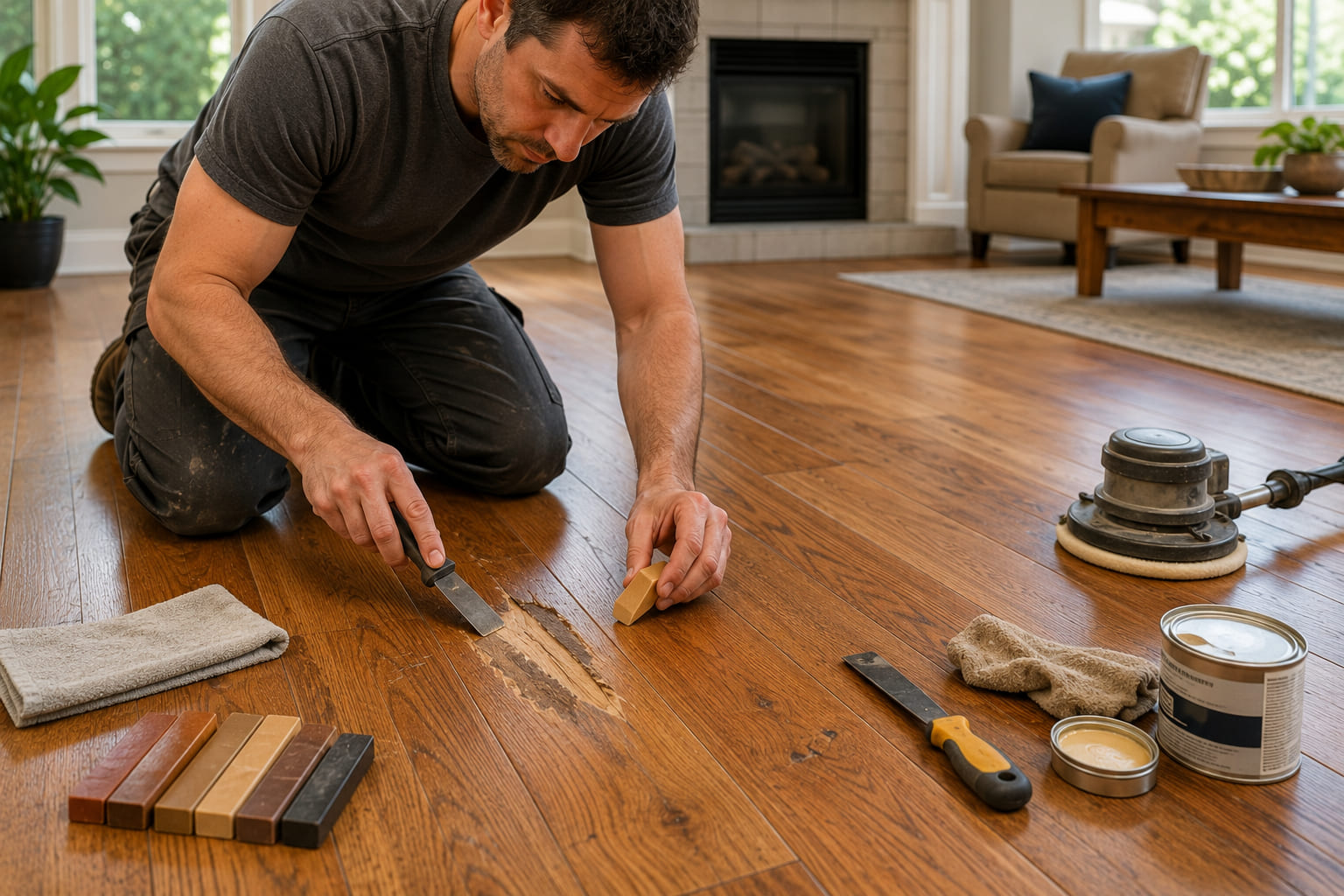
Most homeowners look at a scratched, squeaky, or water-stained hardwood floor and immediately jump to the worst possible conclusion. They think it is over. They picture ripping everything out, spending thousands of dollars, living through weeks of disruption, and starting completely from scratch. But here is the thing: most hardwood floor problems are fixable without replacement, and fixing them is almost always faster, cheaper, and less stressful than you think.
Hardwood is not like carpet or vinyl. It is a material with real depth to it, which means it can be sanded, refinished, filled, patched, and brought back to life in ways that softer flooring materials simply cannot. The goal of this guide is to help you understand exactly what is wrong with your floor and what the right fix looks like, whether that is something you can tackle on a Saturday afternoon or a job that calls for a professional set of hands.
And if your floors have seen water damage, structural issues, or years of heavy wear, hardwood floors repairs handled by an experienced team can genuinely restore them to a condition that surprises you.

Why Hardwood Floor Repair Makes More Sense Than Replacement
Before getting into the how, it helps to understand the why. Why bother repairing when you could just replace?
The Real Cost of Ripping Out and Starting Over
Full hardwood floor replacement is one of the more expensive home improvement projects you can take on. Between material costs, labor, subfloor prep, and the disposal of the old flooring, you are looking at a significant investment for a single room, and considerably more for a whole home. And that does not account for the disruption. Furniture gets moved. Rooms become unusable. Life gets complicated for days or weeks at a time.
Repair work, by contrast, is targeted. You address the actual problem in the actual spot where it exists, and the rest of the floor stays put. In most cases, a good repair is faster, dramatically cheaper, and completely invisible once it is done right.
What Types of Damage Are Actually Fixable
Most hardwood floor damage falls into one of a few categories, and nearly all of them are repairable. Surface scratches and scuffs. Deep gouges and dents. Cupping and minor warping from moisture. Squeaky boards. Gaps between planks. Worn finish that has lost its sheen. Stains from water, pets, or spills. Each one has a proven fix. The key is matching the right solution to the specific problem rather than assuming the worst.
Fixing Scratches and Surface Scuffs on Hardwood Floors
Scratches are the most common complaint from hardwood floor owners, and also the most commonly overthought. Most scratches look worse than they are, especially under certain lighting conditions. Walk up to the floor with a small flashlight held at a low angle and take a closer look. You might find a shallow surface scuff rather than a deep gouge.
Light Scratches: The Easy Wins
Shallow scratches that only affect the finish layer, not the wood itself, are the easiest repairs in the book. A scratch that catches your fingernail lightly is in the finish. One that your nail falls into is in the wood. The difference matters because finish scratches can often be buffed out or concealed without any wood repair at all.
For light finish scratches, options include hardwood floor touch-up markers, which come in dozens of wood tones and do a genuinely good job of minimizing visibility. Paste wax rubbed into a scratch with a soft cloth and buffed dry is another simple fix. Some people even swear by the natural oils in a walnut kernel rubbed along the scratch, which can minimize the contrast between the damaged area and the surrounding finish.
Which Touch-Up Products Actually Work
Not all touch-up products are created equal. Avoid products that go on thick and shiny if your floor has a matte or satin finish, because the sheen mismatch will draw the eye straight to the repair. Look for products that match both the color and the finish level of your floor. Most manufacturers sell color-matched repair kits for popular species like oak, maple, hickory, and cherry, and these tend to give the cleanest results.
Deep Scratches and Gouges: A Different Approach
When a scratch goes through the finish and into the wood itself, the repair involves a little more work. Wood filler or wood putty in a matching color can fill the depression, and once it dries and is sanded level, a topcoat of finish seals everything in. The goal is not perfection under a magnifying glass. The goal is a repair that reads as normal wood from a standing height, in normal lighting, and that holds up over time. Done well, these repairs are nearly invisible.
How to Deal With Cupped, Warped, or Water-Damaged Hardwood
Water is hardwood’s most significant enemy, and unfortunately it is also one of the most common sources of floor damage in Portland homes. A leaking appliance, a plumbing issue, a spill that sat too long, or chronic humidity can all cause wood to cup, bow, or stain.
Understanding Why Wood Cups and Warps in the First Place
Cupping happens when the bottom face of a plank absorbs more moisture than the top face. The bottom swells, the top stays relatively dry, and the plank develops a slight concave shape across its width. You can feel it underfoot and see it in raking light. Crowning is the opposite problem, where the top face swells more than the bottom, creating a slight hump along the center of each plank.
Both of these conditions are caused by uneven moisture, not by a defect in the wood. And because they are caused by moisture, they can often be corrected by addressing the moisture source and allowing the wood to dry and restabilize before any mechanical repair begins.
Drying Out the Problem Before Fixing the Floor
This is the step most people want to skip, and it is the step that matters most. If there is an active moisture source, whether that is a pipe leak, a foundation seepage issue, or a failed vapor barrier, the floor will not recover until that source is eliminated. If you suspect a plumbing issue underneath or behind your floors, pipe leak detection services can help identify the source before any repair work begins, preventing the same damage from recurring after the fix.
Once the moisture source is gone, improved airflow, dehumidification, and time can allow mildly cupped boards to flatten back on their own. This process can take weeks, but in many cases it works, and the floor recovers without any further intervention.
When a Buff and Recoat Can Save a Water-Damaged Floor
If the wood has dried and restabilized but the surface looks rough, stained, or dull from water exposure, a buff and recoat is often all it takes to restore the appearance. This process involves lightly abrading the existing finish and applying a fresh topcoat. It is not a full sand-down. It is a surface refresh that adds protection and significantly improves how the floor looks. For floors with minor water staining and worn finish but no structural damage, a buff and recoat delivers remarkable results at a fraction of the cost of refinishing or replacement.
Squeaky Floors, Loose Boards, and Gaps Between Planks
Squeaks and gaps are the kinds of problems that start as minor annoyances and gradually become impossible to ignore. The good news is that neither one typically signals serious structural damage. They are usually mechanical issues with straightforward solutions.
How to Stop Squeaks Without Pulling Up the Floor
A squeak happens when two pieces of wood rub against each other. That could be a plank rubbing against another plank, a plank rubbing against the subfloor, or a nail that has worked loose over time. Identifying which boards are squeaking and where the contact point is narrows down the fix considerably.
From above, powdered graphite or talcum powder worked into the joint between two boards can reduce friction enough to eliminate the sound. Screws driven at an angle through the face of a squeaky board and into the subfloor can pull the board back into firm contact and stop the movement that causes the noise. From below, if you have access to a basement or crawlspace, construction adhesive applied between the subfloor and the joist directly under the squeak is one of the most effective fixes available.
Filling Gaps the Right Way
Gaps between planks are natural. Wood moves with the seasons, and small gaps that open in winter when the air is dry often close back up in summer when humidity rises. These seasonal gaps do not need to be filled. If you fill them when they are open and the wood swells back in humid weather, the fill material has nowhere to go and can cause more problems than the gap itself did.
Gaps that stay open year-round, or that are wide enough to catch small objects, can be filled with flexible wood filler in a matching color. The key word is flexible. Rigid fillers crack as the wood continues to move. Rope or string filler, which is pushed into the gap with a putty knife, is another option that accommodates seasonal movement without breaking apart.
When to Call a Professional for Hardwood Floor Repairs
Some repairs genuinely are DIY-friendly. Others look like DIY jobs right up until the moment they are not. Knowing the difference saves you from turning a moderate problem into a major one.
Signs the Job Is Beyond DIY
If more than a few boards are cupped or damaged, if the subfloor underneath is wet or soft, if the damage is structural rather than cosmetic, or if the floor needs sanding and refinishing across a large area, a professional is the right call. Sanding in particular is a skill that takes real practice. An inexperienced sander can create dips, swirl marks, and uneven areas that are visible across the entire floor.
What a Professional Hardwood Floor Repair Includes
A qualified flooring professional brings diagnostic experience, the right tools for the specific job, and the ability to match existing finishes and wood tones in ways that make repairs virtually invisible. At All Seasons Floors, hardwood floors repairs cover everything from isolated board replacement and stain removal to full refinishing and structural board work. The goal is always to extend the life of what you already have rather than pushing you toward replacement before it is truly necessary.
Conclusion
Hardwood floors are some of the most durable and repairable surfaces you can have in a home. Most of what looks like serious damage is actually very fixable, and fixing it is almost always worth doing before considering replacement. Whether you are dealing with scratches, water damage, squeaks, or gaps, there is a solution that fits the problem. Start by understanding what type of damage you actually have, then match the right repair to it. And when the job calls for more than a weekend project, work with someone who knows these floors as well as you know your own home.

Frequently Asked Questions
- Can badly scratched hardwood floors be repaired without sanding the whole floor? Yes, in most cases isolated deep scratches can be filled with color-matched wood filler, sanded flush, and touched up with a fresh finish coat. You do not need to refinish the entire floor for a single damaged area. A spot repair done by an experienced hand blends in well and is far less disruptive than a full sand-down.
- How do I know if my cupped hardwood floor will flatten out on its own? If the cupping was caused by a temporary moisture event and the source has been resolved, many floors will gradually return to flat on their own over several weeks as the moisture equalizes. Mild to moderate cupping often self-corrects with good airflow and dehumidification. Severe cupping, or cupping caused by an ongoing moisture source, typically requires professional assessment.
- Is it safe to use a steam mop on hardwood floors for cleaning? No. Steam mops push hot moisture directly into the wood and the joints between planks, which accelerates warping, cupping, and finish failure over time. Use a dry mop, a microfiber cloth, or a hardwood-specific cleaning product applied sparingly. Excess moisture in any form is the biggest threat to a wood floor’s longevity.
- What is the difference between refinishing and a buff and recoat? Refinishing involves sanding the floor down to bare wood before applying new stain and finish. It removes deep scratches, stains, and significant wear. A buff and recoat is a lighter process that scuffs the existing finish and applies a fresh topcoat without sanding to bare wood. Recoating is faster, less expensive, and appropriate for floors that look dull or worn but have no deep damage. Most floors should be recoated several times before a full refinish is ever needed.
- How long does a professional hardwood floor repair typically take? That depends on the scope of the damage. A spot repair or board replacement can often be completed in a single visit. A buff and recoat on a medium-sized room takes a day, plus drying time. Full refinishing across a larger area may take two to three days. Your contractor should give you a clear timeline upfront based on what your specific floor actually needs.