Modern manufacturing demands accuracy, efficiency, and consistency at every stage of production. As industries push for tighter tolerances and faster turnaround times, advanced machining technology has become the backbone of competitive production floors. CNC vertical machining has established itself as one of the most reliable and widely adopted solutions across a broad range of industries. From aerospace components to automotive parts, this technology delivers the precision and repeatability that modern manufacturing simply cannot do without.
What Is CNC Vertical Machining?
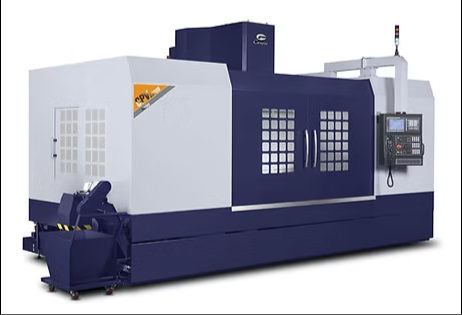
The CNC vertical machining refers to a computer-controlled manufacturing process where the spindle axis is oriented vertically. The cutting tool moves up and down along the Z-axis while the workpiece is secured on a horizontal table below. This configuration allows for highly accurate material removal across a wide variety of materials, including steel, aluminum, titanium, plastics, and composites.
The “CNC” component — Computer Numerical Control — means that every movement of the machine is directed by pre-programmed software. This eliminates the variability of manual operation and allows for the same part to be produced thousands of times identically with minimal deviation.
How Does a Vertical Machining Center Work?
A vertical machining center operates through a coordinated system of motors, drives, and a computer controller that interprets G-code programming. The operator or programmer inputs the design specifications using CAD/CAM software, which then generates the toolpath instructions the machine follows.
The spindle, positioned vertically, holds the cutting tool and rotates at high speeds to remove material from the workpiece. The table moves along the X and Y axes, while the spindle travels along the Z-axis, allowing three-dimensional cutting operations. Many advanced centers also offer additional rotational axes, enabling complex multi-sided machining in a single setup.
Key components of a vertical machining center include:
- The spindle and tool holder
- Automatic tool changer (ATC)
- Worktable and clamping system
- CNC controller and operator interface
- Coolant delivery system
- Chip conveyor for waste removal
Advantages of CNC Vertical Machining
The CNC vertical machining offers a compelling set of advantages that explain its widespread adoption across industries:
- Superior Precision: Computer-controlled movements achieve tolerances as tight as ±0.001 inches or better, making it ideal for parts that demand exacting specifications.
- Repeatability: Once a program is established and verified, the machine can reproduce the same part consistently across long production runs without operator-to-operator variation.
- Versatility: Vertical machining centers can perform a wide range of operations including drilling, boring, tapping, contouring, and face milling — all within a single setup.
- Reduced Setup Time: Automatic tool changers allow the machine to switch between cutting tools rapidly, minimizing downtime between operations and improving overall cycle times.
- Cost Efficiency: The combination of speed, accuracy, and automation reduces scrap rates and labor costs, delivering a strong return on investment over the life of the machine.
Common Applications Across Industries
The versatility of CNC vertical machining makes it a go-to solution across many sectors:
- Aerospace: Producing structural components, brackets, and housings with tight tolerances from high-strength alloys
- Automotive: Manufacturing engine components, transmission parts, and custom tooling
- Medical: Fabricating surgical instruments, implants, and diagnostic equipment housings
- Defense: Creating precision parts for weapons systems, communications equipment, and vehicle components
- Electronics: Machining enclosures, heat sinks, and connector components from aluminum and other materials
- General Fabrication: Custom parts, prototypes, and low-to-mid volume production runs
Conclusion
As manufacturing continues to evolve, the demand for fast, accurate, and flexible machining solutions will only grow. Vertical machining centers meet that demand with a proven combination of precision engineering and intelligent automation. Whether you are producing complex aerospace components or high-volume industrial parts, CNC vertical machining provides the performance and reliability that modern production requires. For shops looking to complement their capabilities further, integrating a high-quality CNC milling machine into the workflow opens up even greater flexibility in handling complex geometries and diverse material types across a full range of production needs.