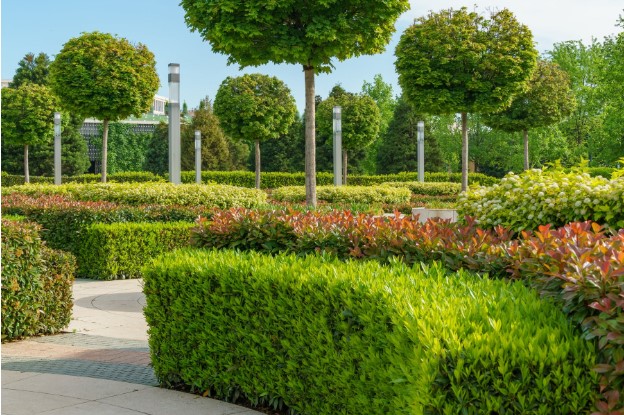
Outdoor landscaping continues to evolve as homeowners and property developers seek greenery that offers both visual appeal and practical function. Trees and hedges that provide year-round coverage, privacy, and shade have become increasingly popular in residential and commercial settings. Among the most commonly selected evergreen landscape plants is Ficus nitida, valued for its dense foliage, rapid growth, and adaptability to various landscape designs.
Known as the Indian Laurel Fig, this evergreen species is widely used as a privacy hedge, shade tree, and ornamental landscape feature. Its glossy green leaves and structured appearance make it a preferred option in warm climates where year-round greenery is desired. In addition to its aesthetic appeal, landscapers often choose this plant for its responsiveness to trimming and shaping, making it suitable for formal hedges and boundary screens.
What Is Ficus Nitida?
Ficus Nitida is commonly identified as a variety of Ficus microcarpa and belongs to the Moraceae family. It is native to regions of Southeast Asia and is recognized for its broad canopy, smooth gray trunk, and dense evergreen foliage. The tree is capable of growing into a large shade tree, although many homeowners maintain it at a smaller size through regular pruning.

This species is often planted in urban and suburban environments because of its tolerance to heat and its ability to create effective natural privacy barriers. Many landscape professionals use it to reduce visibility between neighboring properties or to soften the appearance of walls and fencing. Its thick foliage also contributes to noise reduction and shade coverage in outdoor spaces.
Common Landscaping Uses
Privacy Hedges
One of the primary uses of Ficus Nitida is as a privacy screen. When planted in rows, the trees develop a dense wall of greenery that can help block unwanted views and create a more secluded outdoor environment. Because of its rapid growth rate, property owners often choose this plant for faster landscape coverage than slower-growing hedge species.
Shade Trees
Ficus Nitida is also widely appreciated for its broad canopy and cooling shade. Mature trees can create significant sun protection in outdoor living areas, patios, and walkways. In warmer climates, this natural shade can help improve comfort while reducing heat exposure around homes and commercial buildings.
Ornamental Landscape Features
In addition to its practical functions, the tree is frequently used as an ornamental feature for its polished appearance and evergreen foliage. Its ability to tolerate shaping allows landscapers to maintain formal designs and structured garden layouts throughout the year.
Growing Conditions and Maintenance
Ficus Nitida performs best in full sun to partial shade and prefers well-draining soil conditions. During the establishment phase, regular watering is important to support healthy root development. Once established, the tree becomes relatively drought-tolerant and can adapt to varying moisture levels.
Routine pruning is often necessary to maintain the desired height and shape, particularly when used as a hedge. Many landscape professionals recommend deep watering to promote stronger root growth and reduce surface-root issues. Community discussions among gardeners also frequently emphasize the importance of avoiding overwatering, especially during cooler seasons, as excess moisture can lead to yellowing leaves and fungal issues.
Important Considerations Before Planting
Although Ficus Nitida offers many landscaping advantages, proper placement is essential due to its vigorous root system. The roots can spread extensively over time and may interfere with sidewalks, foundations, or underground utilities if planted too close to structures.
Climate conditions should also be considered before planting. While the species thrives in warm regions, colder temperatures and frost exposure may affect growth and foliage health. Gardeners in cooler zones often discuss winter sensitivity and reduced performance in colder climates.

Conclusion
As landscape design increasingly focuses on privacy, shade, and evergreen beauty, Ficus Nitida remains a popular choice for both residential and commercial environments. Its dense foliage, adaptability, and fast growth make it highly effective for creating privacy hedges, providing shade, and shaping structured outdoor landscapes. For homeowners, a nursery near me is a reliable service to find healthy plants and expert guidance for their outdoor projects. Therefore, these landscaping solutions continue to gain popularity among property owners seeking attractive, low-maintenance, and long-lasting greenery that enhances both privacy and curb appeal.