Understanding what electrical engineering services actually include is essential before any business can make an informed decision about investing in them. From designing robust power systems to ensuring full regulatory compliance, electrical engineering services cover a wide spectrum of technical, strategic, and consultancy-based activities that keep businesses running safely and efficiently. This guide breaks down every major component, helping UK business owners and facilities managers understand exactly what to expect.
1. Power System Design
Power system design is the foundation of any electrical engineering project. It involves calculating the electrical load requirements of a building or facility and designing a layout that ensures safe, efficient, and reliable power distribution. Engineers analyse load forecasting data, select appropriate equipment such as transformers, switchgear, and circuit breakers, and create detailed single-line diagrams. A well-designed power system reduces the risk of overload, equipment damage, and costly downtime.
| Service Component | What It Involves | Business Benefit |
| Load Forecasting | Analysing current and future power demands | Prevents overload, saves costs |
| Single-Line Diagrams | Visual layout of the electrical system | Ensures clarity for contractors and authorities |
| Equipment Specification | Selecting transformers, switchgear, breakers | Improves reliability and safety |
| Distribution Layout | Planning cabling and panel placements | Reduces installation errors |
| System Redundancy | Designing backup circuits | Minimises business interruption risk |
2. Energy Management and Audits
Energy management is a growing priority for UK businesses facing rising utility costs and stricter environmental regulations. Electrical engineering consultants conduct detailed energy audits to identify inefficiencies, wasteful equipment, and areas where smart solutions can reduce consumption. Recommendations often include upgrading to LED lighting, installing power factor correction equipment, and deploying building energy management systems (BEMS). The result is lower operational costs and a smaller carbon footprint.
3. Safety and Regulatory Compliance
Every electrical installation in the UK must comply with the BS 7671 Wiring Regulations, as well as international standards such as the NEC, IEC, and IEEE. Compliance audits involve a thorough inspection of existing electrical systems, identification of hazards, and the preparation of detailed reports documenting findings and required remedial actions. Non-compliance can result in significant fines, insurance invalidation, and in worst cases, injury or fatality. Electrical engineering services ensure your site is always up to standard.
4. Low and Medium Voltage System Design
Depending on the scale of your operations, you may require low-voltage (LV) or medium-voltage (MV) electrical systems. LV systems typically operate at up to 1000V and are used in most commercial and light industrial settings, while MV systems operating between 1kV and 36kV serve heavy industries, substations, and large campuses. Experienced electrical engineers design both types of systems with full consideration of safety, efficiency, and future scalability.
5. Project Management and Commissioning
Electrical engineering services do not end at design. Skilled consultants oversee the installation process, manage subcontractors, coordinate with local authorities, and perform final commissioning tests to verify that every component operates as intended. This end-to-end approach ensures projects are delivered on time, within budget, and to specification. Post-commissioning documentation including as-built drawings and operation manuals is also provided.
6. Renewable Energy Integration
With the UK government’s net-zero targets in focus, many businesses are now integrating renewable energy sources such as solar PV panels, wind turbines, and battery storage systems into their electrical infrastructure. Electrical engineering consultants assess the feasibility of such installations, handle grid connection applications, and ensure seamless integration with existing systems. This service is increasingly in demand across commercial, industrial, and public sector clients.
7. Emergency and Standby Power Systems
Business continuity depends on having a reliable backup power source. Electrical engineering services include the design and installation of uninterruptible power supplies (UPS), diesel generators, and automatic transfer switches (ATS). These systems ensure that critical operations continue uninterrupted during power outages, protecting sensitive equipment, data, and safety-critical systems such as fire alarms and emergency lighting.
8. Electrical Testing and Inspection
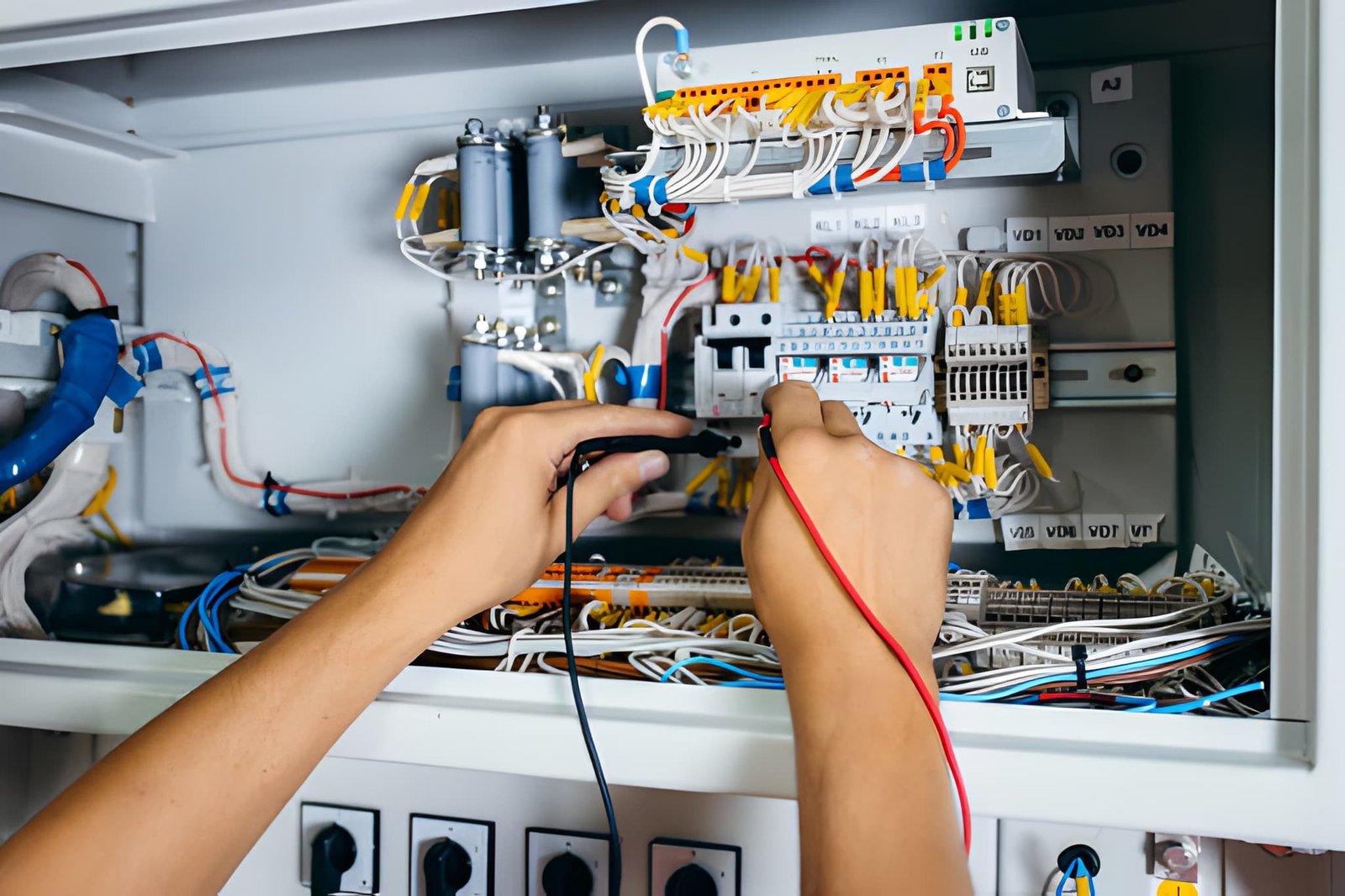
Periodic inspection and testing is a legal requirement for many business types and is best practice for all. Electrical engineers carry out fixed wiring inspections, thermographic surveys, and earth leakage testing to detect faults before they cause harm. Testing services include insulation resistance testing, continuity testing, and loop impedance testing. Reports generated from these inspections provide landlords, employers, and insurers with documented evidence of compliance.
9. Lighting Design
Lighting design is a specialist area within electrical engineering services that combines technical knowledge with an understanding of human factors and aesthetic requirements. Engineers calculate lux levels for different work environments, specify energy-efficient luminaires, design emergency lighting escape routes, and integrate daylight harvesting controls. Good lighting design improves employee productivity, reduces energy consumption, and ensures compliance with workplace regulations.
10. Instrumentation and Control Systems
Industrial and commercial facilities often rely on complex instrumentation and control systems to manage processes, monitor performance, and ensure safety. Electrical engineers design and commission SCADA systems, PLCs, motor control centres (MCCs), and building automation systems (BAS). These systems enable facilities managers to monitor energy consumption in real time, automate processes, and respond quickly to faults.
Why Electrical Engineering Services Matter for UK Businesses
The UK’s electrical infrastructure standards are among the most rigorous in the world. Failing to meet these standards not only puts businesses at legal risk but also compromises the safety of employees, customers, and the public. Professional electrical engineering services provide the expertise, documentation, and oversight needed to ensure every electrical system is designed, installed, and maintained to the highest standard. For growing businesses, these services also provide the scalability needed to adapt to changing demands.
| Industry | Key Electrical Engineering Need | Typical Service Required |
| Retail | Safe, efficient store lighting and HVAC | Lighting design, energy audit |
| Manufacturing | Reliable power for machinery | MV/LV design, MCC commissioning |
| Healthcare | Uninterrupted critical power | UPS, standby generators, compliance |
| Education | Safe, modern electrical infrastructure | Inspection, lighting, BMS |
| Hospitality | Energy efficiency and guest comfort | Energy management, smart controls |
| Data Centres | High-density, resilient power distribution | Power design, UPS, redundancy |
Why Almens Consult Is Your Best Choice for Electrical Engineering Services
When it comes to reliable, compliant, and future-ready electrical solutions, Almens Consult stands head and shoulders above the rest. With a team of highly qualified electrical engineers, consultants, and project managers, Almens Consult delivers end-to-end electrical engineering services that are tailored to your unique business needs. From power design and energy audits to full compliance management and smart system integration, every project is executed with precision, transparency, and a commitment to long-term results. Whether you are a small business looking to optimise your energy usage or a large corporation planning a complex infrastructure rollout, Almens Consult brings the expertise, tools, and dedication to make your project a success. Trusted by clients across the UK and Ghana, Almens Consult is the partner you need for safe, scalable, and efficient electrical engineering solutions.
Conclusion
Electrical engineering services encompass far more than just wiring and installation. They cover the entire lifecycle of an electrical system, from initial design and compliance to ongoing maintenance and optimisation. For UK businesses looking to operate safely, efficiently, and sustainably, investing in professional electrical engineering services is not optional ,it is essential. Understanding what these services include is the first step towards making the right decisions for your facility.
Frequently Asked Questions (FAQs)
What are the main components of electrical engineering services?
The main components include power system design, energy management, safety compliance, LV/MV system design, project management, renewable energy integration, emergency power systems, electrical testing, lighting design, and control systems.
Why do UK businesses need electrical engineering services?
UK businesses need these services to comply with BS 7671 and international electrical standards, reduce energy costs, ensure the safety of their premises, and maintain operational continuity.
How often should electrical inspections be carried out?
For commercial properties, a full electrical inspection is recommended every five years or on change of occupancy. High-risk environments such as industrial sites may require more frequent inspections.
Can electrical engineering consultants help with energy savings?
Yes. Through detailed energy audits and the implementation of smart energy solutions, electrical engineering consultants can significantly reduce a business’s energy consumption and utility bills.
What standards do UK electrical engineers follow?
UK electrical engineers follow BS 7671 (IET Wiring Regulations), along with international standards including NEC, IEC, and IEEE depending on the project requirements.