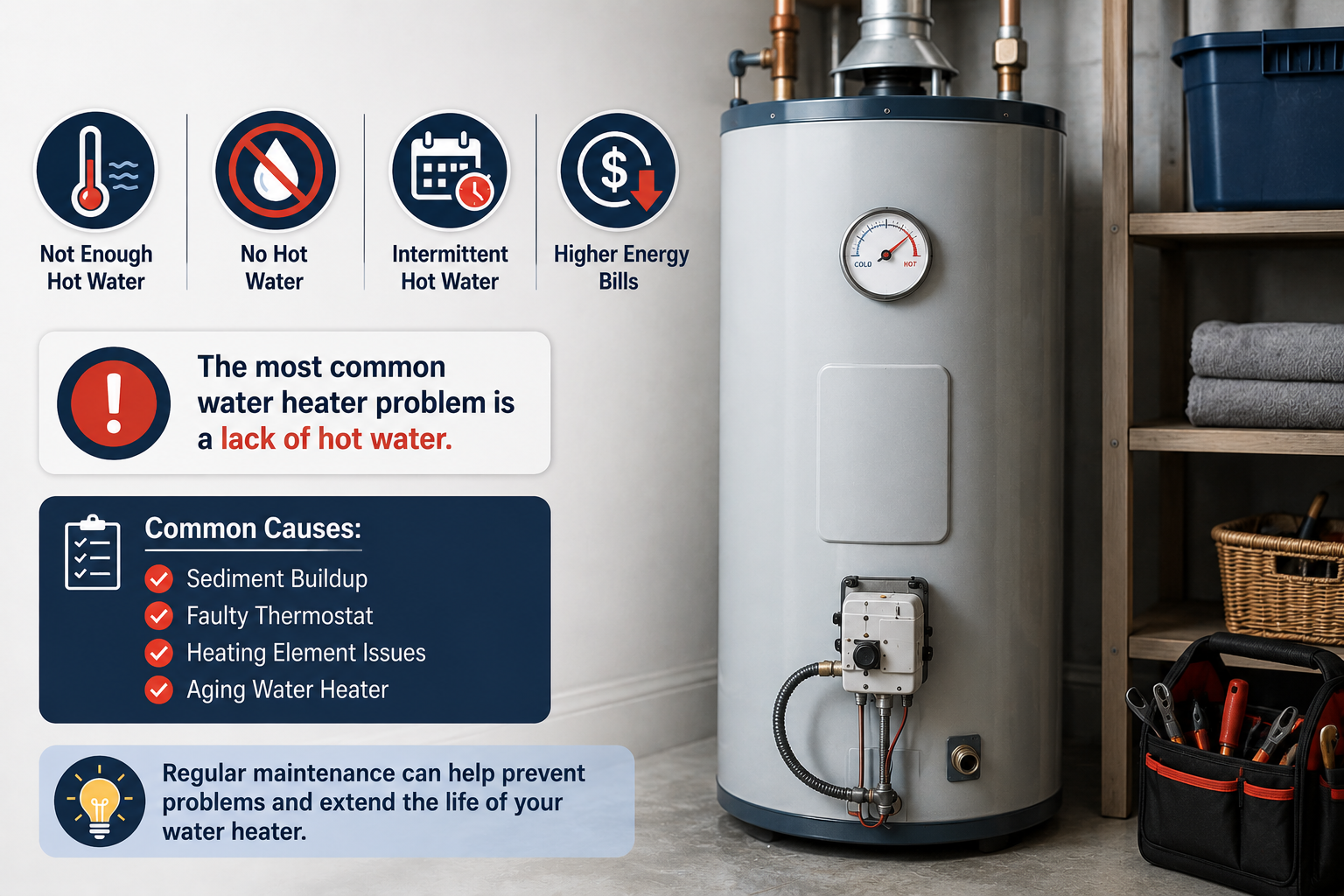
Most people never think about their water heater until the morning they turn on the shower and get hit with a wall of cold water. It is one of those appliances that quietly does its job every single day until one day it does not. And when something goes wrong, it tends to affect everything at once, from your morning routine to your laundry to dishes piling up in the sink.
So what actually breaks on a water heater most often? The truth is there are a handful of problems that plumbers see over and over again in homes of all ages. Some are quick fixes. Others signal that the unit is on its last legs. Understanding which is which can save you from overpaying for repairs on a unit that should be replaced, or from replacing a unit that just needed a $50 part. Let us walk through the most common issues one by one.
No Hot Water at All: The Problem That Stops Everything
If you turn on the hot tap and get nothing but cold water, that is the most disruptive problem a water heater can have and also the most common reason people call a plumber. What causes it depends entirely on whether you have an electric unit or a gas unit, because the two systems work very differently.
What Causes It in Electric Water Heaters
Electric water heaters use one or two heating elements to warm the water in the tank, similar to the coils inside an electric oven. Over time those elements corrode, get coated with mineral deposits, or simply burn out from years of constant cycling. When the upper element fails, you get no hot water at all. When the lower element goes, you get hot water that runs out almost immediately. Replacing a heating element is a fairly straightforward repair that a licensed plumber can handle in a couple of hours without replacing the whole unit.
The thermostat that controls each element can also fail, causing the element to stop activating even when it is physically intact. Testing the thermostat is part of any proper diagnosis, and a plumber should check both components before recommending parts.
What Causes It in Gas Water Heaters
Gas water heaters rely on a pilot light and a device called a thermocouple to keep the burner running safely. The thermocouple is a heat sensor positioned near the pilot flame. When it detects the flame is burning, it keeps the gas valve open. When it wears out or gets dirty, it can incorrectly signal that the flame is out and shut the gas off, killing your hot water supply entirely.
A failed thermocouple is one of the most common gas water heater repairs out there and usually costs well under $200 parts and labor. The pilot light itself can also go out from a draft, debris, or a clogged orifice. If relighting the pilot does not hold, the thermocouple is almost always the reason.
Running Out of Hot Water Too Fast
You had a full tank an hour ago. Now three people into the morning, the hot water is gone. This is not always a sign that your tank is too small. More often it is a sign that something inside is reducing the effective capacity of the tank you already have.
Sediment Buildup and How It Steals Your Hot Water
Every water supply contains dissolved minerals, mainly calcium and magnesium. Every time your water heater heats water, those minerals drop out of solution and settle at the bottom of the tank. Over months and years they form a thick, insulating layer of sediment right on top of the heating element or burner. The result is a heater that works twice as hard to warm half the water.
It is a bit like trying to heat a room through a thick concrete floor instead of a thin wood one. The heat is there but it cannot transfer efficiently. Annual tank flushing removes that sediment layer, restores efficiency, and extends the life of the unit. Most homeowners skip this step entirely because nobody ever told them it was something they needed to do.
The Real Cost of Ignoring Sediment
The energy cost alone adds up fast. According to the U.S. Department of Energy, water heating accounts for roughly 18 percent of a home’s energy use. A heater working against a heavy sediment layer burns significantly more energy to deliver the same amount of hot water. That difference shows up on your monthly utility bill every single month. Add in the accelerated wear on the heating elements from overworking and you are looking at a unit that fails years earlier than it should.
Strange Noises Coming From the Tank
A water heater should be quiet. If yours is making sounds you cannot explain, that is the tank trying to tell you something.
Popping, Rumbling, and Banging Sounds Explained
That popping or rumbling sound you hear during heating cycles is almost always sediment. As the water heats up underneath the sediment layer, it forces its way through, creating those bubbling and cracking noises. Think of it like boiling water that has to push through a gravel layer to escape. The sound is annoying but it is also a direct signal that your tank needs to be flushed.
A banging sound, sometimes called water hammer, is a different issue entirely. It happens when water flow suddenly stops or reverses in the pipes, sending a pressure shockwave through the line. This is more of a plumbing system issue than a water heater issue, but it often gets associated with the heater because that is where the hot water originates.
When Noise Becomes a Warning You Cannot Ignore
A hissing sound is one you want to take seriously immediately. Hissing near the tank usually points to a leak or excessive pressure buildup escaping from a valve. A high-pitched whine can indicate a failing pressure relief valve or a problem with water pressure entering the unit. These are not sounds to wait on. Pressure issues in a sealed tank are a legitimate safety concern, and a plumber should look at it promptly.
Water That Looks or Smells Wrong
Your water heater directly affects water quality in ways that catch a lot of homeowners by surprise. When the hot water coming out of your taps looks or smells wrong, the tank itself is often the source.
Rusty or Discolored Hot Water
Orange or brownish hot water points to corrosion inside the tank. Every tank has an anode rod, a metal rod designed to attract corrosive elements in the water and slowly sacrifice itself so the tank walls stay protected. Think of it as a bodyguard for the tank. When the anode rod depletes completely, the tank walls start corroding instead, and that rust ends up in your hot water.
Replacing the anode rod every three to five years is cheap maintenance that most homeowners never do. Catching a depleted rod before it causes tank corrosion is the difference between a $30 part and a full unit replacement.
That Rotten Egg Smell and Where It Comes From
Sulfur-smelling hot water is caused by a reaction between the magnesium anode rod and naturally occurring sulfate bacteria in your water supply. The bacteria are harmless but the smell is genuinely unpleasant. Switching to an aluminum or zinc anode rod usually eliminates the odor entirely. This is a common problem in homes on well water but it happens with municipal water supply too.
Leaks Around the Water Heater
Finding water pooling near your water heater is never a good sign, but the repair cost depends entirely on where the leak is coming from.
Valve Leaks vs. Tank Body Leaks
Leaks from the temperature and pressure relief valve, the drain valve, or the inlet and outlet connections are often repairable without touching the tank itself. A worn valve seat, a loose fitting, or a gasket that has dried out can all cause dripping that looks alarming but is actually a straightforward fix. A plumber can usually handle these repairs in under an hour.
A leak from the tank body is a completely different story. Tank walls corrode from the inside out, especially in units past the ten-year mark. Once the steel wall of the tank itself starts weeping water, no repair will hold. The tank has failed internally and the only real solution is replacement.
When a Leak Means Full Replacement
If your unit is already eight to twelve years old and water is pooling from underneath or seeping from the tank body itself, putting money into repairs is not a good investment. Getting professional water heater services at that point means getting an honest assessment of whether repair or replacement makes financial sense, not just having the cheapest visible part swapped out.
Your Water Heater Is Just Too Old
Most traditional tank water heaters are designed to last between eight and twelve years. Some run longer with diligent maintenance. Most start developing problems well before they completely fail. The closer your unit gets to or past that ten-year mark, the more repair calls you can expect, the less efficiently it runs, and the more you are spending each month in energy costs compared to what a modern unit would use.
A newer unit is not just more reliable. High-efficiency models available today use significantly less energy to deliver the same amount of hot water, and some qualify for utility rebates or tax credits that offset part of the purchase cost. If your unit is aging and showing multiple symptoms at once, replacement often costs less over a three to five year period than continuing to repair and run an old, inefficient tank.
When to Stop Guessing and Call a Professional
Water heaters give warning signs before they fully fail. Longer recovery times between hot showers, higher energy bills without explanation, visible rust streaks on the outside of the tank, or mineral deposits forming around fittings are all worth paying attention to. None of these fix themselves, and most get worse the longer they sit.
Getting ahead of problems with professional water heater service and repair saves money compared to dealing with a complete failure, which can mean water damage on top of the replacement cost. SJ Plumbing has served Orange County homeowners for over 12 years, handling everything from heating element replacements and anode rod swaps to full tank and tankless system installations. They offer upfront pricing before any work begins and back every job with a satisfaction guarantee.
Conclusion
The most common water heater problems follow a consistent pattern: no hot water, running out too quickly, strange noises, water quality issues, and leaks. Most of them are fixable, especially when caught before they fully develop. Regular maintenance like annual flushing and anode rod checks prevent the majority of these problems from showing up at all. When something does go wrong, understanding what you are dealing with helps you make a smarter decision about whether to repair or replace. Your water heater works around the clock without any recognition. A little attention goes a long way toward making sure it keeps doing its job.
FAQs
- How do I know if my water heater needs repair or full replacement?
Age is the biggest factor. If the unit is under eight years old and the problem is isolated to one component like a heating element or thermocouple, repair almost always makes sense. If it is past ten years, showing multiple symptoms, or leaking from the tank body itself, replacement is usually the better financial decision over the next few years.
- How often should I have my water heater serviced?
A professional inspection and tank flush once a year keeps sediment under control and gives a plumber the chance to catch developing problems early. Anode rod inspection should happen every three years. This simple schedule extends the life of most units by several years and keeps energy costs where they should be.
- Can sediment in my water heater make me sick?
Sediment itself is primarily mineral deposits and does not make the water unsafe to drink. However, a heavily sediment-laden tank with a depleted anode rod can allow bacterial growth in certain conditions, particularly if the thermostat is set below 120 degrees Fahrenheit. Keeping the temperature at 120 degrees and flushing annually addresses both concerns.
- Why does my hot water run out faster in winter?
Incoming cold water is significantly colder in winter, which means the heater has to work harder and longer to bring water up to temperature. A unit that barely keeps up in summer will struggle noticeably in colder months. If the problem is noticeable every winter, it often points to sediment buildup reducing effective tank capacity, a failing heating element, or a unit that is undersized for your household’s actual demand.
- Is a tankless water heater worth the upgrade if my current tank keeps having issues?
For many homeowners, yes. Tankless units heat water on demand rather than storing it, which eliminates standby heat loss and reduces energy consumption by 20 to 30 percent in most homes. They last up to 20 years compared to 10 to 12 for a tank unit and never truly run out of hot water. The higher upfront cost is typically recovered through energy savings within five to seven years.