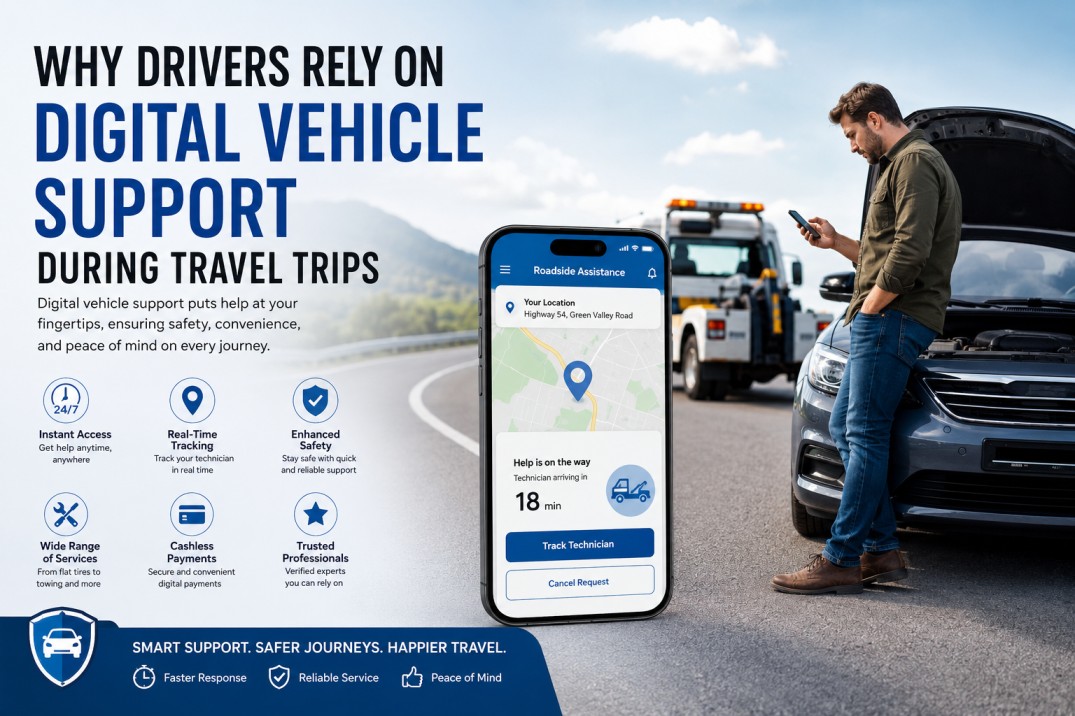
Traveling by road offers freedom, flexibility, and the opportunity to explore destinations at a comfortable pace. However, long-distance journeys also come with uncertainties that can disrupt even the most carefully planned trips. Vehicle breakdowns, tire punctures, battery failures, and unexpected mechanical issues can occur without warning. In such situations, drivers increasingly depend on digital vehicle support solutions that provide quick access to help. These platforms have transformed the way motorists respond to roadside emergencies, making travel safer, more efficient, and significantly less stressful.
Growing Dependence on Mobile Vehicle Assistance While Travelling
The growing reliance on digital vehicle assistance is supported by several industry trends:
- Smartphone adoption among drivers continues to rise globally, enabling instant access to vehicle support services.
- A significant percentage of roadside incidents involve common issues such as dead batteries, flat tires, and lockouts that can be resolved through rapid assistance dispatch.
- Consumers increasingly prefer app-based service requests over traditional phone-based support systems.
- Real-time GPS tracking has improved response efficiency and reduced waiting times in many service networks.
- Digital platforms have enhanced transparency by allowing users to track service providers and receive status updates.
These trends demonstrate why technology-driven support systems are becoming a standard part of modern travel experiences.
Instant Access to Emergency Help During Unexpected Breakdowns
One of the primary reasons drivers rely on digital vehicle support is the ability to access assistance immediately. Traditional methods often required searching for local mechanics, locating service numbers, or relying on unfamiliar contacts. Digital platforms eliminate these challenges by connecting users directly with available service providers.
When a vehicle experiences a problem during a trip, every minute matters. Delays can create safety risks, especially when breakdowns occur on highways, remote roads, or during adverse weather conditions. Digital support tools allow drivers to request help with just a few taps.
The process typically includes:
- Identifying the driver’s location automatically
- Selecting the type of assistance required
- Connecting with the nearest available technician
- Providing estimated arrival times
- Delivering real-time status updates
This streamlined experience reduces uncertainty and allows travelers to focus on their safety while waiting for assistance.
Real Time Location Tracking Improves Driver Safety Measures
Location technology has become one of the most valuable features in modern vehicle support systems. GPS integration enables accurate positioning, which helps service providers locate stranded drivers quickly and efficiently.
For travelers driving through unfamiliar regions, describing an exact location can be difficult. Real-time location sharing removes this challenge by transmitting precise coordinates directly to support teams.
The safety benefits include:
- Faster dispatch of roadside technicians
- Improved accuracy in locating vehicles
- Reduced communication errors
- Better support in remote locations
- Enhanced emergency response coordination
Families and travel companions also benefit from location visibility, as they can stay informed about the driver’s situation and expected resolution timeline.
The importance of location-based services has significantly contributed to the growing interest in roadside assistance app development across the mobility technology sector.
How Digital Platforms Simplify Roadside Service Requests
Convenience is a major factor influencing user adoption. Travelers appreciate solutions that simplify complex processes and reduce the effort required during stressful situations.
Digital vehicle support platforms typically provide a user-friendly interface where drivers can:
- Register vehicle details.
- Store emergency contact information.
- Request specific support services.
- View technician availability.
- Monitor service progress.
- Access digital payment options.
- Review completed service records.
This level of convenience is particularly valuable during long journeys when drivers may already be dealing with fatigue, schedule disruptions, or unfamiliar surroundings.
The ability to manage the entire assistance process through a single platform creates a seamless experience that traditional support channels often struggle to provide.
Predictive Features Help Prevent Travel Related Vehicle Issues
Modern digital vehicle support systems are evolving beyond emergency response. Many platforms now incorporate preventive maintenance and predictive monitoring capabilities designed to reduce the likelihood of breakdowns.
Using vehicle data and intelligent analytics, these systems can notify drivers about potential issues before they become serious problems.
Common preventive functions include:
- Battery health monitoring
- Tire pressure alerts
- Engine performance notifications
- Maintenance reminders
- Service scheduling recommendations
These proactive features help travelers prepare their vehicles before embarking on long trips. By addressing maintenance concerns early, drivers can reduce the risk of roadside incidents and improve overall travel reliability.
As technology continues to advance, predictive support is expected to play an increasingly important role in the future of vehicle assistance ecosystems.
Enhanced Transparency Creates Greater Trust for Travelers
Trust is essential when drivers seek assistance during vulnerable situations. Digital platforms help build confidence by increasing transparency throughout the service process.
Traditional roadside support often provided limited visibility into technician arrival times, service progress, or pricing details. Modern systems address these concerns through real-time communication and detailed information sharing.
Transparency features commonly include:
- Technician identification
- Live tracking capabilities
- Estimated arrival windows
- Service status notifications
- Digital invoices
- Customer reviews and ratings
These features allow travelers to make informed decisions and maintain realistic expectations regarding service delivery.
Transparency also contributes to higher customer satisfaction because users remain informed at every stage of the assistance journey. When drivers know what is happening and when help will arrive, anxiety levels decrease considerably.
Technology Trends Shaping Future Travel Support Experiences
The future of digital vehicle assistance is being influenced by several emerging technologies. Artificial intelligence, connected vehicles, and advanced analytics are creating new opportunities for more responsive and efficient support services.
Some important developments include:
Artificial Intelligence
AI can analyze vehicle data, predict maintenance requirements, and assist in diagnosing common mechanical issues before dispatching technicians.
Connected Vehicle Integration
Connected vehicles can automatically transmit diagnostic information, helping support teams understand problems before arriving on-site.
Automated Service Coordination
Advanced systems can identify nearby providers, assign jobs automatically, and optimize dispatch operations.
Digital Ecosystem Expansion
Vehicle support platforms are increasingly integrating with navigation tools, insurance services, and travel applications to create unified mobility experiences.
Organizations exploring roadside assistance app development are increasingly focusing on these technologies to enhance service quality and operational efficiency.
Another important industry trend is the emergence of the white label roadside assistance app model, which enables businesses to launch customized support solutions while leveraging established technological frameworks.
Factors Influencing Investment and Platform Development Costs
As demand for digital vehicle support grows, many organizations are evaluating the resources required to create these solutions. Understanding the major cost drivers is essential for effective planning.
Several factors influence the cost to build roadside assistance app solutions:
- Feature complexity
- Platform compatibility
- GPS and mapping integration
- User interface design
- Backend infrastructure
- Security requirements
- Third-party integrations
- Maintenance and updates
Development expenses vary significantly depending on the project’s scope and objectives. Simple platforms with essential functionality generally require fewer resources than advanced systems incorporating predictive analytics, AI capabilities, and large-scale service provider networks.
For businesses evaluating how to build roadside assistance app solutions, a phased approach is often beneficial. Beginning with core functionality and expanding features over time can help manage resources while ensuring a strong user experience.
The increasing demand for roadside assistance app development reflects the broader digital transformation occurring throughout the transportation and mobility industries. As traveler expectations continue to evolve, organizations are prioritizing solutions that deliver speed, convenience, and reliability.
Why Digital Assistance Continues Transforming Modern Road Travel
Digital vehicle support has fundamentally changed how drivers manage travel-related challenges. Instead of relying on uncertain and time-consuming methods, travelers can now access structured assistance through intelligent and connected platforms.
Several factors explain this ongoing transformation:
- Faster access to support services
- Improved safety through location tracking
- Greater transparency during service delivery
- Enhanced convenience for travelers
- Predictive maintenance capabilities
- Better coordination between users and service providers
As road travel remains an essential part of personal and professional mobility, the demand for efficient support systems is expected to continue growing. Technology has made it possible to address roadside emergencies more effectively while reducing stress and uncertainty for drivers.
Conclusion
Digital vehicle support solutions have become an essential component of modern road travel. They provide drivers with immediate access to help, improve safety through location-based services, enhance transparency, and streamline the entire assistance process. As technological innovation continues to reshape mobility experiences, travelers will benefit from even smarter and more responsive support systems. The combination of convenience, reliability, and proactive service capabilities ensures that digital assistance will remain a valuable resource for drivers navigating roads both near and far.