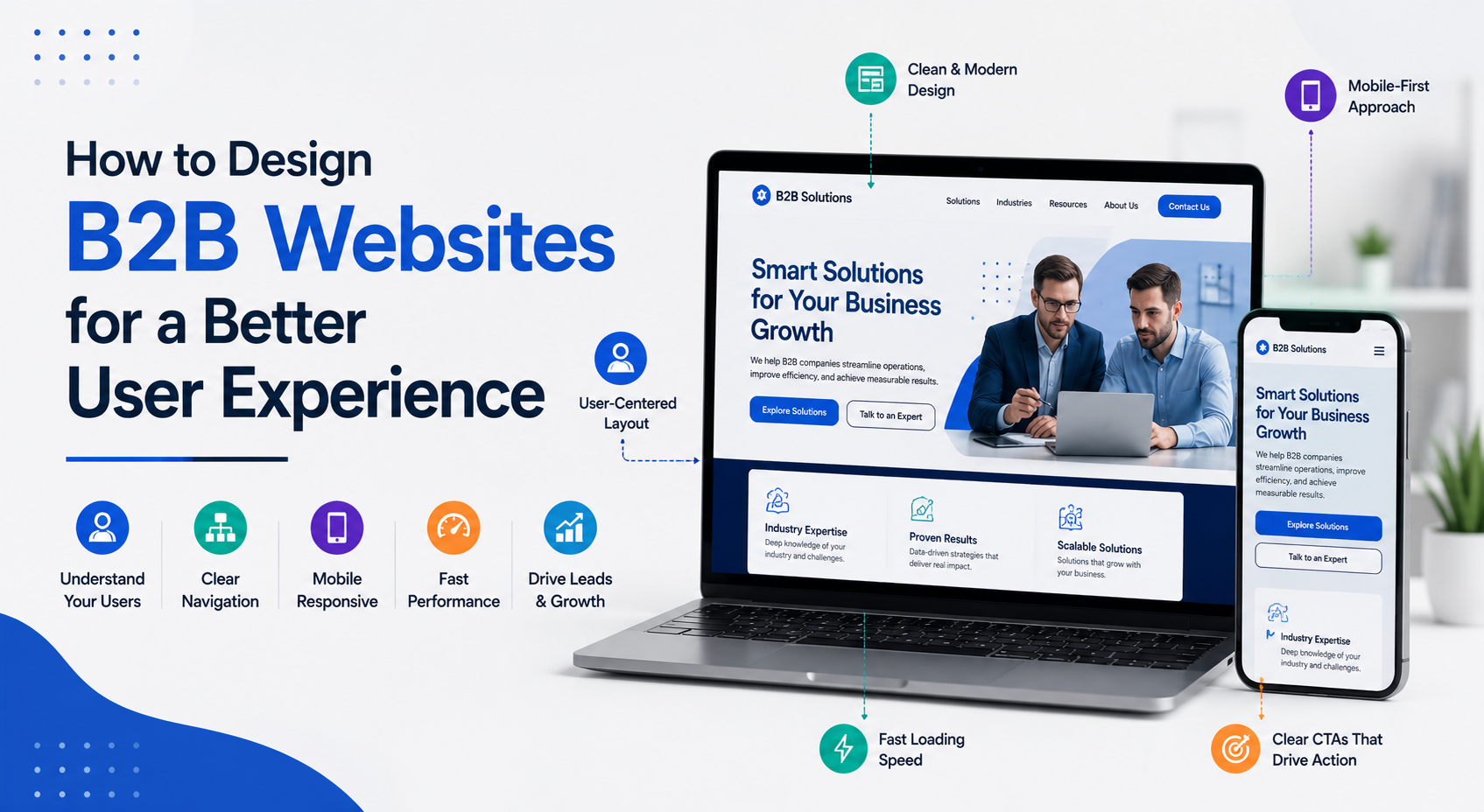
A business website is no longer simply an online brochure. It is often the first place potential customers interact with a brand, research its products or services, compare alternatives, and decide whether to make contact. For businesses using WordPress, the quality of the underlying website can have a direct impact on how effectively that digital presence supports growth.
A well-engineered WordPress website goes beyond attractive visuals. It combines thoughtful design, reliable performance, strong security, search-friendly architecture, scalability, and a smooth user experience. When these elements work together, a website can become a long-term business asset rather than a platform that constantly requires expensive fixes and redesigns.
1. A Strong Website Creates a Better First Impression
Customers often form an opinion about a business within seconds of visiting its website. A slow-loading page, confusing navigation, outdated design, or inconsistent layout can make even a reputable company appear less credible.
A well-engineered WordPress website, built through professional WordPress Website Development Services, provides a professional digital experience from the moment visitors arrive. Clear messaging, logical page structures, responsive layouts, and consistent branding help users understand what the business offers and why they should choose it.
This matters because credibility can influence purchasing decisions. Visitors are more likely to explore a website, read about a service, or submit an inquiry when the experience feels trustworthy and professional.
Instead of treating website design as decoration, businesses should view it as part of their overall customer experience.
2. Performance Supports User Experience and Conversions
Website speed is another important factor in long-term growth. Modern users expect websites to respond quickly, particularly when browsing from smartphones or slower connections.
A poorly optimized website may contain oversized images, unnecessary plugins, inefficient code, or excessive scripts. As a result, pages can become slow and frustrating to use.
Good WordPress engineering takes performance into account from the beginning. Developers can use optimized images, efficient themes, appropriate caching, clean code, content delivery solutions, and carefully selected plugins to reduce unnecessary loading.
Better performance can benefit the business in several ways:
- Visitors can find information more quickly.
- Mobile users have a smoother browsing experience.
- Important landing pages can perform more effectively.
- Lower friction can encourage more inquiries and purchases.
- Ongoing maintenance becomes easier when the website is built efficiently.
Performance should therefore be considered an investment in customer experience rather than merely a technical requirement.
3. Mobile-Friendly Development Expands Your Reach
A significant portion of website traffic comes from mobile devices. A website that works beautifully on a desktop but performs poorly on smartphones can lose potential customers.
Responsive WordPress development allows website layouts to adapt to different screen sizes. Navigation, buttons, forms, images, typography, and content should remain usable regardless of the device.
Mobile optimization is particularly important for businesses that depend on local searches, social media traffic, paid advertising, or customers researching services while away from their computers.
A mobile-first mindset also encourages developers to focus on the essentials. Instead of filling pages with unnecessary elements, the website can prioritize useful information and clear calls to action.
The result is a more consistent experience across desktops, tablets, and smartphones.
4. Search-Friendly Architecture Helps Attract Organic Traffic
Long-term business growth often depends on a steady stream of potential customers. Search engines can provide that traffic when a website has useful content and a technically sound foundation.
A well-structured WordPress website can make it easier for search engines to understand the relationship between pages and content. Logical navigation, descriptive URLs, proper heading structures, internal linking, mobile usability, and fast-loading pages all contribute to a healthier technical foundation.
However, search visibility is not achieved simply by installing an SEO plugin. Technical implementation and content strategy need to work together.
For example, a business might create separate service pages targeting specific customer needs, publish educational articles that answer common questions, and connect related pages through internal links. Over time, this creates a broader content ecosystem that can attract users at different stages of the buying journey.
Organic search can take time to develop, but a strong website architecture gives the business a foundation it can build upon for years.
5. Scalability Prevents the Website From Becoming a Limitation
Businesses change. They add services, enter new markets, publish more content, hire employees, introduce new products, and sometimes develop entirely new revenue streams.
A website designed only for today’s needs may struggle to accommodate tomorrow’s requirements.
Scalable WordPress development considers future expansion during the initial planning stage. Developers can organize content logically, create reusable components, establish flexible templates, and choose technologies that can support future functionality.
For example, a small service business may initially need only a handful of pages and a contact form. As it grows, it may want to add:
- Additional service categories
- Location-specific landing pages
- A knowledge center or blog
- Online booking
- Customer accounts
- E-commerce functionality
- Multilingual content
- Advanced lead-generation tools
A scalable foundation makes these additions easier and can reduce the need for a complete rebuild later.
6. Security Protects Business Reputation and Revenue
Website security is an essential part of sustainable growth. A compromised website can damage customer trust, disrupt operations, expose sensitive information, and create unexpected recovery costs.
WordPress security is not something that should be addressed only after a problem occurs. A properly engineered website incorporates security practices throughout development and maintenance.
These may include keeping WordPress and extensions updated, limiting unnecessary plugins, using secure authentication practices, applying appropriate access permissions, maintaining reliable backups, and monitoring for suspicious activity.
The specific security requirements depend on the type of website and information it handles. An online store, membership platform, and simple corporate website may have very different security considerations.
The important principle is proactive protection. Preventing avoidable vulnerabilities is generally better than trying to recover from an incident after it has affected the business.
7. Custom Functionality Can Improve Operational Efficiency
A website can do more than generate leads. It can also reduce repetitive work inside a business.
For example, a company may use its WordPress website to collect inquiries, organize appointment requests, distribute resources, process orders, answer frequently asked questions, or integrate with other business systems.
Thoughtful development can connect the website with appropriate third-party tools and automate parts of the customer journey.
Imagine a potential customer completing an inquiry form. Instead of manually copying that information into another system, the website could send the relevant data to a customer relationship management platform, trigger an internal notification, and provide the customer with an automated response.
These improvements may seem small individually, but they can save considerable time as a business grows.
8. A Better User Journey Can Generate More Leads
Getting visitors to a website is only part of the challenge. The next question is what those visitors do once they arrive.
A well-engineered website guides users toward meaningful actions without making the experience feel forced. Calls to action should appear at appropriate points, forms should be straightforward, and important information should be easy to find.
For a service business, this could mean encouraging visitors to request a consultation. For an e-commerce company, it could mean making product discovery and checkout simpler. For a professional organization, it might involve downloading a resource or contacting a specialist.
The website should reflect the way real customers make decisions.
Understanding different stages of the customer journey allows businesses to create pages for awareness, consideration, and conversion. This makes the website more useful than simply placing a generic “Contact Us” button on every page.
9. Content Becomes a Long-Term Business Asset
One of the greatest advantages of a flexible WordPress website is the ability to continuously publish and organize content.
A business can create articles, case studies, guides, FAQs, videos, product information, and other resources that address customer questions. This content can attract search traffic, support sales conversations, demonstrate expertise, and help existing customers.
The value can accumulate over time.
A useful article published today may continue attracting visitors months or even years later. A detailed case study may help a prospective customer feel more confident about choosing a company. An informative FAQ can reduce repetitive support questions.
For this reason, website development should make content management straightforward. Business teams should be able to update appropriate sections without requiring a developer for every small change.
10. Analytics Make Continuous Improvement Possible
A website should not be considered finished the day it launches.
Business needs change, customer behavior changes, search trends evolve, and new technologies appear. Analytics can help businesses understand how visitors interact with their websites and where improvements may be needed.
Useful measurements can include traffic sources, popular pages, conversion rates, engagement patterns, form submissions, and other business-specific goals.
This information allows companies to make decisions based on evidence rather than assumptions.
For instance, if a landing page attracts substantial traffic but generates very few inquiries, the business can investigate its messaging, page structure, offer, or call to action. If a particular article consistently attracts qualified visitors, additional content around that topic may be worthwhile.
A well-built website makes this process easier by providing a stable platform for experimentation and improvement.
11. Quality Development Reduces Long-Term Costs
Choosing the cheapest approach at the beginning does not necessarily produce the lowest total cost.
A website built with poorly maintained plugins, excessive customization, weak documentation, or incompatible components may become increasingly difficult to manage. Small updates can create unexpected errors, and adding new features may require complicated workarounds.
By contrast, quality development focuses on maintainability.
Clean implementation, appropriate plugin selection, organized content structures, reusable components, and proper documentation can make future updates more predictable.
This does not mean every business needs a completely custom website. The right approach depends on its goals, budget, and technical requirements. The key is choosing a solution that balances immediate needs with realistic future plans.
12. A Website Can Strengthen Brand Authority
Long-term growth is not only about attracting more visitors. It is also about building recognition and trust.
A professionally developed website gives businesses a central platform for communicating their expertise. Consistent visual branding, high-quality content, customer success stories, testimonials, credentials, and useful resources can reinforce the company’s position in its market.
When visitors repeatedly encounter helpful and credible information from the same brand, the business has more opportunities to establish authority.
This is particularly valuable in industries where customers need significant information before making a purchasing decision.
13. Integrations Create a Connected Digital Ecosystem
Modern businesses rarely operate with a website alone. They may use email marketing platforms, customer relationship management systems, payment processors, appointment software, analytics tools, social platforms, and other applications.
A well-engineered WordPress website can serve as a central component within this ecosystem.
Appropriate integrations can reduce manual data entry and create smoother workflows. However, integrations should be selected carefully. Adding too many unnecessary services can increase complexity, maintenance requirements, and potential points of failure.
The goal should be purposeful integration: connect the website to tools that provide genuine business value.
14. Future-Proofing Requires Continuous Maintenance
No website can realistically be made completely future-proof. Technology changes too quickly for that.
What businesses can do is create a website that is adaptable.
Regular updates, security monitoring, backups, performance checks, broken-link reviews, content improvements, and compatibility testing can help keep the website healthy.
Periodic reviews are also an opportunity to reconsider whether the website still supports business objectives. A site built five years ago may technically still work while providing an experience that no longer matches customer expectations.
Continuous improvement is usually more practical than waiting for the website to become outdated and then replacing everything at once.
Conclusion
A well-engineered WordPress website is much more than a collection of attractive pages. It is a digital foundation that can support marketing, sales, customer service, operations, and brand development.
Performance helps create a smoother experience. Responsive design expands accessibility across devices. Search-friendly architecture supports organic visibility. Strong security protects trust. Scalable development accommodates business expansion, while analytics and ongoing optimization create opportunities for continuous improvement.
Most importantly, a successful website should evolve alongside the business.
Instead of viewing website development as a one-time expense, businesses can approach it as a long-term investment. When the technical foundation, user experience, content strategy, and business objectives are aligned, a WordPress website can continue delivering value long after its initial launch.

The goal is not simply to build a website that looks good today. It is to create a digital platform capable of supporting where the business wants to go tomorrow.