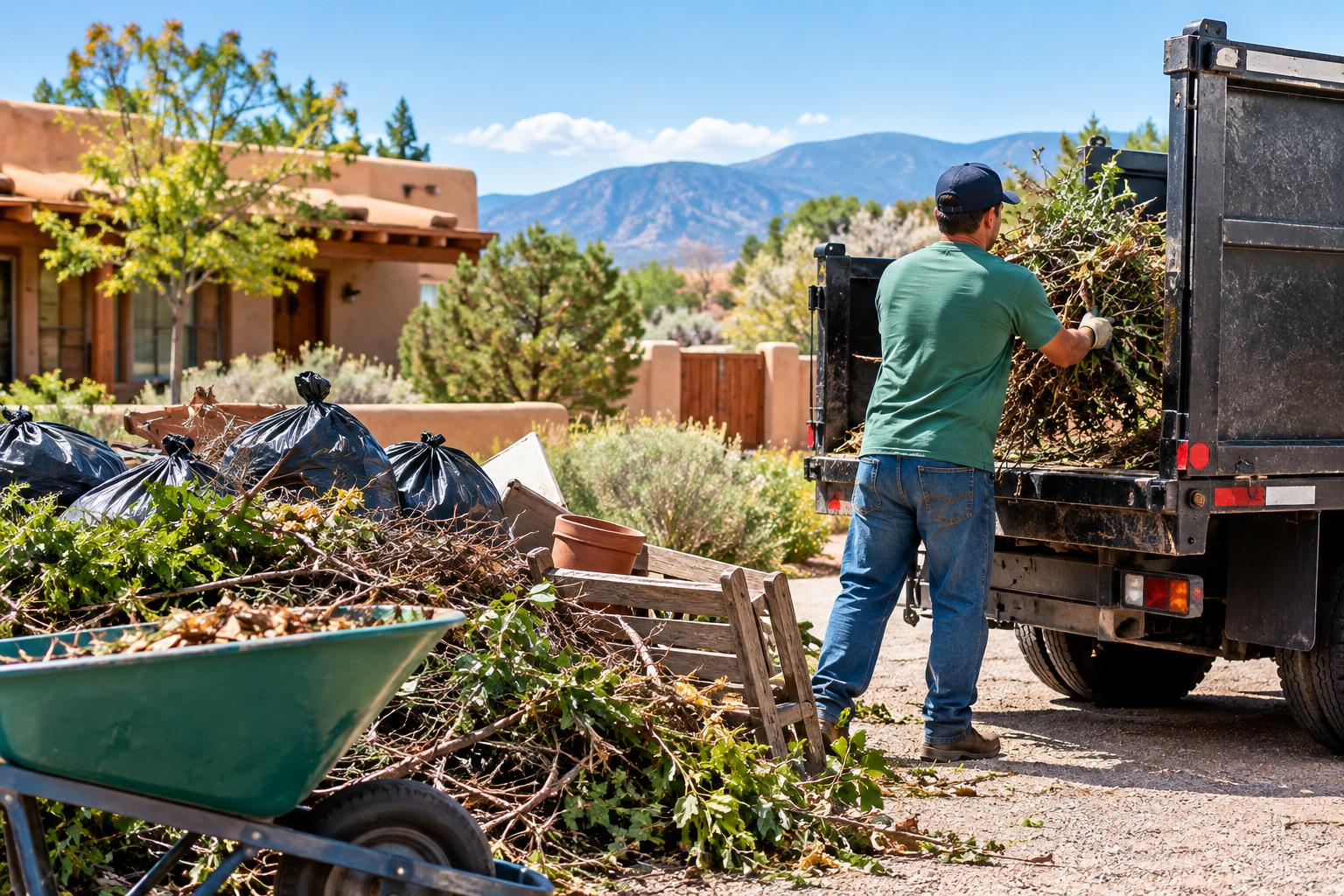
Santa Fe’s high-desert landscape is beautiful, but it creates its own set of cleanup challenges. Dry summers, sudden monsoon storms, windy springs, and a strong culture of home and garden care mean that most properties accumulate outdoor debris faster than owners expect. Whether you are clearing piñon branches, hauling away an old shed, or cleaning up after a remodel, knowing how to handle outdoor waste properly saves time, protects your property, and keeps the community safe. This guide draws on local conditions, common regulations, and standard industry practice to help you decide how to tackle the job, and when professional Junk Removal Santa Fe services make sense.
Why Outdoor Cleanup Matters More in Santa Fe
Santa Fe sits at roughly 7,200 feet in a semi-arid climate, and that shapes how you should think about yard debris.
Fire risk is the biggest factor. Dead branches, dry grass, pine needles, and stacked brush near a home are fuel in wildfire season. Fire agencies in northern New Mexico consistently encourage homeowners to create defensible space by clearing dead vegetation and thinning overgrown areas around structures. Removing yard waste is not only about appearance; it is a safety measure.

Monsoon season adds a second risk. Summer storms can send runoff across properties, and piles of debris, loose lumber, or old equipment can clog drainage paths, wash into arroyos, or become hazards in high winds.
Pests and property value matter too. Rotting wood piles attract rodents and insects, and cluttered yards can reduce curb appeal, which matters in a market where adobe and southwestern-style homes are prized for their character.
What Counts as Yard Waste and Outdoor Junk
Understanding the difference helps you sort material and choose the right disposal route.
Yard waste includes organic material such as tree and shrub trimmings, fallen branches, dead plants, leaves, grass clippings, pine needles, and weeds. Much of this can be chipped, composted, or taken to designated green-waste drop-off locations.
Outdoor junk includes non-organic items that pile up around a property: broken patio furniture, old grills, rusted metal, damaged fencing, worn-out playground equipment, discarded appliances, scrap lumber, concrete chunks, old tires, and leftover construction materials.
Mixed loads are common. A single cleanup often involves branches, broken pots, old fencing, and a collapsed storage shed all in one area. Mixed loads are where professional help saves the most effort, because sorting and hauling them yourself can take multiple trips and a full weekend.
Doing It Yourself: What to Know First
Many homeowners handle smaller jobs on their own, and that is a reasonable choice when the volume is manageable. A few practical points will help.
Check local rules before you burn or dump. Open burning of yard debris is restricted in much of New Mexico, particularly during dry conditions and fire restrictions, and burn rules can change quickly. Always confirm current restrictions with the Santa Fe Fire Department or your county before burning anything. Never dump material in arroyos, on public land, or along roadsides. Illegal dumping carries fines and harms fragile desert ecosystems.
Use the Caja del Rio Transfer Station and local facilities. Residents can typically bring waste to the regional transfer station, and fees and accepted materials vary. Call ahead or check the Santa Fe Solid Waste Management Agency’s website for current hours, rates, and rules on yard waste, scrap metal, and construction debris.
Protect yourself. Wear gloves, eye protection, sturdy boots, and long sleeves. At this altitude, sun exposure and dehydration are real concerns during heavy labor, so work in the morning and drink plenty of water. Watch for snakes, spiders, and wasps in brush piles, especially in warmer months.
Be realistic about lifting and hauling. Old appliances, concrete, and large timbers cause many of the back injuries and pickup-bed mishaps that professional crews avoid through proper equipment and technique.
When to Hire a Professional Junk Removal Service
DIY works for a few bags of clippings. It becomes less practical in several situations.
The volume is large. Storm cleanup, overgrown lots, estate cleanouts, and post-renovation debris can fill multiple truckloads.
The items are heavy or awkward. Hot tubs, sheds, old swing sets, broken concrete, and large appliances require equipment and more than one person.
You are short on time. Selling a home, preparing a rental turnover, or getting ready for an inspection often comes with a deadline.
You want responsible disposal. A reputable Junk Removal Santa Fe provider should sort loads, recycle metal and cardboard, donate usable items, and take the rest to approved facilities rather than dumping it improperly.
You have mobility or health limitations. Hiring help is often the safest option for seniors or anyone who cannot comfortably do heavy physical work.
How to Choose a Trustworthy Provider
Because this is a service performed on your property, trust matters. Look for these signs of a reliable company.
Local experience. A provider who knows Santa Fe’s neighborhoods, narrow access roads, HOA expectations, and disposal facilities will work more efficiently and avoid surprises.
Proper licensing and insurance. Ask whether the company carries general liability insurance and holds any required local business licensing. This protects you if something is damaged during the job.
Transparent pricing. Quotes are commonly based on the volume of material, the type of items, and the labor involved. Ask for a clear estimate before work begins, and ask whether there are extra charges for stairs, long carries, or special items such as tires or appliances.
Clear disposal practices. Ask where the material goes and what is recycled or donated. A good company will answer directly.
Verifiable reviews. Check recent customer feedback on independent platforms, and be cautious about providers with no reviews, no local address, or pressure to pay in cash upfront.
Willingness to inspect first. Many reputable companies offer free estimates, either by photo or in person.
Preparing for a Pickup
A little preparation makes the visit faster and often cheaper.
Walk the property and mark items for removal. Use tape or flagging so the crew knows exactly what is going and what stays.
Clear pathways and gates. Make sure the crew can reach the debris with a truck and dolly.
Separate hazardous materials. Paint, solvents, pesticides, propane tanks, batteries, and motor oil generally cannot go in a standard junk load. Contact the local household hazardous waste program for safe disposal options.
Take photos for the quote. Pictures help a provider give a more accurate estimate in advance.
Set aside items worth keeping or donating. Usable furniture, tools, and building materials may find a second life through local reuse organizations.
Seasonal Tips for Santa Fe Yards
Spring: Clear winter damage, remove dead branches, and cut back dried perennials before fire season builds.
Summer: Keep brush away from structures, monitor fire restrictions, and avoid stacking debris where monsoon runoff flows.
Fall: Rake pine needles and leaves from roofs, gutters, and around foundations, and clean up before winter storms.
Winter: Plan larger cleanouts and removals, since cooler weather makes heavy work more comfortable and many homeowners are planning spring projects.
Environmental Responsibility
Santa Fe’s character depends on its natural surroundings. Responsible disposal means keeping debris out of arroyos and open land, composting or chipping organic waste when possible, recycling metal, and donating reusable goods. Chipped branches can often be reused as mulch, which helps retain soil moisture in a dry climate. Choosing a provider who prioritizes diversion from the landfill supports these goals.
Frequently Asked Questions
Can yard waste be left out for regular trash pickup?
That depends on your hauler and local rules. Many services limit bundle sizes or exclude large branches, so confirm with your provider before setting material at the curb.
Is it legal to burn brush on my property?
Burning is regulated and often prohibited during dry periods. Check current local fire restrictions and permit requirements first.
How much does outdoor junk removal cost?
Pricing varies with volume, weight, item type, and access. Request a written estimate from several providers to compare.
Do professionals take sheds, fencing, and concrete?
Many do, but capabilities differ. Ask about demolition and heavy-material handling when you request a quote.
Can I donate items instead of throwing them away?
Often yes. Usable furniture, tools, and materials can be donated, and some removal companies handle donation drop-offs for you.

Final Thoughts
A tidy, well-maintained yard in Santa Fe does more than look good. It reduces fire risk, protects your home during storm season, supports the environment, and preserves your property’s value. Small jobs are well suited to weekend effort and a trip to the transfer station, while larger or heavier projects are often better handled by an experienced Junk Removal Santa Fe team that can do the work safely, legally, and responsibly. Whichever route you choose, verify current local regulations, plan around the seasons, and prioritize safe, sustainable disposal.