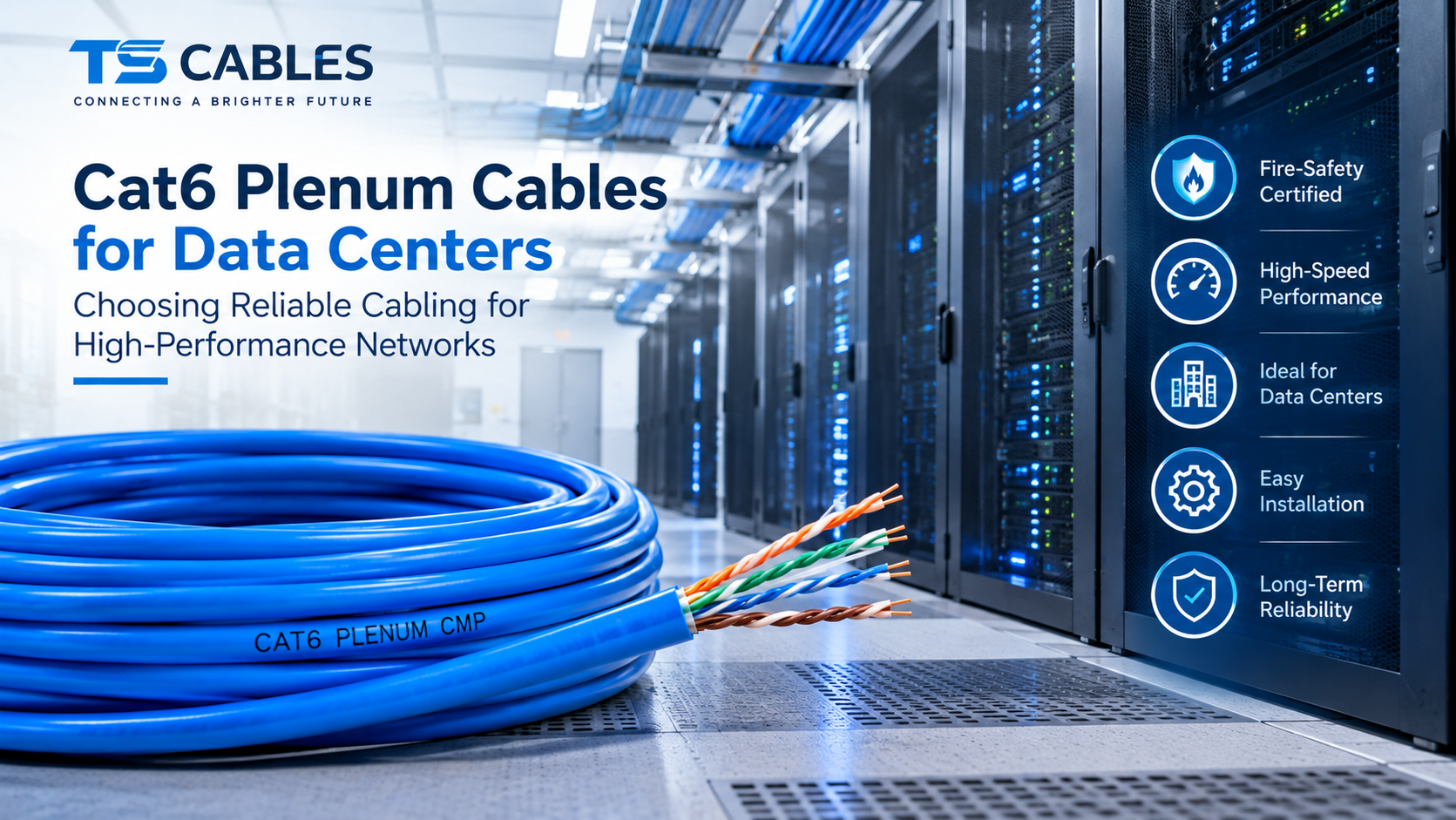
Data centers play a critical role in modern digital infrastructure. They support cloud computing, business applications, data storage, communication systems, and numerous online services that organizations depend on every day. To keep these systems operating efficiently, businesses need reliable network infrastructure that supports consistent data transmission, organized cable management, and appropriate safety requirements.
Cat6 Plenum cables can be a suitable option for specific data center networking applications, particularly where plenum-rated cabling is required. However, choosing the right cable involves more than selecting a product based on its category. Network speed, cable distance, conductor material, installation environment, and applicable building codes all influence the final decision.
This guide explains the essential features of Cat6 plenum cables, their potential applications in data centers, and the factors to consider when planning a reliable network installation.

What Are Cat6 Plenum Cables?
Cat6 plenum cables are Category 6 Ethernet cables manufactured with a specialized outer jacket designed to meet specific flame-spread and smoke-production requirements for plenum spaces.
Plenum spaces are areas used for air circulation in buildings. Depending on the building design, these spaces may include certain areas above suspended ceilings or beneath raised floors. When cabling passes through an area classified as a plenum, the applicable building code may require CMP-rated cable.
Cat6 cables support bandwidths up to 250 MHz and are commonly used for Gigabit Ethernet networks. They can also support 10 Gigabit Ethernet over shorter distances under suitable conditions.
The Cat6 category describes the cable’s networking performance, while the plenum rating relates to its fire-safety characteristics. Both specifications should be considered when selecting cabling for a data center.
Why Is Reliable Cabling Important in Data Centers?
Data centers contain interconnected servers, switches, storage systems, monitoring equipment, and other network devices. These components depend on suitable connectivity to communicate and transfer information.
1. Consistent Network Connectivity
Reliable cabling helps connect network switches, management systems, and compatible Ethernet devices. Proper cable selection and installation can help reduce avoidable connection issues and simplify troubleshooting.
Cat6 plenum cables may be suitable for Gigabit Ethernet connections and certain shorter-distance, higher-speed applications when the cable and equipment specifications support them.
2. Appropriate Fire-Safety Characteristics
Data centers must consider fire safety when designing their physical infrastructure. CMP-rated cables are designed to meet specific flame-spread and smoke-production requirements for plenum spaces.
Using the correct cable rating helps support compliance with applicable building codes. Plenum-rated cable is not fireproof, and its suitability depends on the installation environment and project requirements.
3. Organized Network Infrastructure
A well-organized cabling system makes it easier to identify connections, maintain equipment, and manage future changes.
Proper routing, labeling, and cable management can help technicians trace network connections and reduce confusion when troubleshooting or upgrading systems.
4. Support for Structured Cabling
Structured cabling provides an organized framework for connecting equipment across a facility.
Cat6 plenum cables can form part of a structured cabling system when their specifications match the required network performance and installation conditions.
However, large data centers often require higher-speed links for server connections and backbone infrastructure. Cat6 should therefore be selected according to the specific application rather than treated as the best solution for every data center connection.
Key Factors to Consider When Choosing Cat6 Plenum Cables
Before purchasing cable for a data center project, review the following technical requirements.
1. Verify the Required Cable Rating
Determine whether the planned cable route passes through a space that requires plenum-rated cabling.
Look for the CMP designation and review the product’s applicable listing or certification information. Not every raised floor or ceiling cavity is automatically a plenum space, so confirm the building’s classification and applicable codes.
2. Evaluate Network Speed Requirements
Cat6 supports bandwidths up to 250 MHz and is commonly used for Gigabit Ethernet.
Some Cat6 installations can support 10 Gigabit Ethernet over shorter distances, but supported performance depends on the complete channel and installation conditions.
Before selecting cable, identify the required network speed, connected equipment capabilities, and distance between devices. For higher-speed server and backbone links, other cabling categories or fiber-optic solutions may be more appropriate.
3. Check Conductor Material
Conductor material affects electrical characteristics and cable suitability.
Solid bare copper conductors are commonly used in permanent structured cabling installations. Buyers should check product specifications carefully and distinguish solid copper cable from copper-clad aluminum (CCA).
The selected cable should meet the requirements of the intended Ethernet application and applicable standards.
4. Choose Shielded or Unshielded Cable
Unshielded twisted pair (UTP) cable is commonly used in many Ethernet installations. Shielded cable may be appropriate in environments where electromagnetic interference is a concern, provided the shielding and grounding system are designed and installed correctly.
Consider nearby electrical equipment, power distribution systems, cable routing, and manufacturer recommendations before choosing a cable construction.
5. Plan Cable Lengths Carefully
Cable length can affect network performance and installation efficiency.
A standard Ethernet channel typically has a maximum length of 100 meters, including the permanent link and patch cords. Certain higher-speed applications require shorter runs.
Measure the distance between network devices and allow enough length for proper routing and termination. Avoid unnecessarily long cable runs that complicate cable management.
6. Review Product Documentation
Before purchasing, examine the product’s technical information and confirm that it matches your project requirements.
Important details include:
- CMP rating and applicable certification information
- Conductor material and wire gauge
- Category 6 performance specifications
- Shielded or unshielded construction
- Available cable lengths
- Compatibility with connectors and network equipment
- Manufacturer installation recommendations
Comparing these details helps you select cable based on technical suitability instead of price alone.
Common Applications of Cat6 Plenum Cables in Data Centers
Cat6 plenum cables can support selected networking applications when their specifications match the required performance and installation conditions.
Network Management Connections
Ethernet cabling can connect compatible management devices, monitoring equipment, and administrative workstations to the network.
Gigabit Ethernet Connections
Cat6 can be suitable for Gigabit Ethernet connections between compatible network devices. The cable length and installation quality must remain within the applicable performance requirements.
Monitoring and Security Systems
Data centers may use IP cameras, monitoring devices, and other network-connected equipment. Cat6 plenum cable can be considered where the cable rating and application requirements are appropriate.
Office and Support Areas
Administrative offices, equipment preparation rooms, and other support spaces associated with a data center may require Ethernet connections for computers, printers, and communication equipment.
The correct cable rating should be determined by the actual installation environment.
Cat6 Plenum vs. Cat6 Riser Cables
Understanding cable ratings helps prevent installation mistakes.
Cat6 Plenum (CMP): Designed to meet applicable flame-spread and smoke-production requirements for plenum spaces.
Cat6 Riser (CMR): Designed for vertical runs between floors, subject to applicable building-code requirements.
These ratings serve different purposes. Riser-rated cable should not be installed in a plenum space unless the applicable code specifically permits it. Plenum-rated cable may be permitted in some riser applications, but local requirements must still be checked.
Always verify the required rating for each cable route before beginning installation.
Best Practices for Installing Cat6 Plenum Cables
Proper installation helps preserve cable performance and supports an organized network environment.
Plan Cable Routes in Advance
Identify the network devices, equipment racks, patch panels, and cable pathways before installation. Choose practical routes that avoid unnecessary detours and unsuitable environments.
Avoid Excessive Bending and Pulling
Sharp bends, crushing, and excessive pulling tension can affect cable performance. Follow the manufacturer’s bend-radius and pulling-tension requirements.
Keep Cable Bundles Organized
Use appropriate cable management accessories to keep cable runs orderly and accessible. Avoid compressing bundles excessively or restricting access to equipment.
Label Connections Clearly
Label both ends of each cable and maintain accurate records of network connections. Consistent labeling helps technicians identify links during maintenance and troubleshooting.
Test Completed Cable Runs
Use appropriate cable-testing equipment to verify wire mapping and the required performance of each installed run.
Testing can help identify installation errors before network devices are placed into service.
Why Consider TS Cables for Data Center Cabling Projects?
Selecting a suitable supplier is an important step in planning a network installation. TS Cables offers Ethernet cabling options for different structured cabling and networking requirements.
When evaluating Cat6 plenum cables, buyers should compare conductor materials, cable ratings, technical specifications, and available lengths. These details help determine whether a product is suitable for the intended data center application.
For projects involving servers, switches, monitoring devices, and support-area networks, cable selection should be based on the required network speed and installation environment.
TS Cables can be considered as part of your supplier evaluation when comparing Cat6 plenum cable options. Always review the specifications of individual products and confirm that they meet your project’s requirements before purchasing.
Conclusion
Cat6 plenum cables can be useful for selected data center and support-area networking applications where Category 6 performance and plenum-rated cabling are appropriate.
Choosing the right product requires careful consideration of cable ratings, conductor material, network speeds, cable distances, and installation requirements. Proper routing, labeling, and testing can further support reliable connectivity and easier maintenance.

Before purchasing Cat6 plenum cables, evaluate the specific needs of your project and confirm that the chosen cable meets applicable standards. TS Cables is one supplier to consider when comparing Ethernet cabling options for structured network installations.