The transportation industry has become more competitive, demanding, and technology-driven than ever before. Businesses that rely on trucks, trailers, delivery vans, or commercial vehicles face constant pressure to reduce downtime, improve efficiency, control operational costs, and deliver reliable service to customers. At the center of all these responsibilities lies one critical factor: proper fleet maintenance.
For growing transportation businesses, maintaining vehicles manually is no longer practical. Traditional methods such as paper records, spreadsheets, wall calendars, and disconnected tracking systems often lead to scheduling errors, delayed repairs, unexpected breakdowns, and rising maintenance costs. As fleet sizes expand, these problems become even more difficult to manage efficiently.
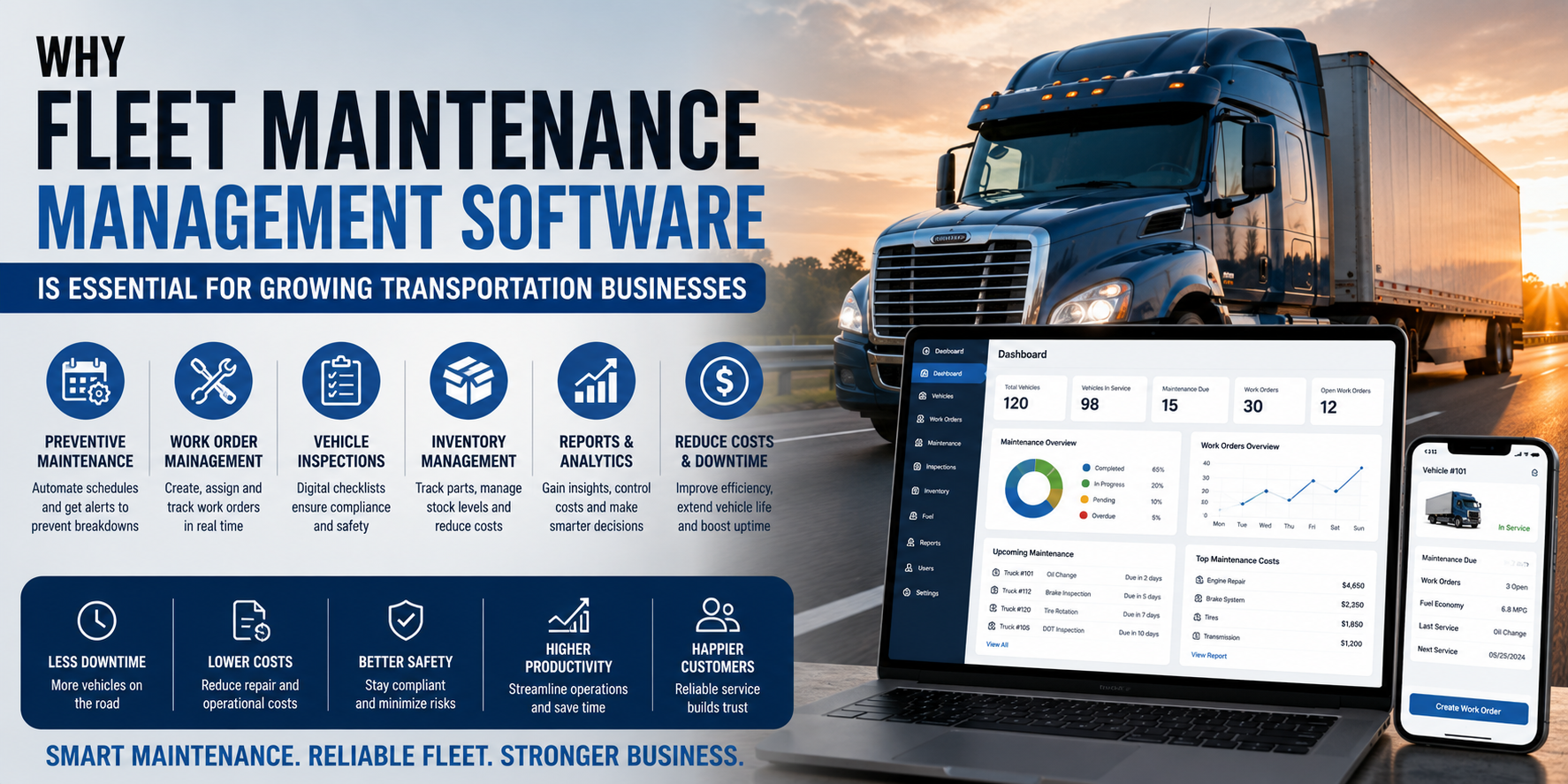
This is why Fleet Maintenance Management Software has become an essential tool for modern transportation companies. These digital platforms help businesses organize maintenance schedules, monitor vehicle performance, track repairs, manage inventory, improve communication, and reduce costly downtime. Instead of reacting to mechanical failures after they occur, businesses can take a proactive approach that keeps vehicles running smoothly and operations moving efficiently.
Fleet Maintenance Management Software is not just designed for large corporations with hundreds of vehicles. Small and medium-sized transportation companies are also investing in these systems because they help simplify operations, improve productivity, and support long-term growth. In an industry where every hour of downtime can impact revenue and customer satisfaction, the ability to manage maintenance efficiently has become a major competitive advantage.
Understanding the Role of Fleet Maintenance Management Software
Why Manual Fleet Maintenance Methods No Longer Work
Many transportation businesses begin with simple maintenance tracking systems because they appear inexpensive and easy to manage initially. However, once a fleet starts growing, manual processes quickly become inefficient. Vehicle inspections, oil changes, brake servicing, tire replacements, and engine repairs all require careful scheduling and accurate record keeping.
Without a centralized system, maintenance records can become disorganized, appointments may be missed, and important repairs can be delayed. These small operational issues often lead to larger problems such as vehicle breakdowns, late deliveries, increased repair expenses, and dissatisfied customers.
Fleet Maintenance Management Software eliminates these inefficiencies by providing a single digital platform where all maintenance activities can be tracked in real time. Fleet managers can instantly access service histories, maintenance schedules, inspection reports, repair costs, and technician notes without searching through paperwork or multiple systems.
The Growing Demand for Smarter Fleet Operations
Transportation businesses today operate in a fast-paced environment where efficiency directly affects profitability. Fuel prices, labor expenses, customer expectations, and vehicle operating costs continue rising, making efficient fleet management more important than ever.
Fleet Maintenance Management Software helps businesses automate repetitive administrative tasks and improve operational visibility. Instead of manually tracking maintenance schedules, managers can rely on automated alerts and digital reporting systems that ensure every vehicle receives timely servicing.
This level of organization allows businesses to reduce downtime, improve safety, and increase overall operational reliability. Companies that adopt digital maintenance systems are often better prepared to scale their operations while maintaining consistent service quality.
How Fleet Maintenance Management Software Improves Vehicle Reliability
Preventive Maintenance Scheduling
Preventive maintenance is one of the most important features of Fleet Maintenance Management Software. Rather than waiting for vehicles to break down unexpectedly, businesses can schedule maintenance proactively based on mileage, operating hours, or time intervals.
The software automatically sends reminders for inspections, oil changes, brake checks, tire rotations, and other essential maintenance tasks. This helps businesses reduce the risk of major mechanical failures and avoid expensive emergency repairs.
Preventive maintenance also improves vehicle lifespan and fuel efficiency. Trucks and commercial vehicles that receive regular servicing typically operate more reliably and require fewer costly repairs over time.
Tracking Complete Service Histories
Managing service records manually becomes increasingly difficult as fleet sizes grow. Fleet Maintenance Management Software stores detailed maintenance histories for every vehicle, including repair records, inspection reports, warranty details, and replacement parts information.
This information helps technicians diagnose recurring problems more accurately and identify patterns that may indicate larger mechanical issues. Fleet managers can also use service history data to determine when vehicles are becoming too costly to maintain.
Accurate service records are also valuable during audits, compliance inspections, and vehicle resale processes. Well-documented maintenance histories demonstrate responsible fleet management and improve the resale value of commercial vehicles.
Reducing Unexpected Breakdowns
Unexpected breakdowns are one of the biggest operational challenges transportation businesses face. A single vehicle failure can disrupt delivery schedules, delay operations, and create expensive emergency repair situations.
Fleet Maintenance Management Software reduces breakdown risks by helping businesses identify problems early. Diagnostic alerts, inspection tracking, and predictive maintenance tools allow managers to schedule repairs before serious failures occur.
This proactive approach improves fleet reliability and helps businesses maintain more consistent operations.
Improving Operational Efficiency Through Automation
Streamlining Work Order Management
Managing repair orders manually can create delays and confusion, especially in businesses operating large fleets. Fleet Maintenance Management Software simplifies work order management by digitizing the entire repair process.
Managers can create work orders instantly, assign technicians, monitor repair progress, and update maintenance statuses in real time. Technicians can access repair instructions, upload inspection notes, and document completed work directly through the system.
This organized workflow improves efficiency and ensures maintenance tasks are completed more quickly and accurately.
Better Communication Across Departments
Transportation businesses often struggle with communication gaps between drivers, technicians, service advisors, and managers. Miscommunication can lead to delayed repairs, scheduling conflicts, and inaccurate maintenance records.
Fleet Maintenance Management Software improves communication by providing centralized access to real-time information. Everyone involved in fleet operations can view repair updates, inspection reports, maintenance schedules, and vehicle statuses through a shared platform.
This transparency helps teams coordinate more effectively and reduces operational delays.
Improving Technician Productivity
Technicians perform better when they have access to organized information and efficient workflows. Fleet Maintenance Management Software reduces paperwork and administrative tasks, allowing technicians to focus more on repairs and inspections.
Digital repair orders, maintenance histories, and inventory tracking systems help technicians complete work faster while improving repair accuracy. Managers can also monitor technician productivity and assign workloads more effectively.
As businesses continue modernizing their operations, many transportation companies are adopting platforms like Fullbay to improve maintenance management and gain better visibility into daily fleet operations.
Financial Benefits of Fleet Maintenance Management Software
Lower Maintenance Costs
One of the biggest advantages of Fleet Maintenance Management Software is cost reduction. Preventive maintenance scheduling helps businesses avoid expensive breakdowns and emergency repairs, while organized inventory management reduces unnecessary spending on parts and supplies.
Improved repair planning also helps businesses reduce labor inefficiencies and minimize vehicle downtime. When trucks spend less time in the repair shop, they remain operational longer and generate more revenue.
Over time, these cost savings can significantly improve overall profitability.
Increased Vehicle Utilization
Transportation businesses depend on vehicle availability to maintain productivity and meet customer expectations. Fleet Maintenance Management Software helps maximize vehicle utilization by reducing downtime and improving maintenance scheduling.
When maintenance tasks are organized efficiently, vehicles spend less time waiting for repairs and more time on the road generating revenue.
This improved operational efficiency becomes especially important for businesses managing large or growing fleets.
Better Financial Reporting and Planning
Modern software platforms provide detailed reporting and analytics tools that help businesses monitor operational performance more accurately. Fleet managers can analyze maintenance costs, repair trends, fuel efficiency, technician productivity, and vehicle reliability through customizable reports.
These insights help businesses identify inefficiencies and make smarter financial decisions. For example, managers may discover certain vehicles are generating unusually high repair costs or identify maintenance trends that require operational changes.
Using data strategically allows transportation businesses to improve long-term planning and operational efficiency.
Key Features Businesses Should Look For
Cloud-Based Accessibility
Cloud-based Fleet Maintenance Management Software allows managers to access operational data from anywhere using internet-connected devices. This flexibility is especially valuable for businesses managing multiple locations or remote fleet operations.
Cloud systems also simplify software updates and improve data security.
Mobile Compatibility
Mobile functionality has become increasingly important in the transportation industry. Drivers and technicians often need access to repair information while working remotely.
Mobile-compatible software allows users to update inspections, track repairs, upload photos, and communicate instantly through smartphones or tablets.
Integration With Telematics Systems
Many modern fleet management systems integrate directly with telematics technology and onboard diagnostics. These integrations provide real-time vehicle data, maintenance alerts, engine diagnostics, and performance monitoring.
This level of connectivity improves repair accuracy and helps businesses make faster maintenance decisions.
Future Trends in Fleet Maintenance Management Software
Artificial Intelligence and Predictive Analytics
Artificial intelligence is transforming fleet maintenance by helping businesses predict failures before they happen. AI-powered systems can analyze vehicle data and identify patterns that indicate potential mechanical issues.
Predictive maintenance technology reduces downtime and helps businesses schedule repairs more strategically.
Greater Automation
Automation will continue improving maintenance management by reducing manual administrative tasks. Scheduling, inventory management, invoicing, and reporting systems are becoming increasingly automated and intelligent.
This allows businesses to operate more efficiently with fewer errors.
Connected Vehicle Technology
Connected vehicle systems are expected to become more advanced in the coming years. Real-time diagnostics, remote monitoring, and automated maintenance alerts will continue improving fleet reliability and operational visibility.
Transportation businesses that adopt these technologies early will likely gain a competitive advantage.
Conclusion
The transportation industry depends heavily on reliable vehicles, organized maintenance operations, and efficient workflow management. As fleets grow and vehicle technology becomes more advanced, managing maintenance manually becomes increasingly difficult and expensive.
Fleet Maintenance Management Software provides transportation businesses with the tools needed to improve vehicle reliability, reduce downtime, control maintenance costs, and streamline daily operations. By automating scheduling, organizing repair workflows, improving communication, and providing real-time operational insights, these systems help businesses operate more efficiently and professionally.
In a competitive industry where operational efficiency directly affects profitability, investing in Fleet Maintenance Management Software is no longer optional for growing businesses. Companies that modernize their maintenance processes today will be better prepared to improve customer satisfaction, support long-term growth, and remain competitive in the evolving transportation industry.