Airports run on speed, safety, and public confidence. A passenger may forget a display screen or a retail store, but a passenger quickly notices whether the terminal feels clean, organized, and well maintained. Floors in check-in areas, concourses, arrival zones, boarding gates, and food courts carry constant passenger movement throughout the day. A manual-only cleaning model can struggle to maintain the same standard across large airport spaces.
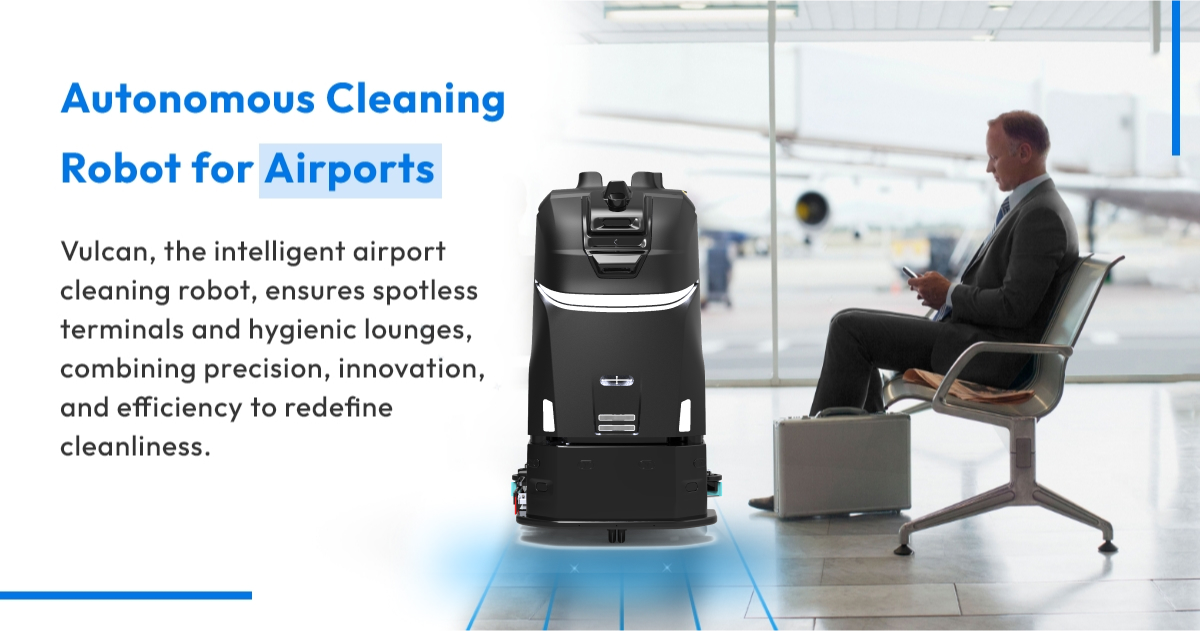
An Autonomous Cleaning Robot for Airports like Vulcan by Kody Robots gives airport facility teams a more structured way to manage large-floor cleaning. The robot can support routine cleaning across wide public areas, reduce repetitive workload for housekeeping teams, and help airport operators maintain visible cleanliness across long operating hours.
For airports in India and the USA, autonomous cleaning has moved from a futuristic idea to a practical operations conversation. Large terminals need scalable floor maintenance. Facility teams need better coverage. Passengers expect cleaner spaces. Vulcan by Kody Robots fits the category as a practical robotic floor-cleaning solution for airport environments that need stronger routine support.
Key Takeaways
An Autonomous Cleaning Robot for Airports helps terminals maintain cleaner public floors with better consistency.
Airport environments need repeated cleaning because passenger movement, trolley use, dust, spills, and food-area traffic affect floor condition throughout the day.
Autonomous cleaning supports airport housekeeping teams by reducing repetitive route-based floor work.
Airports in India and the USA can benefit from smarter cleaning systems across check-in halls, concourses, waiting zones, corridors, and arrival areas.
Vulcan by Kody Robots fits the need for practical airport cleaning automation.
The strongest value comes from better floor coverage, staff support, hygiene presentation, and long-term operational discipline.
Why Airports Need Smarter Cleaning Systems
Airport cleaning is different from cleaning a regular commercial building. A terminal never truly stays still. Passengers arrive early morning, late night, and across peak travel windows. Airlines operate on tight schedules. Retail and food zones stay active for long hours. Trolleys, luggage wheels, shoes, packaging waste, and spills create constant floor maintenance pressure.
A clean airport improves more than appearance. Clean floors support passenger confidence, brand reputation, and operational discipline. A terminal that looks clean gives travelers a sense of order. A neglected floor can make even a modern airport feel poorly managed.
Manual teams remain essential, but airport scale creates pressure. Large spaces require repeated coverage. Long corridors demand continuous attention. Public zones need cleaning without disrupting movement. An Autonomous Cleaning Robot for Airports helps solve part of that challenge by handling routine floor-cleaning routes with consistency.
What an Autonomous Cleaning Robot for Airports Does
An Autonomous Cleaning Robot for Airports is a robotic floor-cleaning system designed to support large-area cleaning in terminal environments. The system can follow planned routes, clean defined zones, and assist housekeeping teams in maintaining high-footfall floor areas.
The robot can support:
- Check-in hall floor cleaning.
- Terminal concourse cleaning.
- Boarding gate area maintenance.
- Arrival and baggage claim zone cleaning.
- Food court and retail corridor cleaning.
- Long corridor and public walkway maintenance.
- Routine floor coverage during scheduled cleaning windows.
Human teams still manage detailed cleaning, spill response, washrooms, waste handling, supervision, and areas requiring judgment. A robot handles repeated floor-cleaning movement so staff can focus on higher-value tasks.
Why Manual-Only Cleaning Is Under Pressure
Airport housekeeping teams work hard, but terminal conditions make manual-only cleaning difficult to scale.
Large Floor Areas Need Repeated Coverage
Airports often have wide halls, long corridors, open waiting spaces, and multiple passenger circulation paths. Covering every area manually throughout the day takes significant time and effort.
Footfall Changes Throughout the Day
Passenger movement can rise suddenly during flight departure waves, arrivals, holiday travel, and weekend traffic. Cleaning schedules need flexibility and consistency.
Public Areas Must Stay Presentable
Airport floors are visible to passengers, airline teams, retail partners, and authorities. Poor floor condition affects the overall perception of airport quality.
Staff Time Should Be Used Carefully
Housekeeping staff should focus on detailed tasks, urgent response, restroom checks, waste management, and supervision. Repeated route cleaning can be supported through automation.
An Autonomous Cleaning Robot for Airports helps airport teams create a stronger baseline for routine floor maintenance.
Best Areas for Autonomous Cleaning in Airports
Airport operators should deploy robotic cleaning where floor area, repetition, and visibility create the strongest value.
Check-In Halls
Check-in areas create the first impression for many travelers. Luggage wheels, queues, and heavy footfall make regular floor cleaning necessary.
Terminal Concourses
Concourses connect major passenger movement zones. Long walking paths and wide floors make concourses ideal for autonomous cleaning support.
Boarding Gate Areas
Passengers spend time seated and moving around gate zones. A clean floor improves comfort and terminal presentation.
Arrival Areas
Arrival halls see heavy movement from passengers, luggage, and trolleys. Clean floors help maintain a smooth first impression for arriving travelers.
Baggage Claim Zones
Baggage areas face repeated trolley movement and crowding. Routine cleaning helps keep the zone organized.
Food Courts and Retail Corridors
Food and retail areas create additional cleaning demand because spills, packaging, and high dwell time affect floor condition.
Long Internal Corridors
Large airports often include long walkways between zones. A robotic system can support repeated cleaning across those routes.
How Autonomous Cleaning Improves Airport Operations
An airport cleaning robot creates value when the system improves daily operations, not only when the robot looks advanced.
Better Cleaning Consistency
A robot follows planned routes and schedules. Consistent coverage helps facility teams maintain cleaner floors across long operating windows.
Better Staff Allocation
Housekeeping teams can spend less time on repetitive floor routes and more time on detail cleaning, urgent response, and passenger-facing cleanliness needs.
Better Terminal Presentation
Clean public floors make the airport feel more organized and professionally managed.
Better Support During Busy Travel Seasons
Holiday travel, festivals, business traffic, and vacation seasons place extra pressure on airport facilities. Robotic cleaning can support routine coverage during these high-demand periods.
Better Scalability
Large airports and expanding terminals need cleaning systems that can scale. A manual-only model becomes harder to manage as floor area and passenger movement increase.
Why India Is a Strong Market
India’s airport sector is growing, and passenger expectations are rising. Major airports in cities such as Delhi, Mumbai, Bengaluru, Hyderabad, Chennai, Ahmedabad, Pune, Goa, and Kochi need strong facility maintenance systems to support high traffic and public confidence.
Indian airports also operate in a climate where dust, monsoon residue, and heavy footfall can affect terminal floors. A stronger cleaning model can help operators maintain better floor appearance across long hours.
An Autonomous Cleaning Robot for Airports fits India because airport operators need practical automation that supports housekeeping teams and improves daily cleaning quality. The value is especially strong for large terminals, new airport infrastructure, and premium travel environments.
Why the USA Is a Strong Market
Airports in the USA often operate across large terminal footprints, high passenger traffic, long operating windows, and strict facility expectations. Many terminals include long concourses, multiple gate zones, heavy retail traffic, and large baggage areas.
Facility teams in the USA face the same core problem as airport teams elsewhere: large public spaces need repeated cleaning every day. Automation becomes relevant when airports want more consistent cleaning without placing every routine floor task on manual teams.
An Autonomous Cleaning Robot for Airports supports airport facility management in the USA by improving route-based cleaning, helping staff focus on detailed work, and supporting cleaner passenger spaces.
Why Vulcan Fits Airport Cleaning Needs
Vulcan is an Autonomous Cleaning Robot by Kody Robots fits the airport cleaning conversation because airports need robotic systems that support real operational needs. A large airport does not need technology for display value alone. The airport needs cleaning support that improves routine maintenance across wide, high-traffic floors.
Vulcan fits airport environments where operators want to support:
- Large-area floor cleaning.
- Repeated route-based cleaning.
- Terminal floor maintenance.
- Staff workload reduction.
- Cleaner public spaces.
- More structured cleaning operations.
A robot like Vulcan becomes most valuable when airport teams integrate the system into daily housekeeping schedules and use the robot for clearly defined cleaning routes.
What Airport Operators Should Evaluate Before Adoption
A cleaning robot should match the airport’s layout, operations, and maintenance goals.
Terminal Layout
Wide halls, long corridors, open public spaces, and clear routes improve robot suitability.
Cleaning Frequency
Airports should identify zones that need repeated cleaning throughout the day.
Passenger Flow
Deployment planning should consider peak hours, passenger queues, security flow, boarding movement, and arrival waves.
Staff Workflow
A robot should complement housekeeping teams and improve daily cleaning structure.
Safety Protocols
Airport operators should define movement rules, restricted areas, supervision points, and emergency handling procedures.
Maintenance and Support
Long-term value depends on onboarding, route setup, technical support, service quality, and staff training.
ROI Logic for Autonomous Airport Cleaning
The ROI of an Autonomous Cleaning Robot for Airports comes from operational value over time.
Reduced Repetitive Manual Work
Routine floor cleaning can be supported through automation, allowing staff to focus on detailed and urgent tasks.
Better Cleaning Coverage
Large areas can receive more consistent attention when robot routes are planned properly.
Stronger Passenger Experience
Clean terminals improve passenger comfort and trust.
Better Facility Image
A clean airport supports the brand image of the terminal, airlines, retailers, and operating authority.
Better Long-Term Scalability
As terminals expand, robotic cleaning provides a more structured way to manage large-floor maintenance.
ROI improves when airports use the robot daily for high-value zones rather than treating the robot as a one-time showpiece.
How Autonomous Cleaning Supports Airport Facility Teams
Airport facility teams manage many responsibilities at once. Cleaning is only one part of the larger facility operation. Teams must also handle waste, inspections, washrooms, service requests, vendor coordination, and emergency response.
A robotic cleaning system supports facility teams by giving them a dependable tool for repetitive floor maintenance. Staff can focus more on supervision, quality checks, and tasks that require human judgment. The robot helps reduce physical strain linked to long floor-cleaning routes.
This support model is important because automation works best when people and robots work together. A robot handles repeated movement. People handle decisions, exceptions, and detailed care.
Future of Autonomous Cleaning for Airports
Airports are moving toward smarter facility management. Cleaning automation will likely become a larger part of that shift because airport floors need constant attention and public cleanliness expectations will only rise.
An Autonomous Cleaning Robot for Airports fits the future because terminal cleaning is repetitive, visible, and operationally important. The technology helps airport teams create cleaner spaces, better schedules, and stronger maintenance discipline.
Airports that adopt robotic cleaning early can create a stronger foundation for large-scale facility automation. The goal is not to replace the housekeeping team. The goal is to help that team work with better tools.
Conclusion
An Autonomous Cleaning Robot for Airports offers a practical way to improve floor-cleaning consistency across large airport terminals in India and the USA. Airport floors carry constant passenger movement, luggage traffic, dust, spills, and daily wear. Manual cleaning teams remain essential, but large terminal spaces need more structured support.
Vulcan by Kody Robots is a robotics company in India for autonomous robots range fits the need for smarter airport floor maintenance by supporting repeated cleaning routes, staff efficiency, and cleaner passenger-facing spaces. For airport operators that want better terminal presentation, stronger housekeeping support, and scalable cleaning operations, autonomous cleaning is a serious step forward.
Explore Vulcan for smarter autonomous cleaning across airport environments.